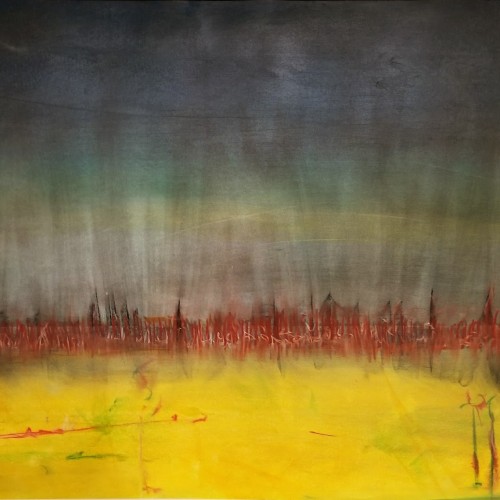
This is no landscape you could ever stand in.
No observational drawing, no safe horizon line.
This chalk experiment is a dream unfolding in color: a golden field lit from within, a scarlet seam of fire at its edge, and a storm-heavy sky pressing down with ancient weight.
It feels like a place between worlds—where the conscious and unconscious meet, where memory and imagination blur. Some might see a battlefield, others a meadow after rain, and still others a veil between life and death. That is the beauty: the painting does not tell you what it is; it invites you to confess what you see.
Psychologists say we project ourselves onto images like these. So—what do you notice first? The light? The darkness? The burning red?
Perhaps that is not about the drawing at all, but about you.
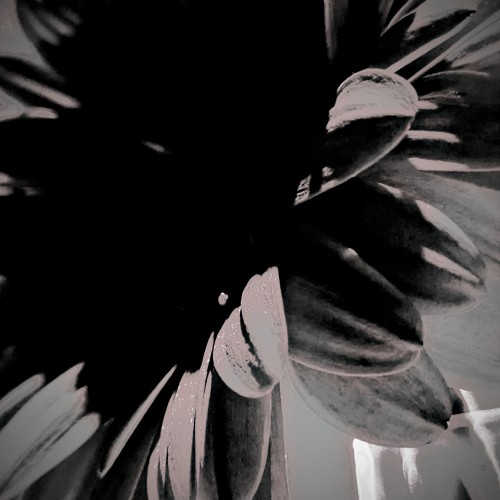
Capturing the spaces in between and amplifying them with a play on exposure and contrast to bring forth the beauty I see within the layers. This particular play is a flower I saved from a very special event I attended. I then dried the petals of this beauty. These special petals make their way to various projects, including oil and acrylic paintings and resin on canvas. More to come :)
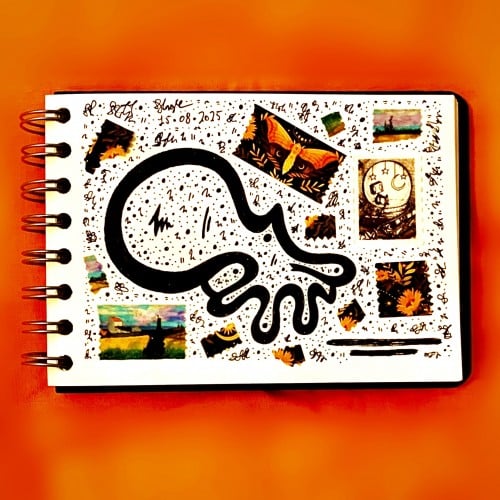
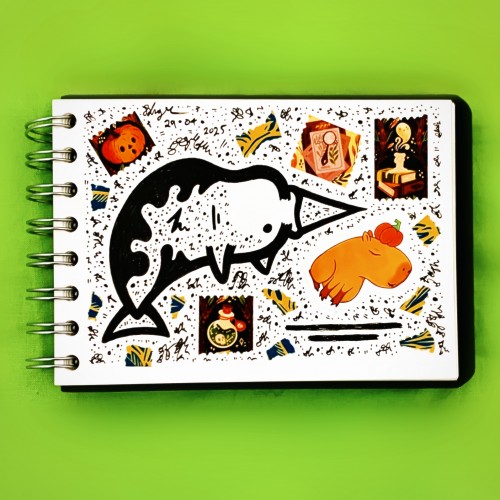
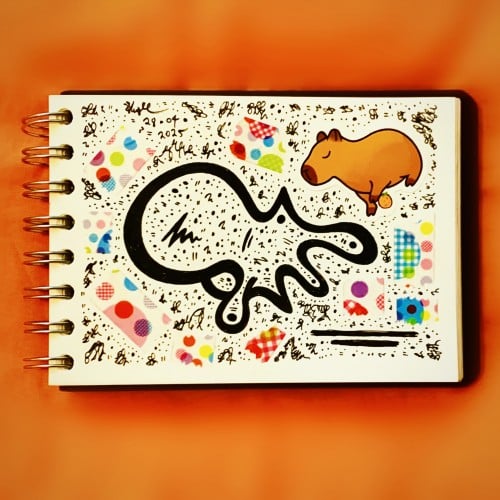
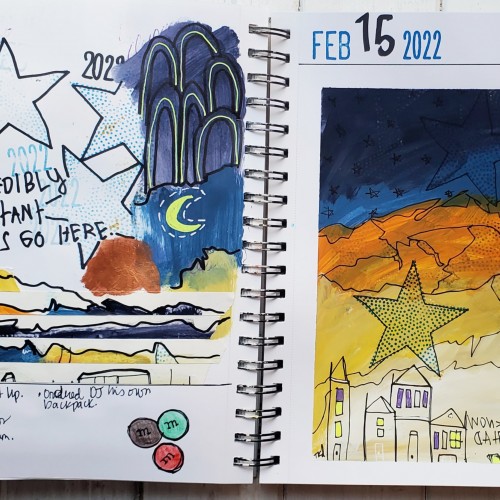
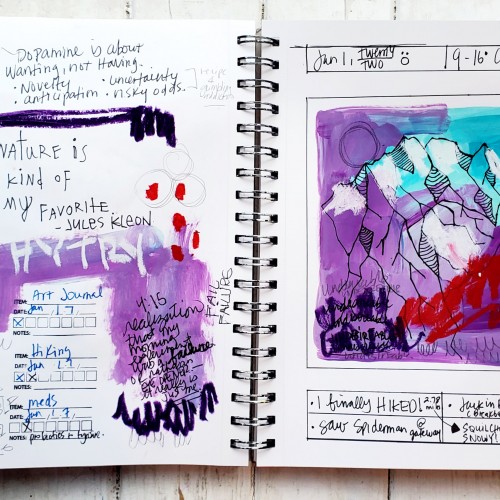
I generally make marks on something every day, but I'm really TRYING to do it purposefully in one single journal at a time. I also have super ADHD, which means I pretty much never go up to my actual studio and usually only use what's out on my desk, because out-of-sight-out-of-mind.
I do generally put pen (or some kind of tool), to paper (or some kind of surface), every day, but I'm really TRYING to do it purposefully in one singular location (journal). Here is a successful attempt from that particular day. I'm also super lazy, which means I never go up to my actual studio and only use what's out on my computer desk. (Including the "waste" page because I often like it as much/more.)
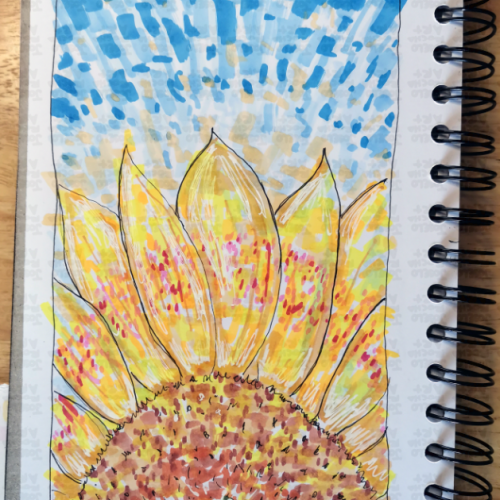
A vibrant, hand-drawn sunflower illustration featuring bold marker strokes and a rhythmic, blue-sky background. This piece captures the energy of a summer day through an impressionistic lens, blending warm yellows and oranges with cool, textured blues.
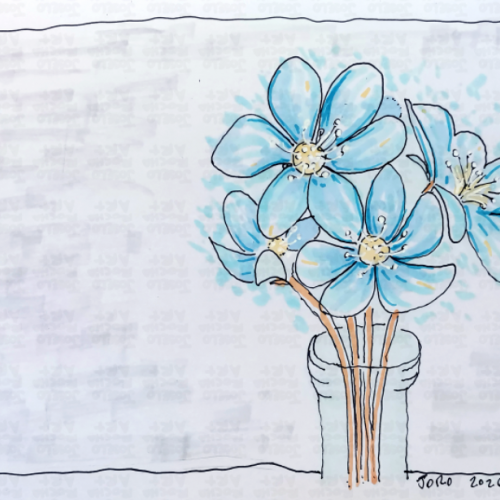
A delicate, hand-drawn study of the Blue Liverflower (Hepatica), capturing the first signs of spring. This design features breezy blue petals, energetic linework, and a minimalist vase, blending a classic botanical feel with a modern, sketchy illustrative style. Perfect for those who love the quiet beauty of forest wildflowers and cottagecore-inspired art.
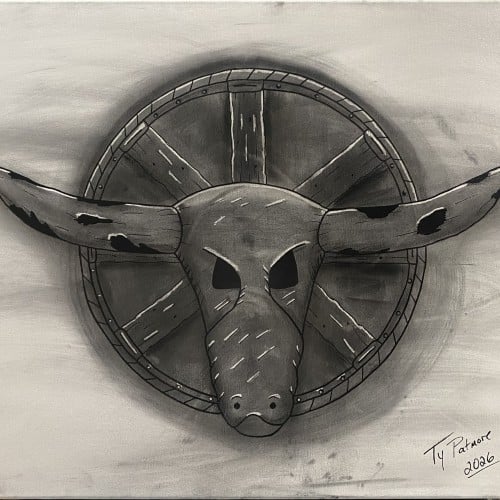
24x30 canvas A weathered steer skull fixed against a wagon wheel, drawn in graphite, charcoal, and ink, evokes the grit and resolve of westward migration. The skull stands as a quiet emblem of endurance, sacrifice, and survival, while the wheel anchors the piece in motion and passage. Westbound ’49 references the year many headed west in search of promise, capturing the stark beauty and cost of that journey in restrained black and white.
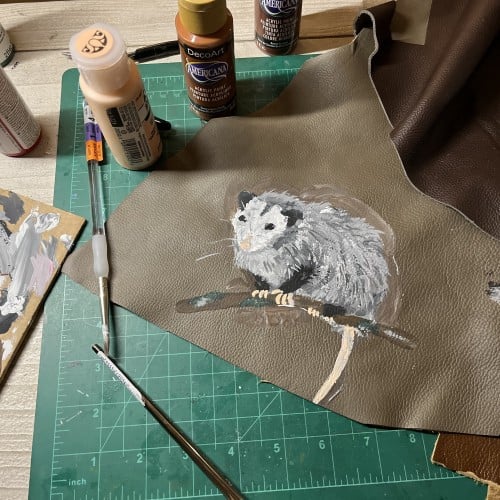
I spilled a little paint on this leather scrap so I figured why not paint something on it? It’s kinda hard bringing a ‘possum to life on paper because they’re so silly and dumb in a cute sort of way, I think I managed to capture this guy’s personality alright..
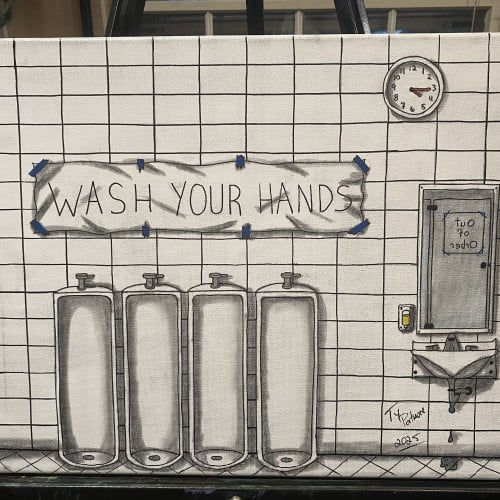
In this memory-driven piece, Patmore reconstructs the bathroom from his third-grade elementary school, capturing the sterile brightness, the tiled repetition, and the institutional reminder to “WASH YOUR HANDS.”
But the scene is not pristine — a leaky sink, an out-of-order stall, and a taped-up sign reveal the quiet decay behind childhood places we assume were orderly and safe.
Patmore blends nostalgia with unease, transforming a simple restroom into a study of what it means to grow up: how the lessons we learn early (“hygiene,” discipline, responsibility) stay with us even after the walls begin to crack. The small pop of blue tape emphasizes the DIY fragility of rules meant to guide us.
This piece stands at the intersection of memory and maintenance — of spaces, of bodies, and of ourselves.
What I Learned from Looking
through my childhood artwork, help me discover my art style: It was already within me. A Picasso documentary got me intrigued.The film captures the moment and the mystery of creativity.
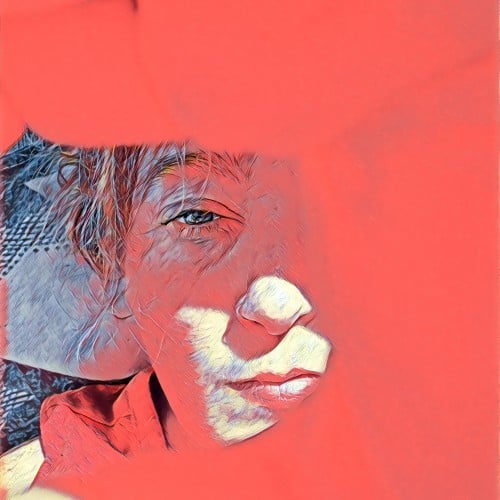
This piece critiques the modern tendency to hide identity behind brands and consumerism.
* Visual Focus: The mask is partially obscured by a fitted baseball cap, with the bill pulled down to cover one eye. The cap itself is a symbol of brand identity and fast-fashion culture. The uncovered eye retains an unsettling, almost mechanical gaze.
* Symbolism:
* The Cap: Represents the societal practice of hiding behind brands and allowing consumerism to dictate self-worth and block out unwanted truths. The act of seeing is deliberately curtailed.
* The Mask: Emphasizes that the consumer identity is often a façade-a manufactured mask that prevents others from truly
"seeing" the individual, while simultaneously restricting the individual's full sight of the world.