Previous
Next
logo logo
logo logo
  • Discover Art
    • Trending
    • Most Recent
    • Most Faves
    • Most Views
    • Curated Galleries
  • Drawing Challenges
    • See All Challenges
  • Drawing Prompts
  • Artists
    • Most Popular
    • Most Recent
    • Available For Hire
    • Artist Spotlight
  • More
    • Marketplace
    • Art Discussions
    • Resources
    • News + Blog
Login
Most Comments
Select an option
  • Most Relevant
  • Most Faves
  • Most Views
  • Most Comments
  • Most Recent
SEARCH RESULTS FOR

artist

Sabina Hahn Sabina Hahn
Enlarge
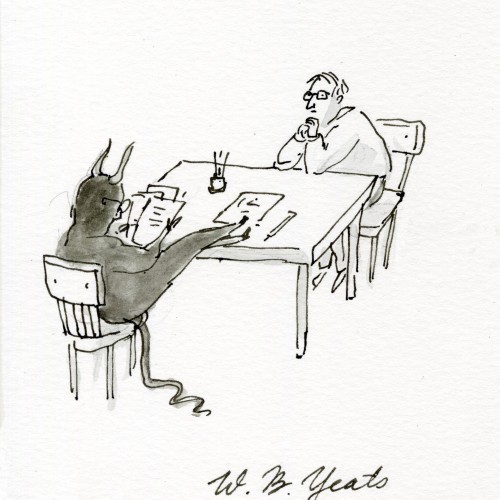
W. B. Yeats

W. B. Yeats (1865–1939) A lyric poem of eighty or more lines took him about three months of hard labor. Fortunately, Yeats was not so careful about his other writing, like the literary criticism he did to earn extra money. “One has to give something of one’s self to the devil that one may live,” he said. “I give my criticism.”- From Daily Rituals: How Artists Work by Mason Currey “Life is a long preparation for something that never happens.” ― W.B. Yeats #dailyrituals #inktober #WBYeats @masoncurrey

  • 255
  • 3
  • 0
Sabina Hahn Sabina Hahn
Enlarge
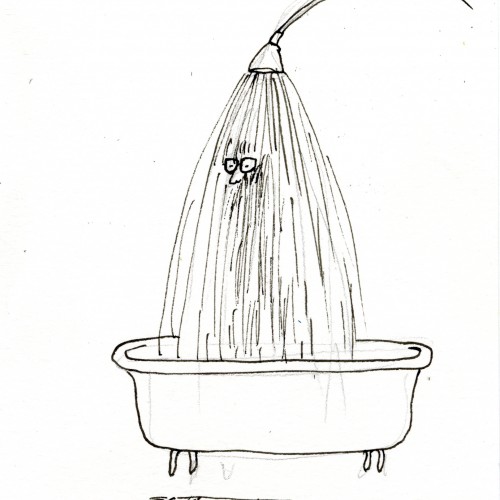
Woody Allen

Woody Allen (b. 1935) I’ve found over the years that any momentary change stimulates a fresh burst of mental energy. So if I’m in this room and then I go into the other room, it helps me. If I go outside to the street, it’s a huge help. If I go up and take a shower it’s a big help. So I sometimes take extra showers. “I think in the cracks all the time,” he has said. “I never stop.” - From Daily Rituals: How Artists Work by Mason Currey “Some guy hit my fender the other day, and I said unto him, 'Be fruitful, and multiply'. But not in those words.” ― Woody Allen #dailyrituals #inktober #Woody Allen @masoncurrey

  • 239
  • 4
  • 0
Sabina Hahn Sabina Hahn
Enlarge
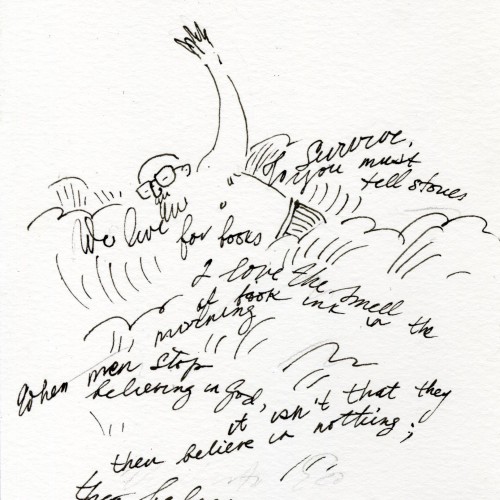
Umberto Eco

Umberto Eco (b. 1932) Eco says that he is able to be productive during the brief “interstices” in the day. He told The Paris Review’s interviewer: “This morning you rang, but then you had to wait for the elevator, and several seconds elapsed before you showed up at the door. During those seconds, waiting for you, I was thinking of this new piece I’m writing. I can work in the water closet, in the train. While swimming I produce a lot of things, especially in the sea. Less so in the bathtub, but there too.” - From Daily Rituals: How Artists Work by Mason Currey “When men stop believing in God, it isn’t that they then believe in nothing: they believe in everything.” ― Umberto Eco #dailyrituals #inktober #UmbertoEco @masoncurrey

  • 276
  • 4
  • 0
Sabina Hahn Sabina Hahn
Enlarge
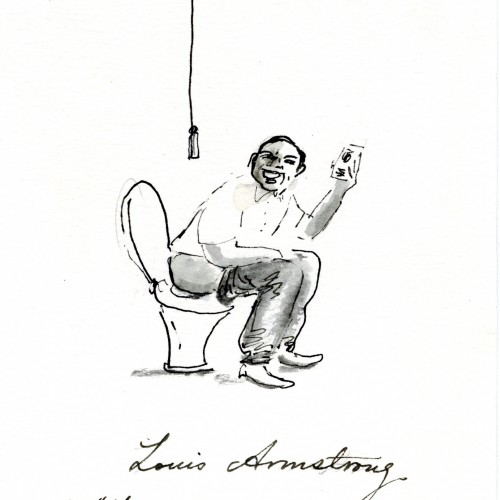
Louis Armstrong

Louis Armstrong (1901–1971) Armstrong relied on music to lull himself to sleep. Before he could get into bed, however, he had to administer the last of his daily home remedies, Swiss Kriss, a potent herbal laxative invented by the nutritionist Gayelord Hauser in 1922 (and still on the market today). Armstrong believed so strongly in its curative powers that he recommended it to all his friends, and even had a card printed up with a photo of himself sitting on the toilet, above the caption “Leave It All Behind Ya.” - From Daily Rituals: How Artists Work by Mason Currey “All music is folk music. I ain't never heard a horse sing a song.” ― Louis Armstrong #dailyrituals #inktober #LouisArmstrong @masoncurrey

  • 298
  • 2
  • 0
Mos Deprez Mos Deprez
Enlarge
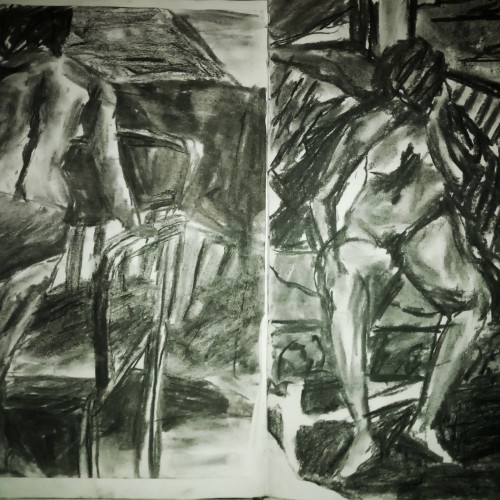
charcoal drawing sketch female nude

Charcoal sketch of nude females

  • 15
  • 5
  • 0
Darién diaz Darién diaz
Enlarge
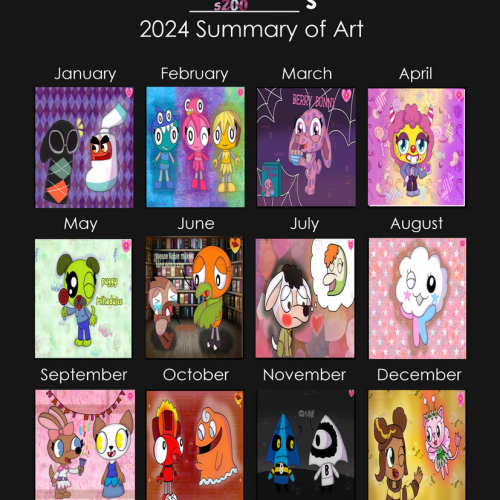
My summary of art 2024

Hola a todos y feliz año nuevo 2025, ya casi es hora de decirle adios a el 2024 y decirle ho,a al que viene. Me encanta hacer mis resumenes artísticos del 2024 y feliz para todos. :..。oƒ :..。oƒ :..。oƒ :..。oƒ :..。oƒ:..。oƒ :..。oƒ :..。oƒ :..。oƒ :..。oƒ Hello everyone and happy new year 2025, it's almost time to say goodbye to 2024 and say hello to the one coming. I love making my artistic summaries of 2024 and happy to everyone.

  • 7
  • 1
  • 0
Sabina Hahn Sabina Hahn
Enlarge
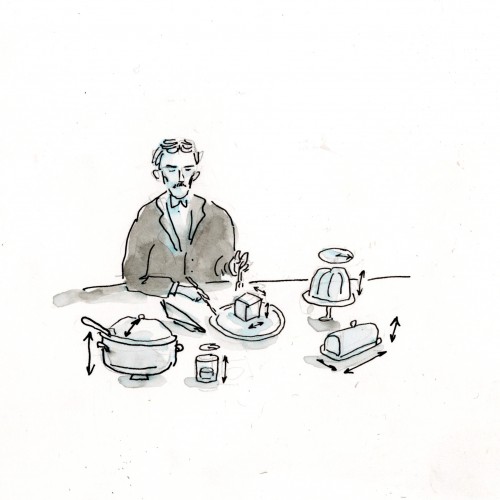
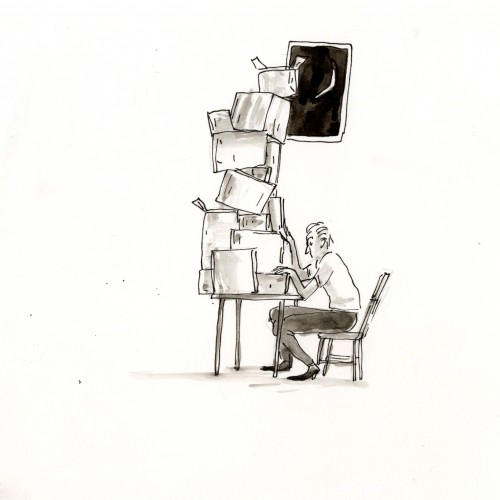
Joseph Cornell (1903–1972)

Joseph Cornell (1903–1972) Cornell worked nights at the kitchen table, sorting and assembling materials for his boxes. It was not easy going. Some nights he felt too fatigued from his day job to concentrate on his art and would sit up reading instead, switching on the oven for warmth. In the mornings, his quarrelsome mother would scold him about the mess he’d left at the kitchen table; without a proper workroom, Cornell was forced to store his growing collection of magazine clippings and dime-store baubles out in the garage. In 1940 Cornell finally mustered the courage to quit his job and pursue his art full-time—and even then his habits changed little. He still worked nights at the kitchen table, while his mother and brother slept upstairs. In the late morning he would head downtown for breakfast at his local Bickford’s restaurant, often satisfying his sweet tooth with a Danish or a slice of pie (and lovingly cataloging these indulgences in his diary). - From Daily Rituals: How Artists Work by Mason Currey #dailyrituals #inktober #JosephCornell @masoncurrey

  • 256
  • 12
  • 0
Sabina Hahn Sabina Hahn
Enlarge
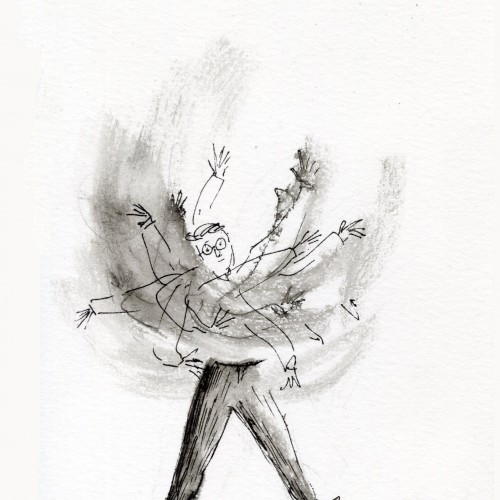
Dmitry Shostakovich (1906–1975)

Dmitry Shostakovich (1906–1975) Shostakovich’s contemporaries do not recall seeing him working, at least not in the traditional sense. The Russian composer was able to conceptualize a new work entirely in his head, and then write it down with extreme rapidity—if uninterrupted, he could average twenty or thirty pages of score a day, making virtually no corrections as he went. But this feat was apparently preceded by hours or days of mental composition—during which he “appeared to be a man of great inner tensions,” the musicologist Alexei Ikonnikov observed, “with his continually moving, ‘speaking’ hands, which were never at rest.” Shostakovich himself was afraid that perhaps he worked too fast. “I worry about the lightning speed with which I compose,” he confessed in a letter to a friend. Undoubtedly this is bad. One shouldn’t compose as quickly as I do. Composition is a serious process, and in the words of a ballerina friend of mine, “You can’t keep going at a gallop.” I compose with diabolical speed and can’t stop myself.… It is exhausting, rather unpleasant, and at the end of the day you lack any confidence in the result. But I can’t rid myself of the bad habit. - From Daily Rituals: How Artists Work by Mason Currey #dailyrituals #inktober #shostakovich @masoncurrey

  • 494
  • 8
  • 0
Sabina Hahn Sabina Hahn
Enlarge
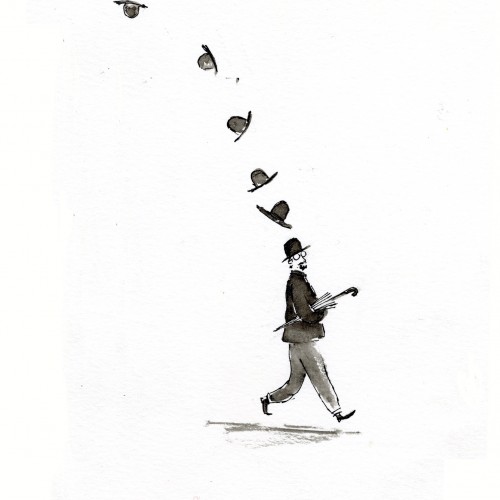
Erik Satie

Erik Satie (1866–1925) In 1898, Satie moved from Paris’s Montmartre district to the working-class suburb of Arcueil, where he would live for the rest of his life. Most mornings, however, the composer returned to the city on foot, walking a distance of about six miles to his former neighborhood, stopping at his favorite cafés along the way. According to one observer, Satie “walked slowly, taking small steps, his umbrella held tight under his arm. When talking he would stop, bend one knee a little, adjust his pince-nez and place his fist on his hip. Then he would take off once more, with small deliberate steps.” His dress was also distinctive: the same year that he moved to Arcueil, Satie received a small inheritance, which he used to purchase a dozen identical chestnut-colored velvet suits, with the same number of matching bowler hats. Locals who saw him pass by each day soon began calling him the Velvet Gentleman. The last train back to Arcueil left at 1:00 A.M., but Satie frequently missed it. Then he would walk the several miles home, sometimes not arriving until the sun was about to rise. Nevertheless, as soon as the next morning dawned, he would set off to Paris once more. The scholar Roger Shattuck once proposed that Satie’s unique sense of musical beat, and his appreciation of “the possibility of variation within repetition,” could be traced to this “endless walking back and forth across the same landscape day after day.” Indeed, Satie was observed stopping to jot down ideas during his walks, pausing under a streetlamp if it was dark. During the war the streetlamps were often extinguished, and rumor had it that Satie’s productivity dropped as a result. - From Daily Rituals: How Artists Work by Mason Currey

  • 361
  • 5
  • 0
TimShch TimShch
Enlarge
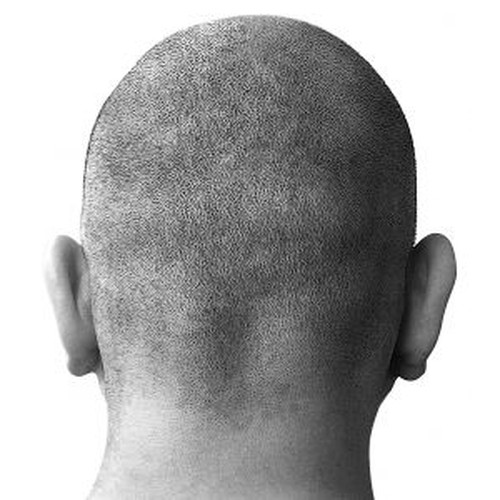
50heads #2

Artists I'm inspired by. For every head different material: pencil, ballpoint pen, brush pen, colored pencils + ink, watercolour

  • 76
  • 4
  • 0
Cameron Cameron
Enlarge
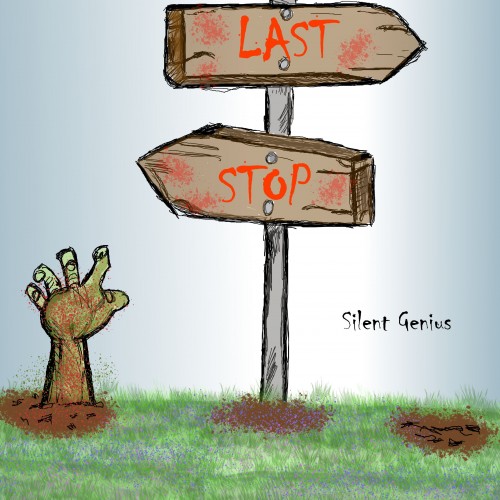
Last Stop

Illustration created in the Krita App.

  • 18
  • 2
  • 0
Steven Steven
Enlarge
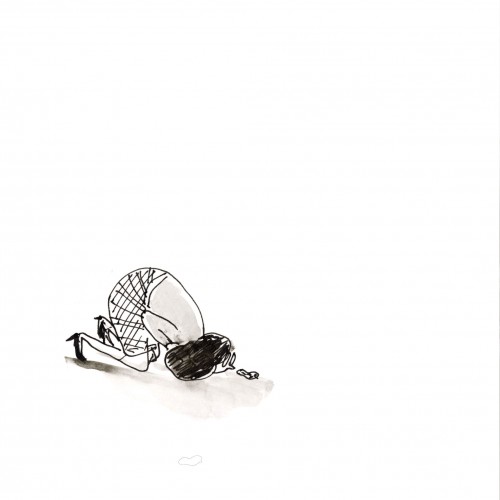
Some drawings of mine
1/5

All my drawings are random ideas from my head. I actually just started drawing in pencil about a year ago. I love to normally use felt tip pens. I just hope all like what they see. We're all artists here so everyone should know that we are our own worst critics lol.

  • 4
  • 2
  • 0
Sabina Hahn Sabina Hahn
Enlarge
Joyce Carol Oates

Joyce Carol Oates (b. 1938) The first several weeks of a new novel, Oates has said, are particularly difficult and demoralizing: “Getting the first draft finished is like pushing a peanut with your nose across a very dirty floor.” From Daily Rituals: How Artists Work by Mason Currey #dailyrituals #inktober #JoyceCarolOates @masoncurrey

  • 570
  • 1
  • 0
DeeDee  Joseph DeeDee Joseph
Enlarge
Nap Queen goes to sleep once more

I wasn't feeling this one but I pushed and finished

  • 26
  • 2
  • 0
Simon Simon
Enlarge
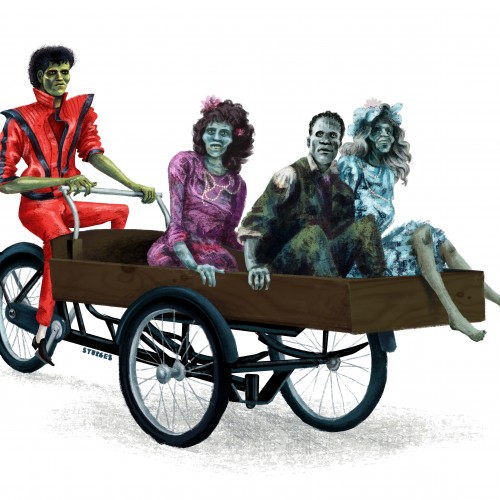
Zombie Ride

Another halloween bike

  • 62
  • 2
  • 0
Sabina Hahn Sabina Hahn
Enlarge
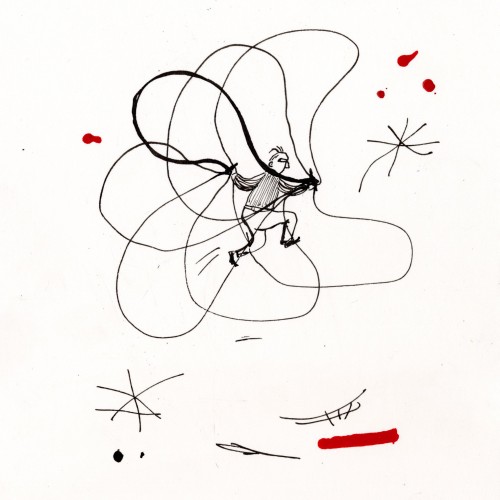
Joan Miró

Joan Miró (1893-1983) Miró always maintained a rigidly inflexible daily routine—both because he disliked being distracted from his work, and because he feared slipping back into the severe depression that had afflicted him as a young man, before he discovered painting. To help prevent a relapse, his routine always included vigorous exercise—boxing in Paris; jumping rope and Swedish gymnastics at a Barcelona gym; and running on the beach and swimming at Mont-roig, a seaside village where his family owned a farmhouse. Miró hated for this routine to be interrupted by social or cultural events. As he told an American journalist, “Merde! I absolutely detest all openings and parties! They’re commercial, political, and everybody talks too much. They get on my tits!” From Daily Rituals: How Artists Work by Mason Currey

  • 573
  • 6
  • 0
Hermit Hermit
Enlarge
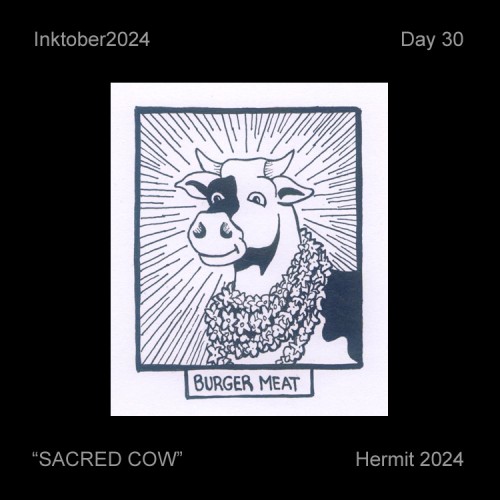
SACRED COW

(Gel Fineliner on A5 Paper) A simple image to show that sacred cows, of all kinds, should not be immune in the eyes of any artist.

  • 594
  • 3
  • 0
Will (Bampi) Edwards Will (Bampi) Edwards
Enlarge
Sumatran Tiger Cub

I've been going through my sketches, both completed and incomplete, and found a drawing of a young Sumatran Tiger that I began working on around two years ago, but never completed. I'm actually relieved that I didn't draw it earlier, as it has allowed me to gain more experience in illustrating this stunning creature, which is unfortunately a species at risk of extinction. A few facts about the Sumatran Tigers... The Sumatran tiger Panthera tigris sumatrae*, the smallest tiger subspecies, is critically endangered and stands as the final surviving species of island tigers. Poaching poses a significant danger to Sumatran tigers as hunters target them for their skin, bones, and canines. Additionally, habitat loss caused by oil palm, coffee, and acacia plantations, further endangers these big cats by reducing their prey availability and pushing them closer to human habitations. It is estimated that there are fewer than 400 mature individual tigers in Sumatra in isolated pockets of protected land. Three of the protected areas are classified as UNESCO World Heritage Sites but all are in danger of losing this status due to threats from poaching, illegal logging, agricultural encroachment, and planned road building. It is for these reasons the Sumatran tiger is classified in the most severe IUCN status: Critically endangered. Description: The Sumatran tiger is the smallest and darkest tiger subspecies and tends to be more bearded and maned than the other subspecies. Male tigers can expect to reach somewhere in the region of 120kg and 8ft from head to tail vs females who average 91kg and 7ft length. Breeding: Female tigers are sexually mature at about 3 or 4 years of age, and males at about 4 to 5 years. Mating may occur any time during the year, but it most frequently takes place from November to April. The information was obtained from conservewildcats.org. Thank you. #indonesia #criticallyendangered #sumatrantiger #amateurartist #tigerdrawing #tigersketch #tigercub #sketchadayapp #october2024

  • 118
  • 4
  • 0
Hermit Hermit
Enlarge
CBA - FIVE

(Gel Fineliner on A5 Paper) The fifth, and last, of these small CBA images, and even an artist can find better things to do when they get bored of doing artwork, but don't worry, they always return to it.

  • 367
  • 2
  • 0
Hermit Hermit
Enlarge
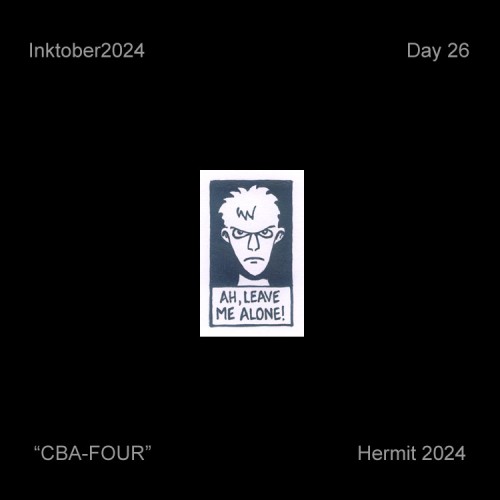
CBA - FOUR

(Gel Fineliner on A5 Paper) An artist isn't being stroppy when they don't want to do any work. It's literally because they "can't be arsed!"

  • 395
  • 3
  • 0
Hermit Hermit
Enlarge
CBA - THREE

(Gel Fineliner on A5 Paper) Words that are used by the halfhearted artist to someone who asks far too much and pays far too little!

  • 199
  • 3
  • 0
Hermit Hermit
Enlarge
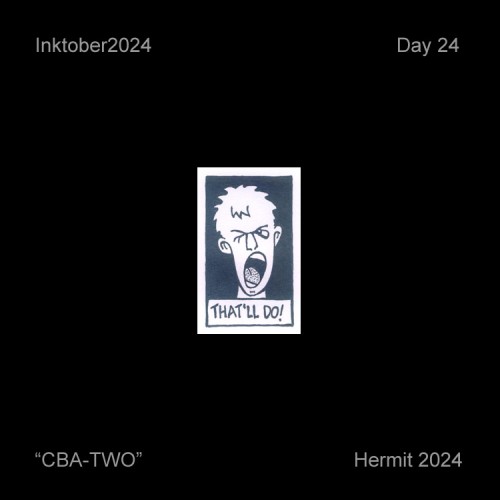
CBA - TWO

(Gel Fineliner on A5 Paper) The second of five small drawings which are meant to show what happens when an artist gets bored of a subject. You draw something halfheartedly and think "That'll do!" XD

  • 320
  • 3
  • 0
Hermit Hermit
Enlarge
CBA - ONE

(Gel Fineliner on A5 Paper) The central image is small because it is that small (about 4cm). It's the first of five which represents that point every artist gets to where they say to themselves: "I really CAN'T BE ARSED doing this!" and casually knock out anything. I thought it was apt for the "encouraging" nature of Inktober ;P

  • 197
  • 4
  • 0
Sabina Hahn Sabina Hahn
Enlarge
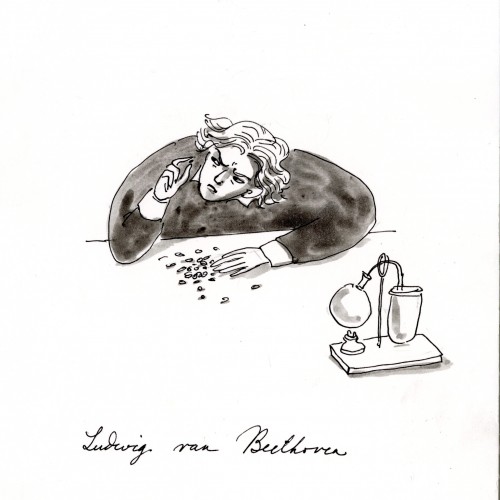
Ludwig van Beethoven

Ludwig van Beethoven (1770–1827) Beethoven rose at dawn and wasted little time getting down to work. His breakfast was coffee, which he prepared himself with great care—he determined that there should be sixty beans per cup, and he often counted them out one by one for a precise dose. From Daily Rituals : How Artists Work by Mason Currey. #dailydrawing #dailyritual #beethoven #coffee #inktober @masoncurrey
  • 282
  • 4
  • 0
Sabina Hahn Sabina Hahn
Enlarge
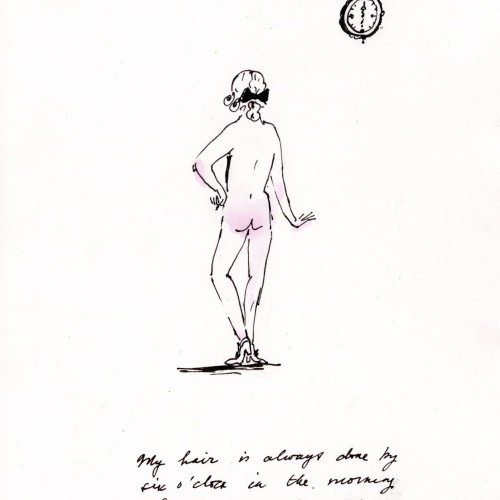
Wolfgang Amadeus Mozart

Wolfgang Amadeus Mozart In a 1782 letter to his sister, he gave a detailed account of these hectic days in Vienna: "My hair is always done by six o’clock in the morning and by seven I am fully dressed. I then compose until nine. From nine to one I give lessons. Then I lunch..." From "Daily Rituals: How Artists Work", edited and with text by Mason Currey.
  • 434
  • 3
  • 0
Hermit Hermit
Enlarge
CUSTOMER SERVICE

(Gel Fineliner on A5 Paper) A piece for Inktober, but one which references the way some artists self-censor so as not to offend anyone.

  • 285
  • 2
  • 0
Sabina Hahn Sabina Hahn
Enlarge
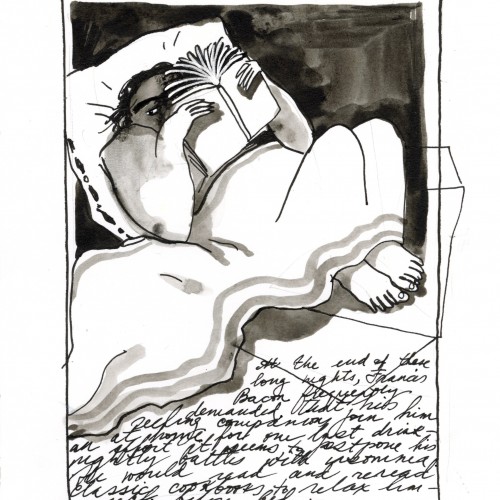
Francis Bacon

I was feeling listless about this inktober until I picked up Daily Rituals : How artists work by Mason Currey. I immediately knew that I want to do these portraits for the inktober. FRANCIS BACON. At the end of these long nights, Bacon frequently demanded that his reeling companions join him at home for one last drink - an effort, it seems, to postpone his nightly battles with insomnia. Bacon depended on polls to get to sleep, and he would read and reread classic cookbooks to relax himself before bed. #inktober #portraits #francisBacon

  • 306
  • 2
  • 0
TheWarm TheWarm
Enlarge
Gorilla

Questa opera mostra un gorilla stilizzato con un tocco di street art e pop art, influenzata da artisti come Jean-Michel Basquiat, soprattutto con l'uso della corona. L'opera combina testo e simboli in modo vibrante e interessante. Il livello tecnico è buono, con una composizione ben curata e forti riferimenti culturali. Ditemi che ne pensate :)

  • 9
  • 2
  • 0
Rebecca Gibson Rebecca Gibson
Enlarge
Skull with Roses

  • 375
  • 2
  • 0
Maia Doodle Maia Doodle
Enlarge
Manga girls and cute cats

Manga girls and cute cats, I made this artwork back in 2023. Markers on paper.

  • 15
  • 3
  • 0
« Previous
Next »

Doodle Addicts

Navigate
  • Discover Art
  • Drawing Challenges
  • Weekly Drawing Prompts
  • Artist Directory
  • Art Marketplace
  • Resources
Other
  • News + Blog
  • About Us
  • Contact Us
Newsletter
© 2026 Doodle Addicts™ — All Rights Reserved Terms & Conditions / Privacy Policy / Community Guidelines
Add Doodle Addicts to your home screen to not miss an update!
Add to Home Screen