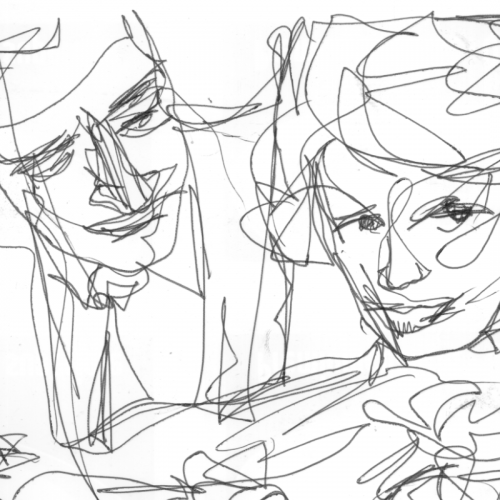
Dmitry Shostakovich (1906–1975)
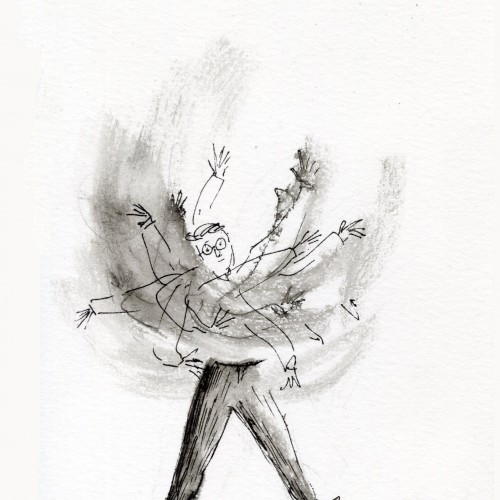
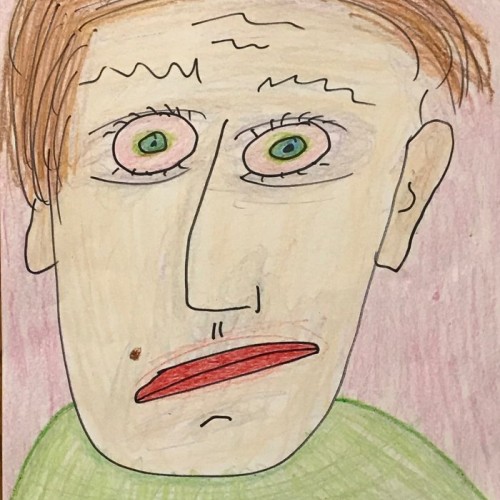
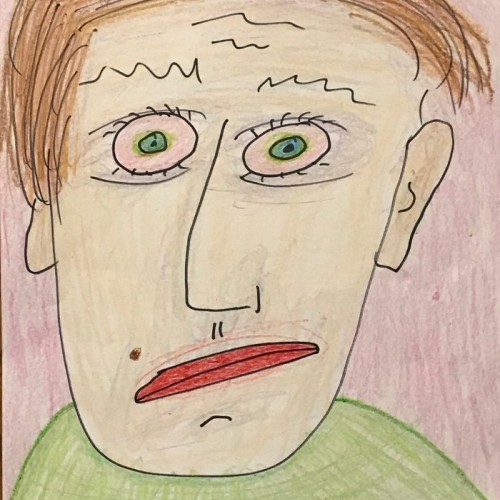
Shostakovich’s contemporaries do not recall seeing him working, at least not in the traditional sense. The Russian composer was able to conceptualize a new work entirely in his head, and then write it down with extreme rapidity—if uninterrupted, he could average twenty or thirty pages of score a day, making virtually no corrections as he went.
But this feat was apparently preceded by hours or days of mental composition—during which he “appeared to be a man of great inner tensions,” the musicologist Alexei Ikonnikov observed, “with his continually moving, ‘speaking’ hands, which were never at rest.”
Shostakovich himself was afraid that perhaps he worked too fast. “I worry about the lightning speed with which I compose,” he confessed in a letter to a friend. Undoubtedly this is bad. One shouldn’t compose as quickly as I do. Composition is a serious process, and in the words of a ballerina friend of mine, “You can’t keep going at a gallop.” I compose with diabolical speed and can’t stop myself.… It is exhausting, rather unpleasant, and at the end of the day you lack any confidence in the result. But I can’t rid myself of the bad habit.
- From Daily Rituals: How Artists Work by Mason Currey
#dailyrituals #inktober #shostakovich @masoncurrey
Happy New Year! I am thankful for the time I have, for the people in my life, and what God has done. After a life long struggle with alcoholism, I have been sober for 2 and half years now. God helped my to quit and to be set free from it. There is so much more to life and so much I want to do. I have also struggled with living in the past and regrets, but I have been making progress with being in the moment more and being content. I'm looking forward to today and what this upcoming year brings.
"Like maggots in a dog's carcass, they fill me, my children..."
A cosmic being known as "The Sleeper", "The Ugly", but most often he is proudly called "The Father".
"Like maggots in a dog's carcass, they fill me, my children..."
A cosmic being known as "The Sleeper", "The Ugly", but most often he is proudly called "The Father".
I SWEAR I made him before I knew about Barbatos.
Anyway, The Father sleeps deep beneath Gotham and unwittingly poisons the city and its population with his toxic aura. He is known to his cult as the God of Madness and Chaos. He simply cannot control his influence on those around, which makes him a villain of a tragic fate. I figured his existence would be a good enough explanation for why Gotham is such a rotten piece of society, with very creative supervillains who loves to be so extra and why they not executed horribly for everything they've done. The cult of his worshippers is quite old and includes a huge number of people trying to keep him asleep, because if he wakes up and gets out of his prison, it will be the end of the city, and maybe not only the city...
I should point out: he's not actually a god, he's an alien, and he's not the embodiment of "chaos and madness" - he's a cosmic horror, most likely mentally ill and therefore his aura is toxic. He didn't create the villains or Batman, but his aura affected the environment in which they were created.
para el día 31 de Fruitecember hoy le toca a jugo de uva
para este día decidí dibujar a Noko con una copa de jugo de uva Durante los fuegos artificiales recibiendo el año nuevo aparte lo elegí porque 2025 será el año de la serpiente
les deseo a todos mis amigos que tengan un feliz año nuevo
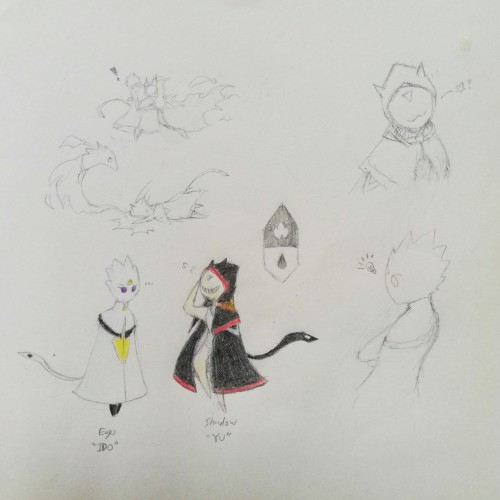
Been developing in a way to free myself from external reference-based OC concepts, which was where I started from in drawing. In a way, exploring how I view characters from my own eyes. Here, is an example of drawing myself in two contrasting counterparts. Personal preferences are actually pretty simplistic by appearance.
This is my boy Sebastian. He is a collaboration of Ichabod Crane and Dracula, he was just born today. I have a least a few pages full of his sketches.
Type: Vampire
-Hopeless Romantic
-Comfortable within his castle
-Kind
-Can be easily scared, but when it comes to those he cares about will fight for.
-He is VERY clumsy
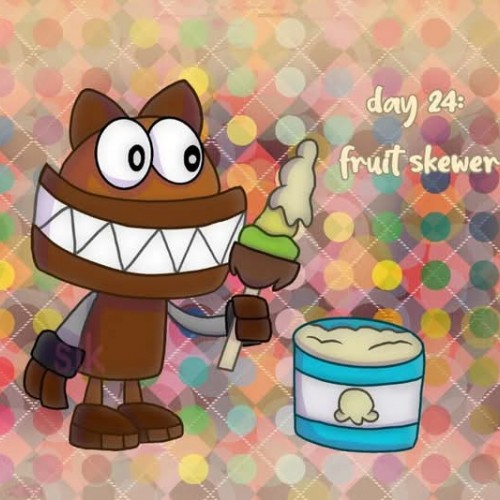
para el día 24 de Fruitecember hoy le toca a brocheta de frutas
para este día decidí dibujar con motivo de estas fiestas a gobba comiéndose una deliciosa brocheta de frutas que darle más sabor lo unto con un poco de helado, les deseo felices fiesta a todos
Teddy Bear's Change of Seasons - Sophie's Christmas included!
Is beautifully written and illustrated, Teddy Bear’s Change of Seasons includes four charming stories, wonderfully rolled into one children’s novel.
Teddy Bear and his friends create magical ways to explore and learn about the snow-white, wonderful world they live in, which changes from summer to autumn and into an unforgettable Christmas.
Teddy’s journey of self-discovery through four seasons, Christmas included, begins in a magnificent old-growth forest, but Teddy is stuck inside a dark and lonely place.
His dreams look far away and out of reach, until Teddy rescues a small mouse, who is desperate for help.
From this one act of kindness, Teddy's life changes in ways he never imagined, bringing him close friends, a new loving family and the kind of challenges and adventures other teddies have never encountered before.
This is a dream of a book, the perfect snuggle-down bedtime story, accompanied by hot, sleepy cocoa.
para el día 9 de Fruitecember hoy le toca a frutillas
para este día decidí dibujar a un Bewear salvaje que le robó algunas frutillas a un entrenador que andaba por allí
Joyce Carol Oates (b. 1938)
The first several weeks of a new novel, Oates has said, are particularly difficult and demoralizing: “Getting the first draft finished is like pushing a peanut with your nose across a very dirty floor.”
From Daily Rituals: How Artists Work by Mason Currey
#dailyrituals #inktober #JoyceCarolOates @masoncurrey
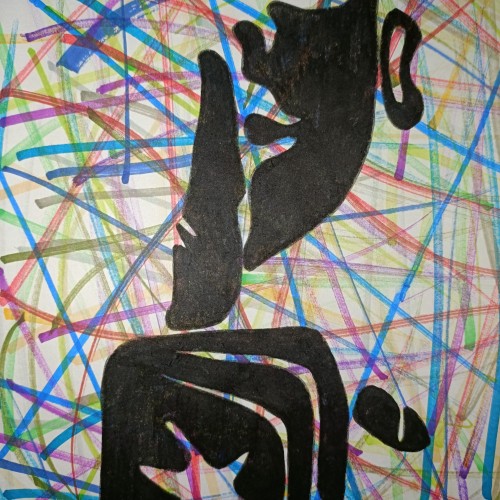
The background tries to represent the noise around in the environment and in the mind. Its a silhouette art which asks the viewer to stay quiet and find escape from noise.
I've been going through my sketches, both completed and incomplete, and found a drawing of a young Sumatran Tiger that I began working on around two years ago, but never completed. I'm actually relieved that I didn't draw it earlier, as it has allowed me to gain more experience in illustrating this stunning creature, which is unfortunately a species at risk of extinction.
A few facts about the Sumatran Tigers...
The Sumatran tiger Panthera tigris sumatrae*, the smallest tiger subspecies, is critically endangered and stands as the final surviving species of island tigers. Poaching poses a significant danger to Sumatran tigers as hunters target them for their skin, bones, and canines. Additionally, habitat loss caused by oil palm, coffee, and acacia plantations, further endangers these big cats by reducing their prey availability and pushing them closer to human habitations.
It is estimated that there are fewer than 400 mature individual tigers in Sumatra in isolated pockets of protected land. Three of the protected areas are classified as UNESCO World Heritage Sites but all are in danger of losing this status due to threats from poaching, illegal logging, agricultural encroachment, and planned road building. It is for these reasons the Sumatran tiger is classified in the most severe IUCN status: Critically endangered.
Description: The Sumatran tiger is the smallest and darkest tiger subspecies and tends to be more bearded and maned than the other subspecies. Male tigers can expect to reach somewhere in the region of 120kg and 8ft from head to tail vs females who average 91kg and 7ft length.
Breeding: Female tigers are sexually mature at about 3 or 4 years of age, and males at about 4 to 5 years. Mating may occur any time during the year, but it most frequently takes place from November to April. The information was obtained from conservewildcats.org. Thank you.
#indonesia #criticallyendangered #sumatrantiger #amateurartist #tigerdrawing #tigersketch #tigercub #sketchadayapp #october2024
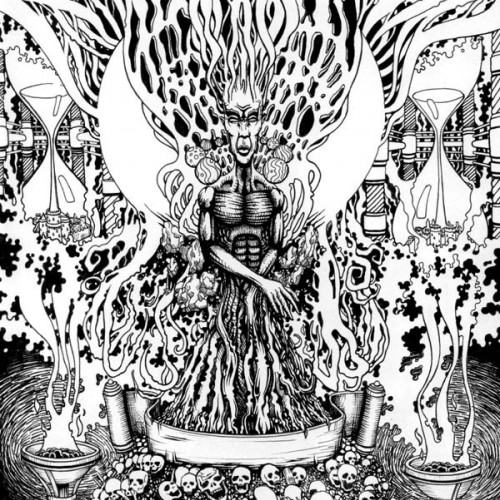
This striking black and white ink drawing personifies Time as a dark entity surrounded by flying souls. A half moon hovers between two hourglasses, symbolizing the passage of time, while smoke billows from two pit fires below. The scene is grounded by skulls and bones, emphasizing the theme of mortality. The artwork is elegantly framed in a gothic style, enhancing its surreal atmosphere and dark symbolism, inviting viewers to reflect on the inevitability of time and its impact on existence.
Jane Austen (1775–1817)
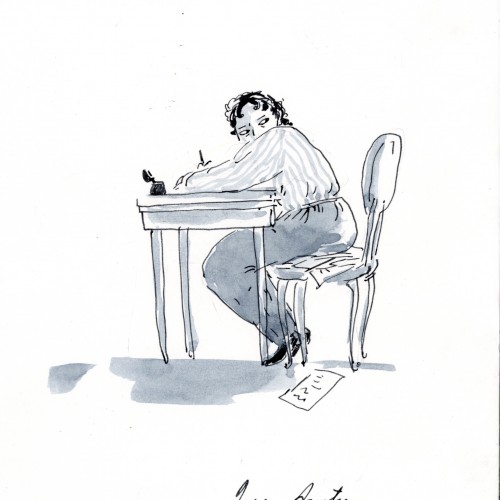
Austen never lived alone and had little expectation of solitude in her daily life. Her final home, a cottage in the village of Chawton, England, was no exception: she lived there with her mother, her sister, a close friend, and three servants, and there was a steady stream of visitors, often unannounced.
...
Austen wrote in the family sitting room, “subject to all kinds of casual interruptions,” her nephew recalled. She was careful that her occupation should not be suspected by servants, or visitors, or any persons beyond her own family party. She wrote upon small sheets of paper which could easily be put away, or covered with a piece of blotting paper. There was, between the front door and the offices, a swing door which creaked when it was opened; but she objected to having this little inconvenience remedied, because it gave her notice when anyone was coming.
“Composition seems to me impossible with a head full of joints of mutton & doses of rhubarb.”
From Daily rituals by Mason Currey
#dailyrituals #inktober #janeAusten @masoncurrey
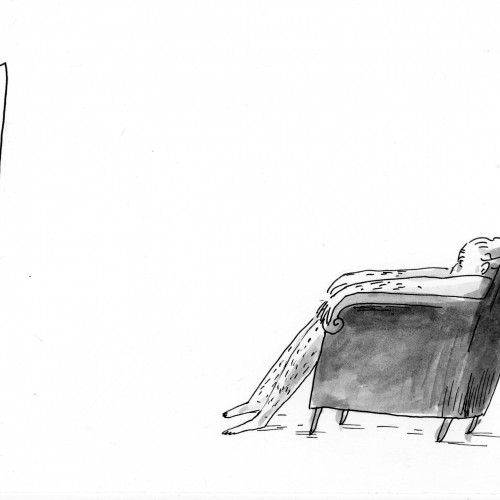
Benjamin Franklin (Part 2)
The plan worked, up to a point. After following the course several times in a row, he found it necessary to go through just one course in a year, and then one every few years. But the virtue of order—“Let all your things have their places; let each part of your business have its time”—appears to have eluded his grasp. Franklin was not naturally inclined to keep his papers and other possessions organized, and he found the effort so vexing that he almost quit in frustration.
This timetable was formulated before Franklin adopted a favorite habit of his later years—his daily “air bath.” At the time, baths in cold water were considered a tonic, but Franklin believed the cold was too much of a shock to the system. He wrote in a letter: I have found it much more agreeable to my constitution to bathe in another element, I mean cold air. With this view I rise early almost every morning, and sit in my chamber without any clothes whatever, half an hour or an hour, according to the season, either reading or writing. This practice is not in the least painful, but on the contrary, agreeable; and if I return to bed afterwards, before I dress myself, as sometimes happens, I make a supplement to my night’s rest, of one or two hours of the most pleasing sleep that can be imagined.
From Daily rituals by Mason Currey
#daulyrituals #inktober #benjaminfranklin @masoncurrey
I was feeling listless about this inktober until I picked up Daily Rituals : How artists work by Mason Currey. I immediately knew that I want to do these portraits for the inktober.
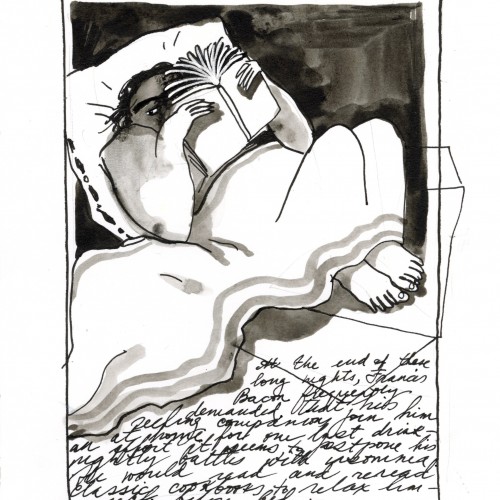
FRANCIS BACON.
At the end of these long nights, Bacon frequently demanded that his reeling companions join him at home for one last drink - an effort, it seems, to postpone his nightly battles with insomnia. Bacon depended on polls to get to sleep, and he would read and reread classic cookbooks to relax himself before bed.
#inktober #portraits #francisBacon
(Gel fineliner on A5 paper) This is a preview drawing before the Inktober2024 challenge starts. Not something I usually take part in, as I don't really need to, but I thought I'd have a bit of fun with it this year.