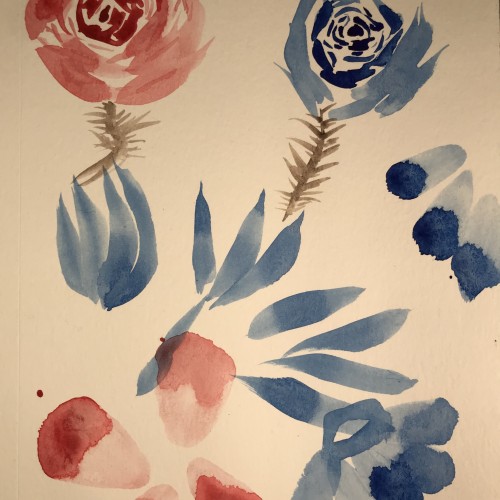
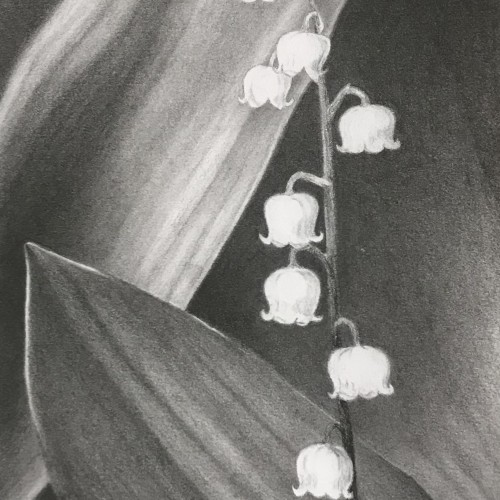
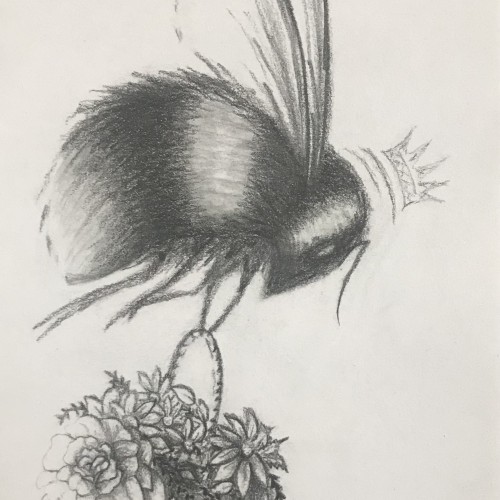
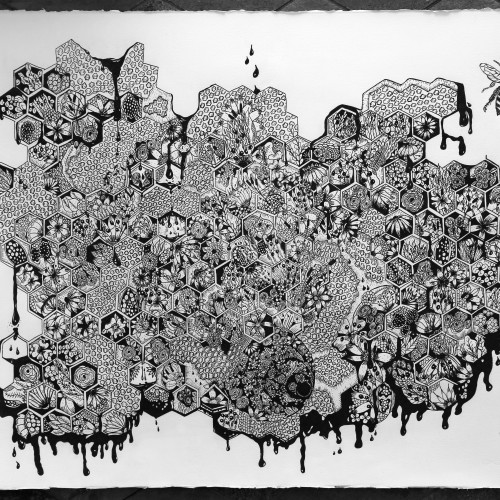
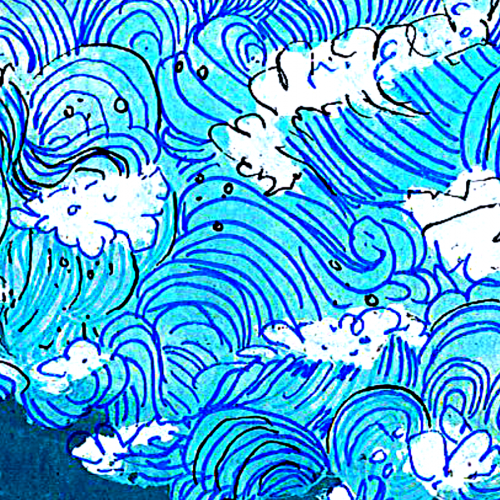
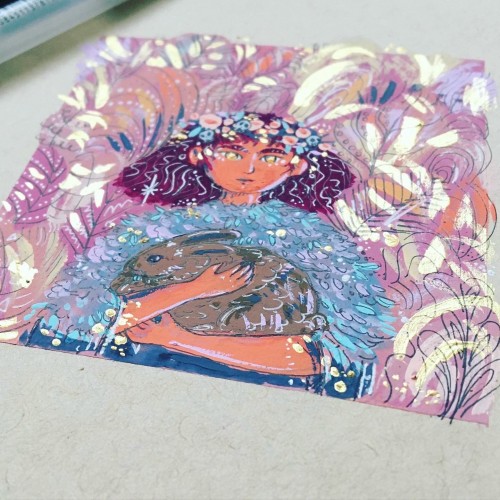
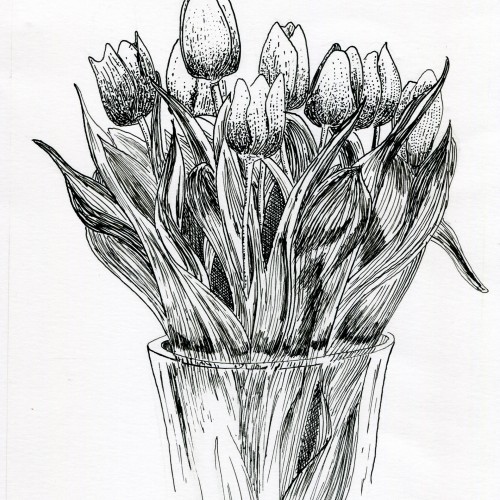
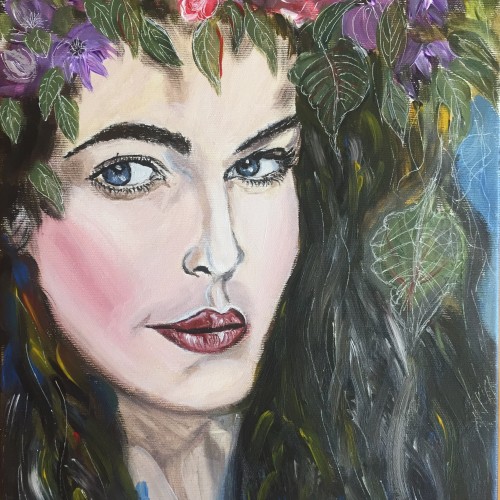
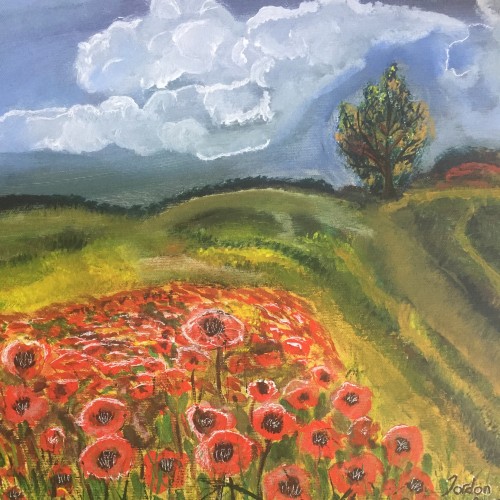
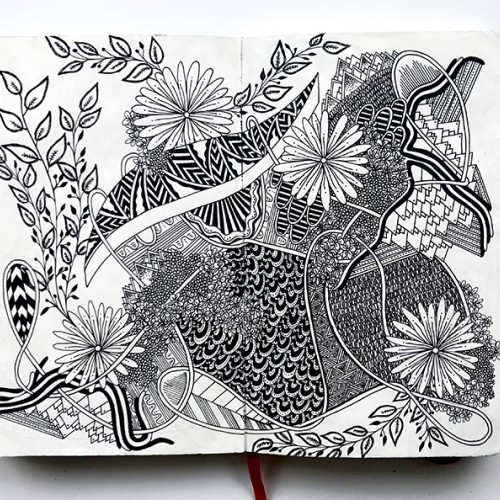
Sensuality, power and fertility - meditative layers and tangles of flowers, weeds, and grasses. A bee emerges, free! Ultimately a positive message of hope!
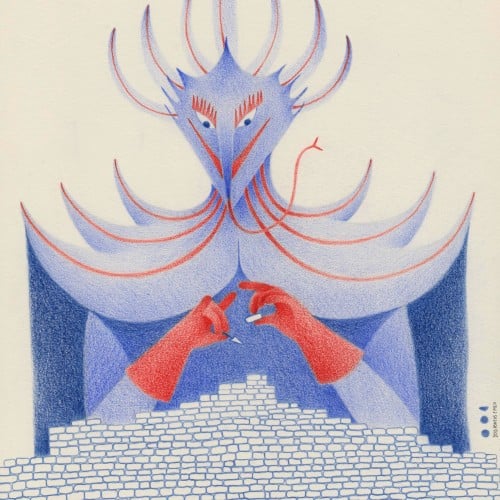
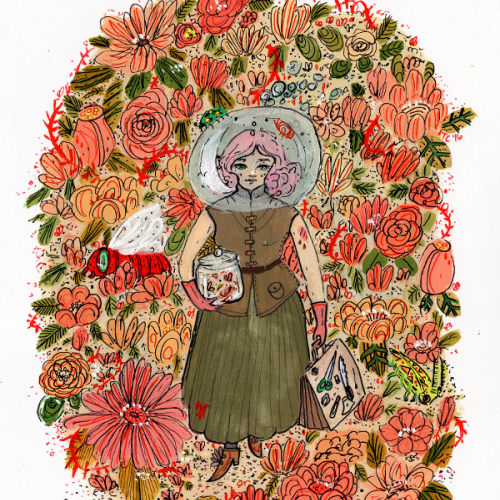
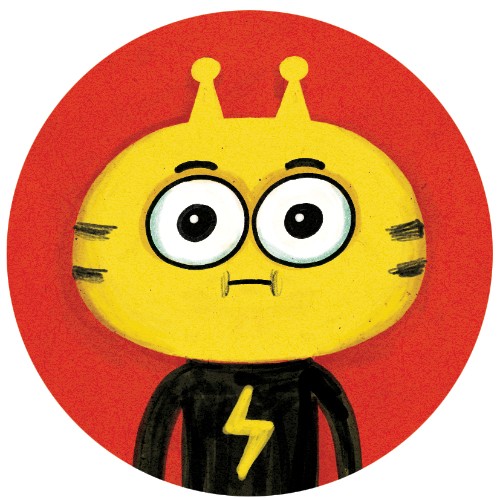
Another one for #transmundanetuesdays, with prompts by Carson Ellis (an older one tho), this is my #glovedandspikeybricklayer!
He looks evil but he's just allergic to non-spikey things.
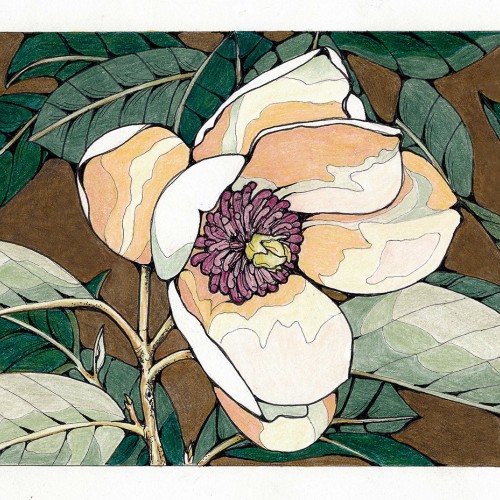
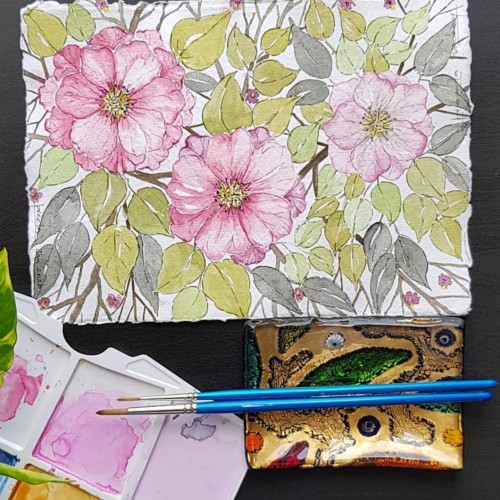
Magnolias are spring harbingers in our garden, as well as our annual ornamental cherry display. Star magnolias are over, tulip magnolias are in full swing, and the occasional Southern magnolia is starting. Perhaps I should have done this with a gouache paint, but I used colored pencils. Oh well. Outlined after with various sizes of Pigma Micron pens.
Our garden: www.edgewoodgarden.com
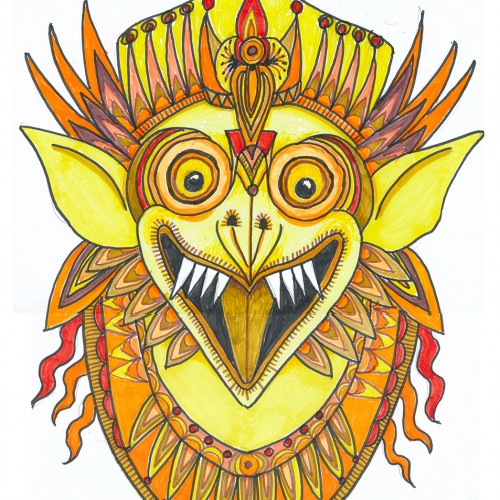
Oh boy, markers (NOT a go-to), least favorite color, and a subject that isn’t on my radar. This was a hard one what with 3 negatives going for it. But, hey, it’s a challenge, right?
Choosing a subject came first….we have a house full of Indonesian masks and sculptures. (My husband studied gamelon music in Indonesia.) Garuda, the “mount” of Vishnu and popular with Balinese artists seemed a good choice, esp. since he can be green, red, yellow or orange.
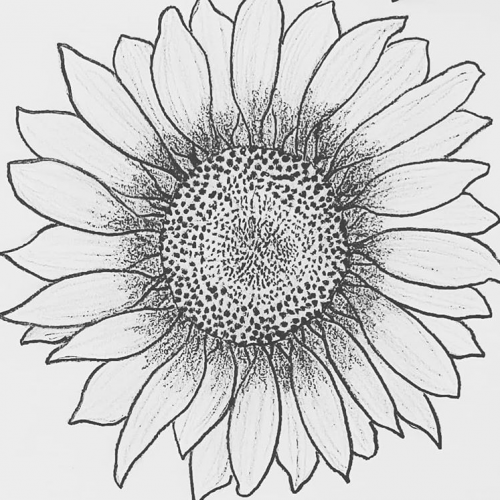
I rarely choose yellow/orange for anything---artwork, décor, clothing...though I do have a soft spot for sunflowers.
First I drew a bunch of images based on one of our wooden Garuda sculptures and then made a simplified marking pen outline and colored it with markers.
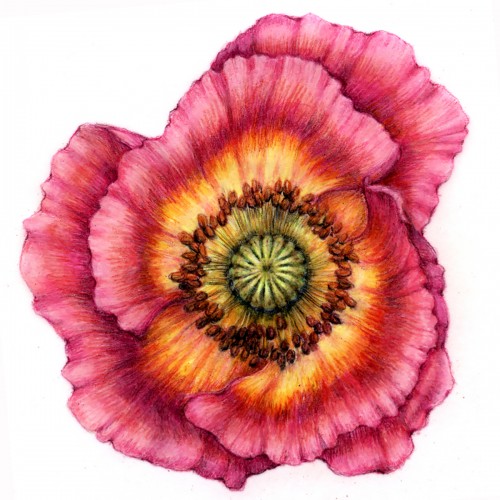
Annuals are encouraged to seed in the less formal beds in our large garden.
We tend them, photograph them, and I draw and paint them. This is a colored pencil (Prismacolor) drawing of one of our seedling poppies. It was an odd form. Not exactly a single, nor a double and lacked the common cross markings in the throat.
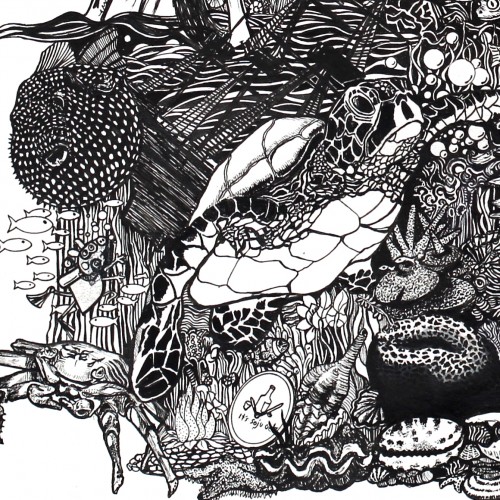
Sea Turtle...and Peppa Pig. This drawing was a gift for a friend of mine who loves Peppa. When I gave it to her, she saw Peppa after looking for only about three seconds. I couldn't believe it.
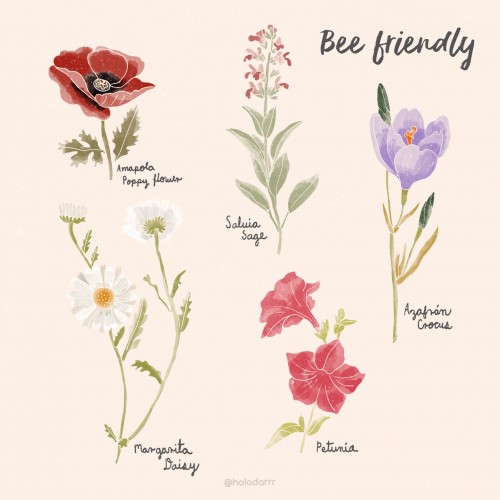
Bee friendly plants you can cultivate, protect or care if you see them anywhere. There are many native flowers, herbs, vegetables and fruit trees that help pollination, the ideal is to grow species free of agrochemicals and pesticides.