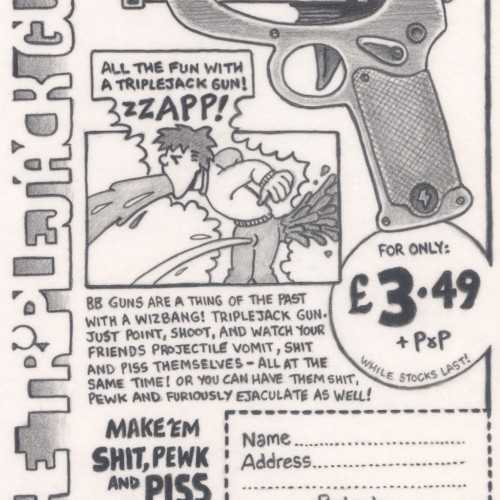
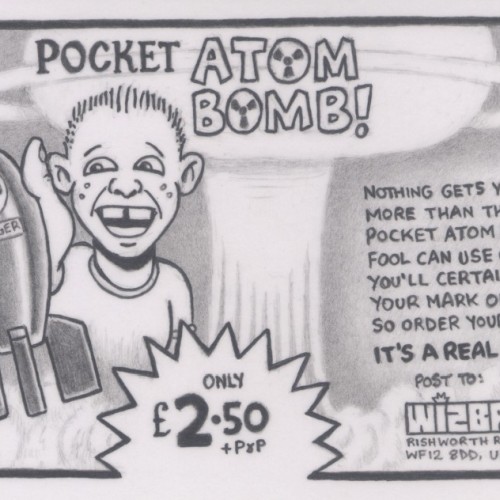
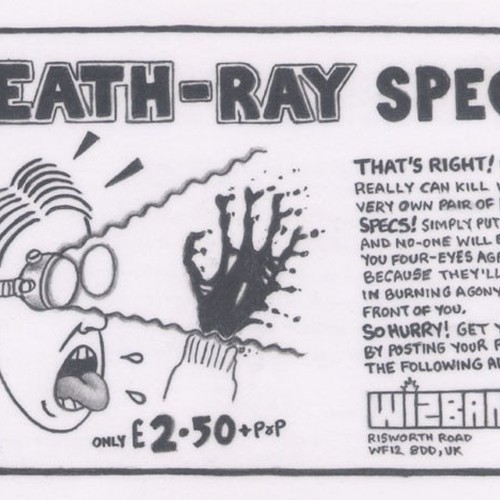
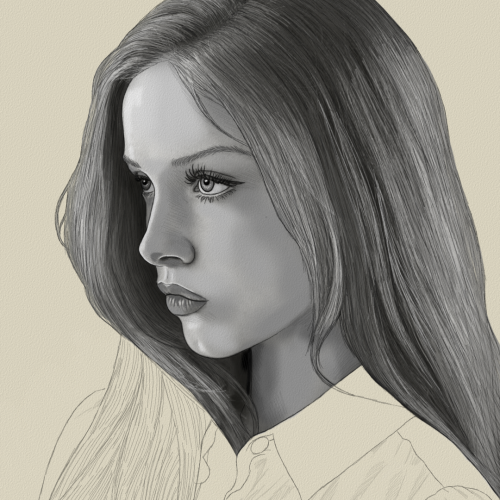
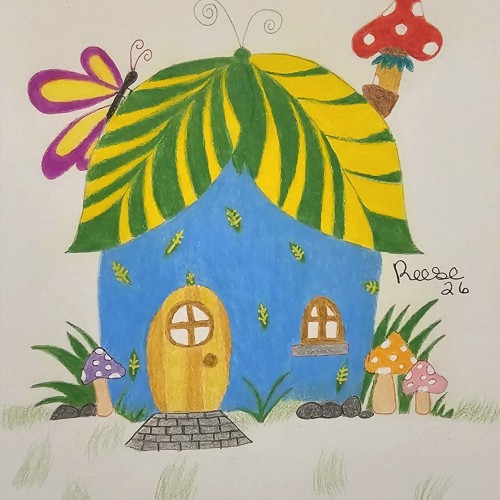
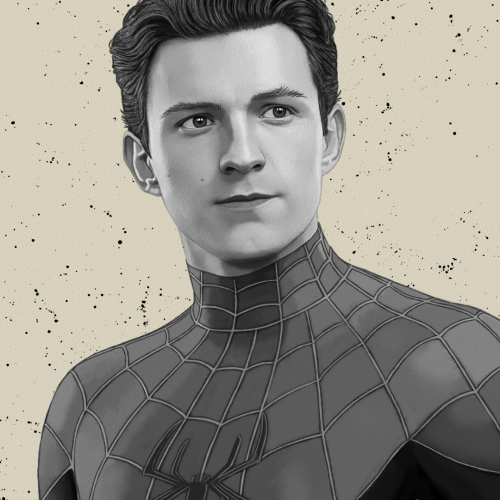
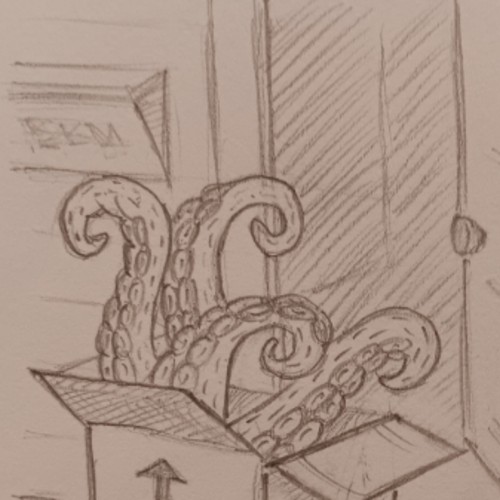
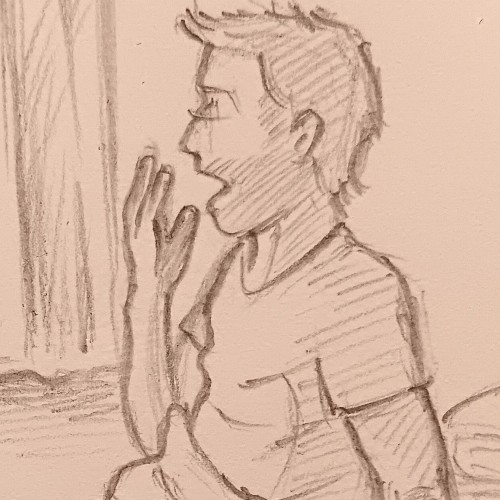
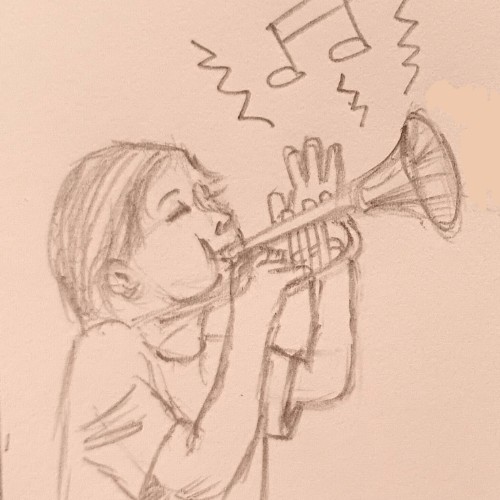
(2B pencil on A6 card) A parody of the type of advert you'd see in the old comic books. What nasty little child wouldn't want something as wonderful as this?
(2B pencil on a 87mm x 139mm postcard) X-ray specs were an iconic mail order item in comics. It was one of the first things that kids bought that introduced them to the world of dubious adverts. I kept the image here simple, like the original advert.
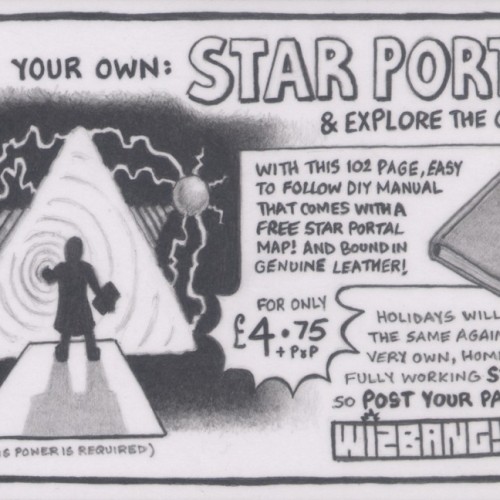
(2B pencil on a 87mm x 139mm postcard) Sometimes, how-to books were sold in old comic book adverts. These ranged from ventriloquism to hypnosis and promised amazing things when, in reality, they were just little booklets. With this artwork, I chose to depict one that would show you how to build something truly wonderful.
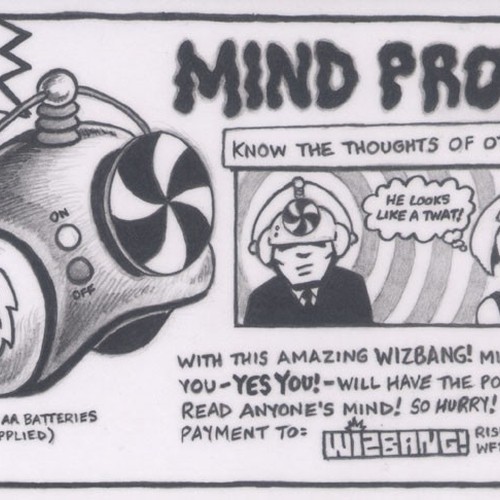
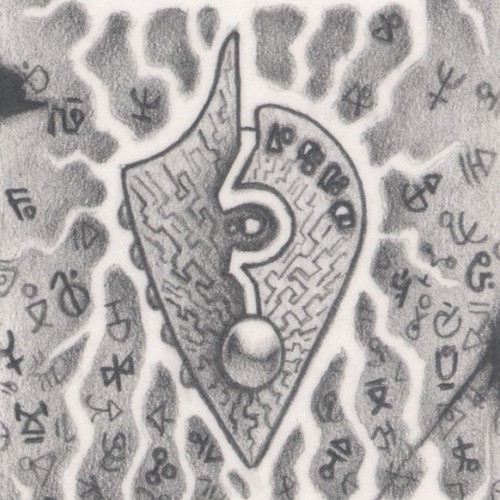
(2B pencil on a 87mm x 139mm postcard) The old comic book adverts used to promise amazing things for cheap prices. Here, I've spoofed that with an advert for a mind probe.
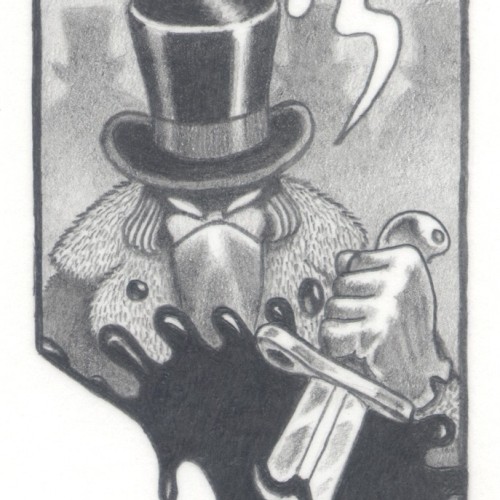
(2B pencil on a 125mm x 75mm notecard) Another juxtaposed artwork that shows an everyday phrase used against a completely out of context comic book frame.
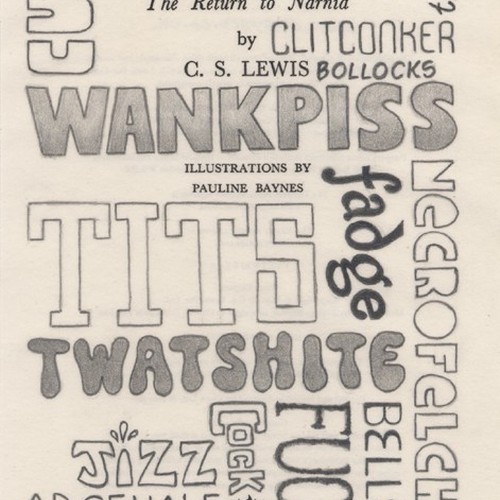
(2B pencil on a 198mm x 124mm book title page) Profanity is a common form of blasphemy. Here, I've used it in a similar way as you'd see fonts used in the old Letraset catalogues. Plus, nobody says "fadge" anymore, and that used to be a good swear-word.
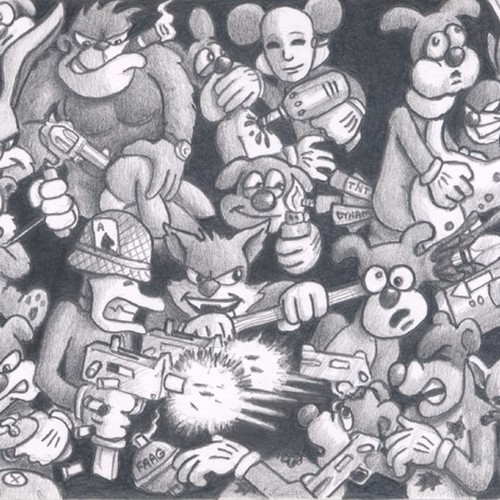
(HB pencil on a 87mm x 139mm postcard) Every leap year day, the residents of toon world go batshit crazy and indulge themselves, because it's the only day when they can really get hurt.
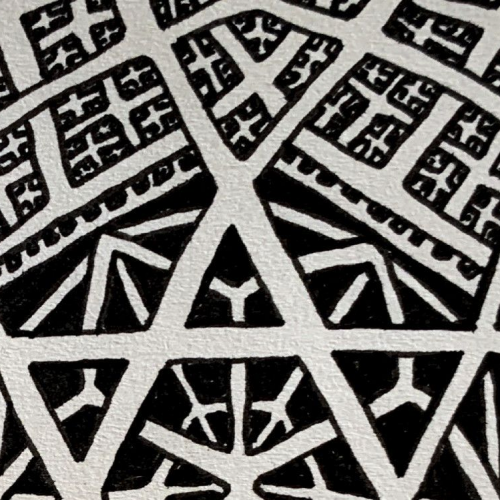
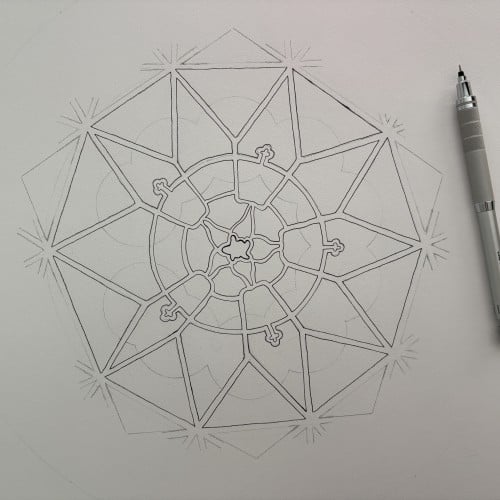
Early days on a new mandala-like shape drawing on 14"x17" paper. A technique I sometimes use for drawings like this is to use pencil, compass, and ruler to get some lines down. Then I freehand over the pencil lines with pen, which gives it more of an organic look. Once I have the empty shapes down, it'll be time to fill *inside* the shapes, connecting the interior parts at the edges for neighboring shapes, which gives the illusion of continuity (and depth) behind the dividing lines. (There's also the option to do the reverse at this point, in which the shapes are left empty inside and the opposite space is filled in; if you search through my drawings you'll see some like this. But more often than not, I prefer the former method.)