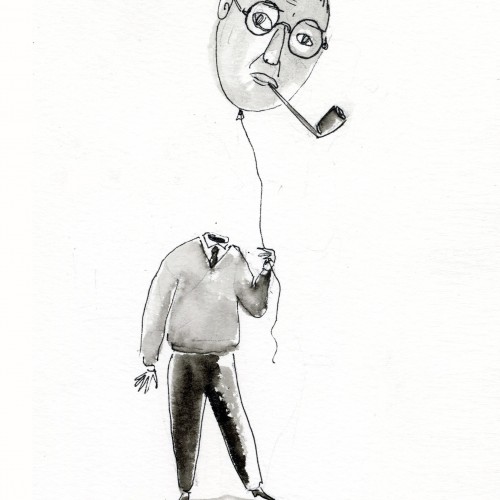
Jean-Paul Sartre (1905–1980)
By the 1950s, too much work on too little sleep—with too much wine and cigarettes—had left Sartre exhausted and on the verge of collapse. Rather than slow down, however, he turned to Corydrane, a mix of amphetamine and aspirin then fashionable among Parisian students, intellectuals, and artists (and legal in France until 1971, when it was declared toxic and taken off the market). The prescribed dose was one or two tablets in the morning and at noon. Sartre took twenty a day, beginning with his morning coffee and slowly chewing one pill after another as he worked. For each tablet, he could produce a page or two of his second major philosophical work, The Critique of Dialectical Reason.
The biographer Annie Cohen-Solal reports, “His diet over a period of twenty-four hours included two packs of cigarettes and several pipes stuffed with black tobacco, more than a quart of alcohol—wine, beer, vodka, whisky, and so on—two hundred milligrams of amphetamines, fifteen grams of aspirin, several grams of barbiturates, plus coffee, tea, rich meals.”
- From Daily Rituals: How Artists Work by Mason Currey
#dailyrituals #inktober #jeanPaulSartre @masoncurrey
Trying to meld the moody tones of pulp noir with the playful romanticism of 1950s lifestyle illustration. Inspired by the fairground scene from the 1942 Veronica Lake classic, This Gun for Hire.
Graphite drawing of Ruth Ellis. She was the last woman in Britain to be hanged, in the 1950s. British justice was no where near as sophisticated then, as it is now. I am convinced that the overwhelming mitigating circumstances would have saved her life. Her confession was never examined or questioned. Today she would have received a manslaughter charge at most. Such a tragedy.
18
1
2
Add Doodle Addicts to your home screen to not miss an update!