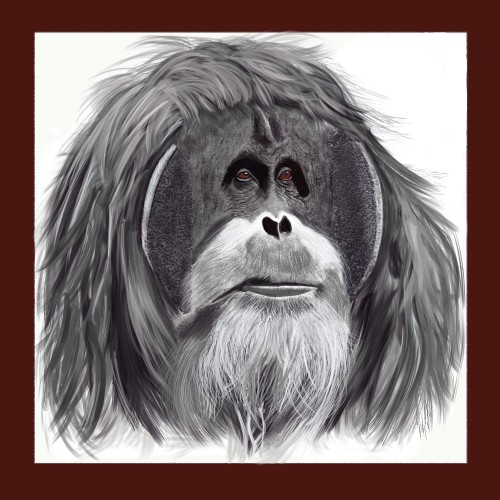
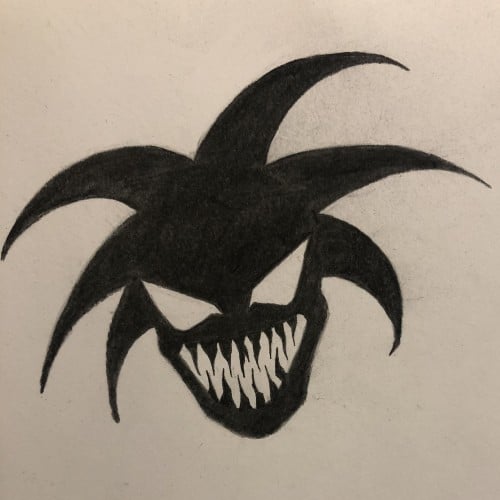
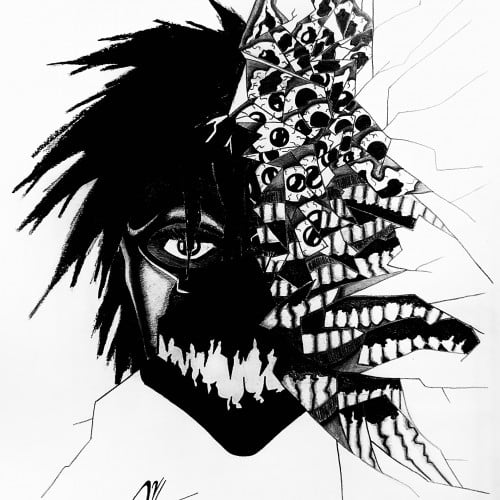
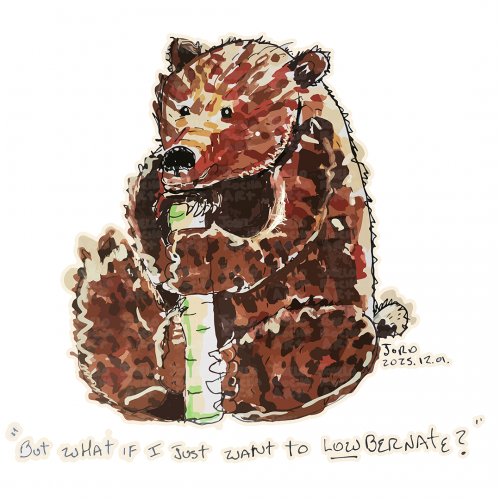
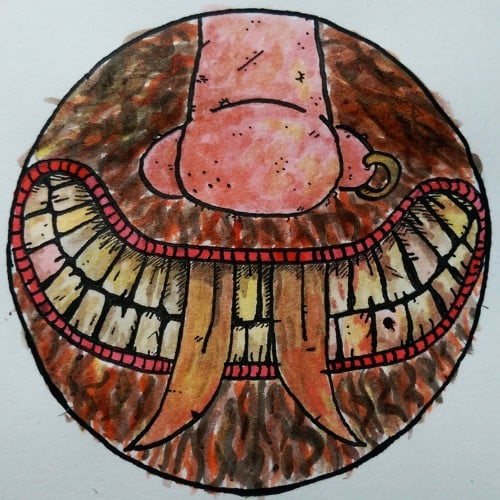
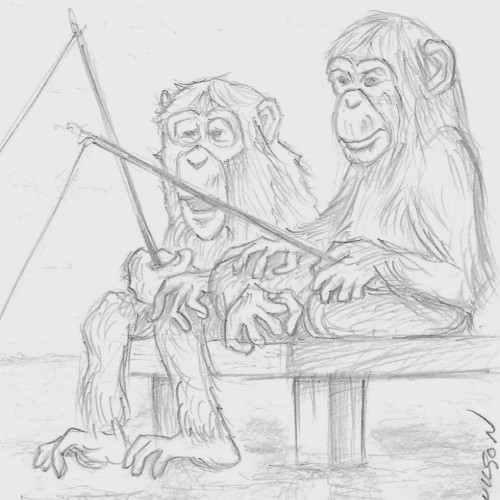
Orangutan sketch (Original Dimensions: 3000x3000px x 300DPI) to try out my new iPad Air M2 13 using both iArtbook Pro and Artstudio Pro artist apps. This iPad is awesome for power and quickness.
Here are three main facts about adult male orangutans:
1. **Physical Characteristics**: Adult male orangutans are significantly larger than females, with an average height of about 1.2-1.5 meters (4-5 feet) and weighing around 50-100 kg (110-220 lbs). They develop distinctive physical features such as large cheek flanges (fleshy pads) and a throat pouch, which they use to produce long calls to communicate across the dense forests.
2. **Solitary Lifestyle**: Unlike many primates, male orangutans are solitary creatures. They spend most of their lives alone, except during brief periods of mating. This solitary behaviour reduces competition for food and other resources. The males will range widely and have large territories that often overlap with the ranges of several females.
3. **Long Call**: Adult male orangutans have a unique and powerful long call that can be heard over great distances. This call is used to establish territory and attract females. The call consists of a series of roars, grunts, and bellows, and it serves to warn other males of their presence, helping to maintain social hierarchy and reduce conflicts.
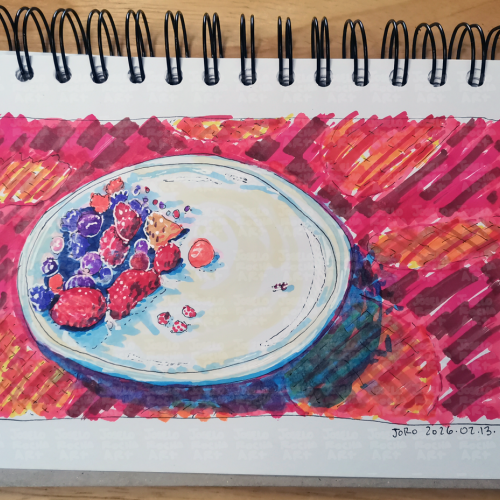
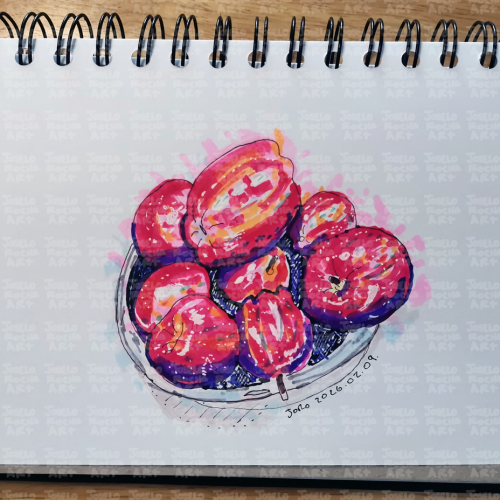
A vibrant fruit bowl filled with a variety of colorful mix of red fruits like strawberries, blueberries, and raspberries. The bright, bold colors create a striking contrast against the background.
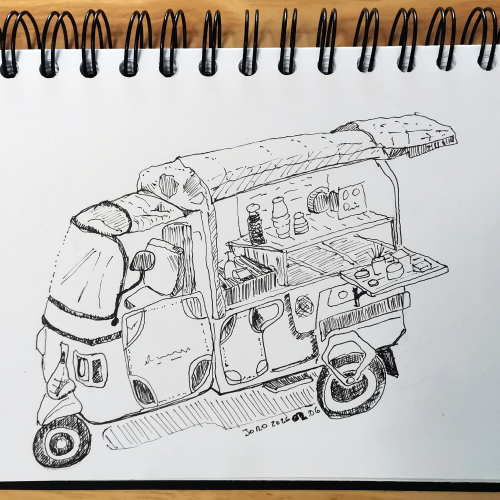
A detailed pen-and-ink exploration of a modified auto-rickshaw turned into a mobile coffee stall. This design captures the charm of urban travel and the global love for street food culture, rendered in a raw, sketchbook style.
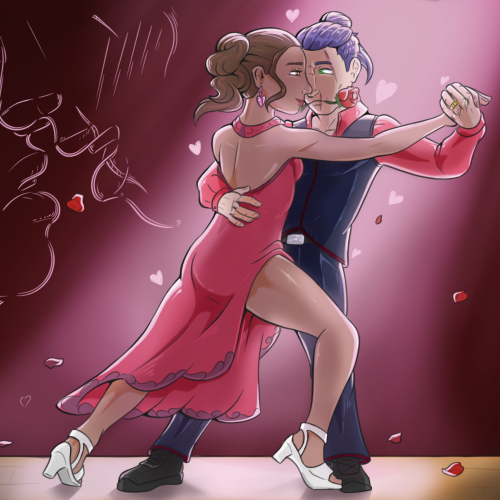
A tango dance between two characters of mine. I really like these two and always love drawing them together. I have several more of them together and plan to do more in the future.
Ps i hadn't drawn Cleetus from flamingo on their own in an while was his commission pt 3 i drew 1 month ago yet again in the sneezy art era aka last time i drew him sneezy art era and Due is busy drawing other YouTuber flamingo fanarts lolz
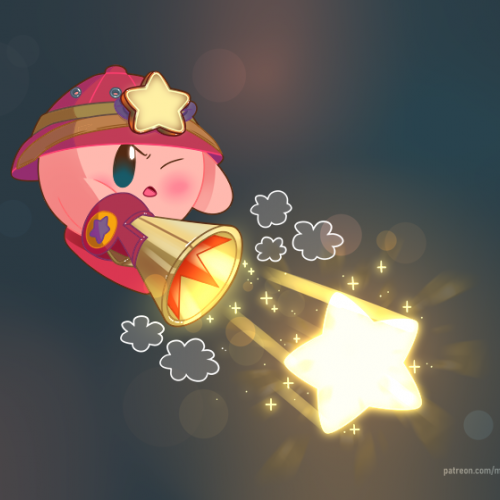
このデザインは私の Patreon でレター サイズで印刷可能で、価格は 3 ドルです | This design is available on my Patreon in letter size to print for $3 | Este diseño esta disponible en mi Patreon en tamaño carta para imprimir por $3: https://www.patreon.com/posts/renziya-ranger-136543377
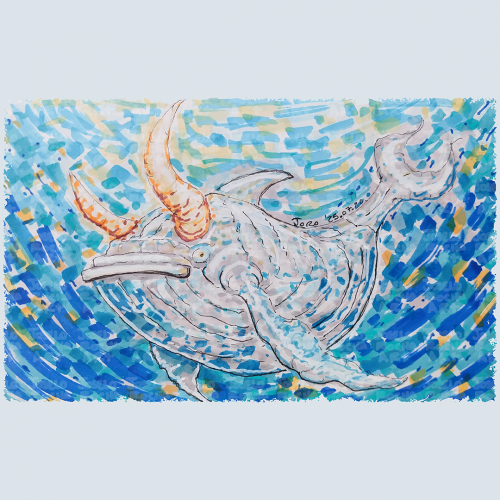
A fantastical bullwhale creature with a mix of whale and bull features glides through a vibrant, swirling, blue and orange hues body of water. The colors blend in a mosaic style, enhancing the creature's mythical presence with a composition that creates a sense of movement and depth, capturing an imaginative underwater scene.
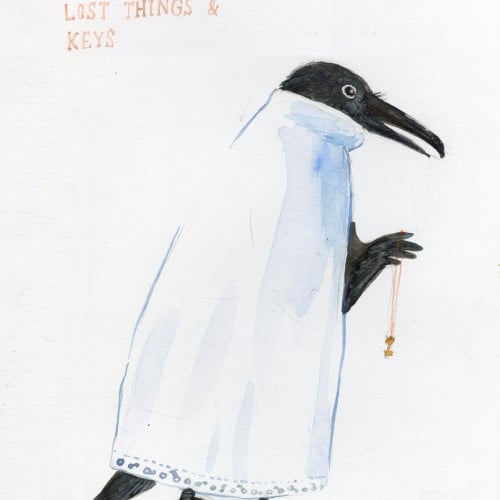
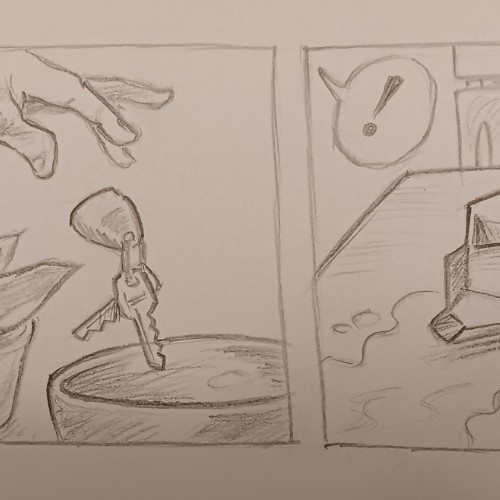
Patron Saint of Lost Keys and Small Things.
Reminded me of this poem by Elizabeth Bishop.
One Art
The art of losing isn’t hard to master;
so many things seem filled with the intent
to be lost that their loss is no disaster.
Lose something every day. Accept the fluster
of lost door keys, the hour badly spent.
The art of losing isn’t hard to master.
Then practice losing farther, losing faster:
places, and names, and where it was you meant
to travel. None of these will bring disaster.
I lost my mother’s watch. And look! my last, or
next-to-last, of three loved houses went.
The art of losing isn’t hard to master.
I lost two cities, lovely ones. And, vaster,
some realms I owned, two rivers, a continent.
I miss them, but it wasn’t a disaster.
—Even losing you (the joking voice, a gesture
I love) I shan’t have lied. It’s evident
the art of losing’s not too hard to master
though it may look like (Write it!) like disaster.
A tiger wearing a teal suit and top hat is depicted against a muted background, giving an elegant and whimsical appearance. The animal's serious expression is emphasized by the formal attire.
P. G. Wodehouse (1881–1975)
Once, when he was beginning a Wooster-Jeeves novel, he experimented with using a Dictaphone. After he had dictated the equivalent of a page, he played it back to check it over. What he heard sounded so terribly unfunny that he immediately turned off the machine and went back to his pad and pencil.
After this, according to the biographer Robert McCrum, “he might snooze a bit in his armchair, have a bath, and do some more work, before the evening cocktail (sherry for her, a lethal martini for him) at six, which they took in the sun parlour, overlooking the garden.
- From Daily Rituals: How Artists Work by Mason Currey
“He had just about enough intelligence to open his mouth when he wanted to eat, but certainly no more.”
― P.G. Wodehouse
#dailyrituals #inktober #PGWodehouse @masoncurrey
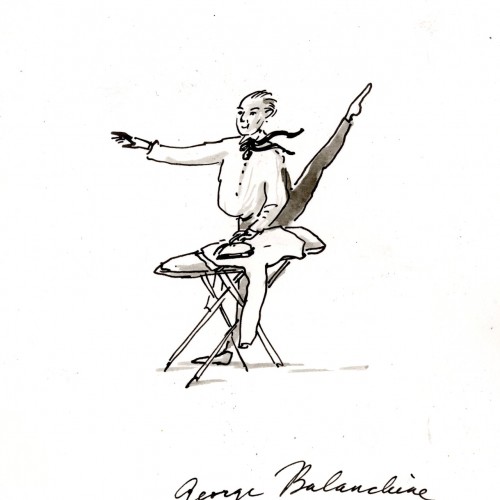
George Balanchine (1904–1983)
Balanchine liked to do his own laundry. “When I’m ironing, that’s when I do most of my work,” he once said. The choreographer rose early, before 6:00 A.M., made a pot of tea, and read a little or played a hand of Russian solitaire while he gathered his thoughts. Then he did his ironing for the day (he did his own washing too, in a portable machine in his Manhattan apartment) and, between 7:30 and 8:00, phoned his longtime assistant for a rundown of the day’s schedule.
- From Daily Rituals: How Artists Work by Mason Currey
“I like to do things certain ways and I disagree with everybody but I don't even want to argue.”
― George Balanchine
#dailyrituals #inktober #balanchine @masoncurrey
A little while back I started doing little triptych cartoons, something I could have fun with and zip off pretty quickly. Then I expanded them to four panels when it felt necessary. Some people think too deeply about my little toons and are confused about what's happening. I just tell them to look at it more simply, and not to overthink it. Like this one.
One of dozens of cartoons I created the last couple of years. A little voice is telling me to get these published in a book. If the voice gets louder, it will happen. In the meantime, I'm brainstorming and filling my sketchbook.
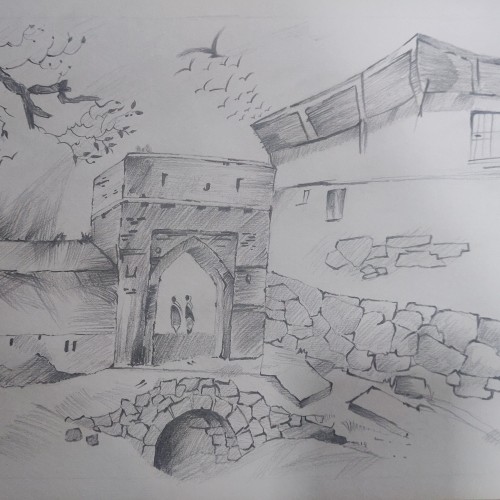
Draped in delicate pencil strokes, this artwork elegantly portrays a historic city gate, standing as a timeless sentry to myriad untold stories. Each shaded contour brings forth the intricate details of the gate's architecture, echoing the urban landscape of a bygone era. The deft use of monochrome evokes a nostalgic journey through the annals of time, where every shadow and highlight adds to the depth and texture of this piece. This mesmerizing blend of artistry and history invites viewers to step into the past and embrace the serene splendor of the city's storied gateway.