There’s a lot of waiting in life.
Waiting in lobbies.
Waiting on answers.
Waiting for braces to tighten, kids to grow, hearts to heal, or prayers to be answered.
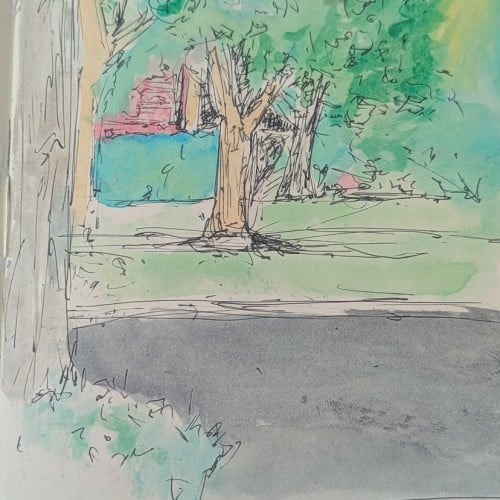
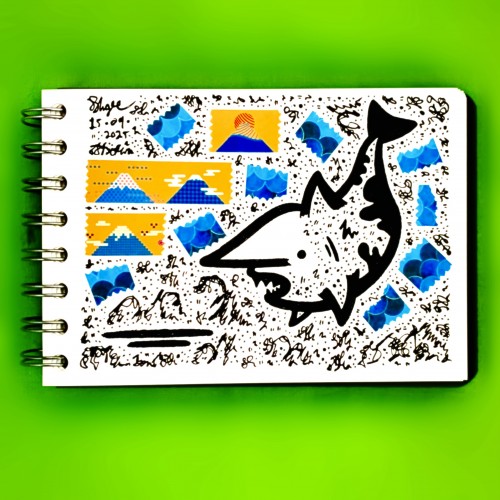
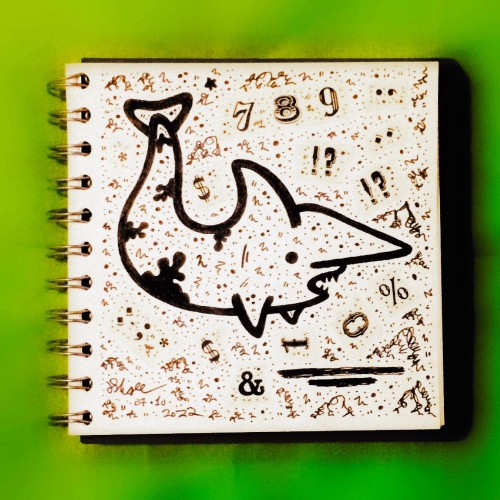
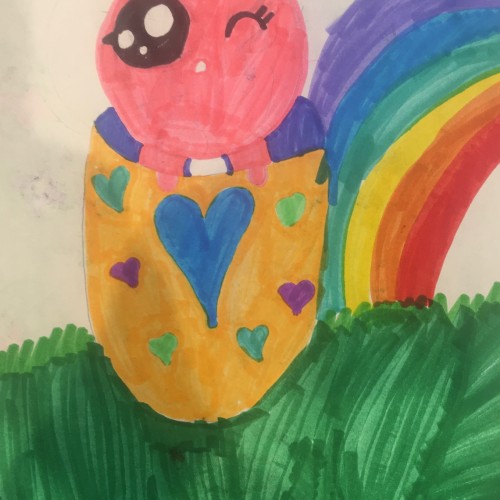
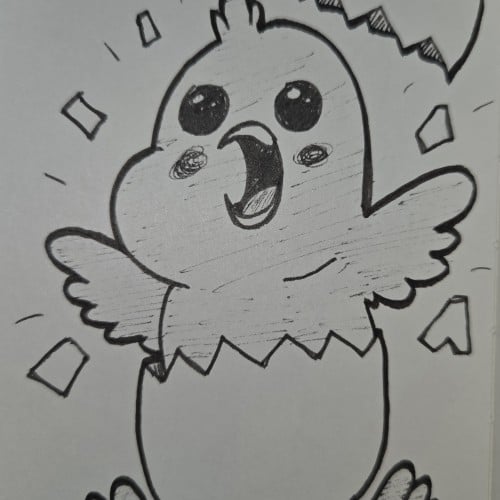
I sat at the orthodontist, watching dollars tighten on tiny wires, and made this sketch. A tree. A house. A street. Color helped the moment breathe.
I remember once hearing a chess master say, “There is no waiting in chess.”
It confused me—wasn’t there always a turn to wait for?
But he explained: “There’s no waiting. Only planning. Plotting. Analyzing. You’re always thinking.”
I once repeated that to a FIDE master. He got mad.
Maybe because waiting and patience aren’t the same thing.
We can be still and deeply active inside.
We can pause without being passive.
And then there’s Lindsey’s voice in the back of my head:
“That sounds like a first-world problem.”
“Speak life.”
“Be thankful. Rejoice always.”
And she’s right.
So here’s to filling waiting time with something creative.
Something kind.
Something that turns a delay into a doorway.
I am an art teacher with a master’s degree—trained by brilliant professors who believed that art could do more than decorate walls. I offer safe spaces for teenagers to grow—nourishing soil where their imaginations can take root.
And yet… I am assigned to hallway duty.
This is compulsory education, after all.
So I sit—posted like a sentinel—watching young lives stream past.
“Get to class,” I say with a smile and a nudge.
The system wants attendance; I’m hungry for presence.
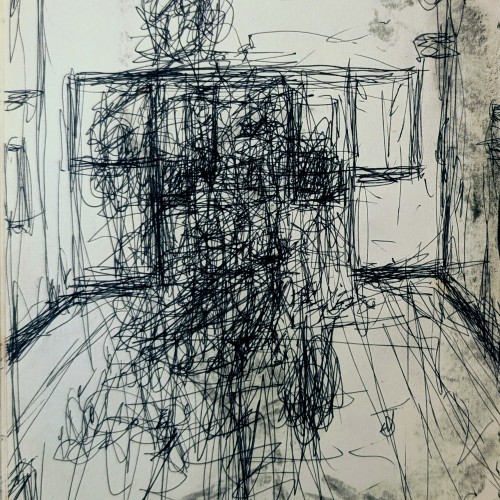
Armed not with a whistle or clipboard, but with a pen—
my scribble’s soft insurgency.
The hallway stretches out like a geometric hymn.
Columns and corners chant structure.
Teenagers swirl past—half-formed galaxies of limbs and laughter—
their orbits chaotic, their gravity pulling time forward.
I begin to draw.
Not their tardiness, but their motion.
A shoulder. A blur of sneakers.
A tilted head chasing freedom.
Feet flickering like seconds.
Each mark a pulse.
Each smudge a breath.
My paper becomes a seismograph of seeing—
trembling gently through the mundane.
This isn’t about making art for a frame or a feed.
It’s about refusing to leak away in the fluorescent hum of obligation.
It’s a quiet mutiny against the clock.
I do this on long car rides, too (passenger side, mind you).
Letting the lines grow wild, jagged, and unapologetic.
Not for polish—
but for presence.
This is how I remember I’m still alive.
Still growing.
Still watching.
Still choosing to see.
Because sometimes mental health looks like
a piece of scrap paper,
a moving pen,
and the simple, sacred act of
marking time with wonder.
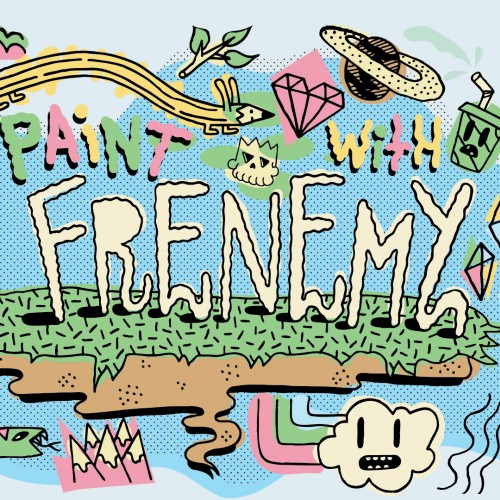
I started a new youtube series called Paint With Frenemy. Channeling Bob Ross in short painting videos. Check it out if you like and please like an subscribe! I'lll be posting new videos every Sunday 9am eastern time. This week video I paint a happy little taco with some stop motion animation mixed into the painting process. Link here https://www.youtube.com/watch?v=7Hfj3xBju_c
Phew! What a fortnight it's been here. Been engaging more in my photography as of late, but the day-job's had me on 'go' mode all Easter quite frankly. Thank the maker for those moments to yourself when you can just.. well, indulge really.
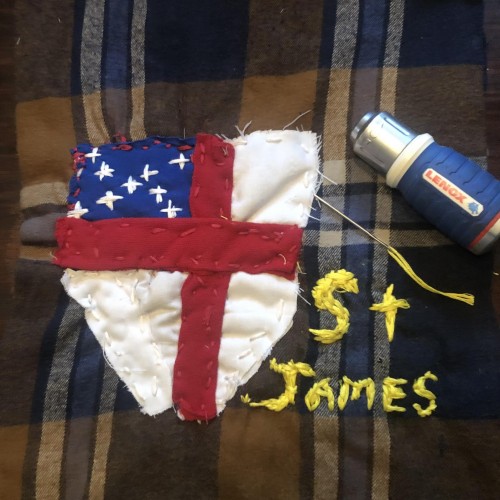
Not a beautiful work of art I know. I hope I paint better. But 70 hours of my life made from materials and techniques utilized by those who crossed our nation in covered wagons. I made this for the Episcopal Church in Prestonsberg. The bishop is retiring and 36 Churches in Eastern Kentucky are all making quilt squares for a quilt for him. The material is doubled so it insulates well.
Imperfect Lines, Honest Presence
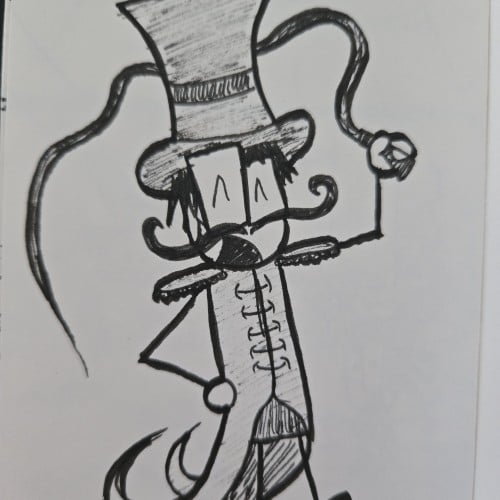
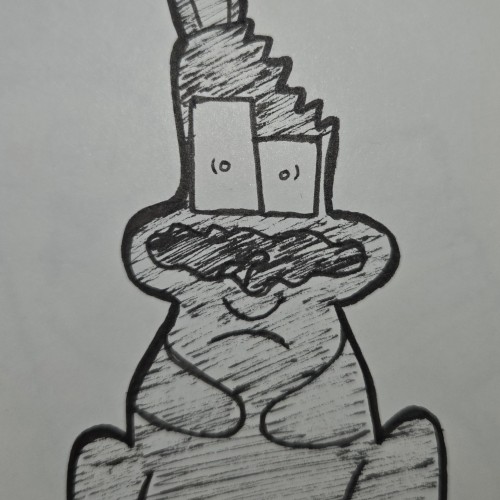
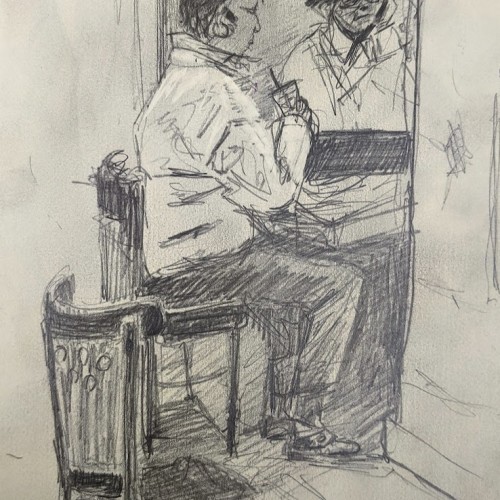
This sketch is not perfect—and that’s exactly why it’s alive. The bold figure, the dissolving hat, the tilted chair: all of it feels unfinished, fleeting, caught in motion. It’s what the Japanese call wabi-sabi—finding beauty in the imperfect, the impermanent, the incomplete.
But there’s something deeper here too. A quick sketch is not just what the eye records. It’s what the soul permits. To draw without fixing, without polishing, is to admit the world will not hold still for us. Life slips past. The lines break off. And yet, somehow, the essence remains.
When you sketch this way, you are not the master of the moment—you are its guest. The pencil does not carve permanence; it pays attention. The act of drawing becomes an act of being present, of honoring what is already vanishing.
So here’s a challenge: grab a pencil and sketch someone near you in sixty seconds. Do not erase. Do not perfect. Let the lines falter. When you finish, ask yourself: What truth did the imperfection reveal?
Perhaps presence itself is the real art.