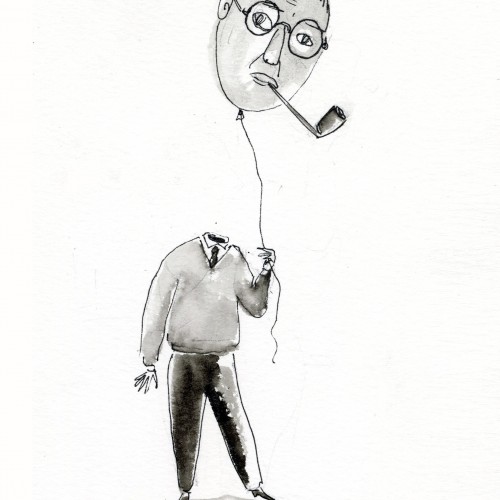
Jean-Paul Sartre (1905–1980)
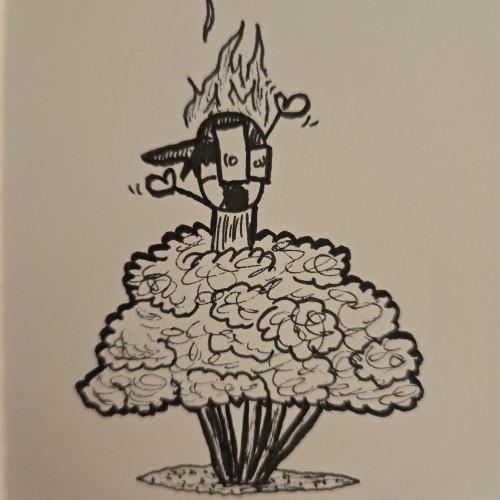
By the 1950s, too much work on too little sleep—with too much wine and cigarettes—had left Sartre exhausted and on the verge of collapse. Rather than slow down, however, he turned to Corydrane, a mix of amphetamine and aspirin then fashionable among Parisian students, intellectuals, and artists (and legal in France until 1971, when it was declared toxic and taken off the market). The prescribed dose was one or two tablets in the morning and at noon. Sartre took twenty a day, beginning with his morning coffee and slowly chewing one pill after another as he worked. For each tablet, he could produce a page or two of his second major philosophical work, The Critique of Dialectical Reason.
The biographer Annie Cohen-Solal reports, “His diet over a period of twenty-four hours included two packs of cigarettes and several pipes stuffed with black tobacco, more than a quart of alcohol—wine, beer, vodka, whisky, and so on—two hundred milligrams of amphetamines, fifteen grams of aspirin, several grams of barbiturates, plus coffee, tea, rich meals.”
- From Daily Rituals: How Artists Work by Mason Currey
#dailyrituals #inktober #jeanPaulSartre @masoncurrey
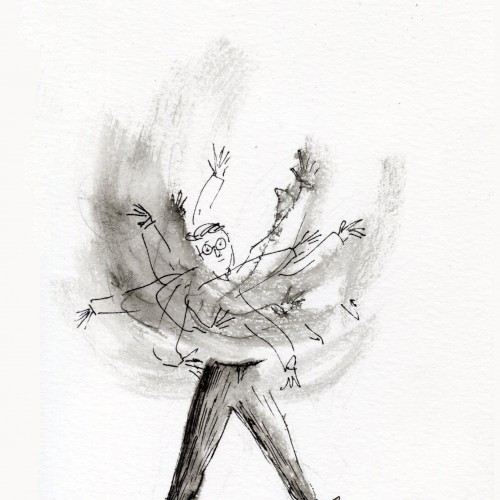
Dmitry Shostakovich (1906–1975)
Shostakovich’s contemporaries do not recall seeing him working, at least not in the traditional sense. The Russian composer was able to conceptualize a new work entirely in his head, and then write it down with extreme rapidity—if uninterrupted, he could average twenty or thirty pages of score a day, making virtually no corrections as he went.
But this feat was apparently preceded by hours or days of mental composition—during which he “appeared to be a man of great inner tensions,” the musicologist Alexei Ikonnikov observed, “with his continually moving, ‘speaking’ hands, which were never at rest.”
Shostakovich himself was afraid that perhaps he worked too fast. “I worry about the lightning speed with which I compose,” he confessed in a letter to a friend. Undoubtedly this is bad. One shouldn’t compose as quickly as I do. Composition is a serious process, and in the words of a ballerina friend of mine, “You can’t keep going at a gallop.” I compose with diabolical speed and can’t stop myself.… It is exhausting, rather unpleasant, and at the end of the day you lack any confidence in the result. But I can’t rid myself of the bad habit.
- From Daily Rituals: How Artists Work by Mason Currey
#dailyrituals #inktober #shostakovich @masoncurrey
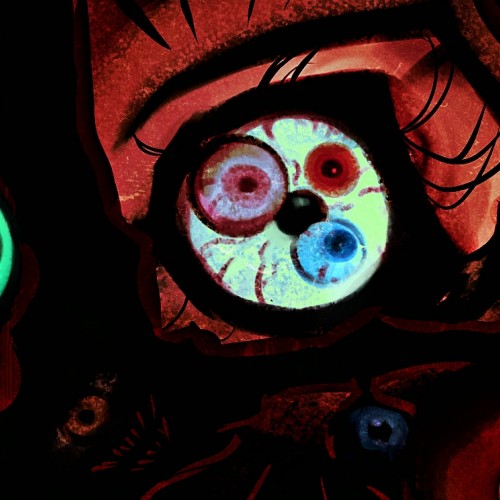
"Like maggots in a dog's carcass, they fill me, my children..."
A cosmic being known as "The Sleeper", "The Ugly", but most often he is proudly called "The Father".
"Like maggots in a dog's carcass, they fill me, my children..."
A cosmic being known as "The Sleeper", "The Ugly", but most often he is proudly called "The Father".
I SWEAR I made him before I knew about Barbatos.
Anyway, The Father sleeps deep beneath Gotham and unwittingly poisons the city and its population with his toxic aura. He is known to his cult as the God of Madness and Chaos. He simply cannot control his influence on those around, which makes him a villain of a tragic fate. I figured his existence would be a good enough explanation for why Gotham is such a rotten piece of society, with very creative supervillains who loves to be so extra and why they not executed horribly for everything they've done. The cult of his worshippers is quite old and includes a huge number of people trying to keep him asleep, because if he wakes up and gets out of his prison, it will be the end of the city, and maybe not only the city...
I should point out: he's not actually a god, he's an alien, and he's not the embodiment of "chaos and madness" - he's a cosmic horror, most likely mentally ill and therefore his aura is toxic. He didn't create the villains or Batman, but his aura affected the environment in which they were created.
This one started off bad and ended good. It was quick sketch that I wasn't really happy with. I decided to keep going and experiment. I was able to let go and draw without thinking and caring as much. I usually struggle with overthinking and perfectionism, so this one felt like a win for me.
The fabric was of elegant silk and velvet, but the skin underneath the fabric continued to become irritated. Sebastian was unable to be still due to such annoyance that plagued him.
Lets just say, he was looking like a fool.
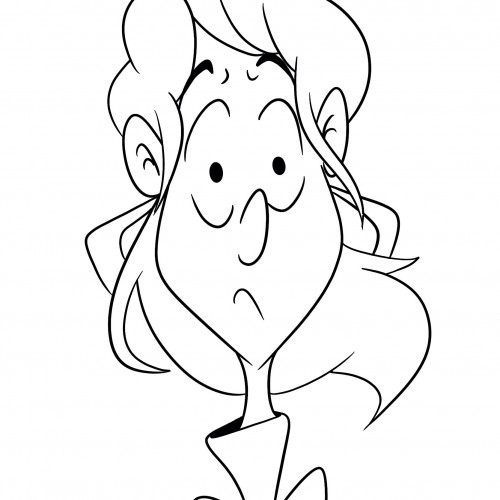
This is my boy Sebastian. He is a collaboration of Ichabod Crane and Dracula, he was just born today. I have a least a few pages full of his sketches.
Type: Vampire
-Hopeless Romantic
-Comfortable within his castle
-Kind
-Can be easily scared, but when it comes to those he cares about will fight for.
-He is VERY clumsy
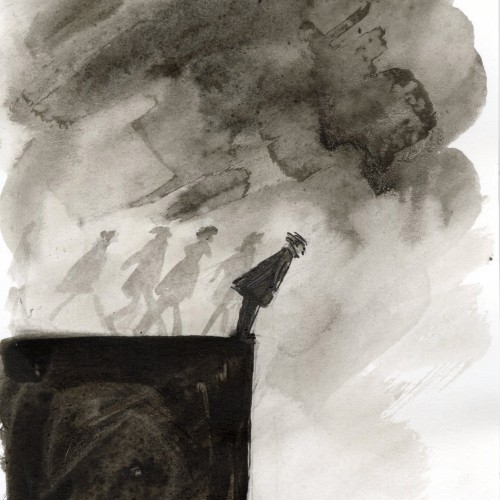
Samuel Beckett (1906–1989)
On a late-night walk near Dublin harbor, Beckett found himself standing on the end of a pier in the midst of a winter storm. Amid the howling wind and churning water, he suddenly realized that the “dark he had struggled to keep under” in his life—and in his writing, which had until then failed to find an audience or meet his own aspirations—should, in fact, be the source of his creative inspiration.
“I shall always be depressed,” Beckett concluded, “but what comforts me is the realization that I can now accept this dark side as the commanding side of my personality. In accepting it, I will make it work for me.”
- From Daily Rituals: How Artists Work by Mason Currey
#dailyrituals #inktober #samuelbeckett @masoncurrey
Teddy Bear's Change of Seasons - Sophie's Christmas included!
Is beautifully written and illustrated, Teddy Bear’s Change of Seasons includes four charming stories, wonderfully rolled into one children’s novel.
Teddy Bear and his friends create magical ways to explore and learn about the snow-white, wonderful world they live in, which changes from summer to autumn and into an unforgettable Christmas.
Teddy’s journey of self-discovery through four seasons, Christmas included, begins in a magnificent old-growth forest, but Teddy is stuck inside a dark and lonely place.
His dreams look far away and out of reach, until Teddy rescues a small mouse, who is desperate for help.
From this one act of kindness, Teddy's life changes in ways he never imagined, bringing him close friends, a new loving family and the kind of challenges and adventures other teddies have never encountered before.
This is a dream of a book, the perfect snuggle-down bedtime story, accompanied by hot, sleepy cocoa.