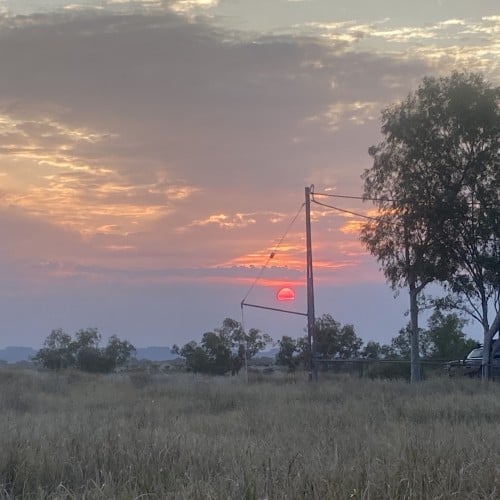
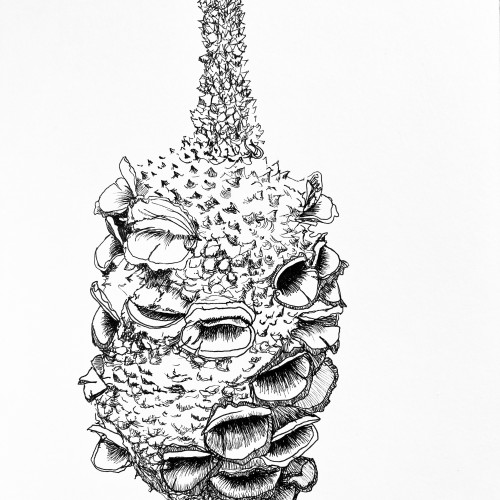
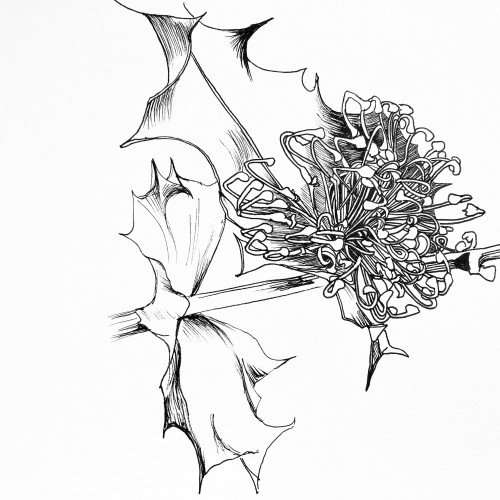
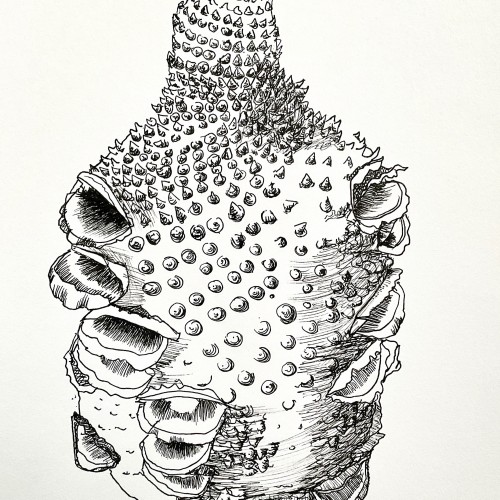
Drawing of leaves and nuts from the Marri tree, found in the Southwest region of Western Australia. This majority of trees that surround my property are the Marri from the Myrtaceae family is endemic to this area. They grow upwards of 40 metres and are a favourite food to the protected Red-tailed Black Cockatoo.
I still haven’t got round to watching the second Joker film yet, but if the reviews I’ve read are true then this random verse I scribbled down to accompany my drawing checks out!
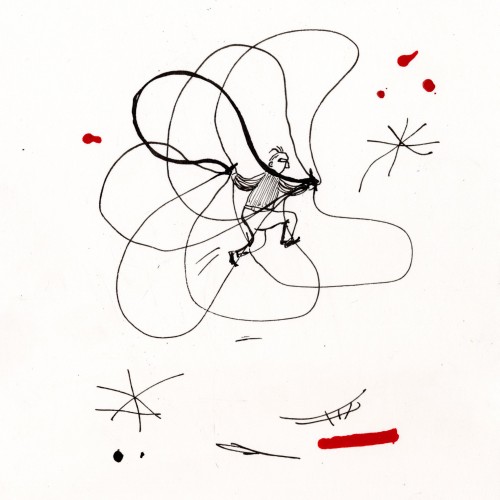
Joan Miró (1893-1983)
Miró always maintained a rigidly inflexible daily routine—both because he disliked being distracted from his work, and because he feared slipping back into the severe depression that had afflicted him as a young man, before he discovered painting. To help prevent a relapse, his routine always included vigorous exercise—boxing in Paris; jumping rope and Swedish gymnastics at a Barcelona gym; and running on the beach and swimming at Mont-roig, a seaside village where his family owned a farmhouse.
Miró hated for this routine to be interrupted by social or cultural events. As he told an American journalist, “Merde! I absolutely detest all openings and parties! They’re commercial, political, and everybody talks too much. They get on my tits!”
From Daily Rituals: How Artists Work by Mason Currey
Initiate of the Order of the Saints of the Scrapyard. All members of the order are entitled to the scrap of the mechs they fell (with the pieces they decline to use or take with them being tithed). To join the ranks proper, an initiate must fell an enemy pilot and bring their mech to heel (often by detonating the cockpit and going from there)). Initiates are given little more than a fusion engine (that may double as a shaped charge (or a death sentence depending on their luck)), a kinetic energy recycler (and shield for it to power), a small pile of scraps to build the rest of their sled, and a book of prayers for the scrapyard saints. Most will not graduate their initiation, ending their short stint as little more than ash on the breeze.
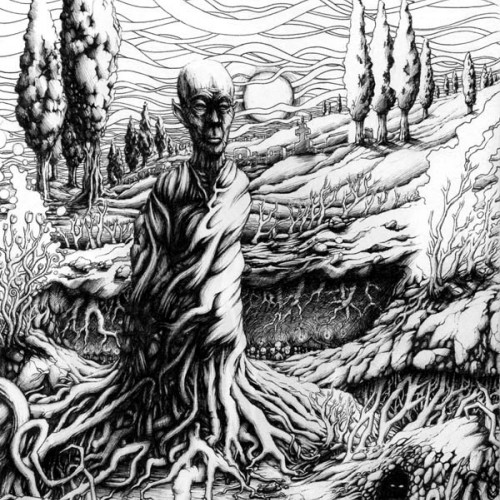
This captivating ink drawing features a fantasy character standing still, deeply rooted to the earth and seamlessly merged with nature. Surrounded by a complex web of trees and plants, the figure embodies the essence of the natural world. In the background, a mesmerizing sunset casts a warm glow over abstract waves of clouds, creating a harmonious blend of light and shadow. This artwork symbolizes the profound connection between humanity and the environment, inviting viewers to reflect on the beauty of nature.
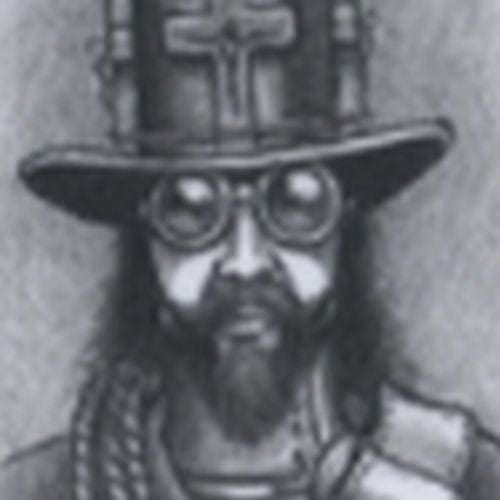
This black and white ink drawing portrays an aged man with a beard lost in deep contemplation within a futuristic spaceship setting. The subtle hints of sadness on his face are contrasted against the vastness of space, where the Milky Way is barely visible in the background. The artwork evokes feelings of isolation and reflection, inviting viewers to ponder the human experience amidst the cosmos.
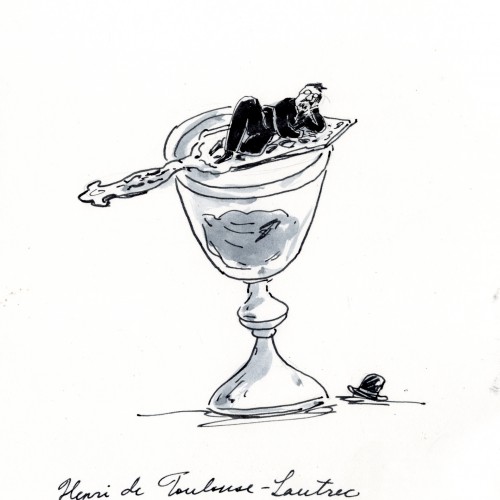
Henri de Toulouse-Lautrec (1864-1901)
Toulouse-Lautrec drank constantly and slept little. After a long night of drawing and binge-drinking, he would often wake early to print lithographs, then head to a café for lunch and several glasses of wine. Returning to his studio, he would take a nap to sleep off the wine, then paint until the late afternoon, when it was time for aperitifs.
(One of his inventions was the Maiden Blush, a combination of absinthe, mandarin, bitters, red wine, and champagne. He wanted the sensation, he said, of “a peacock’s tail in the mouth.”)
From Daily rituals by Mason Currey
#dailyrituals #inktober #henriToulouseLautrec @masoncurrey
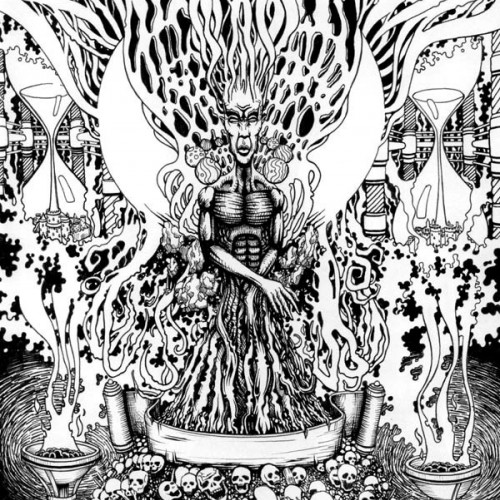
This striking black and white ink drawing personifies Time as a dark entity surrounded by flying souls. A half moon hovers between two hourglasses, symbolizing the passage of time, while smoke billows from two pit fires below. The scene is grounded by skulls and bones, emphasizing the theme of mortality. The artwork is elegantly framed in a gothic style, enhancing its surreal atmosphere and dark symbolism, inviting viewers to reflect on the inevitability of time and its impact on existence.
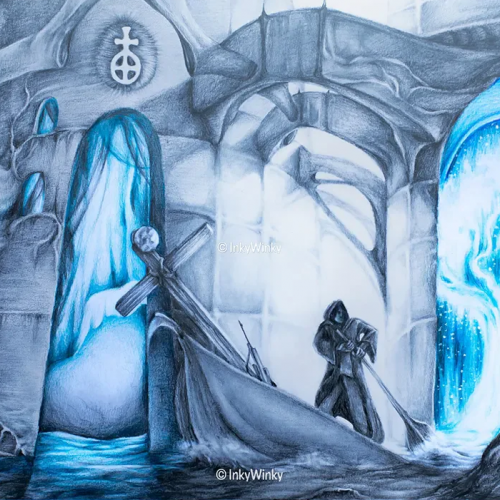
Journey presents a surrealist setting where a man is rowing his boat through a wondrous landscape, surrounded by buildings and stones with strange symbols and runes. A bright heavenly light illuminates the traveller's origin while a stark contrast is made with the vibrant blue light, from behind the walls, of this mysterious sunken building. This artwork is for sale on inkywinky.com.au
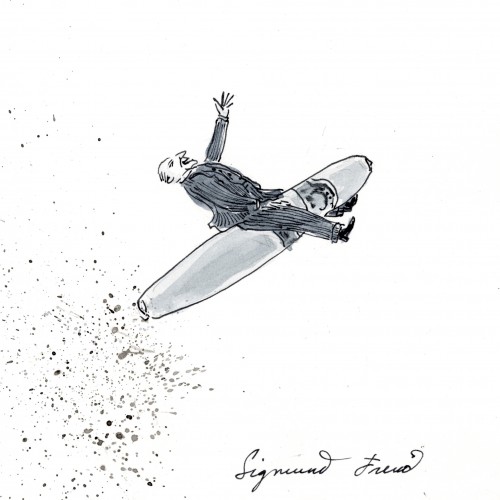
Sigmund Freud (1856–1939)
“I cannot imagine life without work as really comfortable,” Freud wrote to a friend in 1910. With his wife, Martha, to efficiently manage the household—she laid out Freud’s clothes, chose his handkerchiefs, and even put toothpaste on his toothbrush—the founder of psychoanalysis was able to maintain a single-minded devotion to his work throughout his long career.
Freud’s long workdays were mitigated by two luxuries. First, there were his beloved cigars, which he smoked continually, going through as many as twenty a day from his mid-twenties until near the end of his life, despite several warnings from doctors and the increasingly dire health problems that dogged him throughout his later years. (When his seventeen-year-old nephew once refused a cigarette, Freud told him,
From Daily rituals by Mason Currey
#dailyrituals #inktober #sigmundFreud @masoncurrey
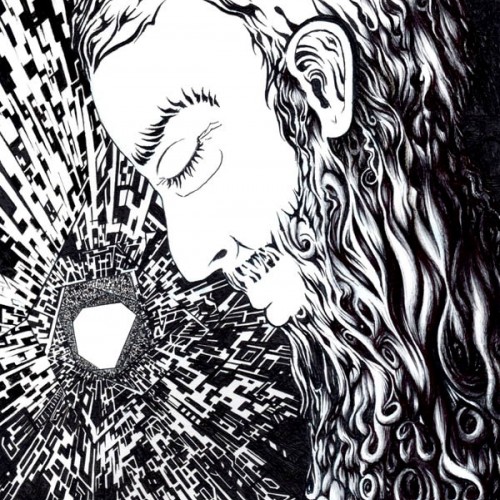
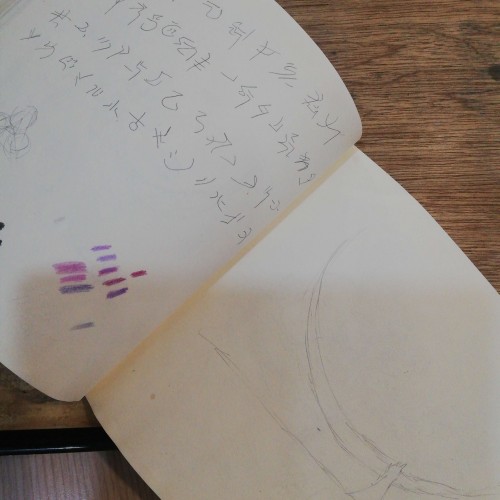
An abstract manifestation of my mind undergoing an "unblocking" to recover the spring of creativity. Putting it in more concrete and psychological terms, a projection of illegible thought processess that free mental binds that have been plagueing my mind for the past year or two.
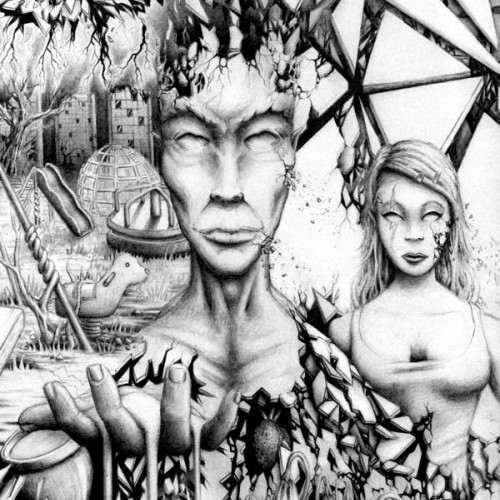
This poignant black and white pencil and ink drawing captures the essence of a dark, broken man with sand slipping through his fingers, symbolizing the passage of time and lost hopes. A hole in his chest reveals his heart, while beside him stands a similarly broken woman. In the foreground, withered flowers and a shattered hourglass accentuate the theme of decay and loss. The background features a forgotten playground, representing the loss of innocence, and a swirling vortex with lightning in the sky that engulfs the man's illusion of reality. This artwork speaks to the emotional turmoil and fragility of the human experience.
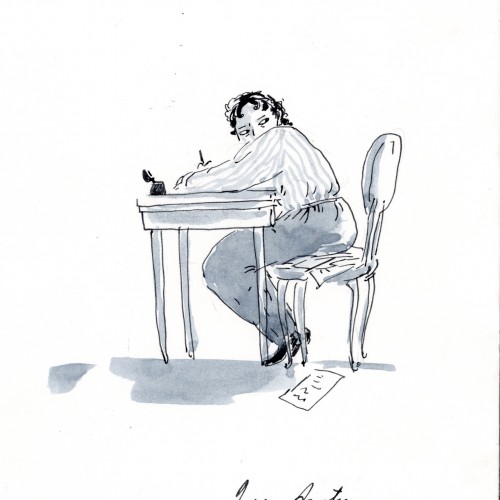
Jane Austen (1775–1817)
Austen never lived alone and had little expectation of solitude in her daily life. Her final home, a cottage in the village of Chawton, England, was no exception: she lived there with her mother, her sister, a close friend, and three servants, and there was a steady stream of visitors, often unannounced.
...
Austen wrote in the family sitting room, “subject to all kinds of casual interruptions,” her nephew recalled. She was careful that her occupation should not be suspected by servants, or visitors, or any persons beyond her own family party. She wrote upon small sheets of paper which could easily be put away, or covered with a piece of blotting paper. There was, between the front door and the offices, a swing door which creaked when it was opened; but she objected to having this little inconvenience remedied, because it gave her notice when anyone was coming.
“Composition seems to me impossible with a head full of joints of mutton & doses of rhubarb.”
From Daily rituals by Mason Currey
#dailyrituals #inktober #janeAusten @masoncurrey
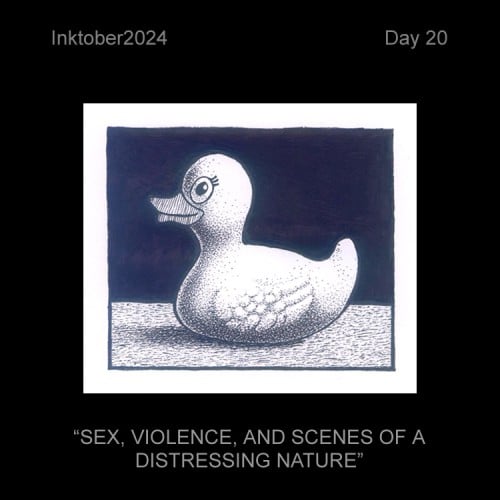
(Gel Fineliner on A5 Paper) The type of artwork which makes you look twice at it due to the title. If it was a photo or a sculpture, I'd probably use a readymade, but here it was something I could easily draw from memory with it being so basic and familiar to everyone.