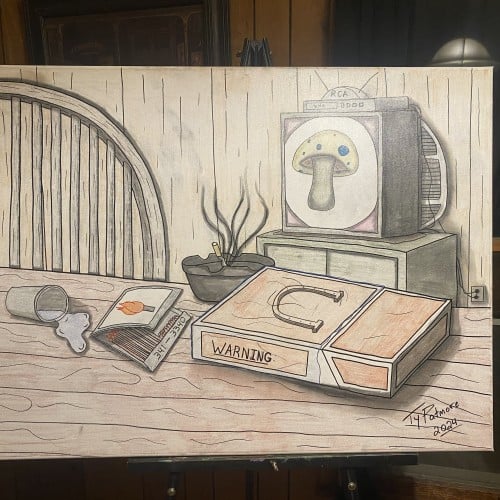
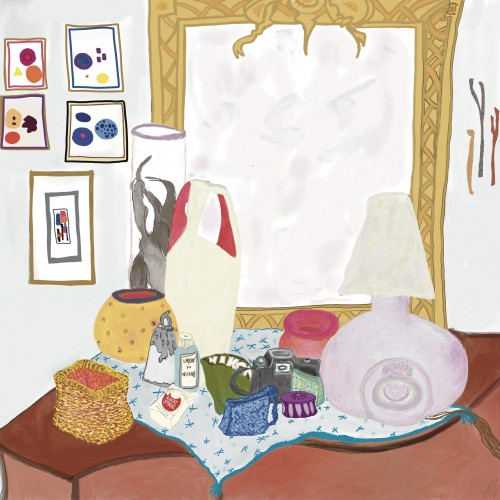
"Nowhere Fast" is a compelling still life that blends mundane domesticity with surreal, slightly ominous undertones. The scene is anchored by a wooden table where a spilled glass, a pack of matches, and an ashtray with a smoldering cigarette suggest a moment of interrupted pause or quiet, long-term stagnation. Dominating the foreground is an oversized, weathered cigarette carton boldly labeled "WARNING", its subtle but unsettling presence hinting at a consumption that leads nowhere.
In the background, a vintage RCA television set displays a stylized amanita mushroom, a recurring symbolic motif that adds a layer of psychedelia and altered perception to the otherwise drab setting. The earthy, muted color palette and soft lighting create a feeling of weary introspection, capturing a sense of being perpetually stuck in a cycle. The piece masterfully uses everyday objects to explore themes of vice, time, and the quiet, slow march toward an uncertain destination.
Jean-Paul Sartre (1905–1980)
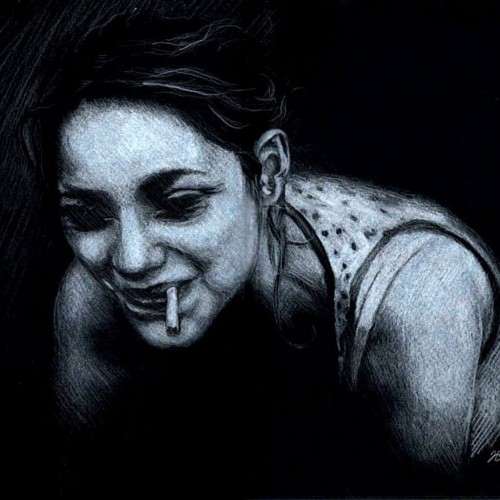
By the 1950s, too much work on too little sleep—with too much wine and cigarettes—had left Sartre exhausted and on the verge of collapse. Rather than slow down, however, he turned to Corydrane, a mix of amphetamine and aspirin then fashionable among Parisian students, intellectuals, and artists (and legal in France until 1971, when it was declared toxic and taken off the market). The prescribed dose was one or two tablets in the morning and at noon. Sartre took twenty a day, beginning with his morning coffee and slowly chewing one pill after another as he worked. For each tablet, he could produce a page or two of his second major philosophical work, The Critique of Dialectical Reason.
The biographer Annie Cohen-Solal reports, “His diet over a period of twenty-four hours included two packs of cigarettes and several pipes stuffed with black tobacco, more than a quart of alcohol—wine, beer, vodka, whisky, and so on—two hundred milligrams of amphetamines, fifteen grams of aspirin, several grams of barbiturates, plus coffee, tea, rich meals.”
- From Daily Rituals: How Artists Work by Mason Currey
#dailyrituals #inktober #jeanPaulSartre @masoncurrey
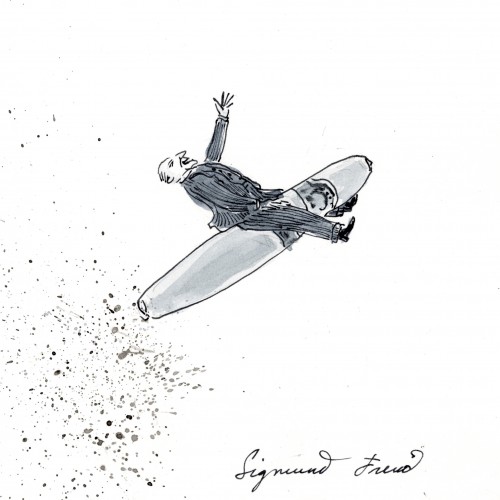
Sigmund Freud (1856–1939)
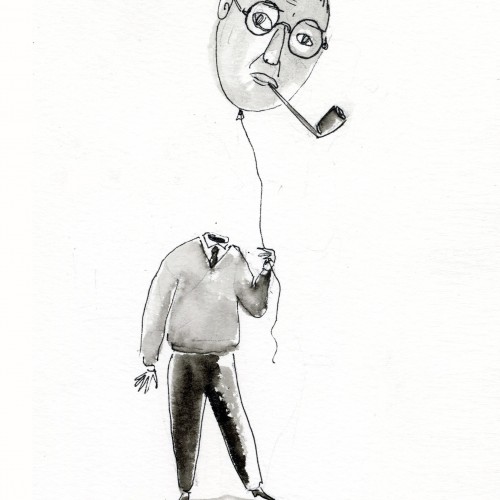
“I cannot imagine life without work as really comfortable,” Freud wrote to a friend in 1910. With his wife, Martha, to efficiently manage the household—she laid out Freud’s clothes, chose his handkerchiefs, and even put toothpaste on his toothbrush—the founder of psychoanalysis was able to maintain a single-minded devotion to his work throughout his long career.
Freud’s long workdays were mitigated by two luxuries. First, there were his beloved cigars, which he smoked continually, going through as many as twenty a day from his mid-twenties until near the end of his life, despite several warnings from doctors and the increasingly dire health problems that dogged him throughout his later years. (When his seventeen-year-old nephew once refused a cigarette, Freud told him,
From Daily rituals by Mason Currey
#dailyrituals #inktober #sigmundFreud @masoncurrey
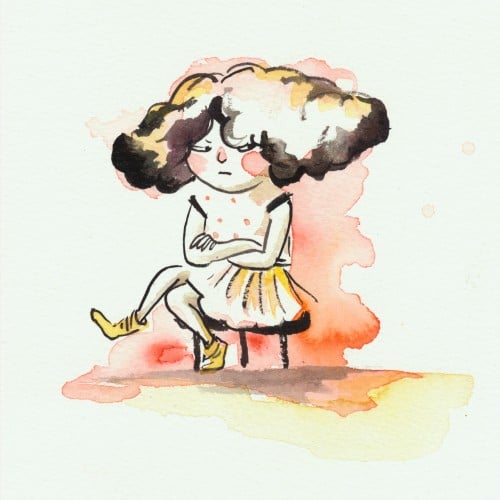
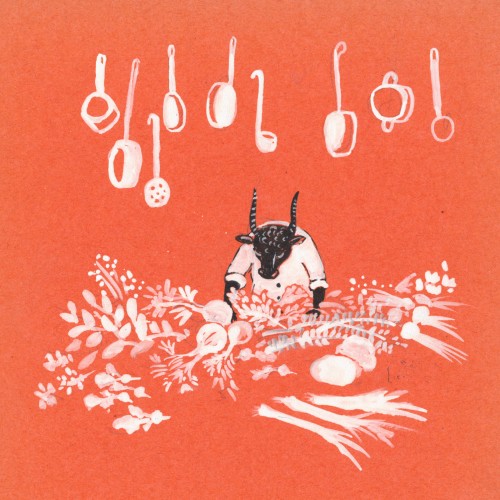
They say Prometheus brought fire from the sun concealed in a hollow fennel stalk. They say tarragon came to be when a flax seed was pushed into the pierced root of a sea onion and planted after dark. The Minotaur simply likes the smell of chopped herbs.”
- Steven Sherrill
For some reason out of all of my drawings, this one went viral on Tumblr. So when I got to the Minotaur on the list of hybrid creatures, I had to (re)make this one.
The sentence is from “Minotaur takes a cigarette break” by Steven Sherrill. It’s wonderful.
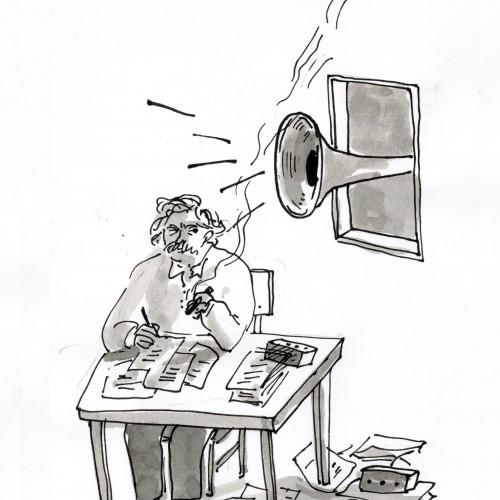
Mark Twain (1835–1910)
In the 1870s and ’80s, the Twain family spent their summers at Quarry Farm in New York, about two hundred miles west of their Hartford, Connecticut, home. Twain found those summers the most productive time for his literary work, especially after 1874, when the farm owners built him a small private study on the property. That same summer, Twain began writing The Adventures of Tom Sawyer. His routine was simple: he would go to the study in the morning after a hearty breakfast and stay there until dinner at about 5:00. Since he skipped lunch, and since his family would not venture near the study—they would blow a horn if they needed him—he could usually work uninterruptedly for several hours. “On hot days,” he wrote to a friend, “I spread the study wide open, anchor my papers down with brickbats, and write in the midst of the hurricane, clothed in the same thin linen we make shirts of.”
Whether or not he was working, he smoked cigars constantly. One of his closest friends, the writer William Dean Howells, recalled that after a visit from Twain, “the whole house had to be aired, for he smoked all over it from breakfast to bedtime.”
- From Daily Rituals: How Artists Work by Mason Currey
“Everyone is a moon, and has a dark side which he never shows to anybody.”
― Mark Twain
#dailyrituals #inktober #MarkTwain @masoncurrey
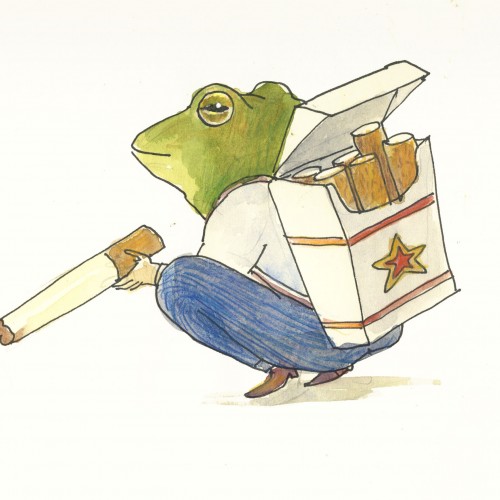
The other day I saw a photograph of a man in a handmade costume of a frog with a huge pack of cigarettes on his back and holding a cigarette.
Then I tried to find it again and I am coming up blank. So blank as a a matter of fact, that now I am not even sure if I didn't see it in a dream.
If you have seen this photo, let me know!
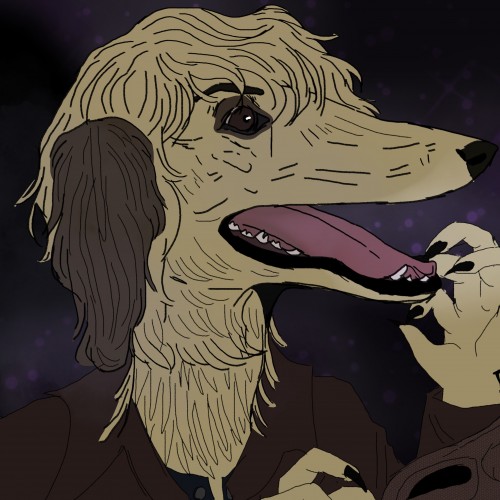
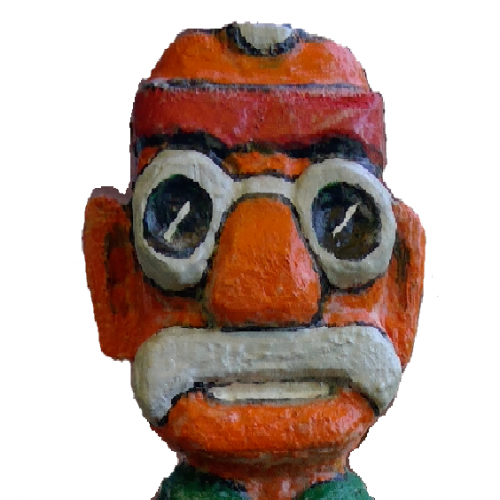
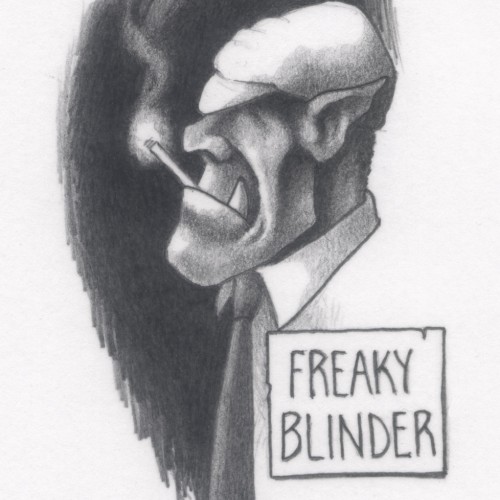
(2B pencil on 130mm x 90mm paper) I've never watched Peaky Blinders, but whilst doing some casual sketching, I came up with this orc character and so called it "Freaky Blinder" due to its flat cap and cigarette.
Oh, the gore! The violence!
Movies warn people of what they may see. But nothing can really prepare anyone for *gasp* cigarettes! Watch at your own risk. You’ve been warned.
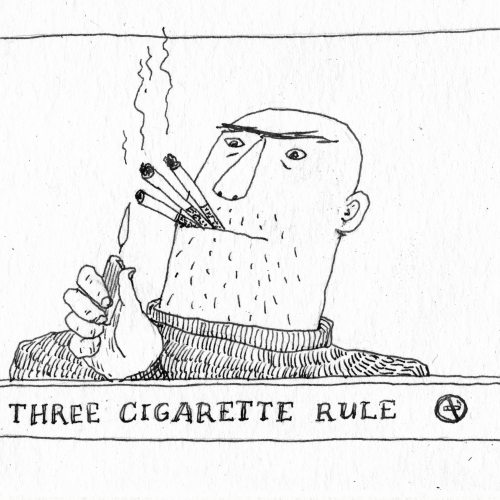
Superstition : Cigarettes.
The superstition that it is bad luck to light three cigarettes from one match appears to have originated during the Boer War. It was said that a sniper could spot where men might be as the first cigarette was being lit, take aim as the second was ignited and fire with deadly effect at the third. Two lights were enough for any group of men who valued their lives.
From "A DICTIONARY OF OMENS AND SUPERSTITIONS" by Philippa Waring
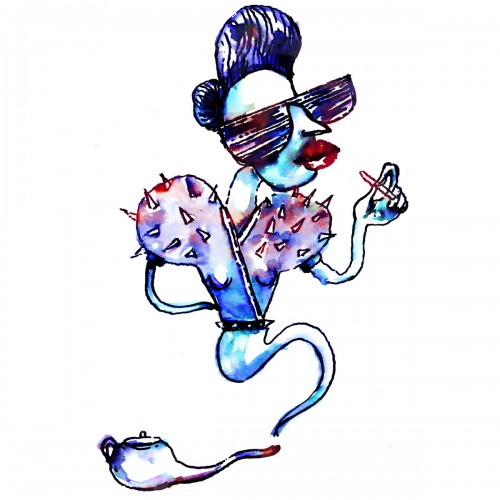
Sometimes in life you've gotta draw a genie that's based on Lady GaGa. Don't blame me. Blame the inevitability of existence. This was ink and watercolor with a bit of assistance from Photoshop.
526
1
0
Add Doodle Addicts to your home screen to not miss an update!