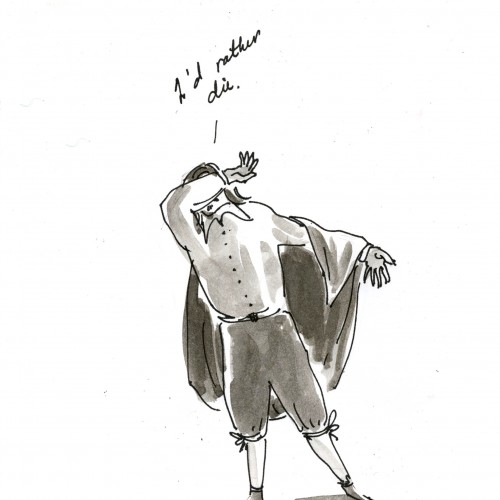
René Descartes (1596–1650)
Descartes was a late riser. The French philosopher liked to sleep until mid-morning, then linger in bed, thinking and writing, until 11:00 or so.
His comfortable bachelor’s life ended abruptly in late 1649, Descartes accepted a position in the court of Queen Christina of Sweden.
Descartes accepted a position in the court of Queen Christina of Sweden,Arriving in Sweden, in time for one of the coldest winters in memory, Descartes was notified that his lessons to Queen Christina would take place in the mornings—beginning at 5:00 A.M. He had no choice but to obey. But the early hours and bitter cold were too much for him. After only a month on the new schedule, Descartes fell ill, apparently of pneumonia; ten days later he was dead.
- From Daily Rituals: How Artists Work by Mason Currey
“Dubito, ergo cogito, ergo sum.
(English: "I doubt, therefore I think, therefore I am")”
― Rene Descartes
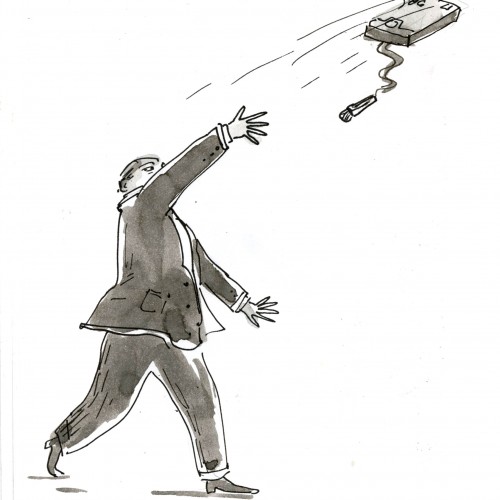
#dailyrituals #inktober #reneDescartes @masoncurrey #wouldratherdiethangetupearly
I was feeling listless about this inktober until I picked up Daily Rituals : How artists work by Mason Currey. I immediately knew that I want to do these portraits for the inktober.
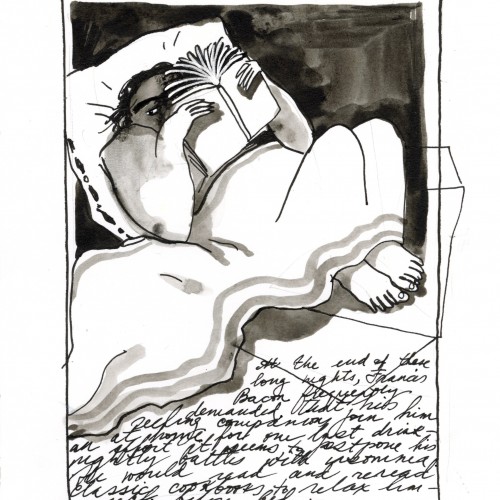
FRANCIS BACON.
At the end of these long nights, Bacon frequently demanded that his reeling companions join him at home for one last drink - an effort, it seems, to postpone his nightly battles with insomnia. Bacon depended on polls to get to sleep, and he would read and reread classic cookbooks to relax himself before bed.
#inktober #portraits #francisBacon
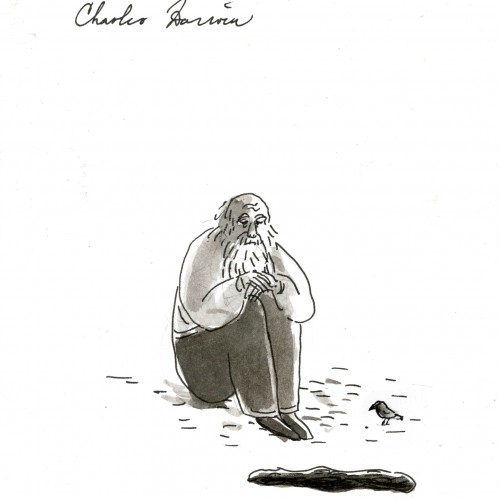
Charles Darwin (1809–1882)
From the time he arrived at Down House until 1859, when he finally published On the Origin of Species, Darwin led a double life, keeping his thoughts on evolution and natural selection to himself while bolstering his credentials in the scientific community.
Meanwhile, he divulged his secret theory to a very few confidants; he told one fellow scientist it was “like confessing a murder.”
- From Daily Rituals: How Artists Work by Mason Currey
“Ignorance more frequently begets confidence than does knowledge: it is those who know little, not those who know much, who so positively assert that this or that problem will never be solved by science.”
― Charles Darwin, The Descent of Man
#dailyrituals #inktober #CharlesDarwin @masoncurrey
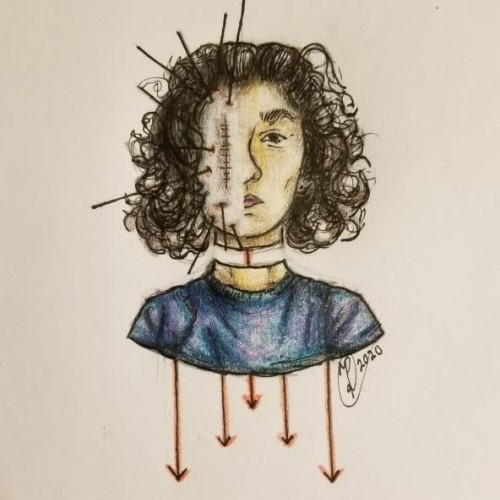
Im Kurt and new to Doodle Addicts. Loneliness and anxiety dominate my life and are reoccurring themes in my art. It wasn't until recently, after countless jobs, countless attempts, and thousands of dollars in school debt, that I realized it is what it is. At this point, I am trying to learn how to express myself through art and build a community without the pain from before. Negative or positive, I hope you feel something and will like or comment. #MentalHealth #GeneralizedAnxietyDisorder #ItWillGetBetter
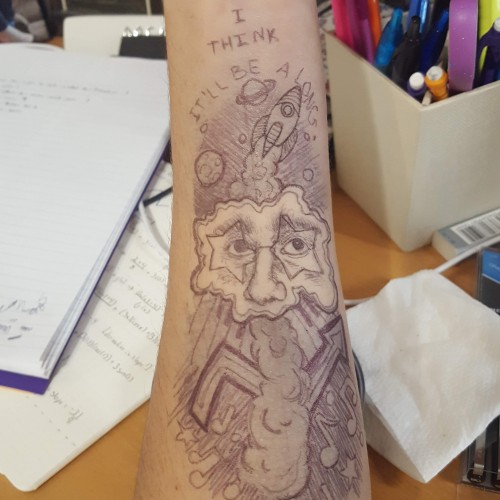
A Civics class arm doodle, a fitting place for a tattoo design. Today was the wrong day to wear a white long sleeve though. This weekend was interesting...good, bad, and very personal. It's currently 8th period though, and here's to the fact that I get to end my day in art.
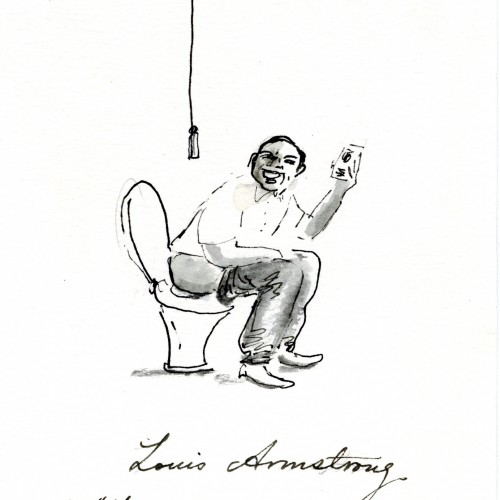
Louis Armstrong (1901–1971)
Armstrong relied on music to lull himself to sleep. Before he could get into bed, however, he had to administer the last of his daily home remedies, Swiss Kriss, a potent herbal laxative invented by the nutritionist Gayelord Hauser in 1922 (and still on the market today). Armstrong believed so strongly in its curative powers that he recommended it to all his friends, and even had a card printed up with a photo of himself sitting on the toilet, above the caption “Leave It All Behind Ya.”
- From Daily Rituals: How Artists Work by Mason Currey
“All music is folk music. I ain't never heard a horse sing a song.”
― Louis Armstrong
#dailyrituals #inktober #LouisArmstrong @masoncurrey
The past two days have been interesting, to say the least. My anxiety kicked up again, yielding two more panic attacks...oh joy. There's an increasingly chaotic external environment: COVID-19 positivity rates rising, looting, SAT nonsense (thank you College Board for not giving anyone information and for being very uncooperative). Am I angry at people in the world? Yes, and I know that's a generic, over-used phrase, but I truly am. I'm tired of all of this. I'm aggravated with the current state of the U.S. There's moments where things feel fine, and others when it feels like things are closing in. No one knows what the next few months will bring and tensions are high. Will things work out? They will eventually; they better. But, at the same time, what the heck is even going on anymore?
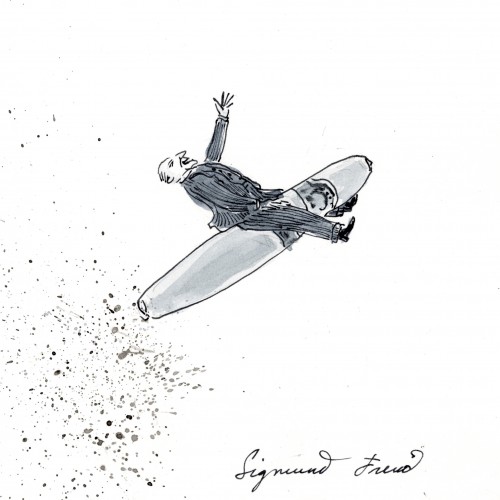
Sigmund Freud (1856–1939)
“I cannot imagine life without work as really comfortable,” Freud wrote to a friend in 1910. With his wife, Martha, to efficiently manage the household—she laid out Freud’s clothes, chose his handkerchiefs, and even put toothpaste on his toothbrush—the founder of psychoanalysis was able to maintain a single-minded devotion to his work throughout his long career.
Freud’s long workdays were mitigated by two luxuries. First, there were his beloved cigars, which he smoked continually, going through as many as twenty a day from his mid-twenties until near the end of his life, despite several warnings from doctors and the increasingly dire health problems that dogged him throughout his later years. (When his seventeen-year-old nephew once refused a cigarette, Freud told him,
From Daily rituals by Mason Currey
#dailyrituals #inktober #sigmundFreud @masoncurrey
Toronto the city is fighting to save Heritage buildings from demolition, they are already on a heritage site called The Distillery District. The current premier of Ontario is corrupt and get financial backing from developer friends, to sell off important pieces of Ontario land., without any public consultation. The situation is currently being fought for by the community through estate lawyers.
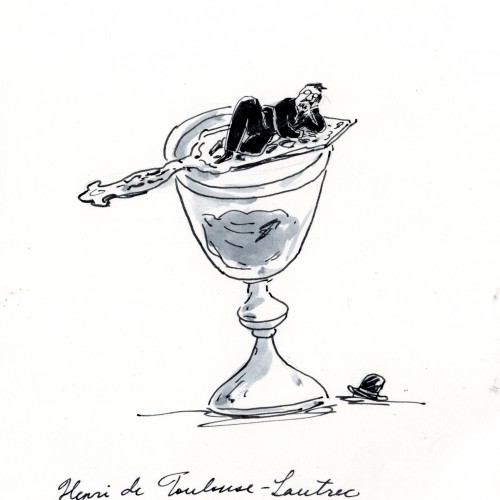
Henri de Toulouse-Lautrec (1864-1901)
Toulouse-Lautrec drank constantly and slept little. After a long night of drawing and binge-drinking, he would often wake early to print lithographs, then head to a café for lunch and several glasses of wine. Returning to his studio, he would take a nap to sleep off the wine, then paint until the late afternoon, when it was time for aperitifs.
(One of his inventions was the Maiden Blush, a combination of absinthe, mandarin, bitters, red wine, and champagne. He wanted the sensation, he said, of “a peacock’s tail in the mouth.”)
From Daily rituals by Mason Currey
#dailyrituals #inktober #henriToulouseLautrec @masoncurrey
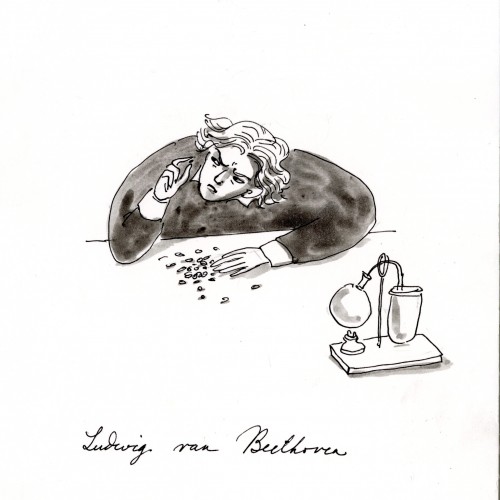
Ludwig van Beethoven (1770–1827)
Beethoven rose at dawn and wasted little time getting down to work. His breakfast was coffee, which he prepared himself with great care—he determined that there should be sixty beans per cup, and he often counted them out one by one for a precise dose.
From Daily Rituals : How Artists Work by Mason Currey.
#dailydrawing #dailyritual #beethoven #coffee #inktober @masoncurrey
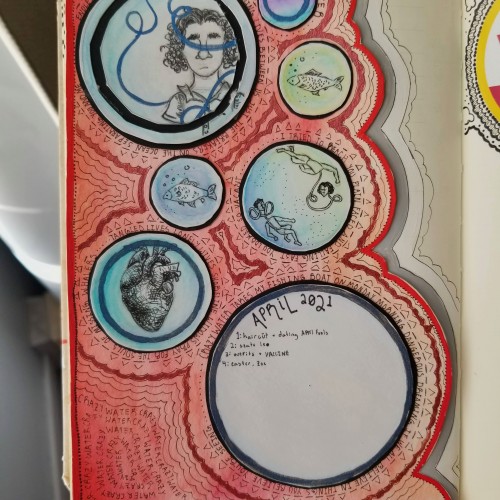
April has truly started off on a high note: 3 days of warm weather (a rare occurrence in an early Chicago spring), I finally did double-backs to the floor at gymnastics, found out I won a few art contests, and I got my first COVID vaccine! It's nice to have things starting to work out, even if it is just temporarily.
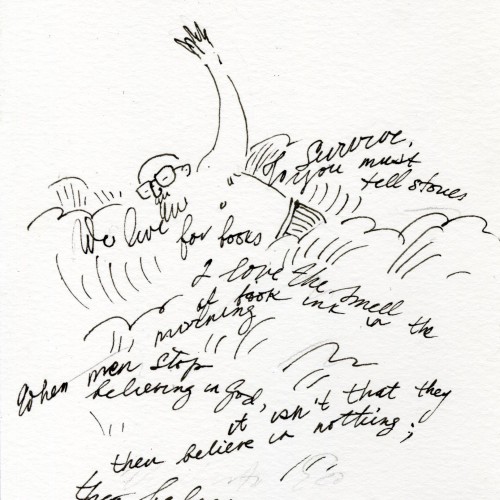
Umberto Eco (b. 1932)
Eco says that he is able to be productive during the brief “interstices” in the day. He told The Paris Review’s interviewer: “This morning you rang, but then you had to wait for the elevator, and several seconds elapsed before you showed up at the door. During those seconds, waiting for you, I was thinking of this new piece I’m writing. I can work in the water closet, in the train. While swimming I produce a lot of things, especially in the sea. Less so in the bathtub, but there too.”
- From Daily Rituals: How Artists Work by Mason Currey
“When men stop believing in God, it isn’t that they then believe in nothing: they believe in everything.” ― Umberto Eco
#dailyrituals #inktober #UmbertoEco @masoncurrey
Jean-Paul Sartre (1905–1980)
By the 1950s, too much work on too little sleep—with too much wine and cigarettes—had left Sartre exhausted and on the verge of collapse. Rather than slow down, however, he turned to Corydrane, a mix of amphetamine and aspirin then fashionable among Parisian students, intellectuals, and artists (and legal in France until 1971, when it was declared toxic and taken off the market). The prescribed dose was one or two tablets in the morning and at noon. Sartre took twenty a day, beginning with his morning coffee and slowly chewing one pill after another as he worked. For each tablet, he could produce a page or two of his second major philosophical work, The Critique of Dialectical Reason.
The biographer Annie Cohen-Solal reports, “His diet over a period of twenty-four hours included two packs of cigarettes and several pipes stuffed with black tobacco, more than a quart of alcohol—wine, beer, vodka, whisky, and so on—two hundred milligrams of amphetamines, fifteen grams of aspirin, several grams of barbiturates, plus coffee, tea, rich meals.”
- From Daily Rituals: How Artists Work by Mason Currey
#dailyrituals #inktober #jeanPaulSartre @masoncurrey
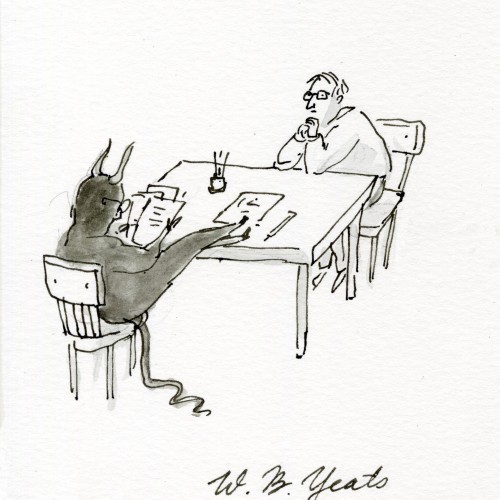
W. B. Yeats (1865–1939)
A lyric poem of eighty or more lines took him about three months of hard labor.
Fortunately, Yeats was not so careful about his other writing, like the literary criticism he did to earn extra money. “One has to give something of one’s self to the devil that one may live,” he said. “I give my criticism.”- From Daily Rituals: How Artists Work by Mason Currey
“Life is a long preparation for something that never happens.”
― W.B. Yeats
#dailyrituals #inktober #WBYeats @masoncurrey
Reflecting on the current pandemic, only to realise things this time last year gave plenty of us something to gripe about too...
How times seemed simpler then.
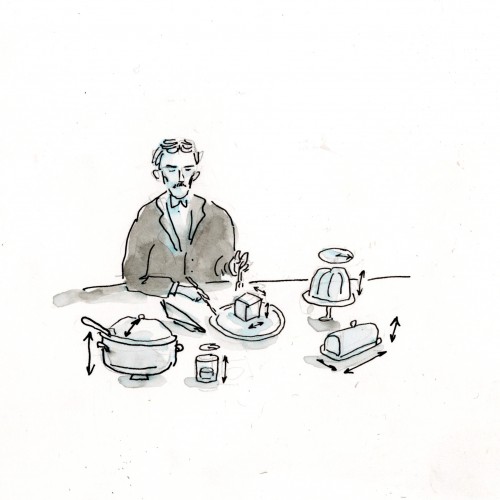
Nikola Tesla (1856–1943)
After he had started his own company, Tesla arrived at the office at noon. Immediately, his secretary would draw the blinds; Tesla worked best in the dark and would raise the blinds again only in the event of a lightning storm, which he liked to watch flashing above the cityscape from his black mohair sofa.
Tesla ate alone, and phoned in his instructions for the meal in advance. Upon arriving, he was shown to his regular table, where eighteen clean linen napkins would be stacked at his place. As he waited for his meal, he would polish the already gleaming silver and crystal with these squares of linen, gradually amassing a heap of discarded napkins on the table. And when his dishes arrived—served to him not by a waiter but by the maître d’hôtel himself—Tesla would mentally calculate their cubic contents before eating, a strange compulsion he had developed in his childhood and without which he could never enjoy his food.
- From Daily Rituals: How Artists Work by Mason Currey
“Of all things, I liked books best.”
― Nikola Tesla
“One must be sane to think clearly, but one can think deeply and be quite insane.”
― Nikola Tesla
#dailyrituals #inktober #NikolaTesla @masoncurrey
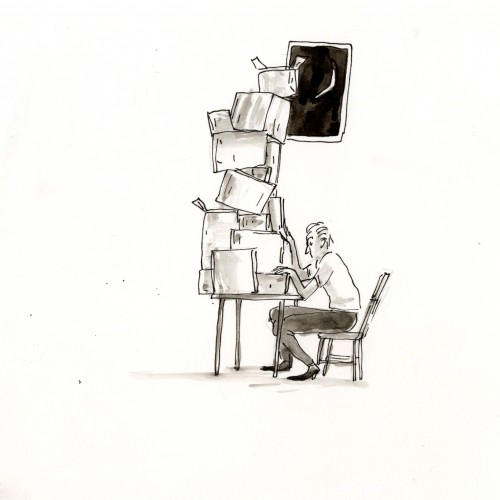
Joseph Cornell (1903–1972)
Cornell worked nights at the kitchen table, sorting and assembling materials for his boxes. It was not easy going. Some nights he felt too fatigued from his day job to concentrate on his art and would sit up reading instead, switching on the oven for warmth. In the mornings, his quarrelsome mother would scold him about the mess he’d left at the kitchen table; without a proper workroom, Cornell was forced to store his growing collection of magazine clippings and dime-store baubles out in the garage.
In 1940 Cornell finally mustered the courage to quit his job and pursue his art full-time—and even then his habits changed little. He still worked nights at the kitchen table, while his mother and brother slept upstairs. In the late morning he would head downtown for breakfast at his local Bickford’s restaurant, often satisfying his sweet tooth with a Danish or a slice of pie (and lovingly cataloging these indulgences in his diary).
- From Daily Rituals: How Artists Work by Mason Currey
#dailyrituals #inktober #JosephCornell @masoncurrey
P. G. Wodehouse (1881–1975)
Once, when he was beginning a Wooster-Jeeves novel, he experimented with using a Dictaphone. After he had dictated the equivalent of a page, he played it back to check it over. What he heard sounded so terribly unfunny that he immediately turned off the machine and went back to his pad and pencil.
After this, according to the biographer Robert McCrum, “he might snooze a bit in his armchair, have a bath, and do some more work, before the evening cocktail (sherry for her, a lethal martini for him) at six, which they took in the sun parlour, overlooking the garden.
- From Daily Rituals: How Artists Work by Mason Currey
“He had just about enough intelligence to open his mouth when he wanted to eat, but certainly no more.”
― P.G. Wodehouse
#dailyrituals #inktober #PGWodehouse @masoncurrey