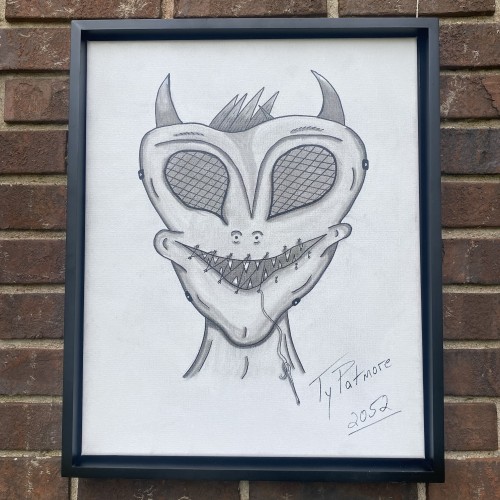
This portrait is the darkest in the series, examining the internal malice that persists even when communication is restricted, illustrating that evil doesn't require a loud voice.
* Visual Focus: The mask's mouth is horrifyingly held closed across the center by surgical thread and a needle, which only covers half of the wide, unnerving smile. The stitching reveals a set of sharp, feral teeth underneath. Disturbingly, a pair of prominent horns protrude from the top of the mask's head.
* Symbolism:
* The Stitched Mouth: Represents the idea of selective silence or the censorship of truth. The fact that the stitching only covers half the mouth highlights the "half-done" nature of modern morality. The revealed sharp teeth suggest that even in silence, the capacity for vicious, cutting, or "devilish" speech remains barely contained. Showed directly on the piece by the date being misleading.
* The Horns: A classic, unambiguous symbol of the Devil or pure malice. This is the figure's core identity—it suggests that even while hiding behind a neutral mask and being partially silenced, the individual's "tongue like the devil" and evil intent are still very much present, emphasizing the inherent corruption and hypocrisy behind the facade.
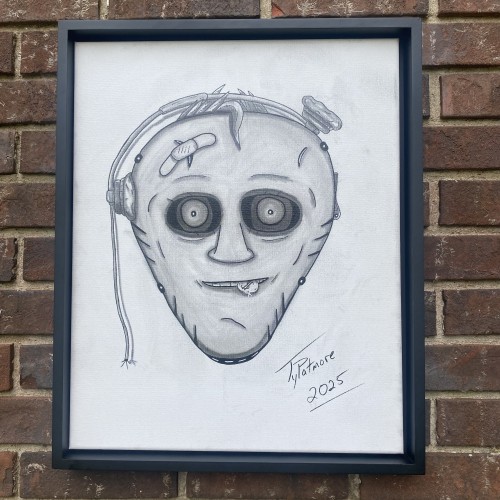
This figure explores how the relentless pursuit of monetary gain and digital distraction stifles genuine attention and moral listening.
* Visual Focus: The mask is equipped with a headphone covering a single ear. The headphone wire is visibly broken, frayed, and cut short, suggesting a deliberate disconnect or a failed attempt at communication. A small coin dangles conspicuously from the corner of the figure's mouth.
* Symbolism:
* The Headphones: Represent modern distraction and the ability to selectively "tune out" inconvenient truths or moral calls. The broken, frayed wire reinforces the idea of a failed connection to the real world.
* The Coin in the Mouth: Serves as a powerful, visceral metaphor for being "consumed by monetary means." It connects the act of speaking/listening to the theme of greed, suggesting that the voice and ear are functionally "plugged" or corrupted by the all-consuming focus on wealth. The refusal to hear moral guidance is dictated by the pursuit of money.
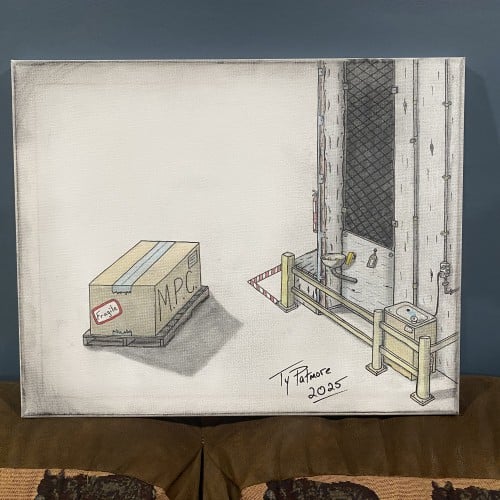
"Industrial Timeout" presents a meticulously rendered scene of solitude and tension within a utilitarian setting. The composition is split between a vast, empty white space and a tightly constrained, detailed industrial corner. In the foreground, a single, unassuming cardboard box sits on a pallet. It is labeled "FRAGILE" and "M.P.C." (possibly a reference to 'Minimum Package Content' or a similar industrial acronym), suggesting a precious, yet standardized, cargo awaiting movement.