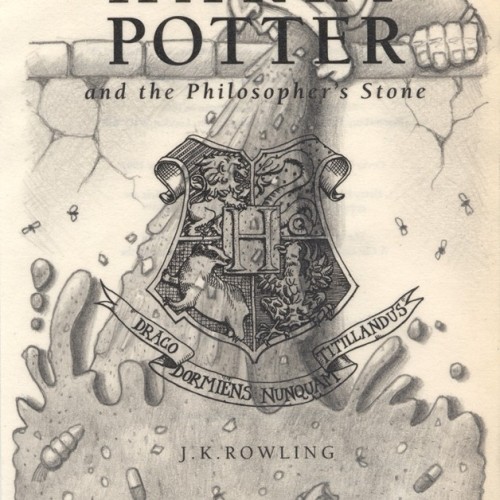
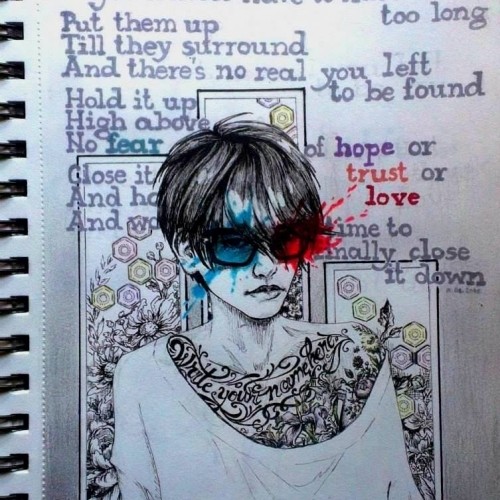
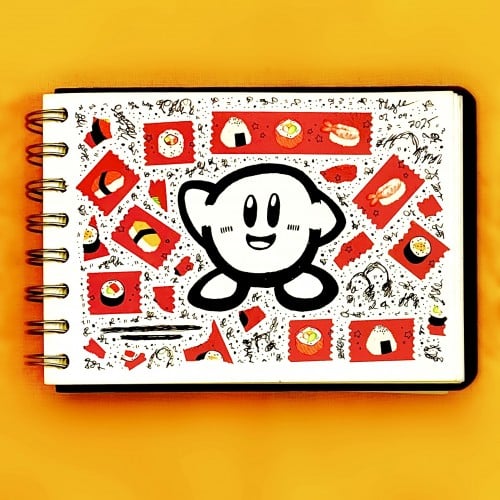
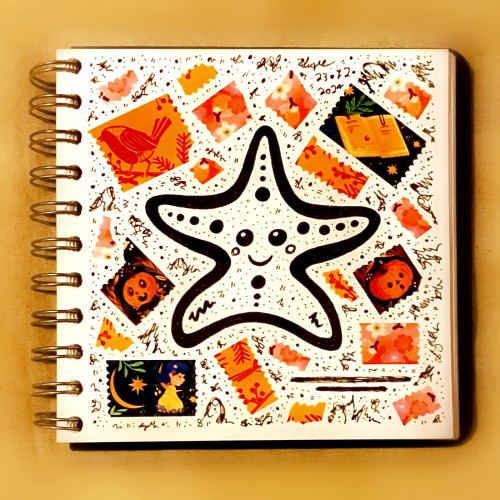
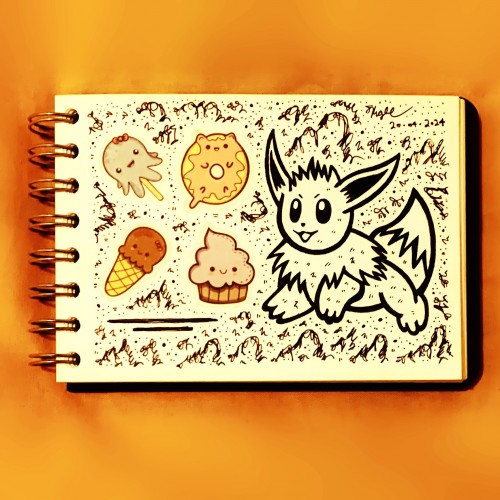
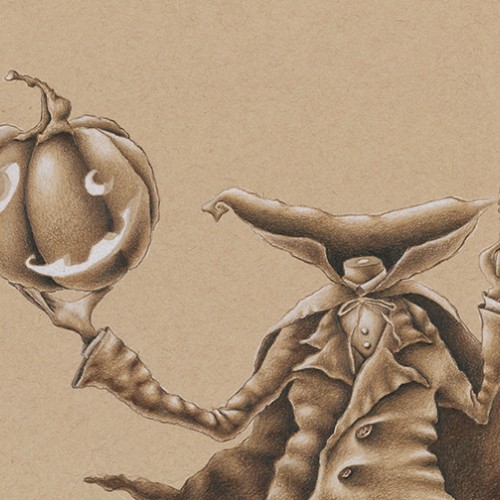
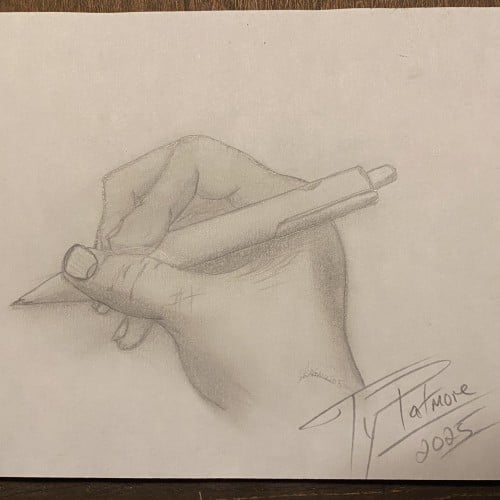
(2B pencil on a 195mm x 123mm book title page) The first of five in this project. I chose the Harry Potter book because it tells the usual religious "hero's journey" story, of a boy born for another life that sees outsiders as something different.
"Build them up
High and strong so you'll never have to hurt too long
Put them up
'Til they surround and there's no real you left to be found
Hold it up
High above no fear of hope or trust or love
Close it up
And hold your ground and wait unt
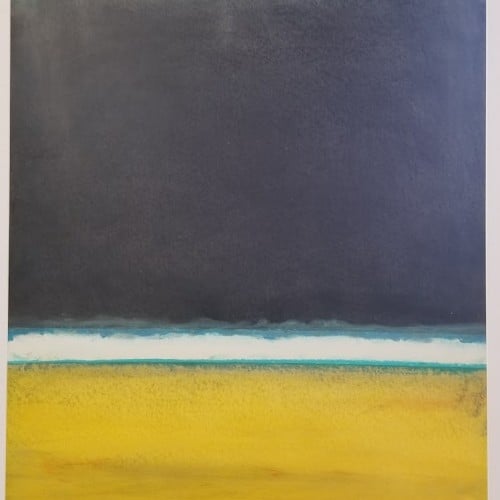
A horizon of chalk—black sky heavy with silence, gold earth glowing with embered breath.
Between them, a thin line of turquoise, the pause where one world ends and another begins.
It is not sky, nor sea, nor sand alone. It is the threshold—a doorway, where silence teaches and light remembers.
Stand here long enough, and you may hear it breathe.
inking and seeing for better being — https://forming20.com/
There’s a lot of waiting in life.
Waiting in lobbies.
Waiting on answers.
Waiting for braces to tighten, kids to grow, hearts to heal, or prayers to be answered.
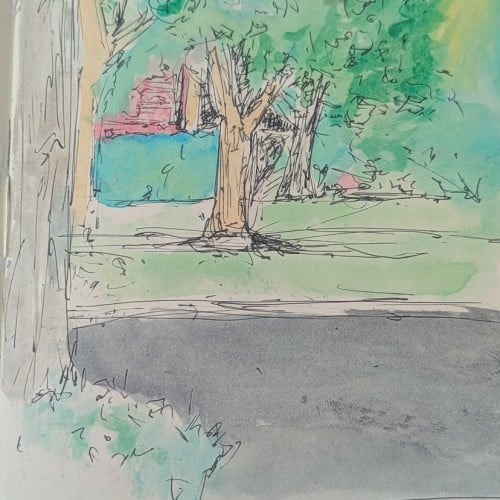
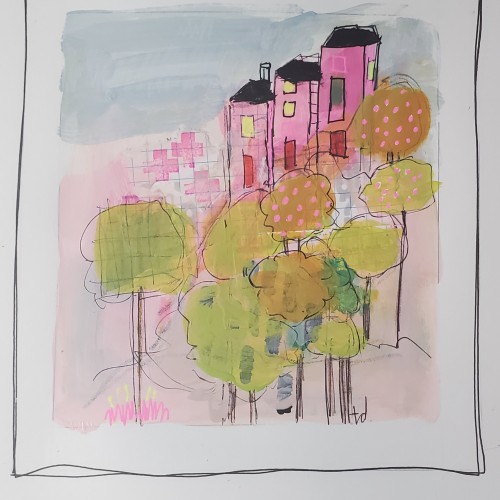
I sat at the orthodontist, watching dollars tighten on tiny wires, and made this sketch. A tree. A house. A street. Color helped the moment breathe.
I remember once hearing a chess master say, “There is no waiting in chess.”
It confused me—wasn’t there always a turn to wait for?
But he explained: “There’s no waiting. Only planning. Plotting. Analyzing. You’re always thinking.”
I once repeated that to a FIDE master. He got mad.
Maybe because waiting and patience aren’t the same thing.
We can be still and deeply active inside.
We can pause without being passive.
And then there’s Lindsey’s voice in the back of my head:
“That sounds like a first-world problem.”
“Speak life.”
“Be thankful. Rejoice always.”
And she’s right.
So here’s to filling waiting time with something creative.
Something kind.
Something that turns a delay into a doorway.
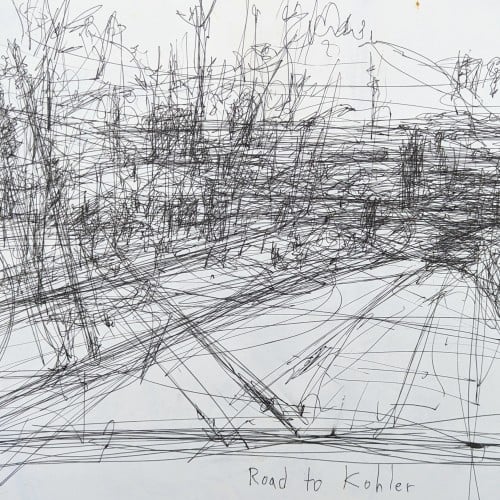
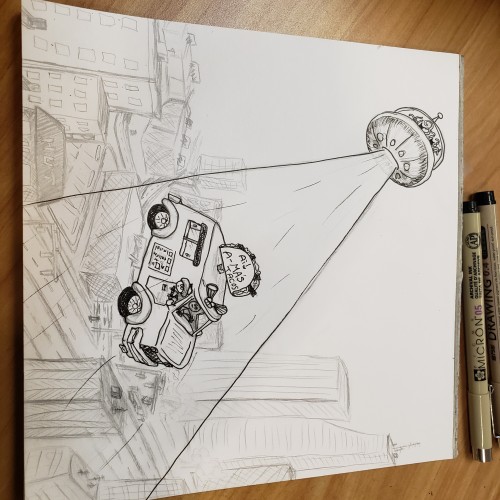
Often I am given to making marks on paper that reflect the objects I see coming towards me as I gaze out the front car window. I do this exercise as a passenger of course. The goal is not the end product, but the process of connecting what I see with motor control. The product is an indication of movement and energy. Give it a try!
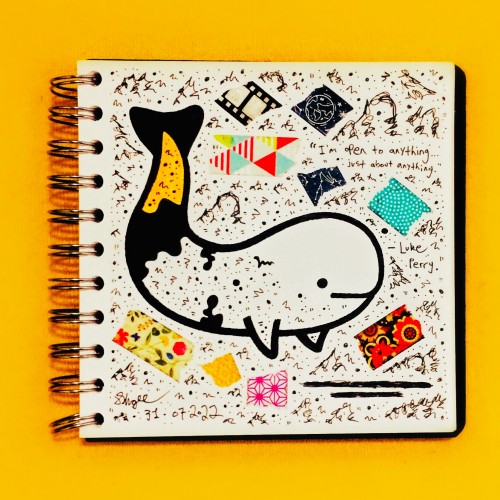
A handful of Brit flicks have been showing up on Disney+ lately, and one of them I watched recently had Luke Perry of all folks in it... the film in question is called ‘The Beat Beneath My Feet’ in case you’re curious.
In all seriousness though, British films with American actors in them as a lead/central character will forever and always fascinate me, much like Luke Perry’s birth name did! Rest well good sir and thanks for everything.
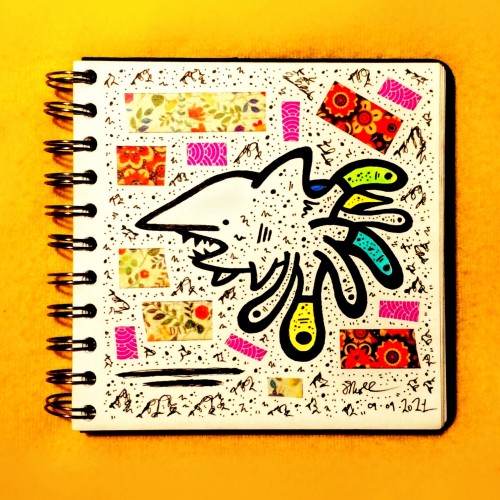
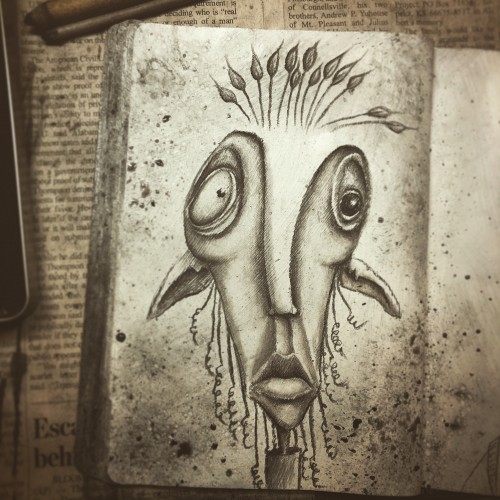
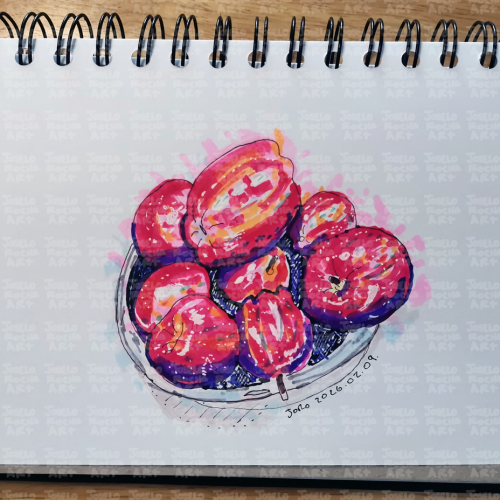
I do generally put pen (or some kind of tool), to paper (or some kind of surface), every day, but I'm really TRYING to do it purposefully in one singular location (journal). Here is a successful attempt from that particular day.
I'm also super lazy, which means I never go up to my actual studio and only use what's out on my computer desk.
“In Caribbean mythology, the lusca or luska is the term given to one of the most feared sea monsters in the region. A deadly creature that prowls the deep and feeds on the unsuspecting. A being or a pod of beings that scour the Gulf eating up all in its wake. The lusca is a chimera; a mismatch of animal parts. A conglomerate of some of the Caribbean’s most feared creatures. It is a cryptid that said to hunt and prowl the Gulf and areas near the Mexican shore. Luscas are one of the lesser known cryptids of the deep. They are also one of the most fascinating not only on account of its fearsome symmetry but of the mystery that surrounds them...”
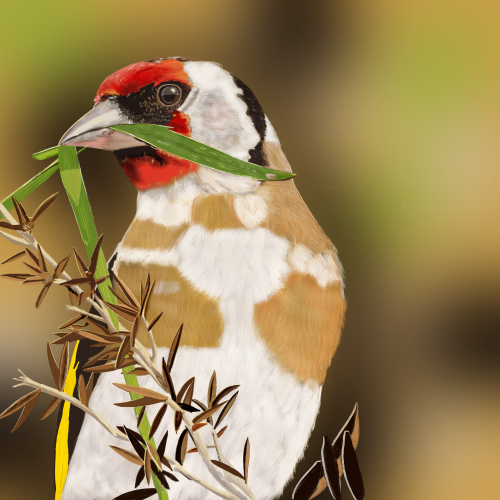
The European Goldfinch is a striking small finch with a distinctive red face and black-and-white head. Its wings are black with a bright yellow wing bar, while the body is mainly buff or light brown.
During the breeding season, the bill of male and female goldfinches is white, but at other times of the year, it is marked with a black tip.
Female goldfinches are very alike in appearance to males, and visually, it is hard to tell them apart from a distance. At close range, the sexes can be distinguished by the size of the red facial patch, with the females not extending past the eyes as it does in males of the species.
Juvenile goldfinches do not develop adults' red, white and black facial markings until the late summer or autumn after hatching. Until this point, they have streaky buff-brown markings on their heads. Info: Birdfact . com
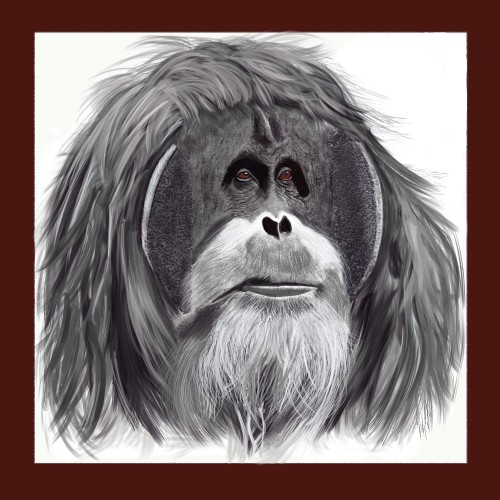
Orangutan sketch (Original Dimensions: 3000x3000px x 300DPI) to try out my new iPad Air M2 13 using both iArtbook Pro and Artstudio Pro artist apps. This iPad is awesome for power and quickness.
Here are three main facts about adult male orangutans:
1. **Physical Characteristics**: Adult male orangutans are significantly larger than females, with an average height of about 1.2-1.5 meters (4-5 feet) and weighing around 50-100 kg (110-220 lbs). They develop distinctive physical features such as large cheek flanges (fleshy pads) and a throat pouch, which they use to produce long calls to communicate across the dense forests.
2. **Solitary Lifestyle**: Unlike many primates, male orangutans are solitary creatures. They spend most of their lives alone, except during brief periods of mating. This solitary behaviour reduces competition for food and other resources. The males will range widely and have large territories that often overlap with the ranges of several females.
3. **Long Call**: Adult male orangutans have a unique and powerful long call that can be heard over great distances. This call is used to establish territory and attract females. The call consists of a series of roars, grunts, and bellows, and it serves to warn other males of their presence, helping to maintain social hierarchy and reduce conflicts.