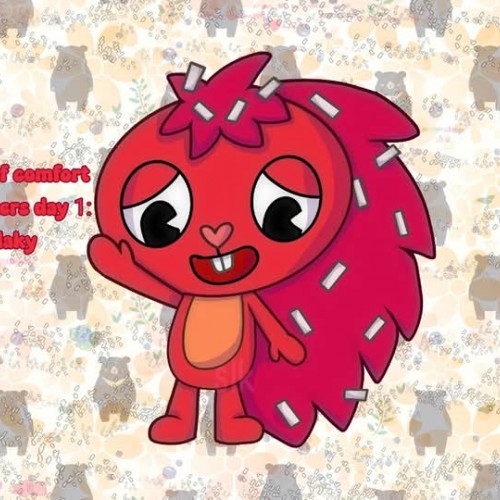
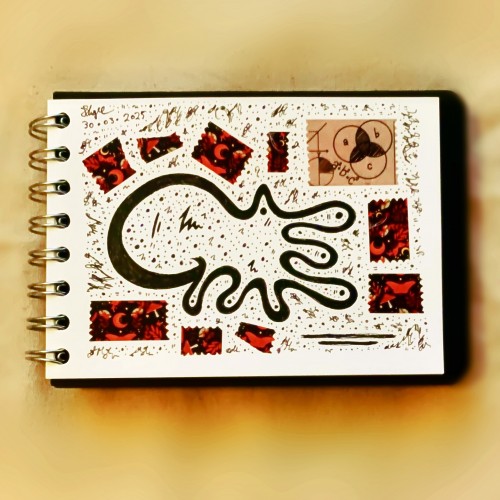
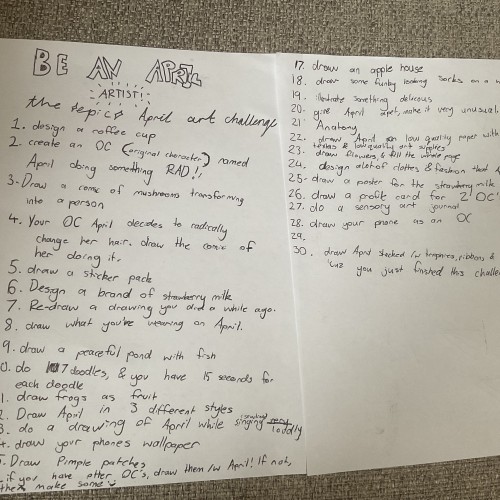
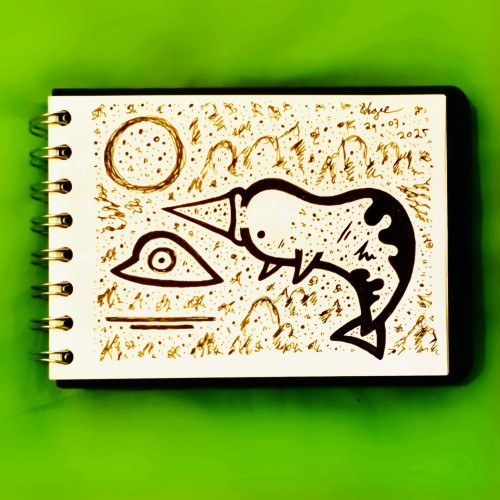
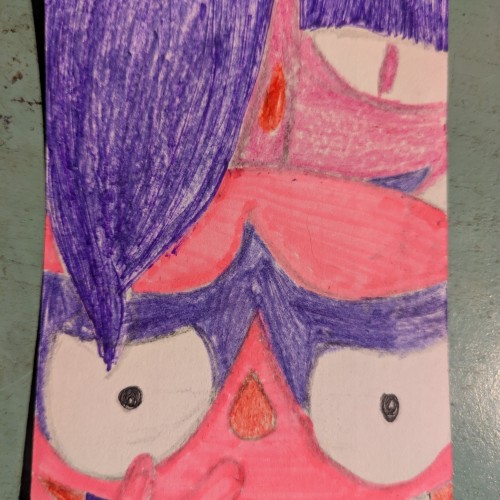
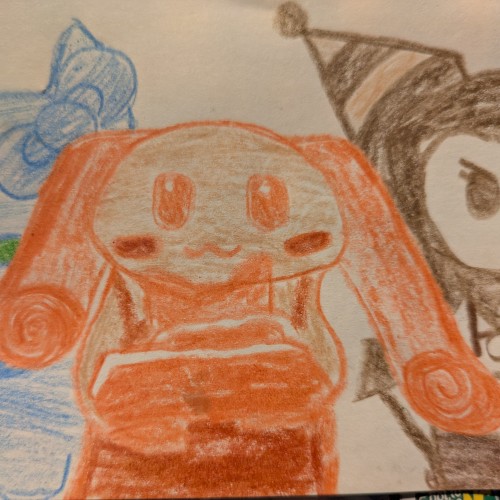
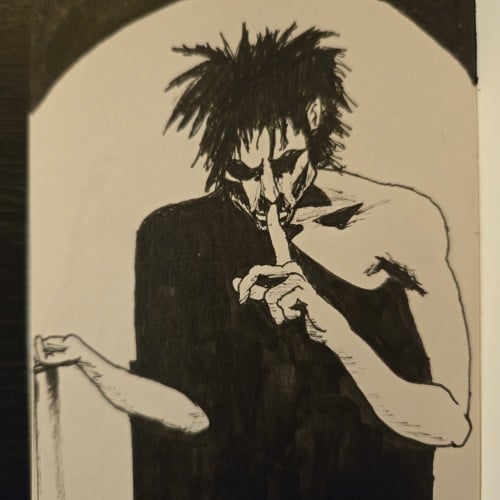
estoy de vuelta con los retos de semana y la temática de esta ocasión son los personajes de confort,
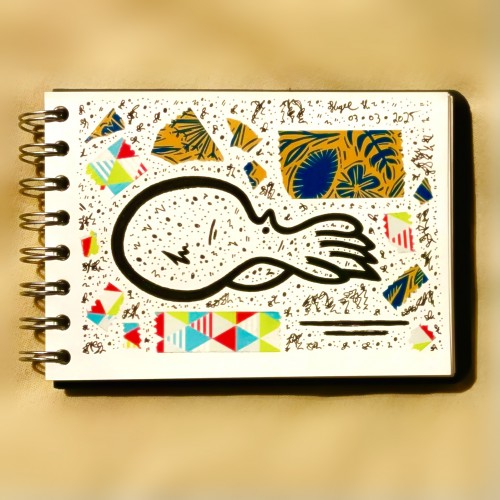
empezando con esta puercaespín llena de caspa que es algo cobarde y que se asusta con facilidad llamada flaky
a planet has continents that are concepts.
there are arrows indicating "immigration" and "emigration" between the continents.
the continents are concepts....
there is movement between "they/them" , "she/her", and "he/him". there is also movement between "black", "Hispanic", and "white". there is also movement between "Spain", "Mexico", and "Brazil".
gender is a concept.
race is a concept.
nationality is a concept.
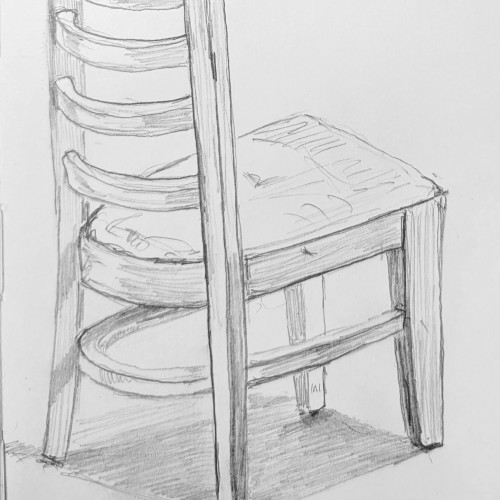
Behold the Chair
(inspired by Wendell Berry)
Make a place to sit down.
Sit down. Be quiet.
The chair does not strive.
It does not speak loudly.
It simply is—
ready to receive,
to hold what comes,
to honor the silence.
This drawing does not shout.
It listens.
It does not disturb the quiet—
it joins it.
Like a prayer whispered
to the One who listens back,
this mark is a presence,
not a performance.
Mark Twain (1835–1910)
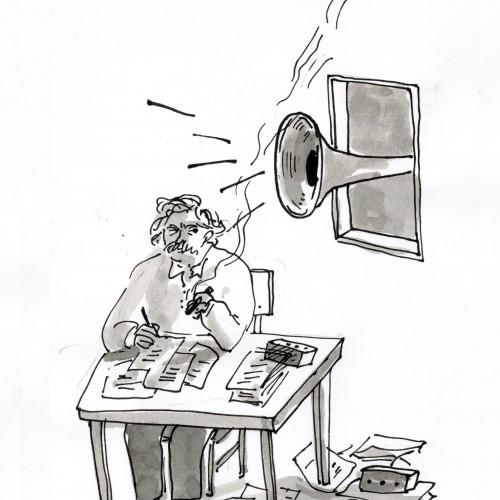
In the 1870s and ’80s, the Twain family spent their summers at Quarry Farm in New York, about two hundred miles west of their Hartford, Connecticut, home. Twain found those summers the most productive time for his literary work, especially after 1874, when the farm owners built him a small private study on the property. That same summer, Twain began writing The Adventures of Tom Sawyer. His routine was simple: he would go to the study in the morning after a hearty breakfast and stay there until dinner at about 5:00. Since he skipped lunch, and since his family would not venture near the study—they would blow a horn if they needed him—he could usually work uninterruptedly for several hours. “On hot days,” he wrote to a friend, “I spread the study wide open, anchor my papers down with brickbats, and write in the midst of the hurricane, clothed in the same thin linen we make shirts of.”
Whether or not he was working, he smoked cigars constantly. One of his closest friends, the writer William Dean Howells, recalled that after a visit from Twain, “the whole house had to be aired, for he smoked all over it from breakfast to bedtime.”
- From Daily Rituals: How Artists Work by Mason Currey
“Everyone is a moon, and has a dark side which he never shows to anybody.”
― Mark Twain
#dailyrituals #inktober #MarkTwain @masoncurrey
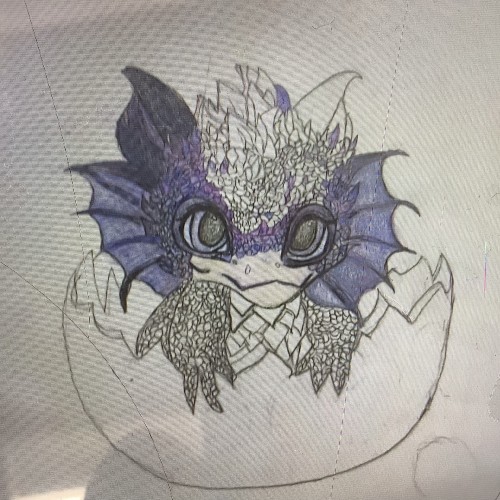
Thanks to my best friend and art teacher, I am working on this beautiful baby dragon ( names are still being brainstormed) that I have been working on in classes and art club, keep in mind it is definitely not finished but I’m excited to see how this goes! Hope you all like it, any tweaks or ideas are greatly appreciated
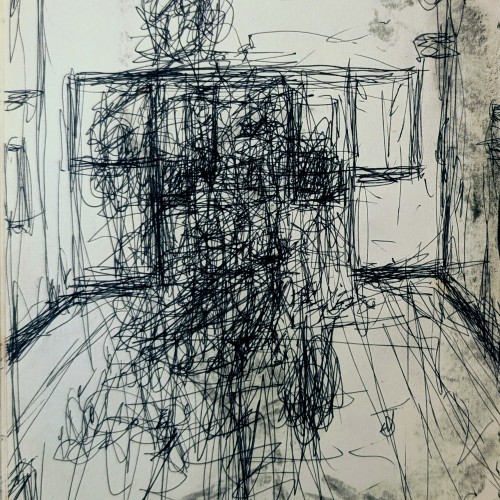
I am an art teacher with a master’s degree—trained by brilliant professors who believed that art could do more than decorate walls. I offer safe spaces for teenagers to grow—nourishing soil where their imaginations can take root.
And yet… I am assigned to hallway duty.
This is compulsory education, after all.
So I sit—posted like a sentinel—watching young lives stream past.
“Get to class,” I say with a smile and a nudge.
The system wants attendance; I’m hungry for presence.
Armed not with a whistle or clipboard, but with a pen—
my scribble’s soft insurgency.
The hallway stretches out like a geometric hymn.
Columns and corners chant structure.
Teenagers swirl past—half-formed galaxies of limbs and laughter—
their orbits chaotic, their gravity pulling time forward.
I begin to draw.
Not their tardiness, but their motion.
A shoulder. A blur of sneakers.
A tilted head chasing freedom.
Feet flickering like seconds.
Each mark a pulse.
Each smudge a breath.
My paper becomes a seismograph of seeing—
trembling gently through the mundane.
This isn’t about making art for a frame or a feed.
It’s about refusing to leak away in the fluorescent hum of obligation.
It’s a quiet mutiny against the clock.
I do this on long car rides, too (passenger side, mind you).
Letting the lines grow wild, jagged, and unapologetic.
Not for polish—
but for presence.
This is how I remember I’m still alive.
Still growing.
Still watching.
Still choosing to see.
Because sometimes mental health looks like
a piece of scrap paper,
a moving pen,
and the simple, sacred act of
marking time with wonder.
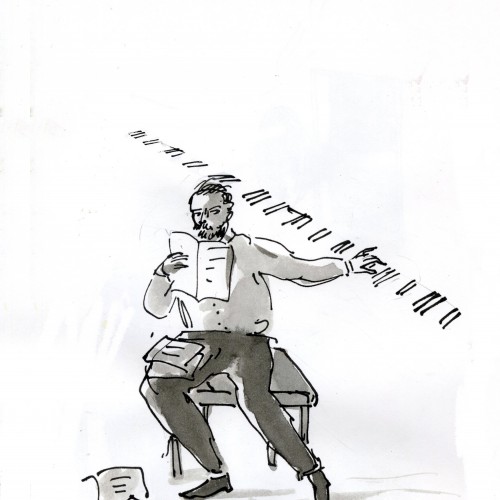
Pyotr Ilich Tchaikovsky (1840–1893)
At 9:30, Tchaikovsky set to work—composing at the piano only after he had dealt with any proofs or his correspondence, chores that he disliked. “Before setting about the pleasant task,” his brother noted, “Pyotr Ilich always hastened to get rid of the unpleasant.”
After lunch he went for a long walk, regardless of the weather. His brother writes, “Somewhere at sometime he had discovered that a man needs a two-hour walk for his health, and his observance of this rule was pedantic and superstitious, as though if he returned five minutes early he would fall ill, and unbelievable misfortunes of some sort would ensue.”
- From Daily Rituals: How Artists Work by Mason Currey
“Truly there would be reason to go mad were it not for music.”
― Peter Ilyich Tchaikovsky
“If you do not want to write, at least spit on a piece of paper, put it in an envelope, and send it to me. You are not taking any notice of me at all. God forgive you – all I wanted was a few words from you.”
― Pyotr Ilyich Tchaikovsky
#dailyrituals #inktober #PeterTchaikovsky @masoncurrey
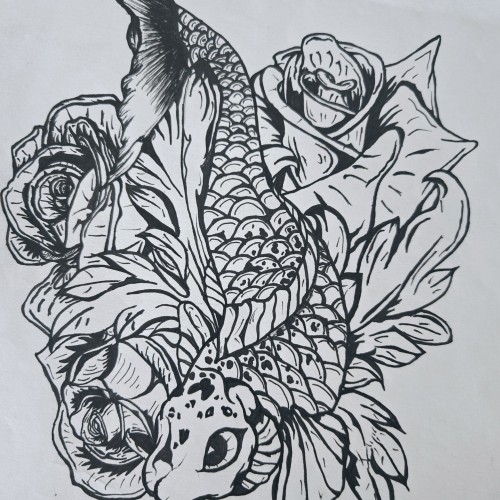
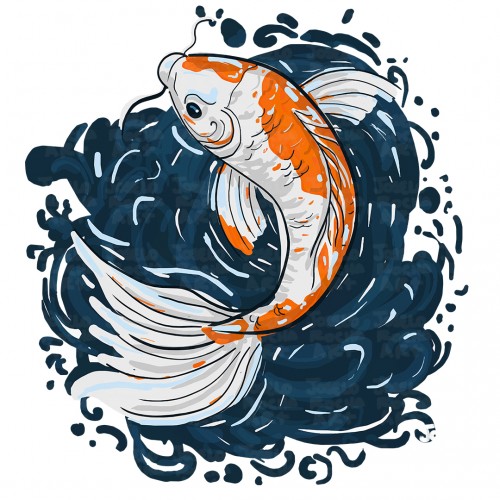
"Pisces Koi" is a bold and intricate black-and-white ink piece that blends symbolism with fluid motion. A koi fish, known for its resilience and transformation, weaves through a bed of blooming roses, creating a contrast between movement and stillness. The fine details in the scales and petals bring depth, making the composition feel alive.
The upward motion of the koi echoes the legend of perseverance—where a koi swimming upstream becomes a dragon—mirroring the Pisces spirit of adaptation and ambition. The roses introduce another layer, possibly symbolizing beauty, personal growth, or challenges that shape us.
This piece captures a sense of quiet strength and fluidity, speaking to those drawn to themes of transformation, water energy, and the balance between struggle and grace.
This one is my " other style " oddly I have two different styles of art , sometimes I feel very sci fi / fantasy , and other times I feel more like drawing animals . I've noticed that my style changes depending on which mood I'm in . It's been a while since I did any of these , this one is from a couple years ago .
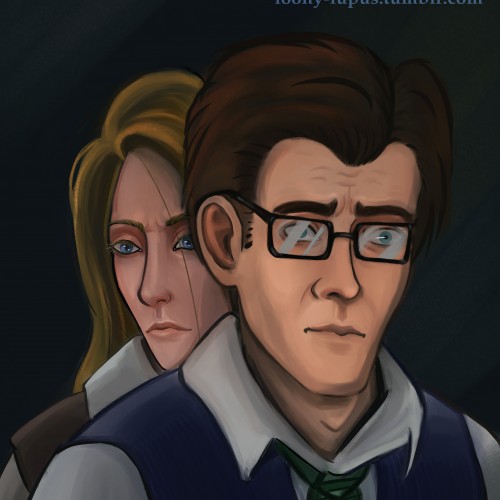
"AN IDIOT! A FOOL!"
"No... You're perfect, and don't let anyone make you think otherwise."
Arkham Origins ends with angst for this pairing, which is not surprising.
Context: Edward finds out that his girlfriend seduced him to ruin his plans because she is an informant, and his plan to expose corruption in Gotham would mean devaluing all the secrets she collected. It's a long story and who hasn't been a young ambitious careerist?.. Uh, maybe Amber is a special case, but she regrets it!.. Falling in love with him was not part of her plan, but it is what it is and everyone is unhappy and heartbroken in the end.
For the 14th of Marchusic something related to the Vocaloid song based on the famous theory of the Nickelodeon series Rugrats in this case Wenda takes the role of Angelica, here with the Pinki, Gray, Brud and Tunner dolls..
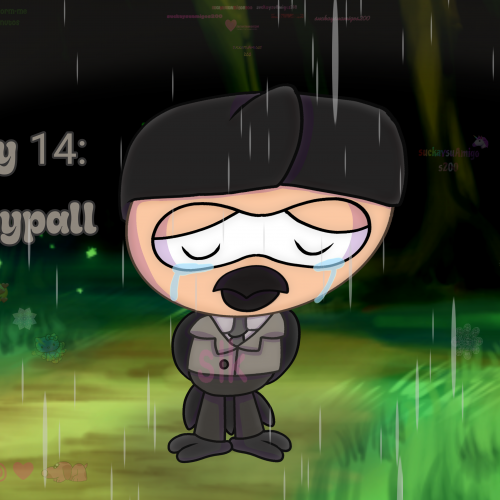
For the 14th of Marchusic, I drew Policarpo, who sometimes doesn't have a good day, even though he has his friends. He remembers that his acquaintances in the ranking don't treat him like family
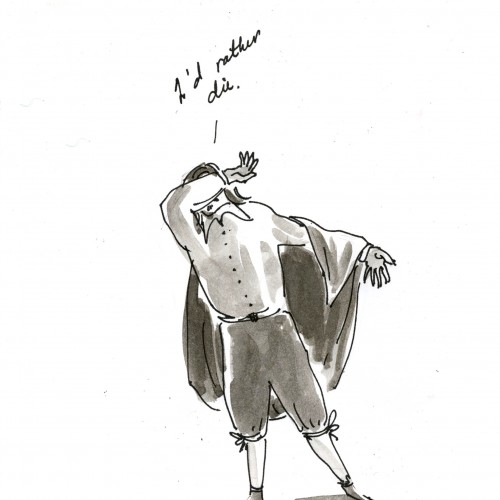
René Descartes (1596–1650)
Descartes was a late riser. The French philosopher liked to sleep until mid-morning, then linger in bed, thinking and writing, until 11:00 or so.
His comfortable bachelor’s life ended abruptly in late 1649, Descartes accepted a position in the court of Queen Christina of Sweden.
Descartes accepted a position in the court of Queen Christina of Sweden,Arriving in Sweden, in time for one of the coldest winters in memory, Descartes was notified that his lessons to Queen Christina would take place in the mornings—beginning at 5:00 A.M. He had no choice but to obey. But the early hours and bitter cold were too much for him. After only a month on the new schedule, Descartes fell ill, apparently of pneumonia; ten days later he was dead.
- From Daily Rituals: How Artists Work by Mason Currey
“Dubito, ergo cogito, ergo sum.
(English: "I doubt, therefore I think, therefore I am")”
― Rene Descartes
#dailyrituals #inktober #reneDescartes @masoncurrey #wouldratherdiethangetupearly
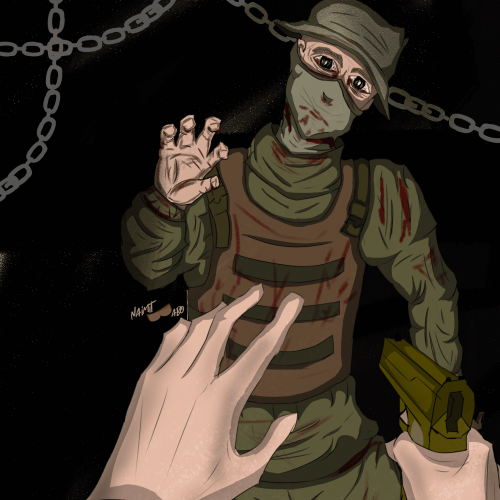
the wounded soldier is no longer just a man begging for mercy - he is infected with something dangerous, which makes him aggressive and possibly uncontrollable. His outstretched hand may now mean not a plea, but an attempt to grab the protagonist, which increases the sense of threat.
The soldier's eyes, wide open and seemingly filled with fear or madness, now look like a sign of loss of humanity. The blood stains on his clothes are no longer just traces of battle, but perhaps the result of his own aggression.
The chains in the background can be interpreted as a symbol of restriction or control over the infected - perhaps he was captured or locked up, but was able to break free.
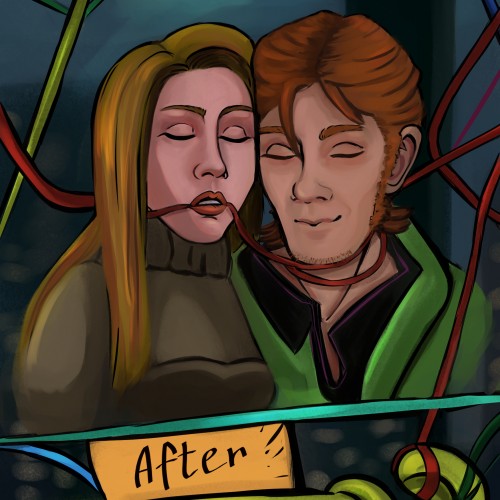
Cover for my fanfic i writing for "Batman: Zero Year" comic.
After Zero: https://archiveofourown.org/works/63498001
"I bloom, a flower fair and bright, A needed thing, for two, a light. In hearts' soft garden, breezes play, I grow in strength with each new day."
The Riddler nodded patiently, his eyes half-lidded in boredom. Amber devoted almost all her energy to keep reciting this stupid rhyme that she had composed and practiced until she turned pale from exhaustion. The remaining part of her energy was spent on NOT clutching her jacket.
"But then, a worm, with wicked bite. Gnawed at my grain and dimmed my light. A spreading blight, a change so foul. Cursed my existence, took its toll. My two companions, caught in strife. Began to gnaw and hurt their life. Absorbing poison, bit by bit. They both grew sick, they couldn't quit."
"…"
“Who am I?"
The Riddler lazily raised his eyes to the sky and just as slowly raised his hands.
"Love!"
His voice was full of theatrical reverence. He didn’t even pretended that the riddle made him ponder over it.
"To be more precise — twisted love. Am I right?"