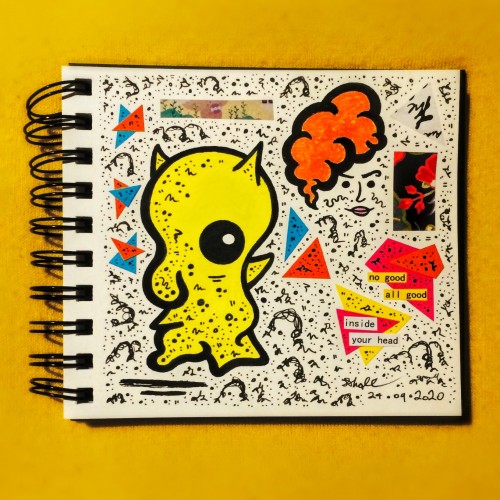
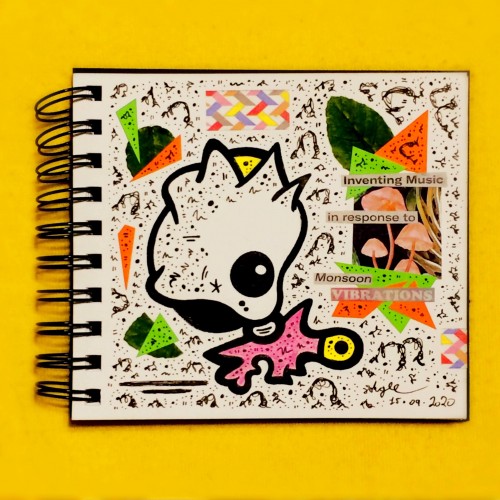
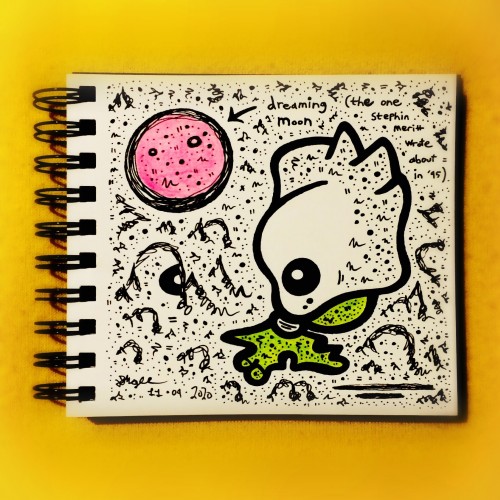
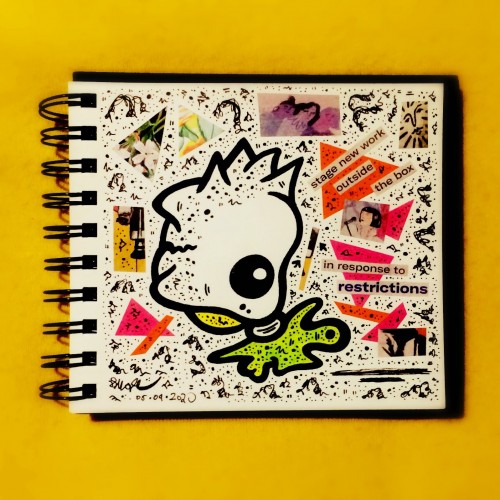
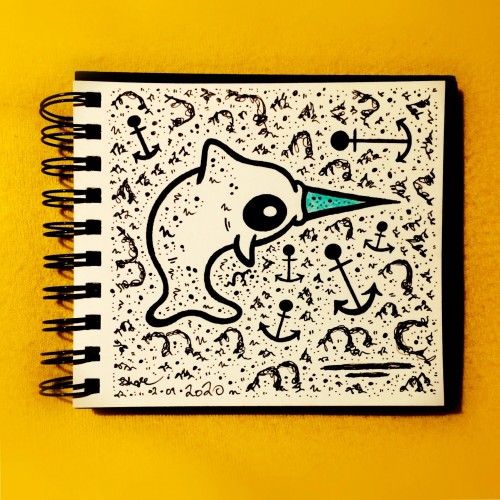
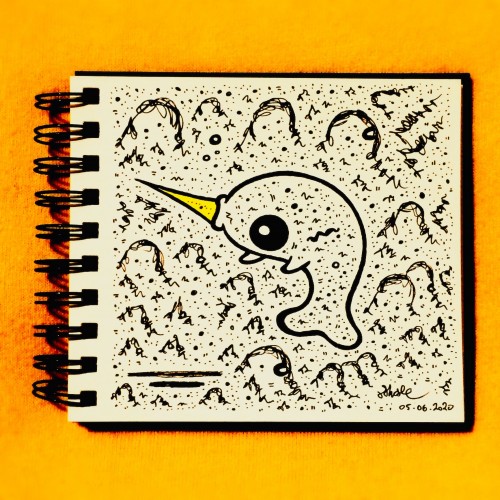
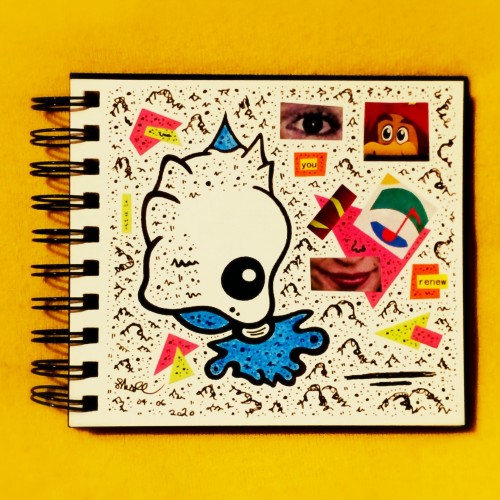
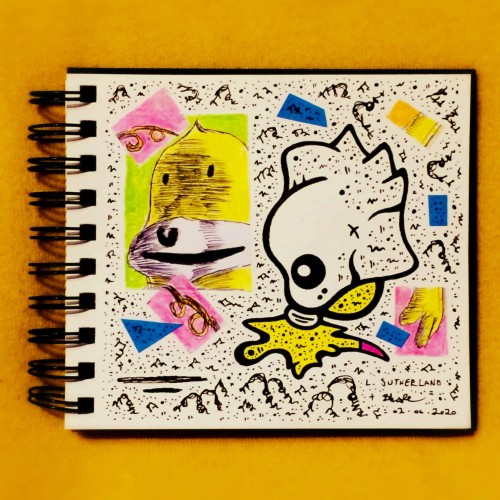
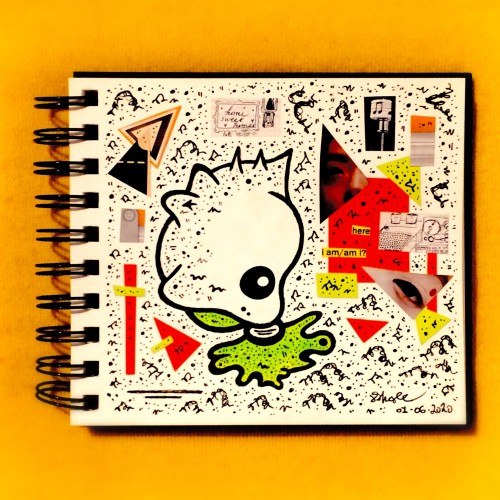
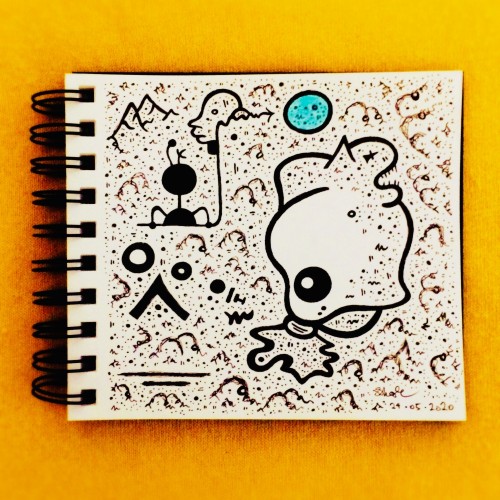
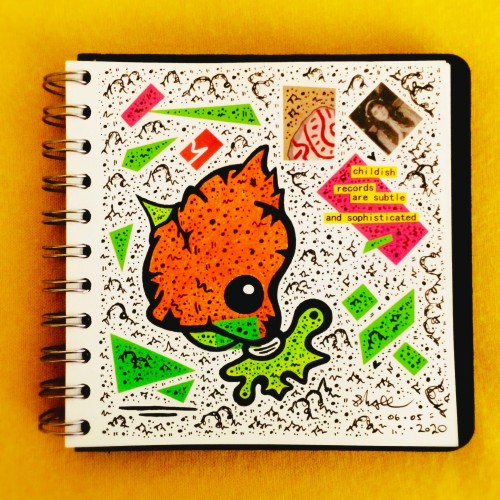
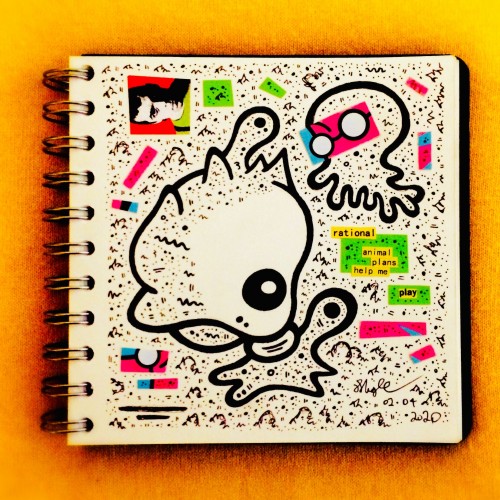
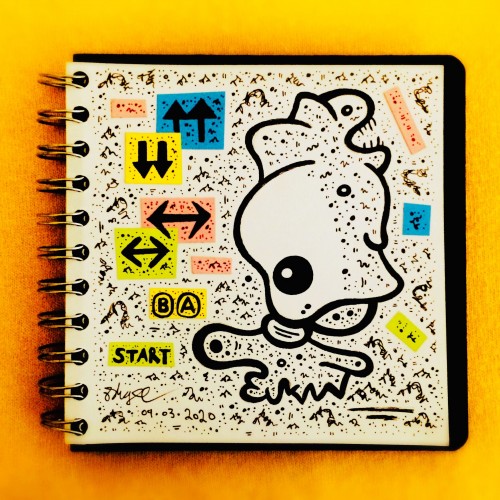
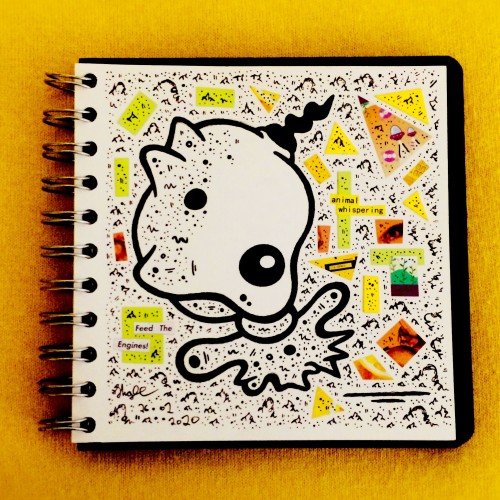
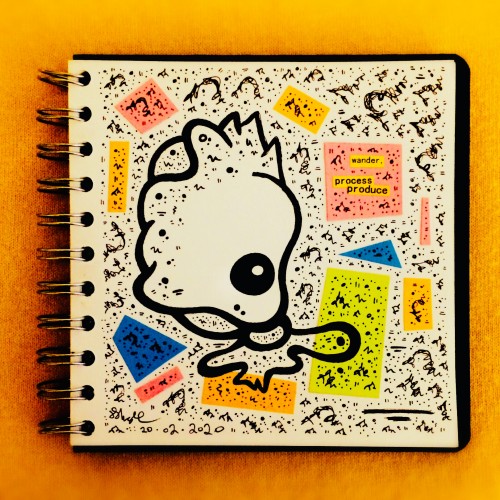
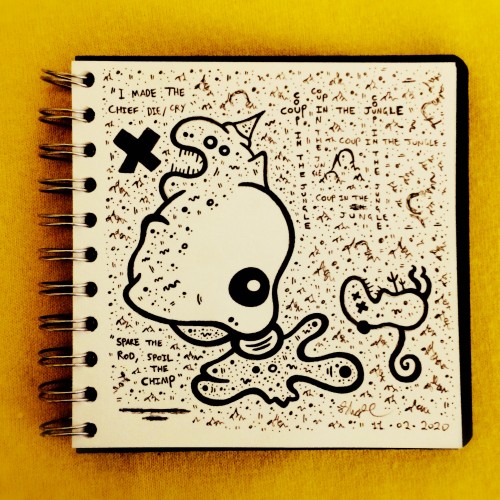
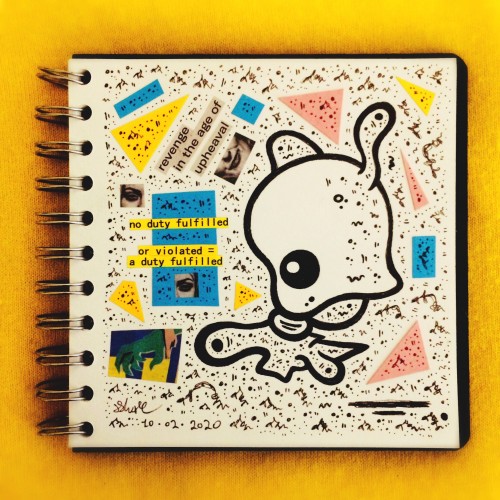
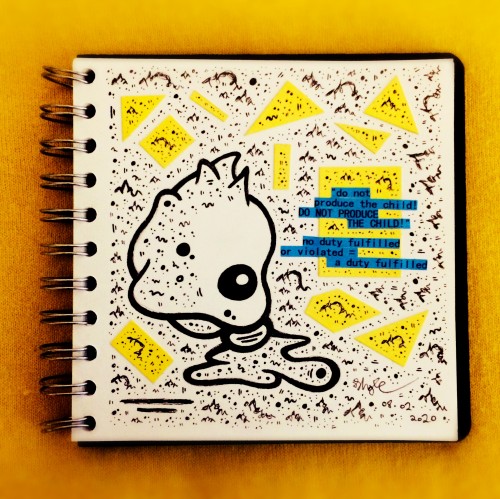
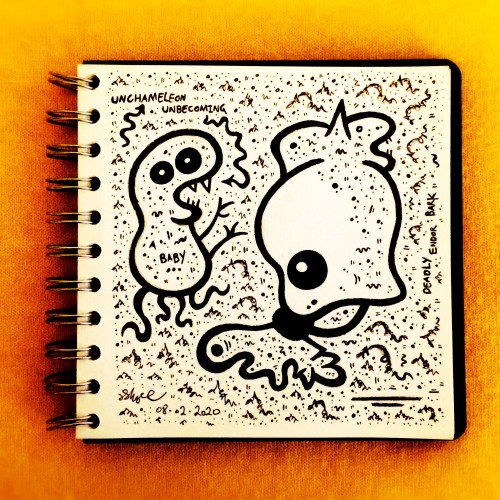
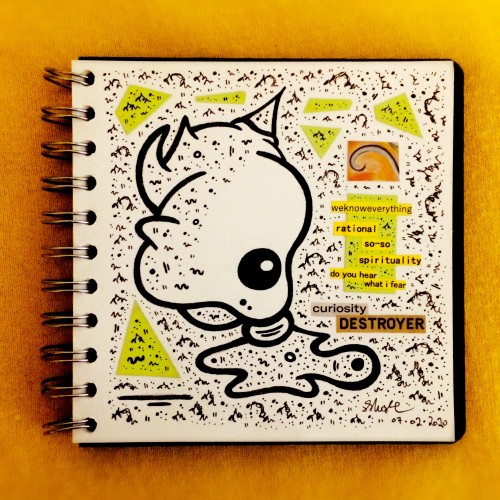
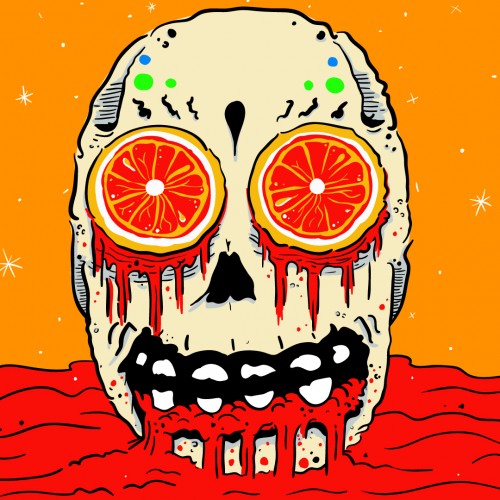
The product of a collaboration with a very good friend of mine's; I did my usual squid thing and he supplied the Mr Oizo homage-themed collage bits! Check out his work here: https://flynnsego.bandcamp.com/
I often have weird dreams that inspire my artwork, and that one I had last night where I took over a jungle (or was it a forest? I don’t know) sure got me inspired.
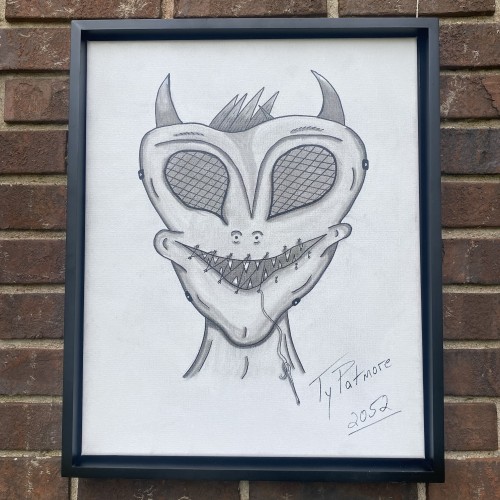
This portrait is the darkest in the series, examining the internal malice that persists even when communication is restricted, illustrating that evil doesn't require a loud voice.
* Visual Focus: The mask's mouth is horrifyingly held closed across the center by surgical thread and a needle, which only covers half of the wide, unnerving smile. The stitching reveals a set of sharp, feral teeth underneath. Disturbingly, a pair of prominent horns protrude from the top of the mask's head.
* Symbolism:
* The Stitched Mouth: Represents the idea of selective silence or the censorship of truth. The fact that the stitching only covers half the mouth highlights the "half-done" nature of modern morality. The revealed sharp teeth suggest that even in silence, the capacity for vicious, cutting, or "devilish" speech remains barely contained. Showed directly on the piece by the date being misleading.
* The Horns: A classic, unambiguous symbol of the Devil or pure malice. This is the figure's core identity—it suggests that even while hiding behind a neutral mask and being partially silenced, the individual's "tongue like the devil" and evil intent are still very much present, emphasizing the inherent corruption and hypocrisy behind the facade.
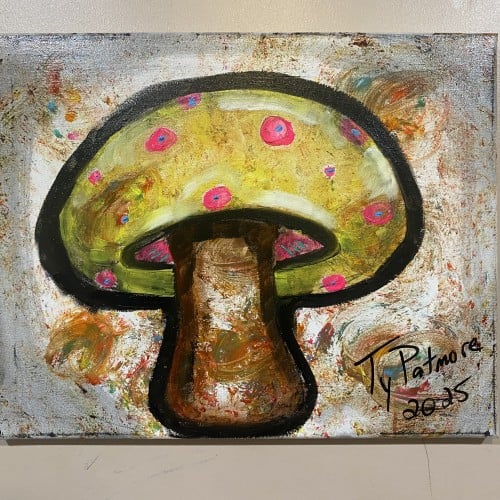
An exuberant, almost psychedelic take on a magical mushroom. The bright chartreuse cap is adorned with striking magenta spots that pop against a textured, almost chaotic background. The bold, black outline gives the subject a playful, cartoon-like presence, while the energetic brushwork suggests movement and a sense of wonder. Signed and dated by Ty Patmore, 2025.
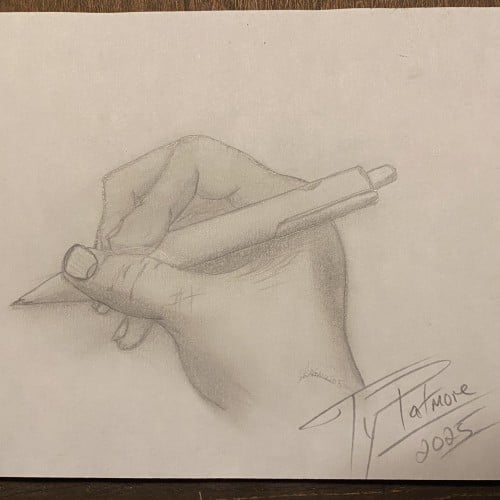
(2B pencil on 141mm x 118mm paper) "They're not flag-waving wannabes, or finger-pointing-blamemongers. They're true British Heroes! They were born with spines of steel, have spunk by the bucketload, and their upper-lips aren't just stiff, they're rock-solid! They're the type who'll kick those mad-dogs aside and proudly march, bare-arsed, into the midday sun!"
And this is my only contribution to mermay.
It doesn't look very good, I know. But I'm glad to draw a mermaid for the first time on mermay, I dreamed about it when I could only draw squiggles. I drew it for half a month, and during this time, I even managed to come up with a deep (don't shoot) lore.
According to my idea, Eddie needed some sunken cargo (and not only him). Amber offered her help in exchange for some relic of her people, which is stored in the Gotham Museum (even being a mermaid, she is an opportunist). Eddie told her to go to hell and tried to get the cargo with the help of his robots, which Amber successfully sabotaged underwater to pressure him into the deal.
In this drawing, Eddie's ran out of luck and got himself roughened up and almost drowned (definitely not Batman this time). Amber saved his skin. No gratitude is expected yet, but this is the least of their problems. Jean advises Amber (they are not at odds in this AU) to leave the polluted waters near Gotham before something happens to her and her health, but she is stupidly stubborn when it comes to the Riddler (and her goals).
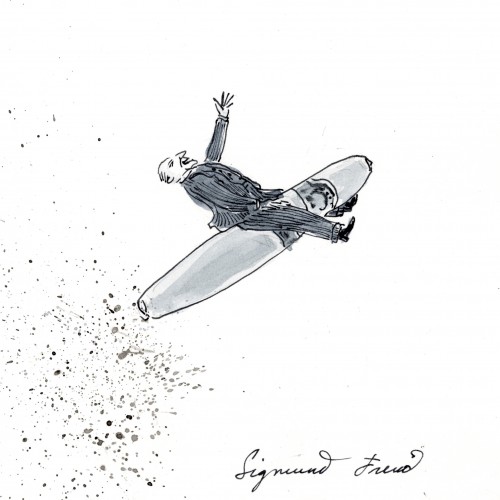
Sigmund Freud (1856–1939)
“I cannot imagine life without work as really comfortable,” Freud wrote to a friend in 1910. With his wife, Martha, to efficiently manage the household—she laid out Freud’s clothes, chose his handkerchiefs, and even put toothpaste on his toothbrush—the founder of psychoanalysis was able to maintain a single-minded devotion to his work throughout his long career.
Freud’s long workdays were mitigated by two luxuries. First, there were his beloved cigars, which he smoked continually, going through as many as twenty a day from his mid-twenties until near the end of his life, despite several warnings from doctors and the increasingly dire health problems that dogged him throughout his later years. (When his seventeen-year-old nephew once refused a cigarette, Freud told him,
From Daily rituals by Mason Currey
#dailyrituals #inktober #sigmundFreud @masoncurrey
Wolfgang Amadeus Mozart
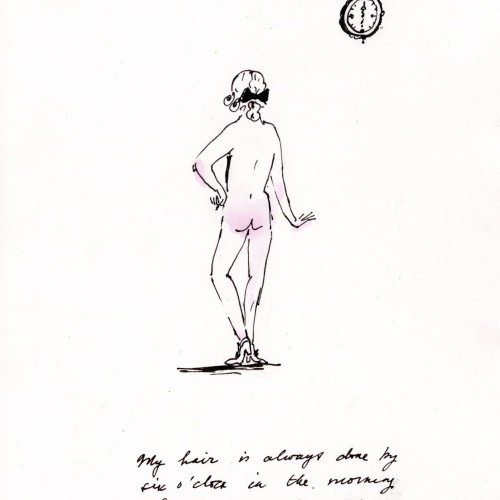
In a 1782 letter to his sister, he gave a detailed account of these hectic days in Vienna:
"My hair is always done by six o’clock in the morning and by seven I am fully dressed. I then compose until nine. From nine to one I give lessons. Then I lunch..."
From "Daily Rituals: How Artists Work", edited and with text by Mason Currey.