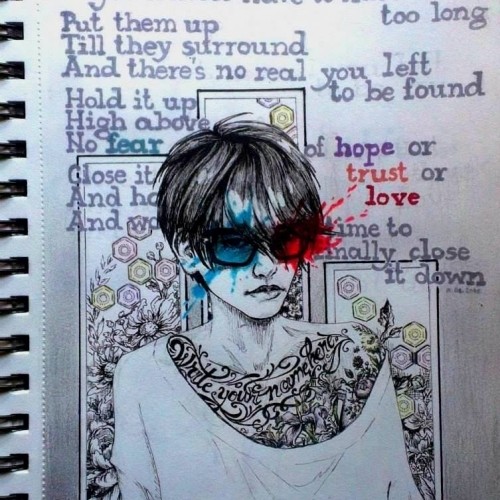
"Build them up
High and strong so you'll never have to hurt too long
Put them up
'Til they surround and there's no real you left to be found
Hold it up
High above no fear of hope or trust or love
Close it up
And hold your ground and wait unt
There’s a lot of waiting in life.
Waiting in lobbies.
Waiting on answers.
Waiting for braces to tighten, kids to grow, hearts to heal, or prayers to be answered.
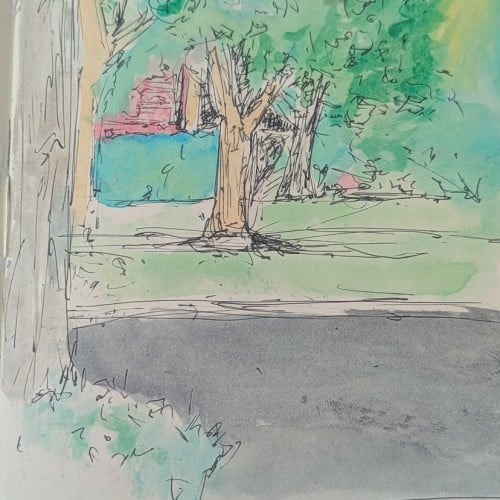
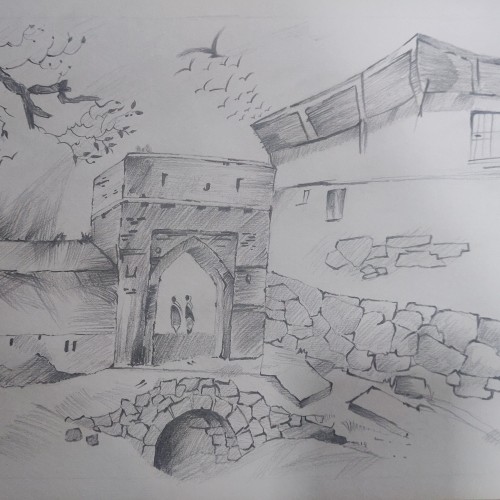
I sat at the orthodontist, watching dollars tighten on tiny wires, and made this sketch. A tree. A house. A street. Color helped the moment breathe.
I remember once hearing a chess master say, “There is no waiting in chess.”
It confused me—wasn’t there always a turn to wait for?
But he explained: “There’s no waiting. Only planning. Plotting. Analyzing. You’re always thinking.”
I once repeated that to a FIDE master. He got mad.
Maybe because waiting and patience aren’t the same thing.
We can be still and deeply active inside.
We can pause without being passive.
And then there’s Lindsey’s voice in the back of my head:
“That sounds like a first-world problem.”
“Speak life.”
“Be thankful. Rejoice always.”
And she’s right.
So here’s to filling waiting time with something creative.
Something kind.
Something that turns a delay into a doorway.
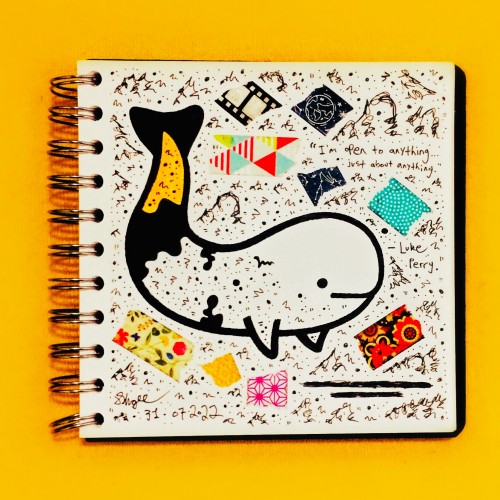
A handful of Brit flicks have been showing up on Disney+ lately, and one of them I watched recently had Luke Perry of all folks in it... the film in question is called ‘The Beat Beneath My Feet’ in case you’re curious.
In all seriousness though, British films with American actors in them as a lead/central character will forever and always fascinate me, much like Luke Perry’s birth name did! Rest well good sir and thanks for everything.
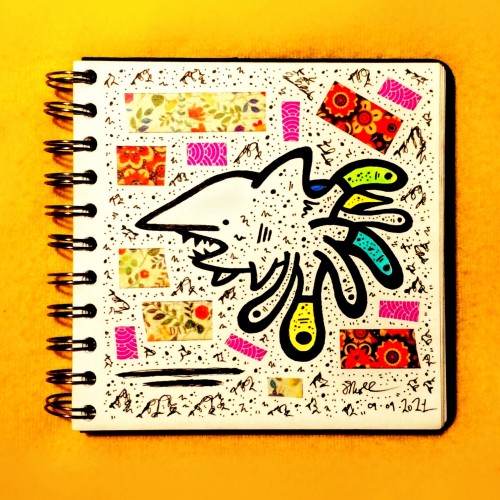
“In Caribbean mythology, the lusca or luska is the term given to one of the most feared sea monsters in the region. A deadly creature that prowls the deep and feeds on the unsuspecting. A being or a pod of beings that scour the Gulf eating up all in its wake. The lusca is a chimera; a mismatch of animal parts. A conglomerate of some of the Caribbean’s most feared creatures. It is a cryptid that said to hunt and prowl the Gulf and areas near the Mexican shore. Luscas are one of the lesser known cryptids of the deep. They are also one of the most fascinating not only on account of its fearsome symmetry but of the mystery that surrounds them...”
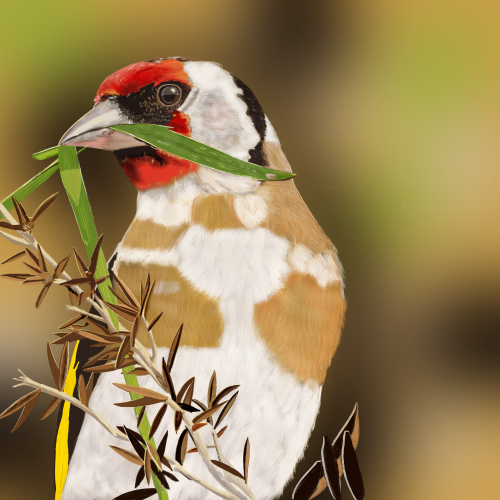
The European Goldfinch is a striking small finch with a distinctive red face and black-and-white head. Its wings are black with a bright yellow wing bar, while the body is mainly buff or light brown.
During the breeding season, the bill of male and female goldfinches is white, but at other times of the year, it is marked with a black tip.
Female goldfinches are very alike in appearance to males, and visually, it is hard to tell them apart from a distance. At close range, the sexes can be distinguished by the size of the red facial patch, with the females not extending past the eyes as it does in males of the species.
Juvenile goldfinches do not develop adults' red, white and black facial markings until the late summer or autumn after hatching. Until this point, they have streaky buff-brown markings on their heads. Info: Birdfact . com
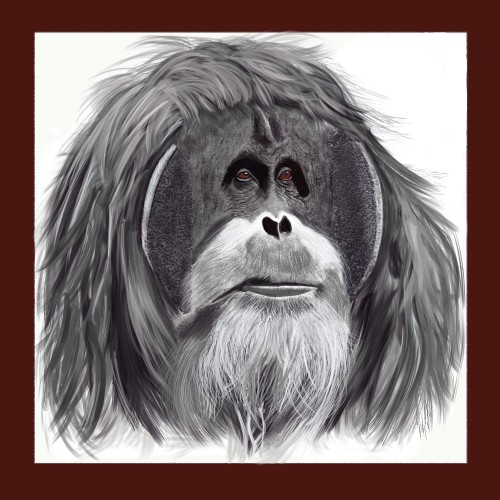
Orangutan sketch (Original Dimensions: 3000x3000px x 300DPI) to try out my new iPad Air M2 13 using both iArtbook Pro and Artstudio Pro artist apps. This iPad is awesome for power and quickness.
Here are three main facts about adult male orangutans:
1. **Physical Characteristics**: Adult male orangutans are significantly larger than females, with an average height of about 1.2-1.5 meters (4-5 feet) and weighing around 50-100 kg (110-220 lbs). They develop distinctive physical features such as large cheek flanges (fleshy pads) and a throat pouch, which they use to produce long calls to communicate across the dense forests.
2. **Solitary Lifestyle**: Unlike many primates, male orangutans are solitary creatures. They spend most of their lives alone, except during brief periods of mating. This solitary behaviour reduces competition for food and other resources. The males will range widely and have large territories that often overlap with the ranges of several females.
3. **Long Call**: Adult male orangutans have a unique and powerful long call that can be heard over great distances. This call is used to establish territory and attract females. The call consists of a series of roars, grunts, and bellows, and it serves to warn other males of their presence, helping to maintain social hierarchy and reduce conflicts.
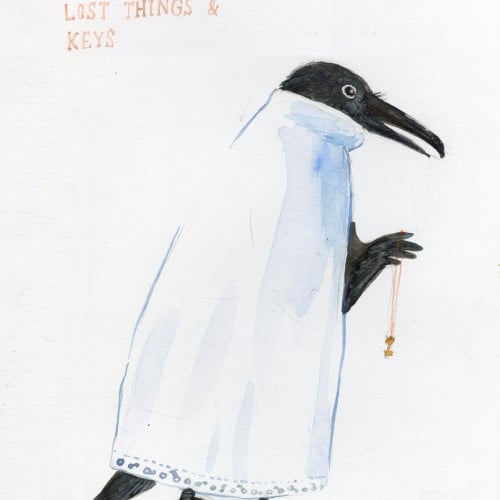
Patron Saint of Lost Keys and Small Things.
Reminded me of this poem by Elizabeth Bishop.
One Art
The art of losing isn’t hard to master;
so many things seem filled with the intent
to be lost that their loss is no disaster.
Lose something every day. Accept the fluster
of lost door keys, the hour badly spent.
The art of losing isn’t hard to master.
Then practice losing farther, losing faster:
places, and names, and where it was you meant
to travel. None of these will bring disaster.
I lost my mother’s watch. And look! my last, or
next-to-last, of three loved houses went.
The art of losing isn’t hard to master.
I lost two cities, lovely ones. And, vaster,
some realms I owned, two rivers, a continent.
I miss them, but it wasn’t a disaster.
—Even losing you (the joking voice, a gesture
I love) I shan’t have lied. It’s evident
the art of losing’s not too hard to master
though it may look like (Write it!) like disaster.
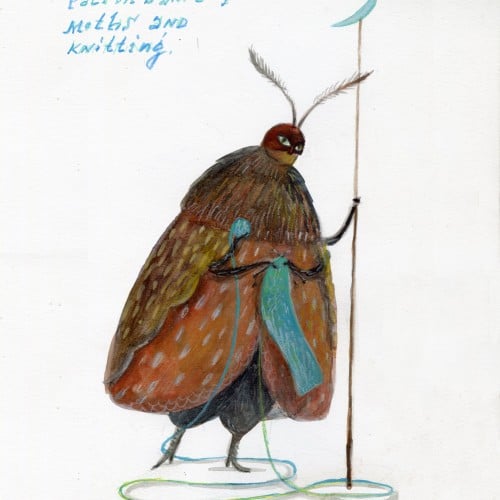
Patron Saint of Moths and Knitting.
I do love moths so much. There is so much quiet beauty in them. Just wish they would stay away from my favorite sweaters.
#PatronSaint #dailyDrawing
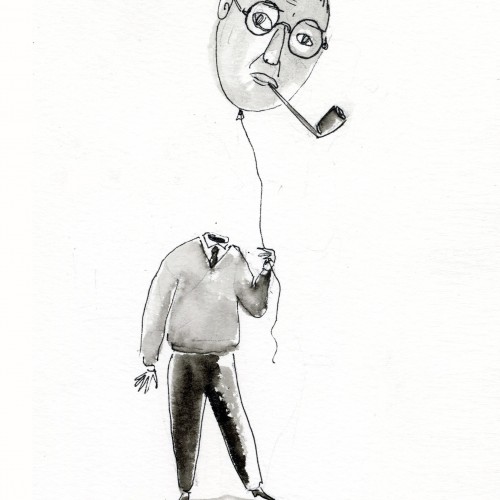
P. G. Wodehouse (1881–1975)
Once, when he was beginning a Wooster-Jeeves novel, he experimented with using a Dictaphone. After he had dictated the equivalent of a page, he played it back to check it over. What he heard sounded so terribly unfunny that he immediately turned off the machine and went back to his pad and pencil.
After this, according to the biographer Robert McCrum, “he might snooze a bit in his armchair, have a bath, and do some more work, before the evening cocktail (sherry for her, a lethal martini for him) at six, which they took in the sun parlour, overlooking the garden.
- From Daily Rituals: How Artists Work by Mason Currey
“He had just about enough intelligence to open his mouth when he wanted to eat, but certainly no more.”
― P.G. Wodehouse
#dailyrituals #inktober #PGWodehouse @masoncurrey
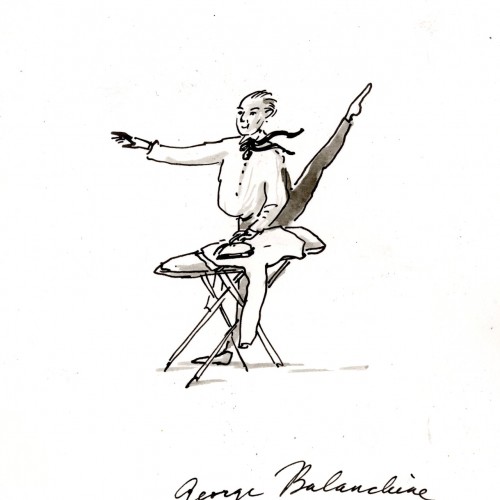
George Balanchine (1904–1983)
Balanchine liked to do his own laundry. “When I’m ironing, that’s when I do most of my work,” he once said. The choreographer rose early, before 6:00 A.M., made a pot of tea, and read a little or played a hand of Russian solitaire while he gathered his thoughts. Then he did his ironing for the day (he did his own washing too, in a portable machine in his Manhattan apartment) and, between 7:30 and 8:00, phoned his longtime assistant for a rundown of the day’s schedule.
- From Daily Rituals: How Artists Work by Mason Currey
“I like to do things certain ways and I disagree with everybody but I don't even want to argue.”
― George Balanchine
#dailyrituals #inktober #balanchine @masoncurrey
Draped in delicate pencil strokes, this artwork elegantly portrays a historic city gate, standing as a timeless sentry to myriad untold stories. Each shaded contour brings forth the intricate details of the gate's architecture, echoing the urban landscape of a bygone era. The deft use of monochrome evokes a nostalgic journey through the annals of time, where every shadow and highlight adds to the depth and texture of this piece. This mesmerizing blend of artistry and history invites viewers to step into the past and embrace the serene splendor of the city's storied gateway.
Jean-Paul Sartre (1905–1980)
By the 1950s, too much work on too little sleep—with too much wine and cigarettes—had left Sartre exhausted and on the verge of collapse. Rather than slow down, however, he turned to Corydrane, a mix of amphetamine and aspirin then fashionable among Parisian students, intellectuals, and artists (and legal in France until 1971, when it was declared toxic and taken off the market). The prescribed dose was one or two tablets in the morning and at noon. Sartre took twenty a day, beginning with his morning coffee and slowly chewing one pill after another as he worked. For each tablet, he could produce a page or two of his second major philosophical work, The Critique of Dialectical Reason.
The biographer Annie Cohen-Solal reports, “His diet over a period of twenty-four hours included two packs of cigarettes and several pipes stuffed with black tobacco, more than a quart of alcohol—wine, beer, vodka, whisky, and so on—two hundred milligrams of amphetamines, fifteen grams of aspirin, several grams of barbiturates, plus coffee, tea, rich meals.”
- From Daily Rituals: How Artists Work by Mason Currey
#dailyrituals #inktober #jeanPaulSartre @masoncurrey
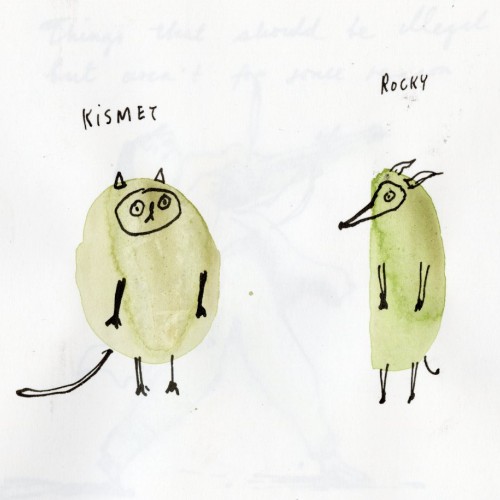
Keep thinking about a story about Kismet (one of my cats) and Rocky (a friends dog I just met). I don’t know what they would both do in it, but there would be much shivering and tail wagging.
Ps. Kismet is not fat. She is actually very svelte. But I had two blobs on my page and she was destined to be one of them
https://www.instagram.com/p/C7mUq3BggSy/?utm_source=ig_web_copy_link&igsh=MzRlODBiNWFlZA==