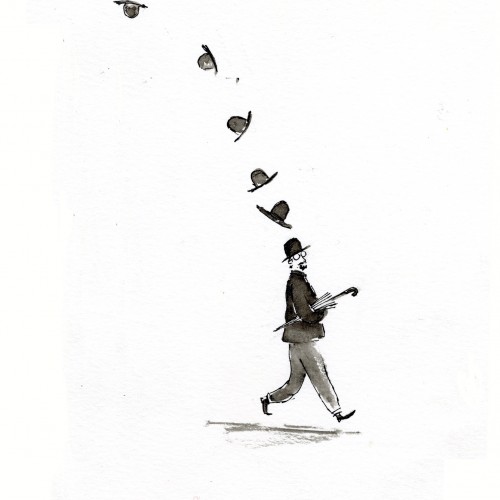
The amaranthus are commonly used as symbols of eternity/immortality due to its ability to retain its color for a long time after dying/cut off". I thought that this phenomenon represents "hope" more than the more common meaning of "devotion/undying love". Having hope keeps us alive during difficult periods where we are cut off from the things that typically motivates us, whether it be financial resources, loved ones, etc., and I tried to convey this by juxtaposing the vibrant colours of the flowers (symbolizing hope and life) with the grayscale tone of the statue (symbolizing death and brokenness).
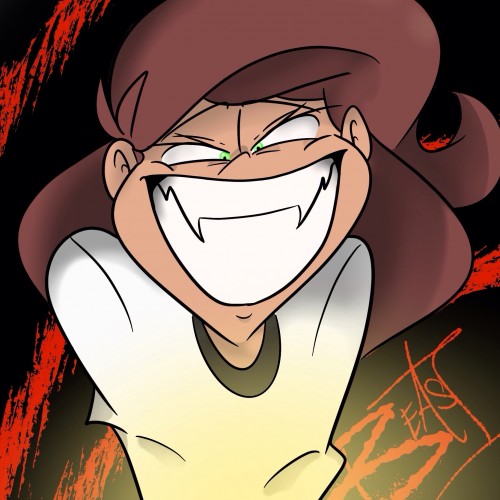
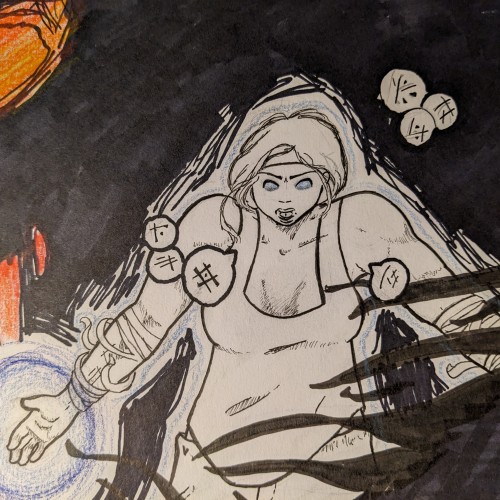
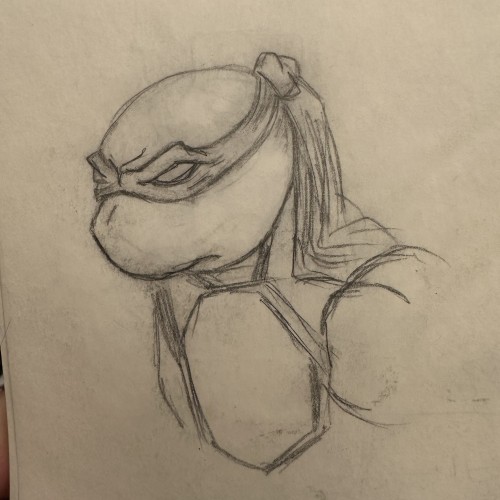
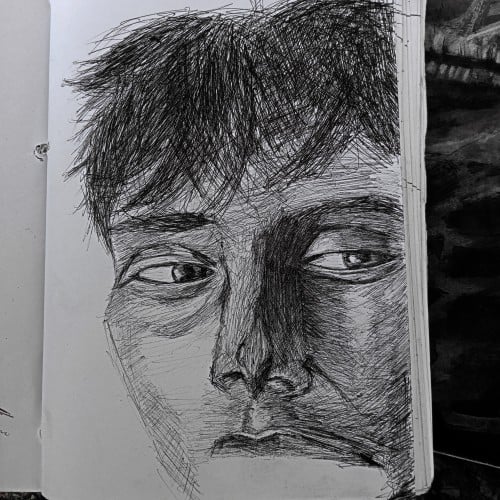
All my drawings are random ideas from my head. I actually just started drawing in pencil about a year ago. I love to normally use felt tip pens. I just hope all like what they see. We're all artists here so everyone should know that we are our own worst critics lol.
The story behind this is that when my little sister and I were kids, we invented a game called Blammer. You duct tape small trashcans to your back and try to slam a sock ball into your opponents basket. We used tennis rackets for defense. We used to terrorize our parents with all the running and yelling in the house. We're in our 30's now and try and play when we see each other. I call her Chicken and she calls me Ducky. Which is why we're are riding birds. One of my favorite pieces I've ever done. A birthday present for her.
A birthday present for my cousin, Alexis. I asked someone what she was into for this. "She likes hello kitty, the utah mountains, sharks, leopard print, and flowers." This one was a challenge to come up with.
Living, breathing, and creating with nature
When you wake up to the gentle sights and sounds of the pond, trees, plants, birds, bees, and dragonflies, inspiration flows effortlessly. So, when the owner asked for a menu design for @SarayaGoa Art Café, I thought—why not let nature speak for itself?
Using pen and ink, I captured the beauty of my mornings here—each stroke reflecting the lush surroundings that make Saraya unique. Instead of focusing on just food items, I filled the cover and inside pages with illustrations of the vibrant life around us. Dining here means eating among the green, surrounded by the diverse plants of our permaculture gardens.
This study is a tribute to the beauty that shapes every meal at Saraya.
Drawing of leaves and nuts from the Marri tree, found in the Southwest region of Western Australia. This majority of trees that surround my property are the Marri from the Myrtaceae family is endemic to this area. They grow upwards of 40 metres and are a favourite food to the protected Red-tailed Black Cockatoo.
Joan Miró (1893-1983)
Miró always maintained a rigidly inflexible daily routine—both because he disliked being distracted from his work, and because he feared slipping back into the severe depression that had afflicted him as a young man, before he discovered painting. To help prevent a relapse, his routine always included vigorous exercise—boxing in Paris; jumping rope and Swedish gymnastics at a Barcelona gym; and running on the beach and swimming at Mont-roig, a seaside village where his family owned a farmhouse.
Miró hated for this routine to be interrupted by social or cultural events. As he told an American journalist, “Merde! I absolutely detest all openings and parties! They’re commercial, political, and everybody talks too much. They get on my tits!”
From Daily Rituals: How Artists Work by Mason Currey
Initiate of the Order of the Saints of the Scrapyard. All members of the order are entitled to the scrap of the mechs they fell (with the pieces they decline to use or take with them being tithed). To join the ranks proper, an initiate must fell an enemy pilot and bring their mech to heel (often by detonating the cockpit and going from there)). Initiates are given little more than a fusion engine (that may double as a shaped charge (or a death sentence depending on their luck)), a kinetic energy recycler (and shield for it to power), a small pile of scraps to build the rest of their sled, and a book of prayers for the scrapyard saints. Most will not graduate their initiation, ending their short stint as little more than ash on the breeze.
I've been going through my sketches, both completed and incomplete, and found a drawing of a young Sumatran Tiger that I began working on around two years ago, but never completed. I'm actually relieved that I didn't draw it earlier, as it has allowed me to gain more experience in illustrating this stunning creature, which is unfortunately a species at risk of extinction.
A few facts about the Sumatran Tigers...
The Sumatran tiger Panthera tigris sumatrae*, the smallest tiger subspecies, is critically endangered and stands as the final surviving species of island tigers. Poaching poses a significant danger to Sumatran tigers as hunters target them for their skin, bones, and canines. Additionally, habitat loss caused by oil palm, coffee, and acacia plantations, further endangers these big cats by reducing their prey availability and pushing them closer to human habitations.
It is estimated that there are fewer than 400 mature individual tigers in Sumatra in isolated pockets of protected land. Three of the protected areas are classified as UNESCO World Heritage Sites but all are in danger of losing this status due to threats from poaching, illegal logging, agricultural encroachment, and planned road building. It is for these reasons the Sumatran tiger is classified in the most severe IUCN status: Critically endangered.
Description: The Sumatran tiger is the smallest and darkest tiger subspecies and tends to be more bearded and maned than the other subspecies. Male tigers can expect to reach somewhere in the region of 120kg and 8ft from head to tail vs females who average 91kg and 7ft length.
Breeding: Female tigers are sexually mature at about 3 or 4 years of age, and males at about 4 to 5 years. Mating may occur any time during the year, but it most frequently takes place from November to April. The information was obtained from conservewildcats.org. Thank you.
#indonesia #criticallyendangered #sumatrantiger #amateurartist #tigerdrawing #tigersketch #tigercub #sketchadayapp #october2024
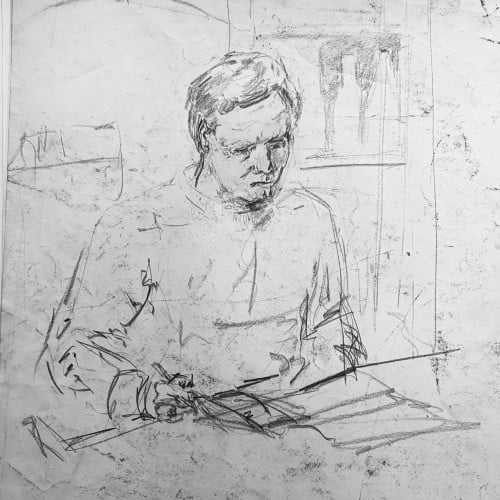
Anthony Trollope (1815–1882)
"All those I think who have lived as literary men,—working daily as literary labourers,—will agree with me that three hours a day will produce as much as a man ought to write.
...
"I always began my task by reading the work of the day before, an operation which would take me half an hour, and which consisted chiefly in weighing with my ear the sound of the words and phrases.…
This division of time allowed me to produce over ten pages of an ordinary novel volume a day, and if kept up through ten months, would have given as its results three novels of three volumes each in the year..."
From Daily rituals by Mason Currey
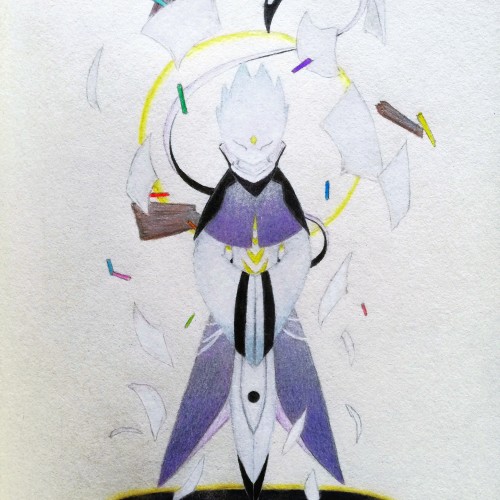
#dailyrituals #inktober #anthonyTrollope @masoncurrey
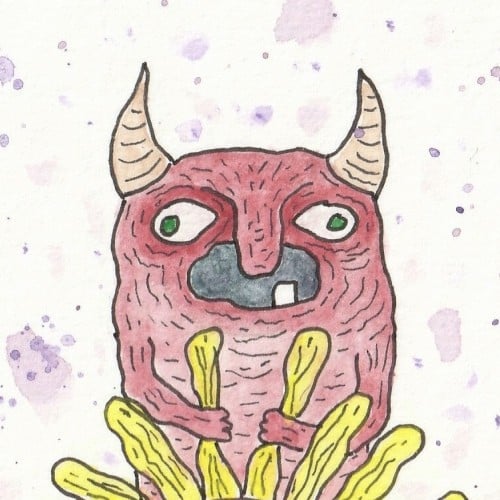
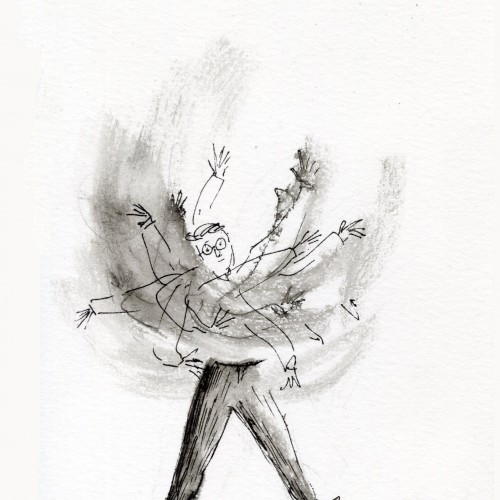
(Gel Fineliner on A5 Paper) The second of five small drawings which are meant to show what happens when an artist gets bored of a subject. You draw something halfheartedly and think "That'll do!" XD
Sigmund Freud (1856–1939)
“I cannot imagine life without work as really comfortable,” Freud wrote to a friend in 1910. With his wife, Martha, to efficiently manage the household—she laid out Freud’s clothes, chose his handkerchiefs, and even put toothpaste on his toothbrush—the founder of psychoanalysis was able to maintain a single-minded devotion to his work throughout his long career.
Freud’s long workdays were mitigated by two luxuries. First, there were his beloved cigars, which he smoked continually, going through as many as twenty a day from his mid-twenties until near the end of his life, despite several warnings from doctors and the increasingly dire health problems that dogged him throughout his later years. (When his seventeen-year-old nephew once refused a cigarette, Freud told him,
From Daily rituals by Mason Currey
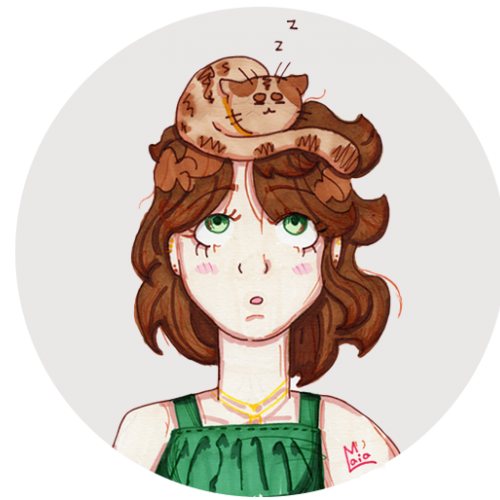
#dailyrituals #inktober #sigmundFreud @masoncurrey
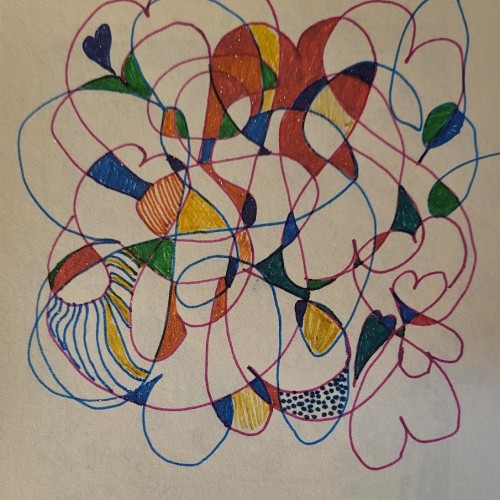
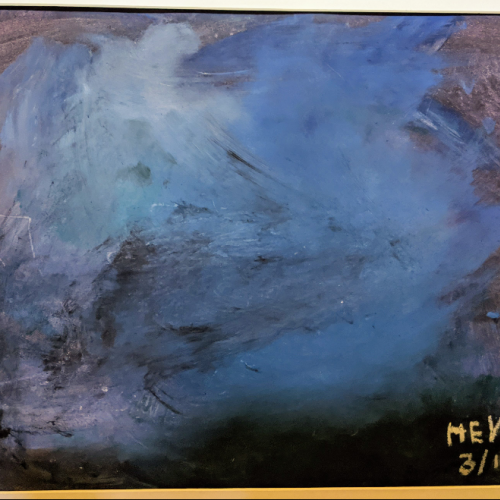
An abstract manifestation of my mind undergoing an "unblocking" to recover the spring of creativity. Putting it in more concrete and psychological terms, a projection of illegible thought processess that free mental binds that have been plagueing my mind for the past year or two.
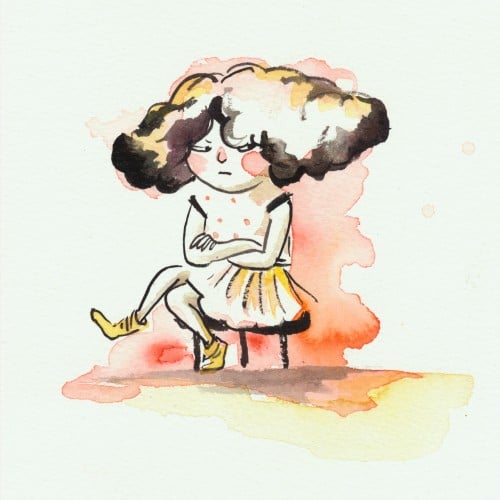
(Gel Fineliner on A5 Paper) The central image is small because it is that small (about 4cm). It's the first of five which represents that point every artist gets to where they say to themselves: "I really CAN'T BE ARSED doing this!" and casually knock out anything. I thought it was apt for the "encouraging" nature of Inktober ;P
This poignant black and white pencil and ink drawing captures the essence of a dark, broken man with sand slipping through his fingers, symbolizing the passage of time and lost hopes. A hole in his chest reveals his heart, while beside him stands a similarly broken woman. In the foreground, withered flowers and a shattered hourglass accentuate the theme of decay and loss. The background features a forgotten playground, representing the loss of innocence, and a swirling vortex with lightning in the sky that engulfs the man's illusion of reality. This artwork speaks to the emotional turmoil and fragility of the human experience.
Jane Austen (1775–1817)
Austen never lived alone and had little expectation of solitude in her daily life. Her final home, a cottage in the village of Chawton, England, was no exception: she lived there with her mother, her sister, a close friend, and three servants, and there was a steady stream of visitors, often unannounced.
...
Austen wrote in the family sitting room, “subject to all kinds of casual interruptions,” her nephew recalled. She was careful that her occupation should not be suspected by servants, or visitors, or any persons beyond her own family party. She wrote upon small sheets of paper which could easily be put away, or covered with a piece of blotting paper. There was, between the front door and the offices, a swing door which creaked when it was opened; but she objected to having this little inconvenience remedied, because it gave her notice when anyone was coming.
“Composition seems to me impossible with a head full of joints of mutton & doses of rhubarb.”
From Daily rituals by Mason Currey
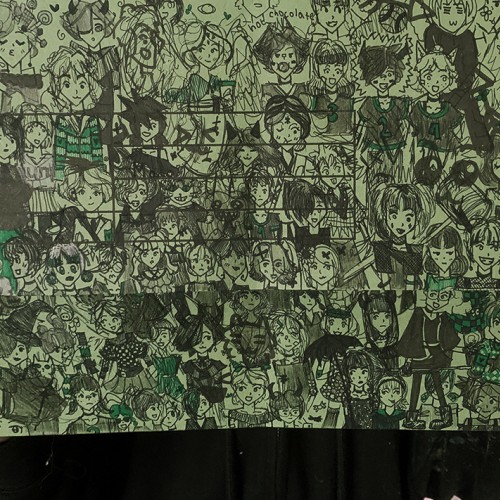
#dailyrituals #inktober #janeAusten @masoncurrey