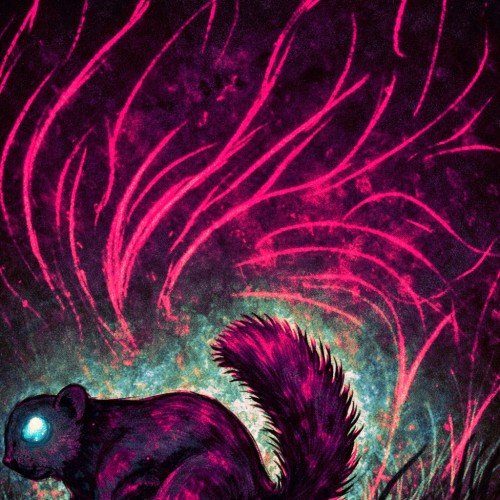
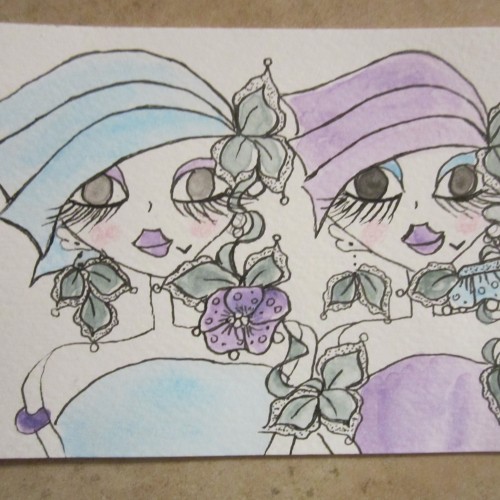
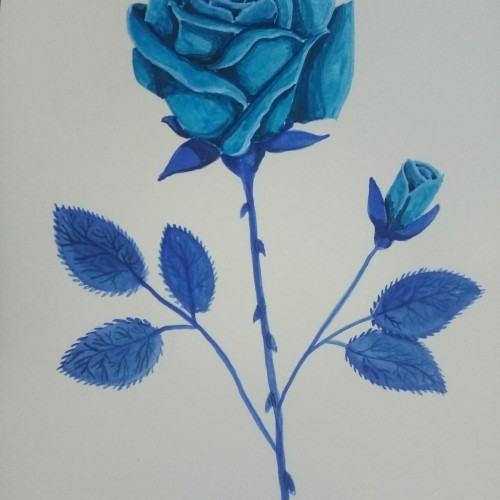
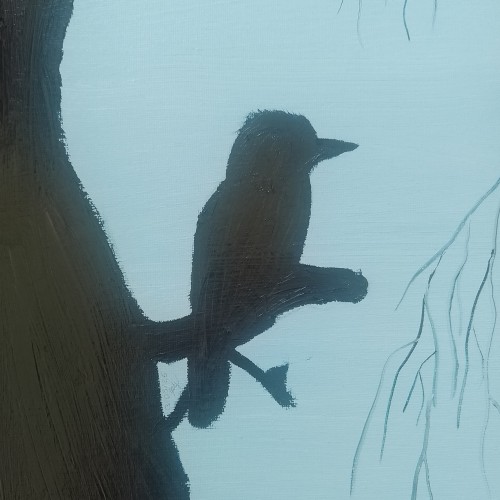
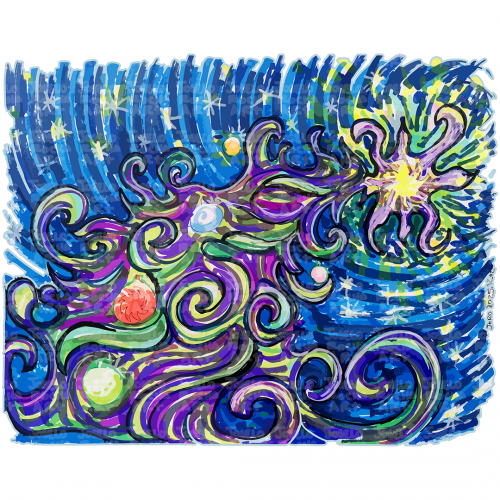
A colorful and dynamic scene depicts a Cosmic Christmas Tree with swirling galaxies and stars against a dark background. The vibrant colors blend together to create an impression of movement and energy in space.
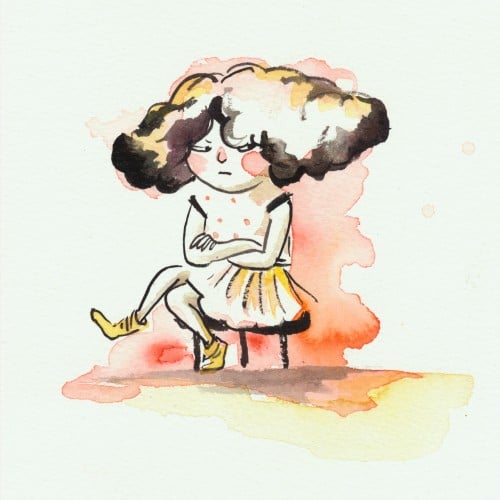
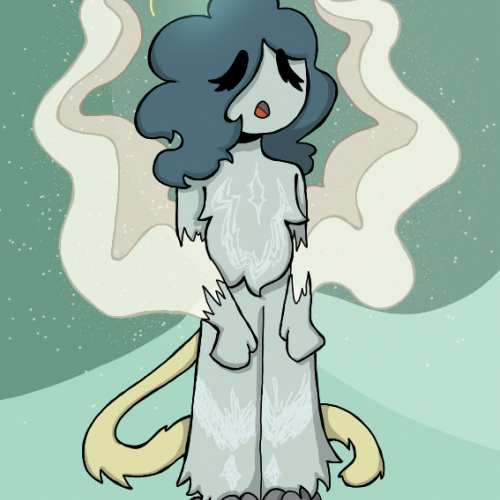
For some reason, I had to prove to myself that good art does indeed take time. Anyways, this is an angel character (they're not real angels, they're a fictional species of mine) in my "spacefluff" style. I think I want to name her Mosambi, because she's sweet.
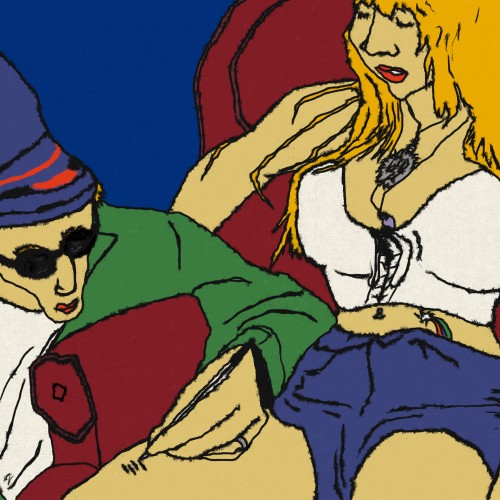
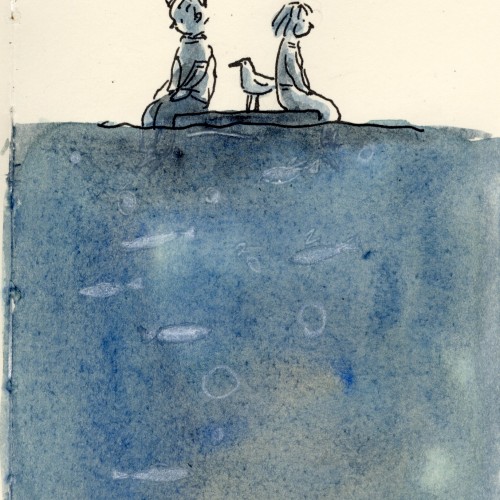
All men have parties and are pals who never let each other down. A pal can say terrible things which are forgotten the next day. A pal never forgives, he just forgets and a woman forgives but never forgets. That's how it is. That's why women aren't allowed to have parties. Being forgiven is very unpleasant.
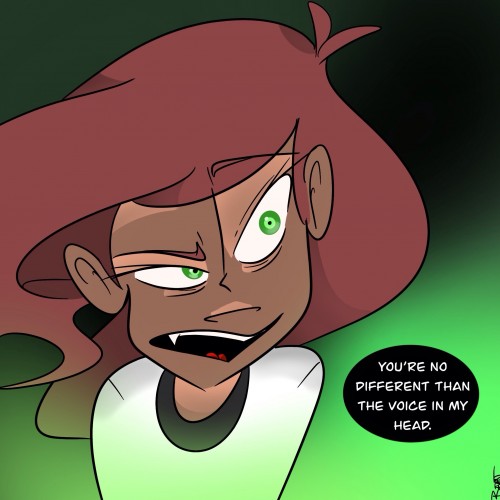
- Sculptor's Daughter by Tove Jansson
#dailydrawing #tovejansson
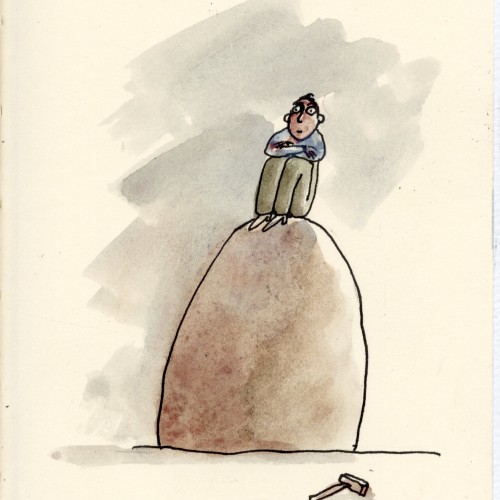
I made my golden calf in the arbour because it was a pagan place and a circle is always a good setting for sculpture.
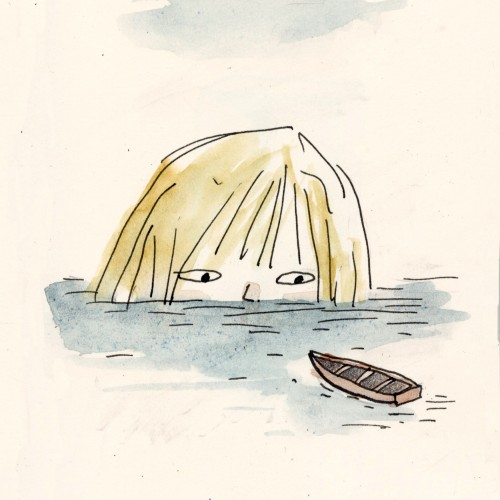
It was very difficult to get the legs to stay upright but in the end they did and I nailed them to the socle just to make sure. Sometimes I stood still, listening for the first rumble of the wrath of God. But so far he had said nothing. His great eye just looked right down into the arbour through the hole between the tops of the spruce trees. At last I had got him to show some interest.
- Sculptor's Daughter by Tove Jansson
#dailydrawing #tovejansson
God lived on the hill above the rock-garden and there was a forbidden cart up there. At sunset he spread out like a mist over the house and the field. He could make himself quite small and creep in everywhere in order to see what one was doing and sometimes he was only a great big eye. Moreover he looked just like Grandfather.
We raised our voices in the wilderness and were continually disobedient because God so likes to forgive sinners. God forbade us to gather manna under the laburnum tree but we did all the same. Then he sent worms up from the earth to eat up the manna. But we went on being disobedient and we still raised our voices.
- Sculptor's Daughter by Tove Jansson
#dailydrawing #tovejansson
24x30 canvas A weathered steer skull fixed against a wagon wheel, drawn in graphite, charcoal, and ink, evokes the grit and resolve of westward migration. The skull stands as a quiet emblem of endurance, sacrifice, and survival, while the wheel anchors the piece in motion and passage. Westbound ’49 references the year many headed west in search of promise, capturing the stark beauty and cost of that journey in restrained black and white.
A sketch recalling an era when smoking indoors after a meal was commonplace—a fleeting pause of stillness before continuing the journey ahead. Done with mechanical pencil on scrap printer paper.
A late Christmas edition, but I suppose it's fine because it's still Christmastide. And according to the story, the wise men didn't actually arrive at the time of Jesus's birth so the lateness has some historical basis.
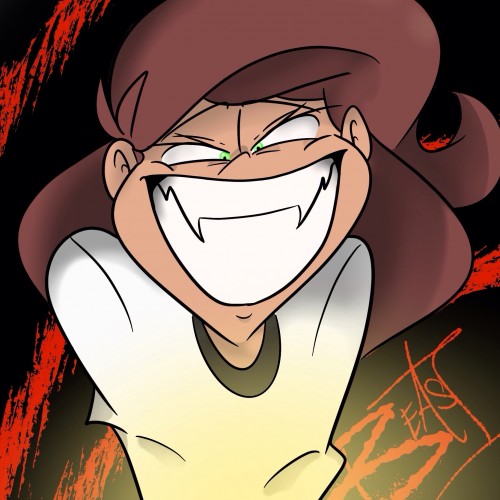
I swear I wasn't going to do fan art for Hazbin. But, yet here I a be. I'm not sure when this will be done. I have been feeling....yeah...so this might be a while until its completed.
This feather rests as a symbol of gentle guardianship. Light enough to drift, yet preserved with intention, it speaks to protection without restraint—something watched over, not controlled. It represents care that is quiet, constant, and strong precisely because it does not weigh anything down.
A moment suspended between departure and arrival. Interim explores transition—where movement pauses, direction is uncertain, and meaning exists in the waiting. Rendered with restraint and negative space, the piece invites reflection on the quiet spaces between what was and what will be.
Meadhbh stretching after a long pose.
Sketchbook work from November 2025
2025, Ballpoint Pens on 5” x 8” (10” x 8” Double page spread) Sketchbook, Adobe Photoshop
A solitary rowboat drifts across a muted, restless surface, unanchored and unattended. Rendered in charcoal, ink, and subtle white highlights, the vessel exists in a quiet state of motion—moving, yet going nowhere. The surrounding water is suggested through loose, rhythmic lines, emphasizing atmosphere and isolation over realism.
The boat is sharply defined against the hazy background, its dark contours and interior shadows contrasting with the soft, unsettled environment. Oars rest unevenly, implying recent human presence while reinforcing absence. The name Perditas—Latin for “lost”—is affixed to the hull, anchoring the emotional weight of the piece without explanation.
This work explores themes of solitude, uncertainty, and endurance. With no shoreline or destination in sight, Perditas becomes a reflection on drifting—physically, mentally, and emotionally—inviting the viewer to confront their own sense of direction within an undefined space.
King Olaf the Forgetful did eventually find his golden helm, in a gully behind his castle. It was just a shame the Crusade of the Lost Helm had led to every neighbouring land being ransacked first.