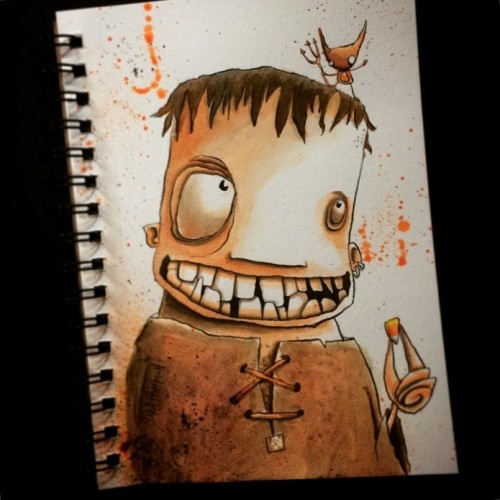
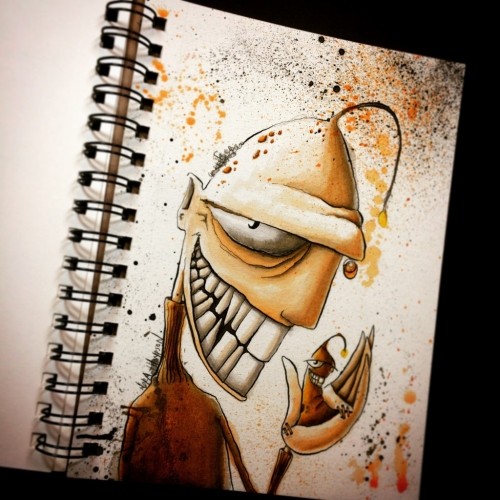
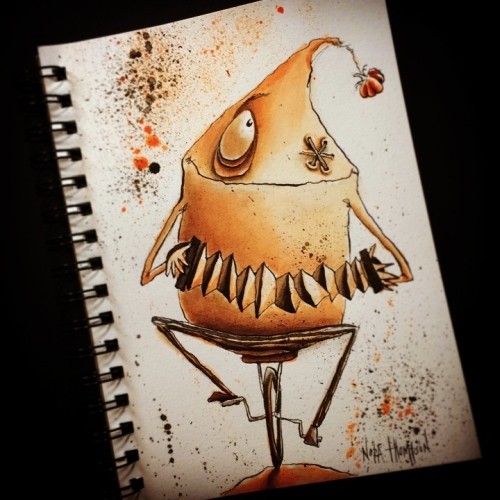
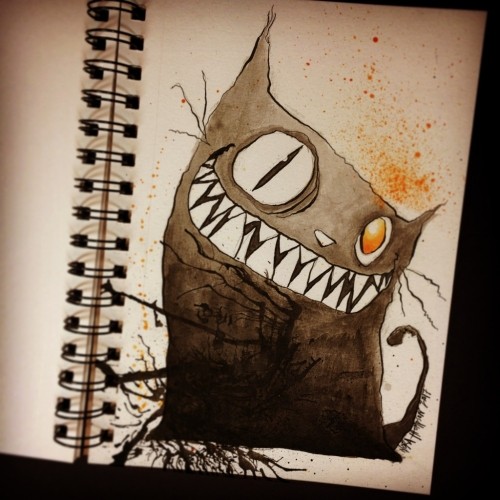
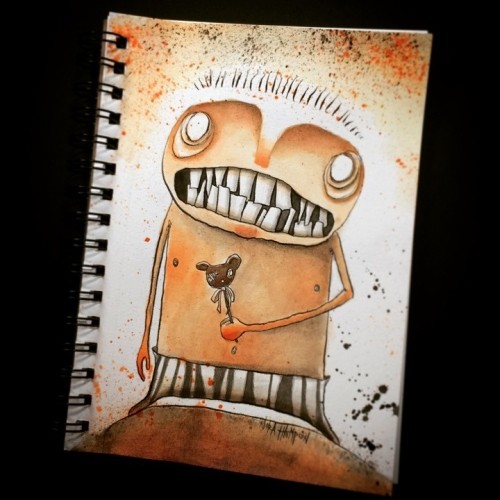
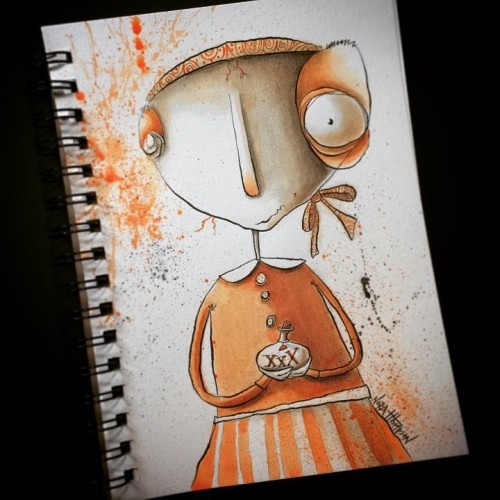
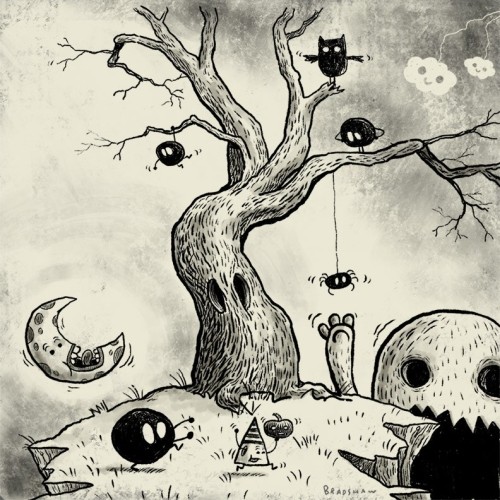
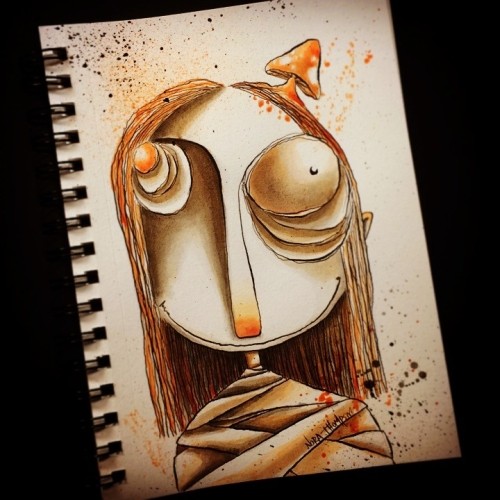
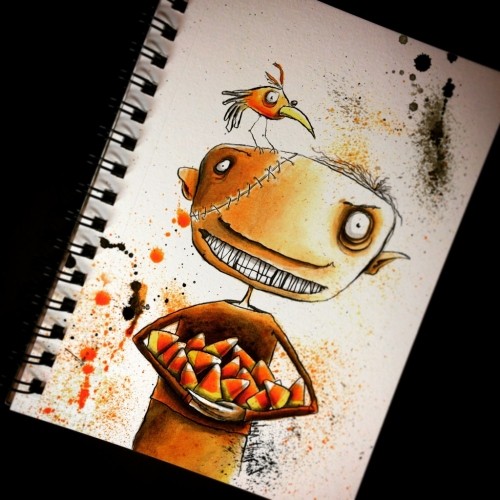
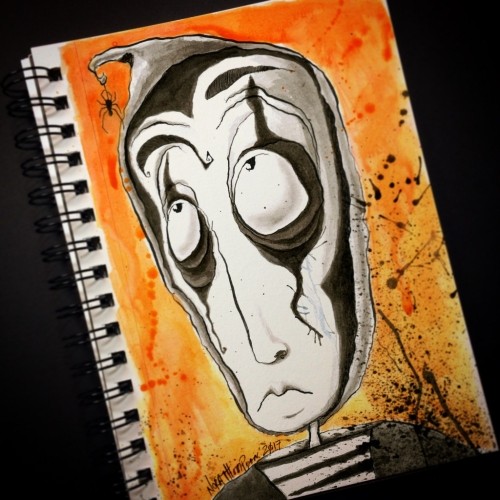
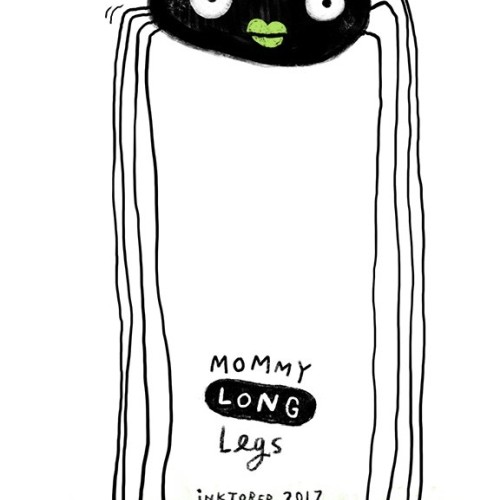
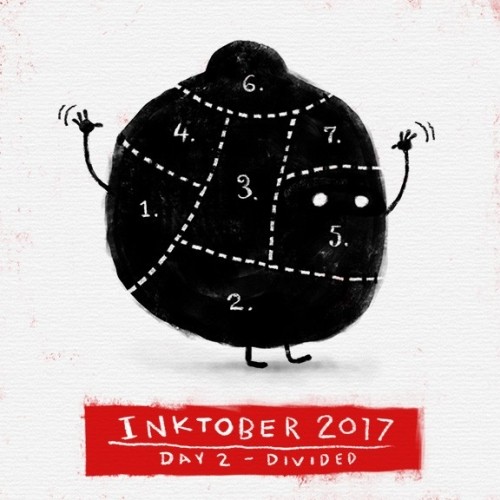
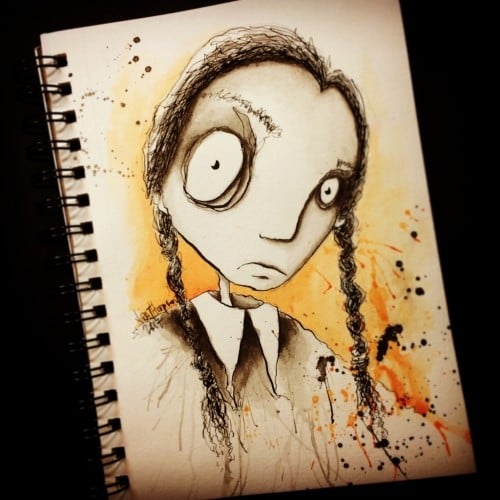
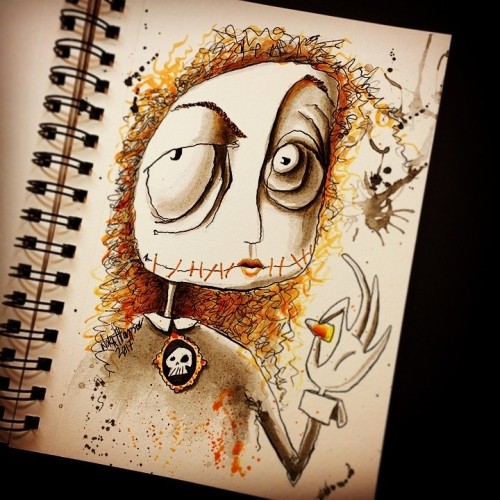
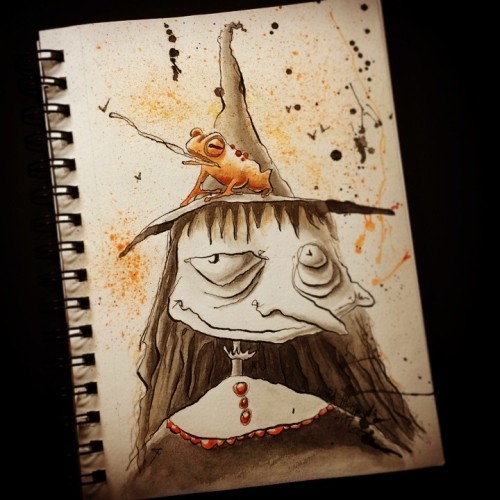
Day 6 #inktober2017 - Sword. Yikes! Someone is feeling some aggression after what him through on day 2. You can follow me on http://instagram.com/jimbradshaw to see the all of my inktober posts and more.
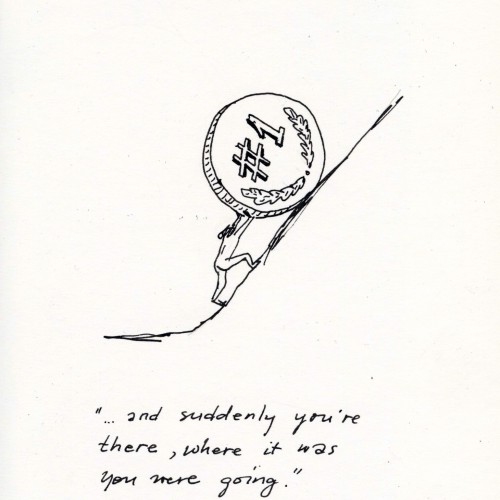
Inktober Day 31.
Award.
"... and suddenly you're there, where it was you were going."
- Mary Ruefle
This inktober went in a full gallop. I held on for my dear life.
#inktober #inktober2025 #award
Mark Twain (1835–1910)
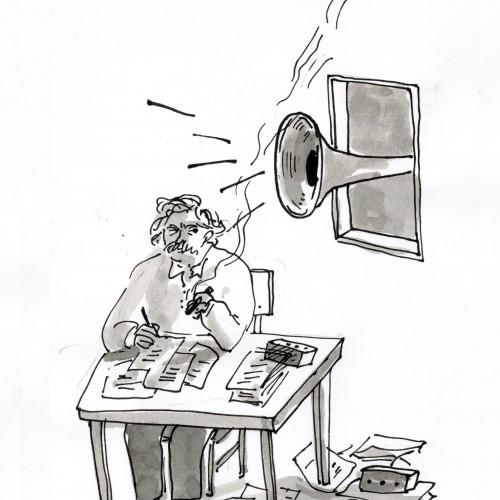
In the 1870s and ’80s, the Twain family spent their summers at Quarry Farm in New York, about two hundred miles west of their Hartford, Connecticut, home. Twain found those summers the most productive time for his literary work, especially after 1874, when the farm owners built him a small private study on the property. That same summer, Twain began writing The Adventures of Tom Sawyer. His routine was simple: he would go to the study in the morning after a hearty breakfast and stay there until dinner at about 5:00. Since he skipped lunch, and since his family would not venture near the study—they would blow a horn if they needed him—he could usually work uninterruptedly for several hours. “On hot days,” he wrote to a friend, “I spread the study wide open, anchor my papers down with brickbats, and write in the midst of the hurricane, clothed in the same thin linen we make shirts of.”
Whether or not he was working, he smoked cigars constantly. One of his closest friends, the writer William Dean Howells, recalled that after a visit from Twain, “the whole house had to be aired, for he smoked all over it from breakfast to bedtime.”
- From Daily Rituals: How Artists Work by Mason Currey
“Everyone is a moon, and has a dark side which he never shows to anybody.”
― Mark Twain
#dailyrituals #inktober #MarkTwain @masoncurrey
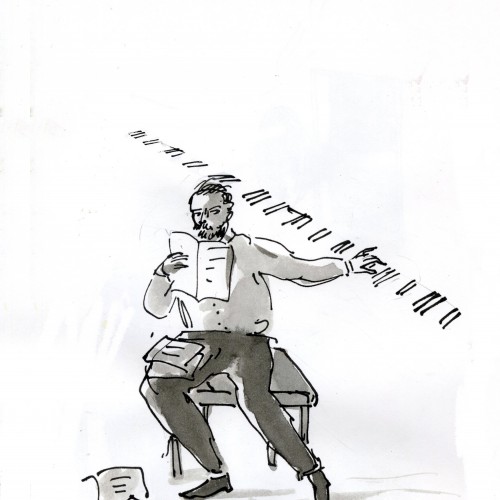
Pyotr Ilich Tchaikovsky (1840–1893)
At 9:30, Tchaikovsky set to work—composing at the piano only after he had dealt with any proofs or his correspondence, chores that he disliked. “Before setting about the pleasant task,” his brother noted, “Pyotr Ilich always hastened to get rid of the unpleasant.”
After lunch he went for a long walk, regardless of the weather. His brother writes, “Somewhere at sometime he had discovered that a man needs a two-hour walk for his health, and his observance of this rule was pedantic and superstitious, as though if he returned five minutes early he would fall ill, and unbelievable misfortunes of some sort would ensue.”
- From Daily Rituals: How Artists Work by Mason Currey
“Truly there would be reason to go mad were it not for music.”
― Peter Ilyich Tchaikovsky
“If you do not want to write, at least spit on a piece of paper, put it in an envelope, and send it to me. You are not taking any notice of me at all. God forgive you – all I wanted was a few words from you.”
― Pyotr Ilyich Tchaikovsky
#dailyrituals #inktober #PeterTchaikovsky @masoncurrey
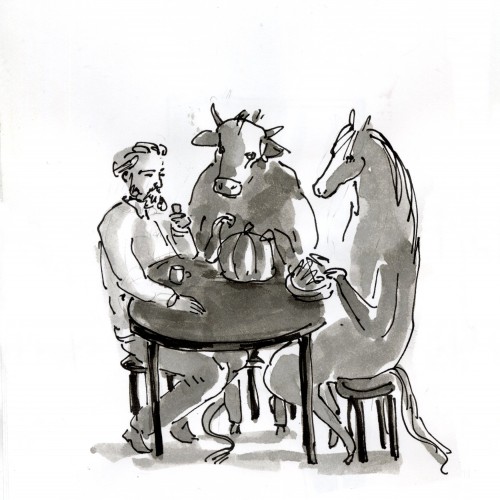
Herman Melville (1819–1891)
"I rise at eight—thereabouts—& go to my barn—say good-morning to the horse, & give him his breakfast. (It goes to my heart to give him a cold one, but it can’t be helped.) Then, pay a visit to my cow—cut up a pumpkin or two for her, & stand by to see her eat it—for it’s a pleasant sight to see a cow move her jaws—she does it so mildly & with such a sanctity."
- From Daily Rituals: How Artists Work by Mason Currey
“I would prefer not to.”
― Herman Melville, Bartleby the Scrivener
“A smile is the chosen vehicle of all ambiguities.”
― Herman Melville, Pierre; or, The Ambiguities
#dailyrituals #inktober #HermanMelville @masoncurrey
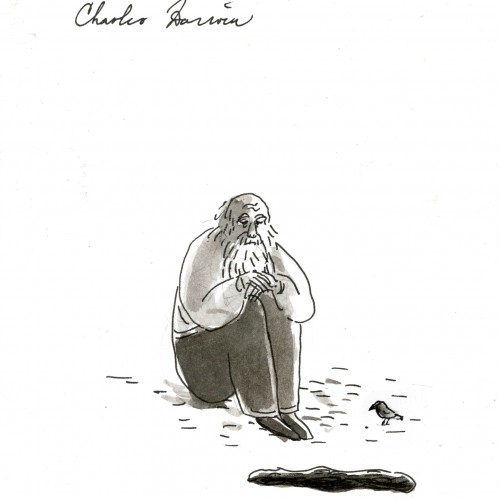
Charles Darwin (1809–1882)
From the time he arrived at Down House until 1859, when he finally published On the Origin of Species, Darwin led a double life, keeping his thoughts on evolution and natural selection to himself while bolstering his credentials in the scientific community.
Meanwhile, he divulged his secret theory to a very few confidants; he told one fellow scientist it was “like confessing a murder.”
- From Daily Rituals: How Artists Work by Mason Currey
“Ignorance more frequently begets confidence than does knowledge: it is those who know little, not those who know much, who so positively assert that this or that problem will never be solved by science.”
― Charles Darwin, The Descent of Man
#dailyrituals #inktober #CharlesDarwin @masoncurrey
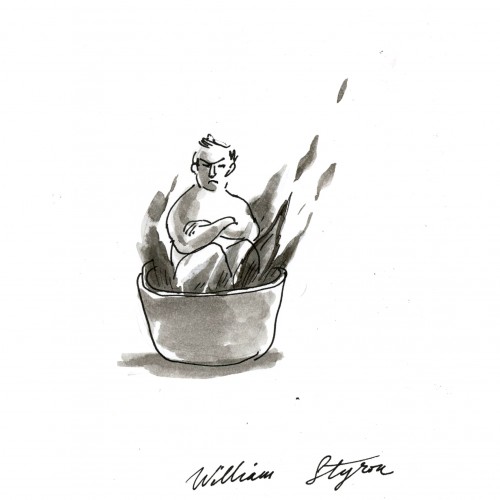
William Styron (1925–2006)
“Let’s face it, writing is hell,” Styron told The Paris Review in 1954.
- From Daily Rituals: How Artists Work by Mason Currey
“We’re all in this game together.”
― William Styron
#dailyrituals #inktober #WilliamStyron @masoncurrey
Louise Bourgeois (1911–2010)
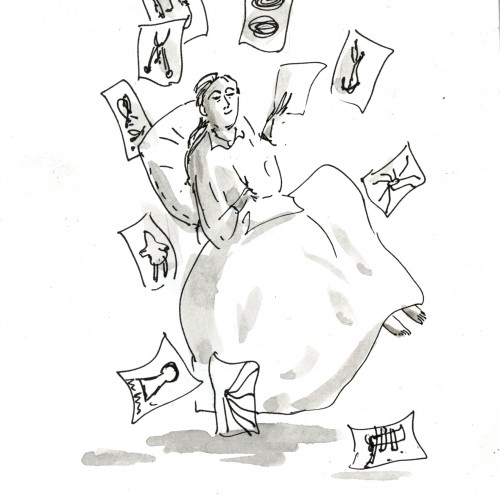
“My life has been regulated by insomnia,” Bourgeois told an interviewer in 1993. “It’s something that I have never been able to understand, but I accept it.” Bourgeois learned to use these sleepless hours productively, propped up in bed with her “drawing diary,” listening to music or the hum of traffic on the streets.
“Each day is new, so each drawing—with words written on the back—lets me know how I’m doing,” she said. “I now have 110 drawing-diary pages, but I’ll probably destroy some.
- From Daily Rituals: How Artists Work by Mason Currey
“I am not what I am, I am what I do with my hands...”
― Louise Bourgeois
“Every day you have to abandon your past or accept it, and then, if you cannot accept it, you become a sculptor.”
― Louise Bourgeois
#dailyrituals #inktober #LouiseBourgeois @masoncurrey
Nikola Tesla (1856–1943)
After he had started his own company, Tesla arrived at the office at noon. Immediately, his secretary would draw the blinds; Tesla worked best in the dark and would raise the blinds again only in the event of a lightning storm, which he liked to watch flashing above the cityscape from his black mohair sofa.
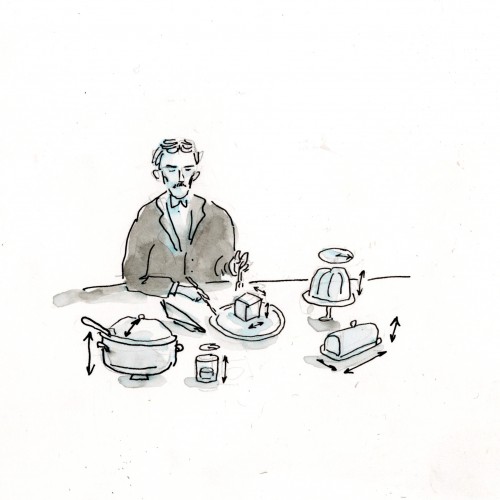
Tesla ate alone, and phoned in his instructions for the meal in advance. Upon arriving, he was shown to his regular table, where eighteen clean linen napkins would be stacked at his place. As he waited for his meal, he would polish the already gleaming silver and crystal with these squares of linen, gradually amassing a heap of discarded napkins on the table. And when his dishes arrived—served to him not by a waiter but by the maître d’hôtel himself—Tesla would mentally calculate their cubic contents before eating, a strange compulsion he had developed in his childhood and without which he could never enjoy his food.
- From Daily Rituals: How Artists Work by Mason Currey
“Of all things, I liked books best.”
― Nikola Tesla
“One must be sane to think clearly, but one can think deeply and be quite insane.”
― Nikola Tesla
#dailyrituals #inktober #NikolaTesla @masoncurrey