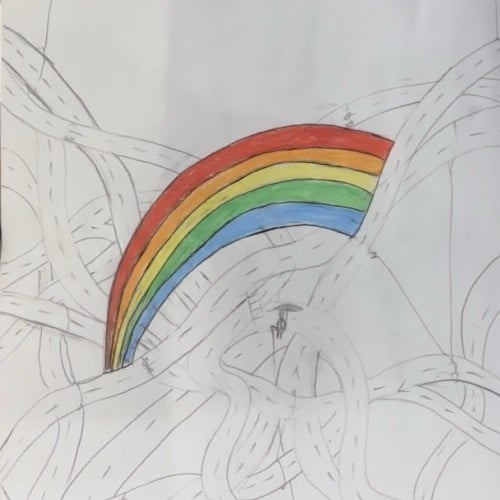
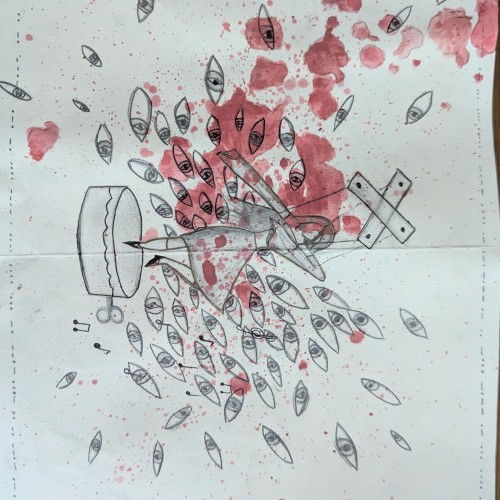
This picture represents that even in the darkest or messiest of times there is still a rainbow. The picture shows as someone is lost and waiting a rainbow still appears. As the path is broken, messed up and there seems to be no way out, there still is hope.
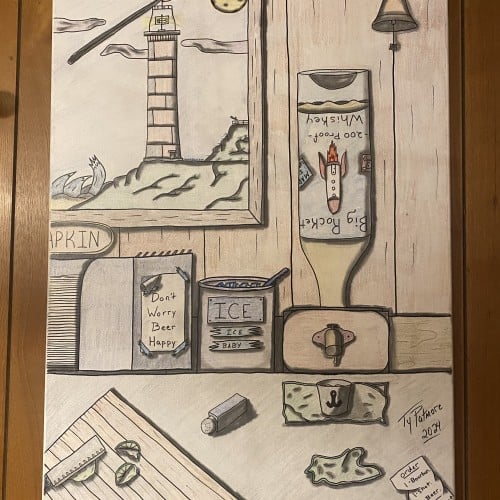
A whimsical yet reflective scene blending humor and nostalgia. Ty Patmore transforms an ordinary tavern tabletop into a surreal narrative—where a whiskey bottle doubles as a rocket, a lighthouse watches over the horizon, and every object hums with quiet irony. Mixing ink and graphite with storytelling detail, this piece captures the playful spirit of escapism and the bittersweet comfort found in small rituals.
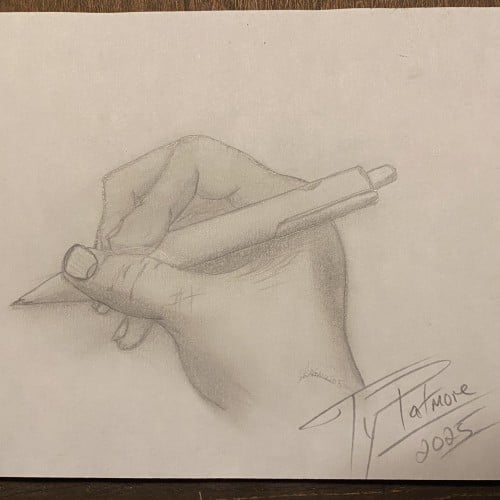
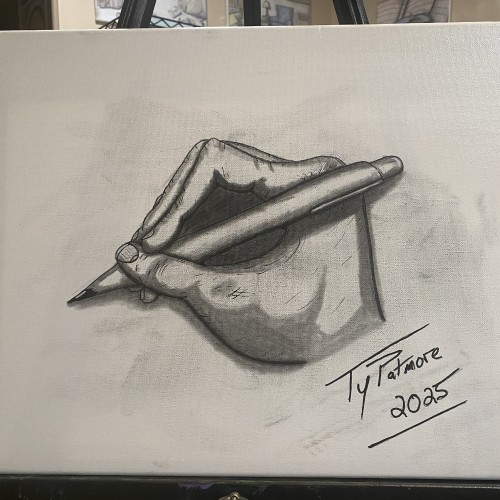
A striking, high-contrast graphite study of a hand in the act of writing. Created in a rapid 45-minute sitting through self-observation, this piece captures the intricate anatomy and focused tension of the artist's own hand as it holds the pen. The tip being pencil the top being pen and finger tips slightly smudged incorporate all aspects of the mediums used to create it.
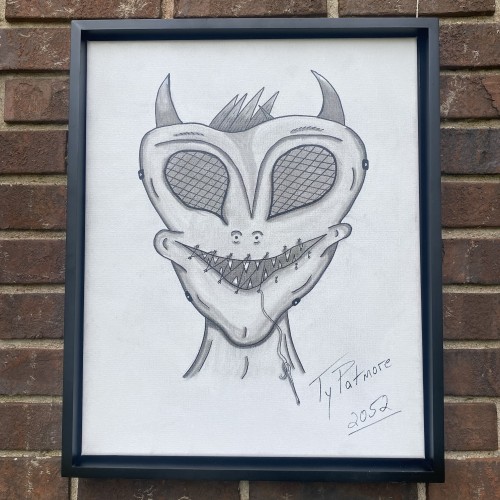
This portrait is the darkest in the series, examining the internal malice that persists even when communication is restricted, illustrating that evil doesn't require a loud voice.
* Visual Focus: The mask's mouth is horrifyingly held closed across the center by surgical thread and a needle, which only covers half of the wide, unnerving smile. The stitching reveals a set of sharp, feral teeth underneath. Disturbingly, a pair of prominent horns protrude from the top of the mask's head.
* Symbolism:
* The Stitched Mouth: Represents the idea of selective silence or the censorship of truth. The fact that the stitching only covers half the mouth highlights the "half-done" nature of modern morality. The revealed sharp teeth suggest that even in silence, the capacity for vicious, cutting, or "devilish" speech remains barely contained. Showed directly on the piece by the date being misleading.
* The Horns: A classic, unambiguous symbol of the Devil or pure malice. This is the figure's core identity—it suggests that even while hiding behind a neutral mask and being partially silenced, the individual's "tongue like the devil" and evil intent are still very much present, emphasizing the inherent corruption and hypocrisy behind the facade.
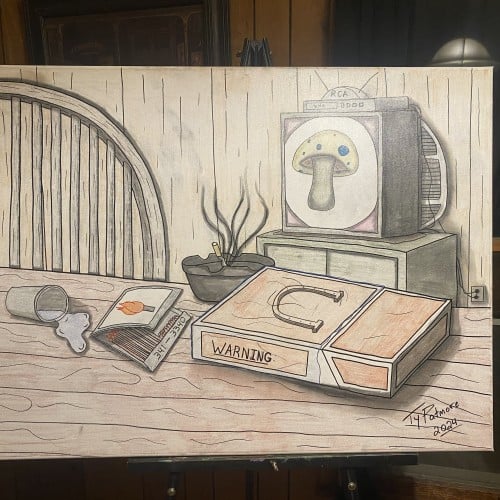
"Nowhere Fast" is a compelling still life that blends mundane domesticity with surreal, slightly ominous undertones. The scene is anchored by a wooden table where a spilled glass, a pack of matches, and an ashtray with a smoldering cigarette suggest a moment of interrupted pause or quiet, long-term stagnation. Dominating the foreground is an oversized, weathered cigarette carton boldly labeled "WARNING", its subtle but unsettling presence hinting at a consumption that leads nowhere.
In the background, a vintage RCA television set displays a stylized amanita mushroom, a recurring symbolic motif that adds a layer of psychedelia and altered perception to the otherwise drab setting. The earthy, muted color palette and soft lighting create a feeling of weary introspection, capturing a sense of being perpetually stuck in a cycle. The piece masterfully uses everyday objects to explore themes of vice, time, and the quiet, slow march toward an uncertain destination.