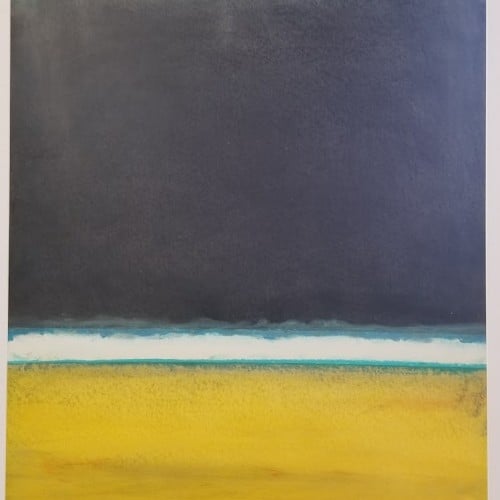
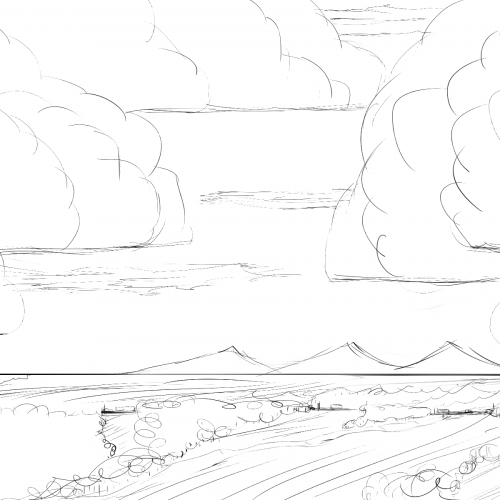
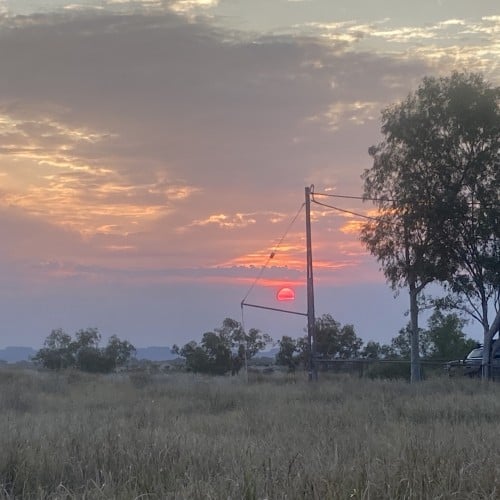
A horizon of chalk—black sky heavy with silence, gold earth glowing with embered breath.
Between them, a thin line of turquoise, the pause where one world ends and another begins.
It is not sky, nor sea, nor sand alone. It is the threshold—a doorway, where silence teaches and light remembers.
Stand here long enough, and you may hear it breathe.
inking and seeing for better being — https://forming20.com/
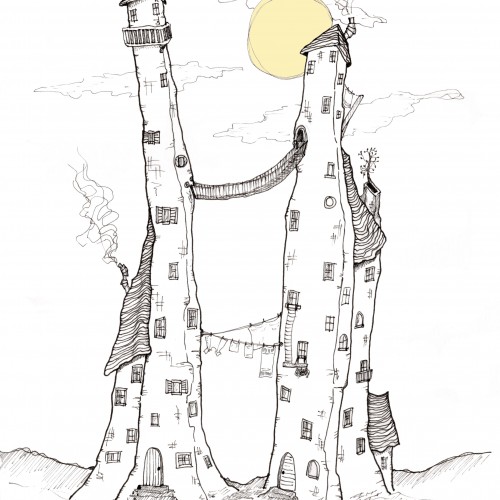
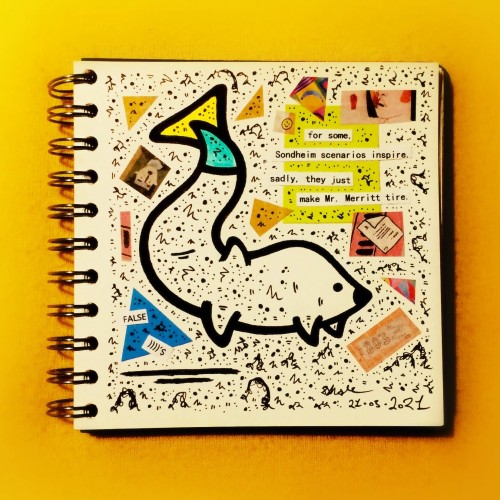
This line from the Stephin Merritt episode of the 'She's A Talker' podcast (referring to Stephen Sondheim plot-lines) got my imagination ticking in overdrive
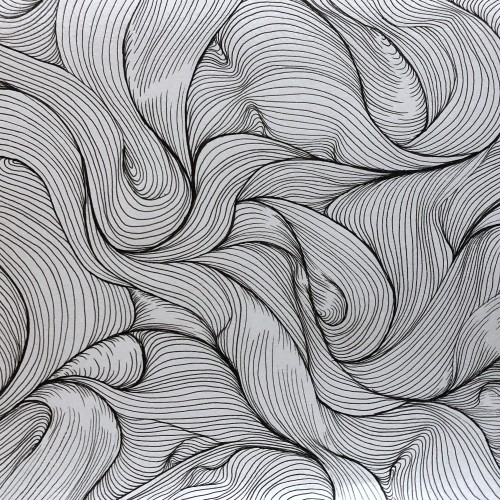
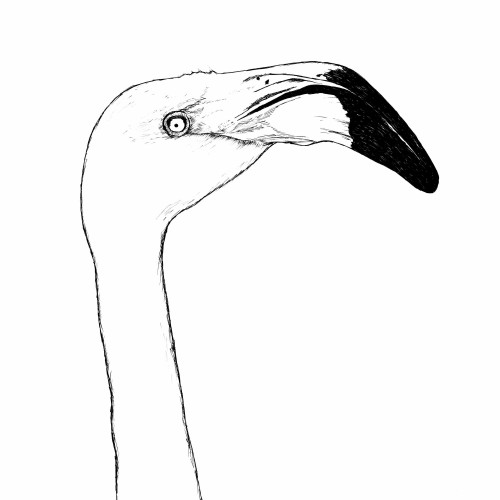
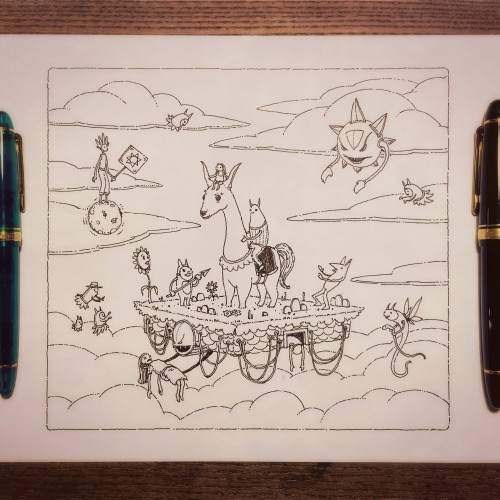
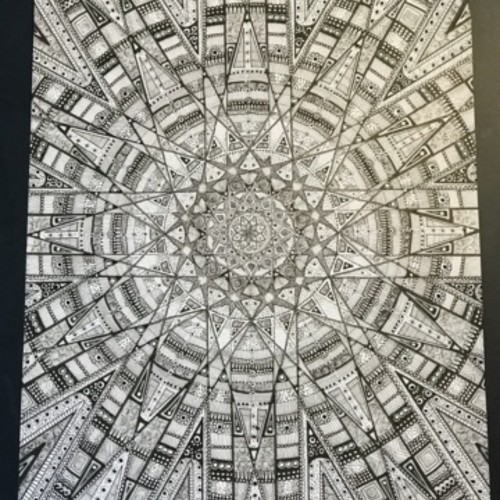
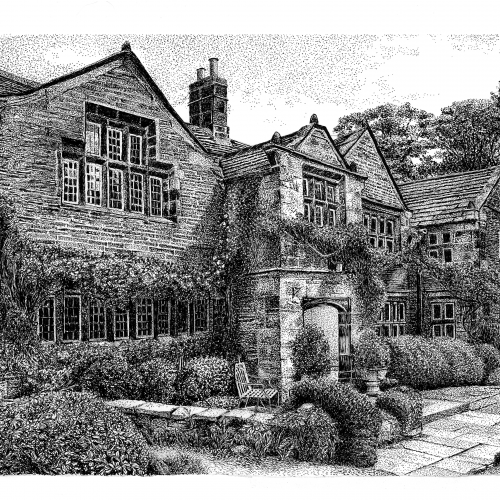
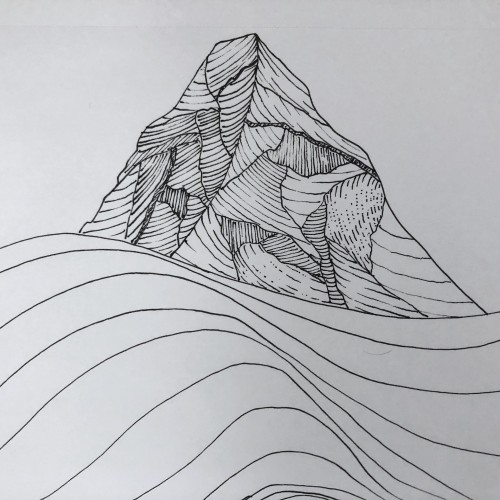
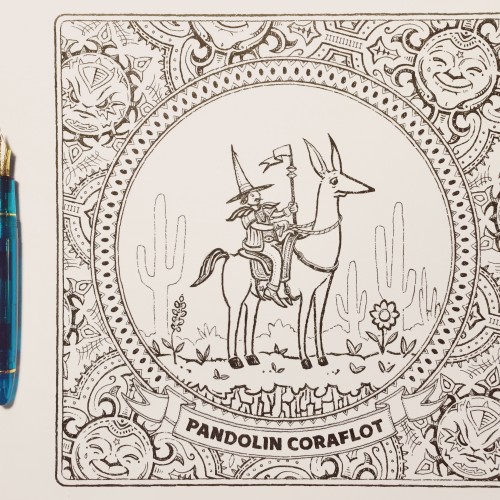
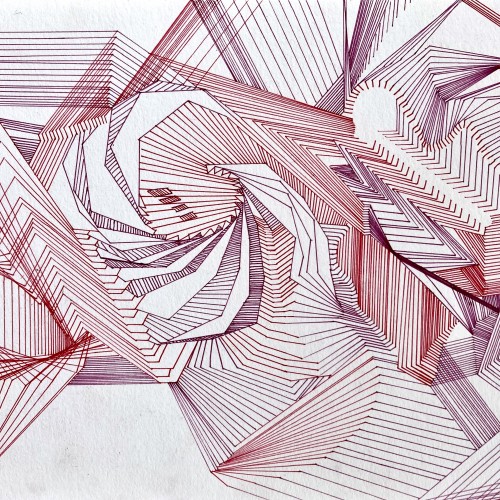
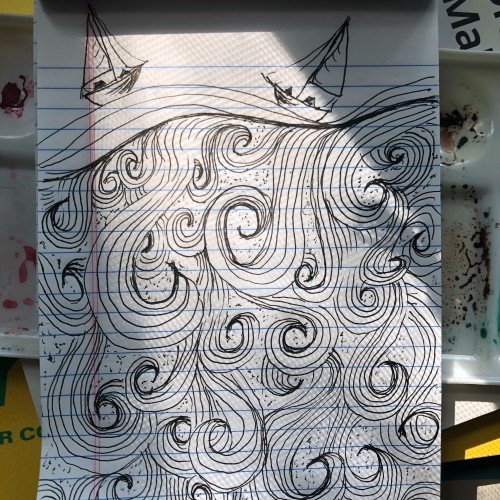
Digital is great -- for composition and color. But for line art? I don't think I can ever give up the fountain pen. This was drawn with a Sailor King of Pen (M) and Sailor 1911L (EF) fountain pens using Pilot Black ink. Yes, sacrilege. Pilot ink in a Sailor. But I have some Kiwa Guro arriving soon!
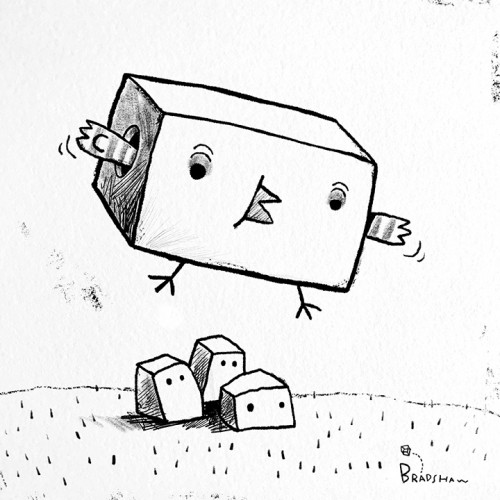
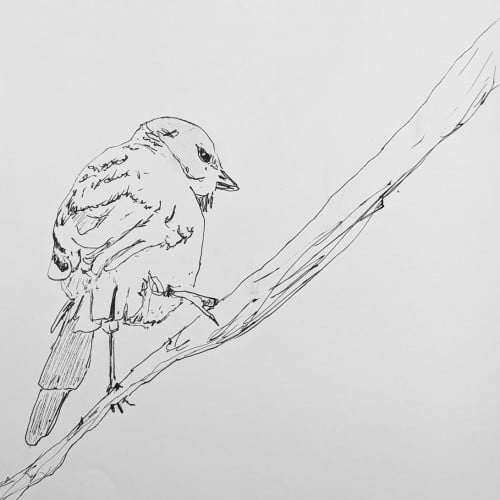
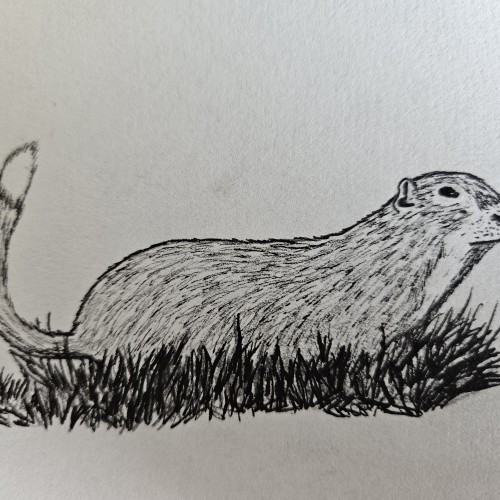
A simple ink sketch of a bird at rest. Sometimes the quiet moments—watching, pausing, waiting—are the deepest teachers. This drawing is part of my exploration of what I call the Quiet Practices—small ways of living from the inside out.
If you’d like to see more of my reflections, I share them here: https://forming20.com/
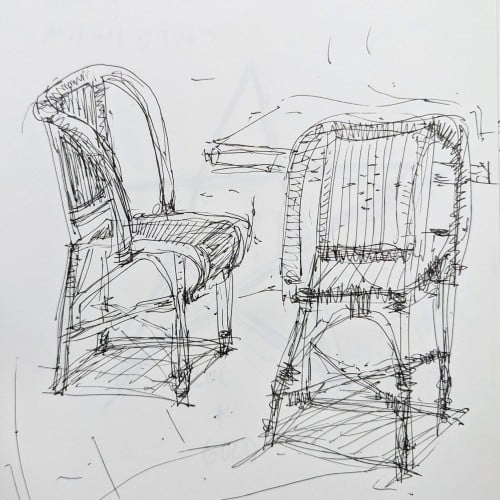
Two wicker chairs in the sun.
One for the waiting,
one for the hoped-for.
The table between them
holds its silence,
its place set for bread or talk.
I draw what is here—
lines quick and unerasable—
and what is not here,
her presence,
waits with me in the white of the page.
I am an art teacher with a master’s degree—trained by brilliant professors who believed that art could do more than decorate walls. I offer safe spaces for teenagers to grow—nourishing soil where their imaginations can take root.
And yet… I am assigned to hallway duty.
This is compulsory education, after all.
So I sit—posted like a sentinel—watching young lives stream past.
“Get to class,” I say with a smile and a nudge.
The system wants attendance; I’m hungry for presence.
Armed not with a whistle or clipboard, but with a pen—
my scribble’s soft insurgency.
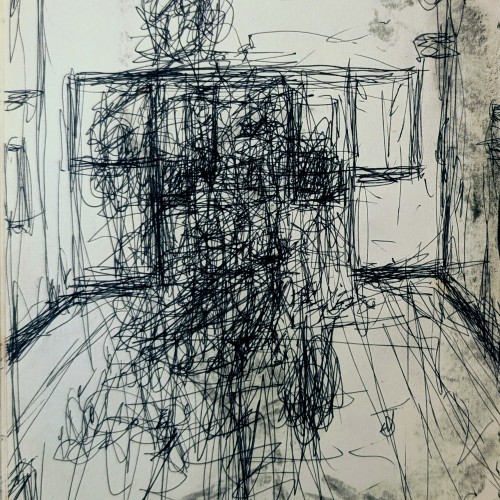
The hallway stretches out like a geometric hymn.
Columns and corners chant structure.
Teenagers swirl past—half-formed galaxies of limbs and laughter—
their orbits chaotic, their gravity pulling time forward.
I begin to draw.
Not their tardiness, but their motion.
A shoulder. A blur of sneakers.
A tilted head chasing freedom.
Feet flickering like seconds.
Each mark a pulse.
Each smudge a breath.
My paper becomes a seismograph of seeing—
trembling gently through the mundane.
This isn’t about making art for a frame or a feed.
It’s about refusing to leak away in the fluorescent hum of obligation.
It’s a quiet mutiny against the clock.
I do this on long car rides, too (passenger side, mind you).
Letting the lines grow wild, jagged, and unapologetic.
Not for polish—
but for presence.
This is how I remember I’m still alive.
Still growing.
Still watching.
Still choosing to see.
Because sometimes mental health looks like
a piece of scrap paper,
a moving pen,
and the simple, sacred act of
marking time with wonder.
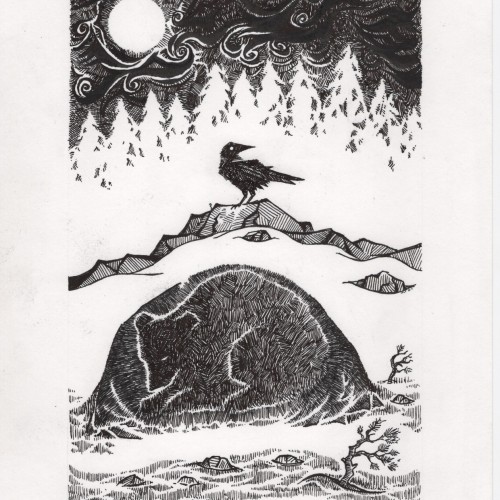
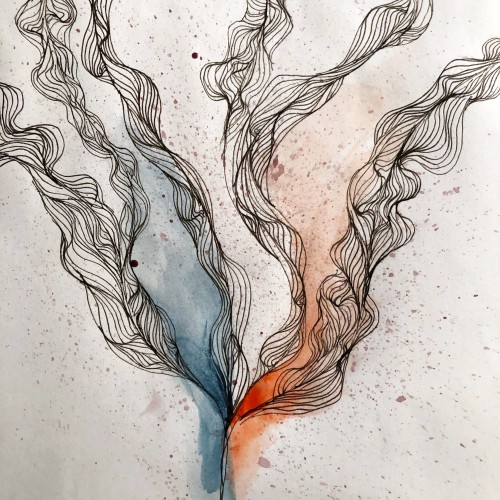
Drawn with a Sailor/Wancher Turquoise 1911L. The M nib on this pen comes to a sharp point which allows for some line variation not from flex but based on how deep the firm nib digs into the watercolor paper. The Noodlers Black ink is a little dry and that contributes to this effect.
The tables were covered in white paper. Crayons, pastels, and smooth sticks waited quietly. Then came Lucy’s glittery purse—her 8-year-old hands had filled it with stones to pass along, one by one, to the strangers around the table.
We traced them. Pushed them. Held them.
Then we let the colors lead:
-Red for emotion.
-Yellow for curiosity.
-Blue for memory.
Each color came with music, with story, with space.
At the Museum of Wisconsin Art, we made marks not for meaning but for presence.
Thank you to Ann Marie and MOWA for the invitation and trust. And thank you to the participants—some new friends, some old students—for showing up and making lines that listened before they spoke.
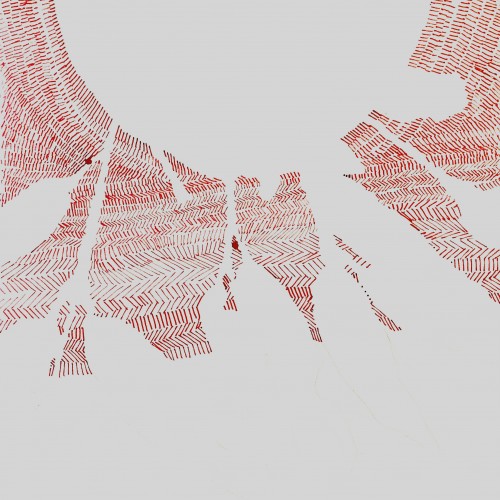
Many people walk past plants either without noticing them or with just a glance. For the Walmajarri people in the Kimberley region of Western Australia, and many other Indigenous groups, plants provide a source of food and medicine. These outlines are of plants that are used by Walmajarri people as either food or medicine. For most people they remain a mystery, hence the outline only.