Previous
Next
logo logo
logo logo
  • Discover Art
    • Trending
    • Most Recent
    • Most Faves
    • Most Views
    • Curated Galleries
  • Drawing Challenges
    • See All Challenges
  • Drawing Prompts
  • Artists
    • Most Popular
    • Most Recent
    • Available For Hire
    • Artist Spotlight
  • More
    • Marketplace
    • Art Discussions
    • Resources
    • News + Blog
Login
Most Faves
Select an option
  • Most Relevant
  • Most Faves
  • Most Views
  • Most Comments
  • Most Recent
SEARCH RESULTS FOR

mother

Madhavi Madhavi
Enlarge
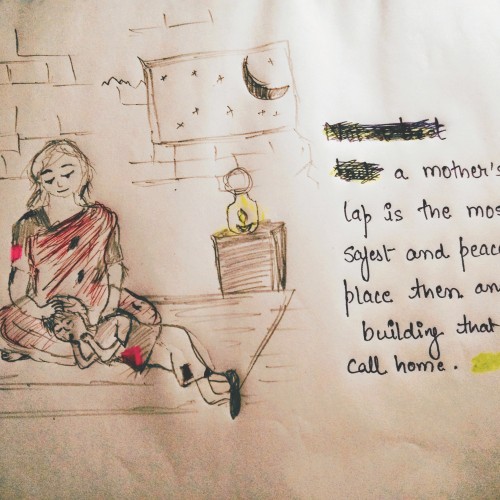
Safest place

A mothers love is purest of all and her lap isis the best place to have a night full of some sweet dreams .

  • 13
  • 2
  • 1
Wei Loon Wei Loon
Enlarge
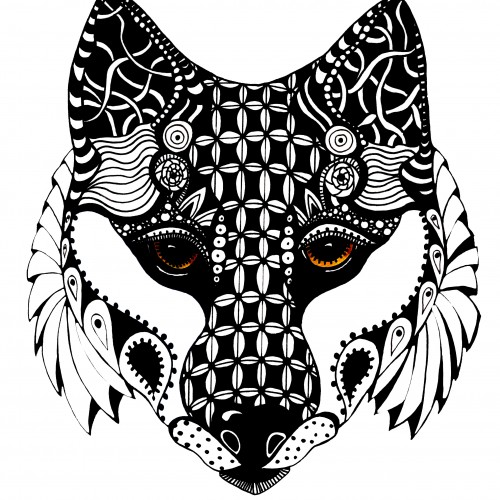
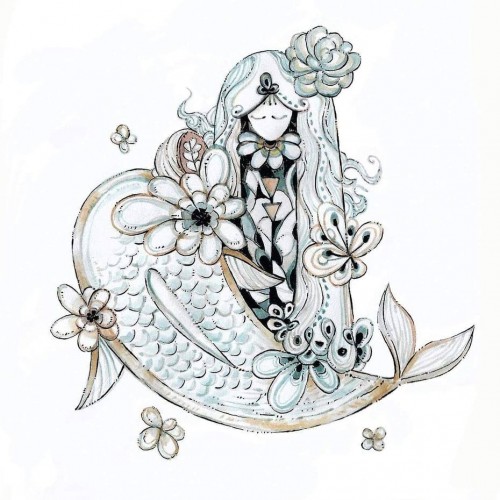
Water Flower

Mother Nature Series. I love doodle some unique pattern in my art. Peace, flower, fish is the artwork main character (I am using watercolor and ink)

  • 409
  • 2
  • 0
Matthew Konicki Matthew Konicki
Enlarge
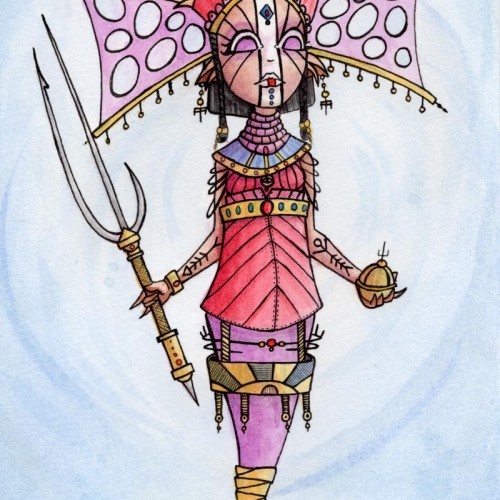
Mermay Day 19: Royal

Mermay Day 19: Royal all hail Ceto of house Humansbane, destroyer of poles, evader of hooks, piercer of nets, mother of all fish-kind, goddess that swims alongside us. shes holding the scepter of Poseidon and the will of Triton. they cover the fins of royals because only the gods should see their beauty. some rumors say that the royal family just has a deformity thats passed on genetically so they cover it up and made the god thing up...who believes rumors though...dead merfolk thats who.

  • 248
  • 2
  • 0
Lúcia Martins Lúcia Martins
Enlarge
Badmotorfinger or badmotherf***er?

A full-body colored portrait of Hunter Benedict "Ben" Shepherd at the time he joined Soundgarden. Prints for sale @ etsy.com/shop/DrawingsByLucia.

  • 15
  • 2
  • 2
Viktor Wilde Viktor Wilde
Enlarge
Death Of Mother, Fear Of The Child

An image depicting the taking of a mother fighting for her life as she holds her child. In tears while Reaper smiles heavily. Emotional valley weep thorns in their struggle to be together one last time.

  • 7
  • 2
  • 0
Cheyenne Holder Cheyenne Holder
Enlarge
Mother of Life

A medium sized painting created by a 16 year old girl

  • 14
  • 2
  • 0
Mariana Cortes Mariana Cortes
Enlarge
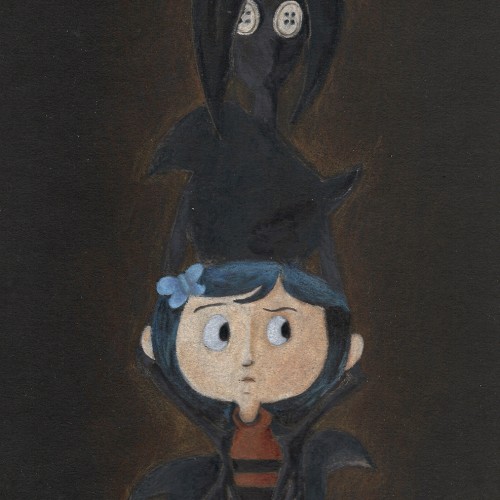
Beldam, the other mother who takes care of your soul.

Prismacolor on black cardboard. Illustration for auction in support of the IMSS Pediatrics Volunteer in Guadalajara /2018

  • 388
  • 2
  • 0
Joyce Rice Joyce Rice
Enlarge
Swollen

Get back mothersucker u don’t know me like that

  • 214
  • 2
  • 0
Joyce Rice Joyce Rice
Enlarge
Angular

My mother always told me this job would swallow me whole

  • 239
  • 2
  • 0
Celeste Celeste
Enlarge
Mother Natures Bounty

Mother Nature Drawing Challenge

  • 336
  • 2
  • 0
Mirjana Mirjana
Enlarge
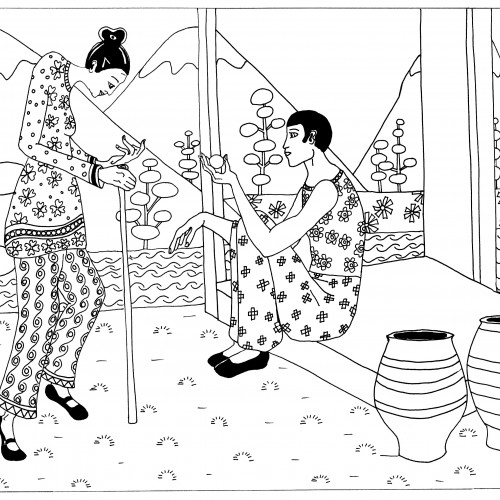
Mother

  • 23
  • 2
  • 0
Leah Lucci Leah Lucci
Enlarge
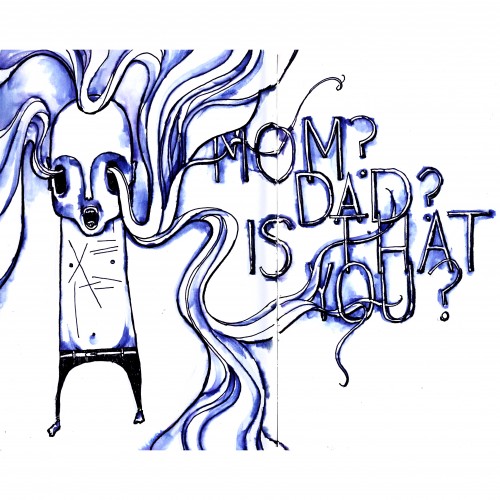
Mom? Dad?

When I was a teen, my grandfather had alzheimers, a failing heart, and half of one lung. He was covered with scars and sometimes muttered at walls. I was asked to keep an eye on him, briefly, one afternoon, while my grandmother did something else. While I was alone with him, he looked at an empty space right next to me, and whispered: "Mom? Dad? Is that you?" With the exception of getting hit by a car, that was the most terrifying moment of my life.

  • 1,218
  • 2
  • 2
Scott Ries Scott Ries
Enlarge
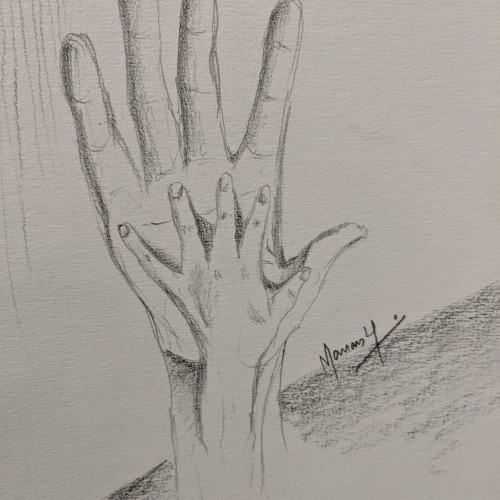
Mother’s Day

Pencil Drawing

  • 585
  • 2
  • 0
Dane Mullen Dane Mullen Plus Member
Enlarge
Anjus Mother (Majoras Mask)

  • 235
  • 1
  • 0
Dane Mullen Dane Mullen Plus Member
Enlarge
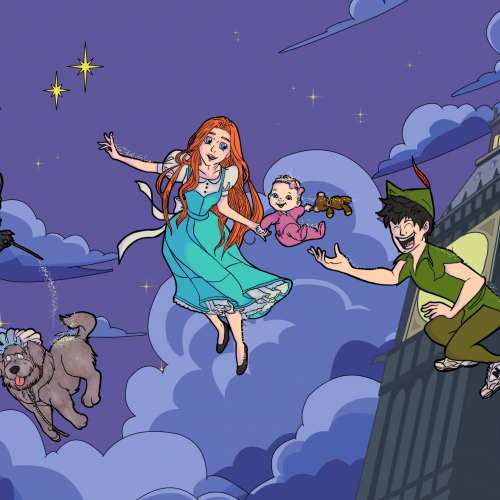
When Theres a Smile in Your Heart

This was my sister's first mother's day and I wanted to surprise her with something special. She loves Peter Pan so it seemed like a perfect fit.

  • 390
  • 1
  • 2
Tonya Doughty Tonya Doughty Plus Member
Enlarge
Mother

  • 350
  • 1
  • 0
Tonya Doughty Tonya Doughty Plus Member
Enlarge
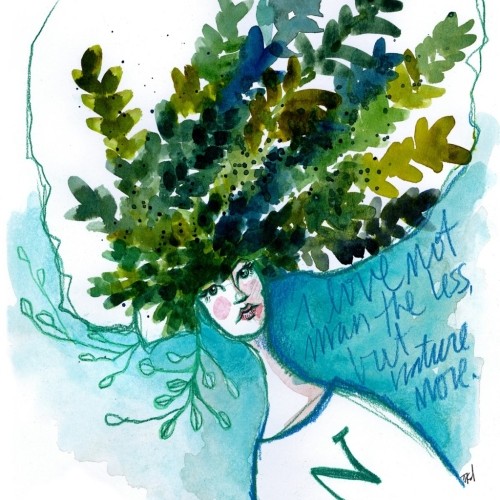
Mother N

"I love not man the less, but nature more."

  • 967
  • 1
  • 0
kid tiki kid tiki
Enlarge
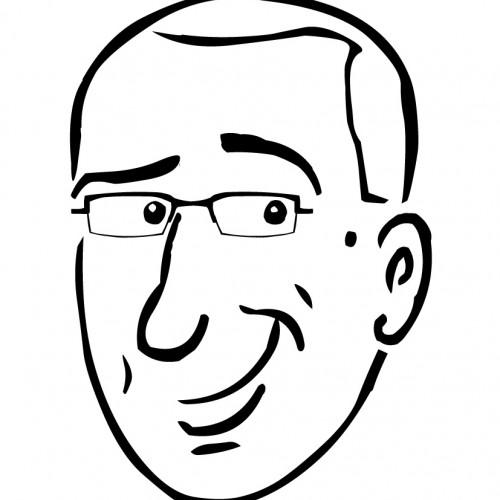
Happy Woman’s Day

women, Mothers, Daughters, love

  • 23
  • 1
  • 2
Kfir Weizman Kfir Weizman
Enlarge
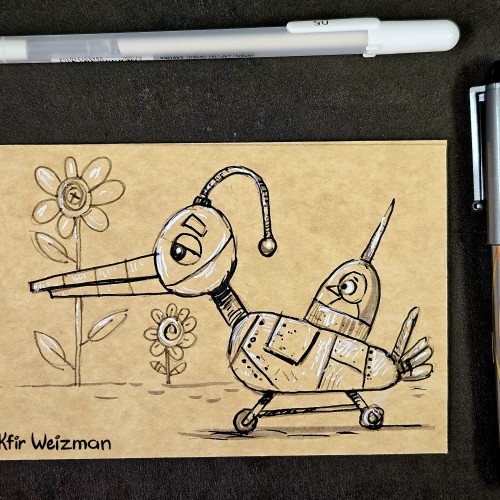
Bird robot mother

https://www.youtube.com/watch?v=8tQ_NgBdPS8

  • 80
  • 1
  • 2
Spearmint Chalk Spearmint Chalk
Enlarge
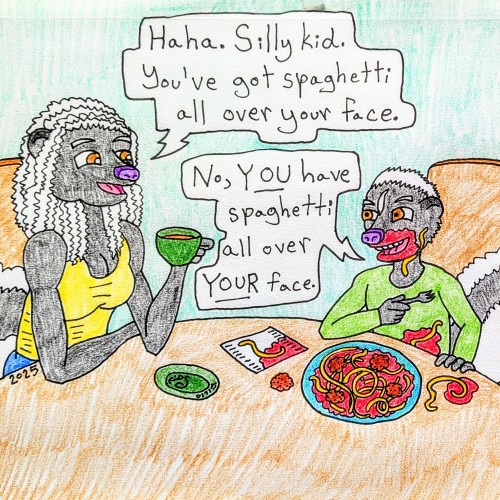
Projection and Spaghetti

The logic of children of all ages. x x x Psychological projection is a defense mechanism in which an individual unconsciously attributes their own unacceptable thoughts, feelings, emotions, impulses, or traits to another person, group, animal, or object to avoid confronting them internally. This process allows a person to manage uncomfortable emotions like guilt, shame, or anxiety by externalizing them, making it easier to tolerate the internal conflict. First conceptualized by Sigmund Freud, projection involves displacing negative or undesirable aspects of the self onto others, thereby preserving self-esteem and avoiding internal discomfort. While it can serve as a short-term coping strategy, unchecked projection can lead to interpersonal conflict, misunderstanding, and damage to relationships. x x x no, you. ^w^

  • 2
  • 1
  • 0
Rebecca Kaylin Gibson Rebecca Kaylin Gibson
Enlarge
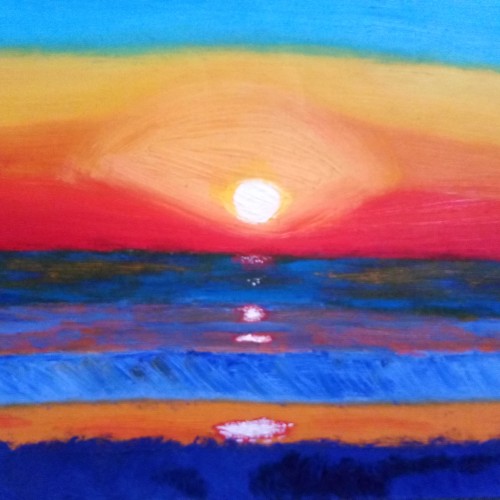
Rhythm of the Sea

Original Photo by my Mother

  • 449
  • 1
  • 0
Rebecca Kaylin Gibson Rebecca Kaylin Gibson
Enlarge
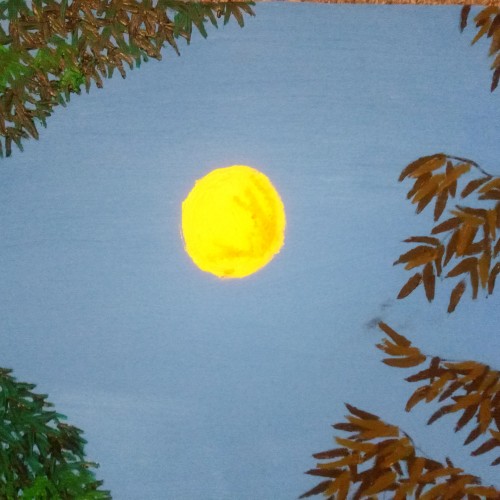
Full Moon

Original Photo by my Mother

  • 362
  • 1
  • 0
Rebecca Kaylin Gibson Rebecca Kaylin Gibson
Enlarge
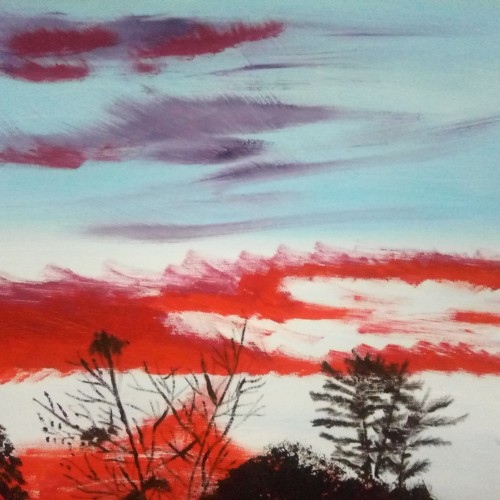
Windswept Sky

Original Photo by my Mother

  • 442
  • 1
  • 0
Rebecca Kaylin Gibson Rebecca Kaylin Gibson
Enlarge
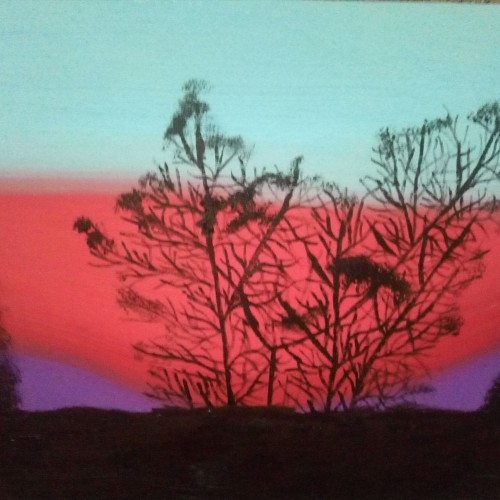
The Setting Sun

Original Photo by my Mother

  • 411
  • 1
  • 0
Tamsin Jones Tamsin Jones
Enlarge
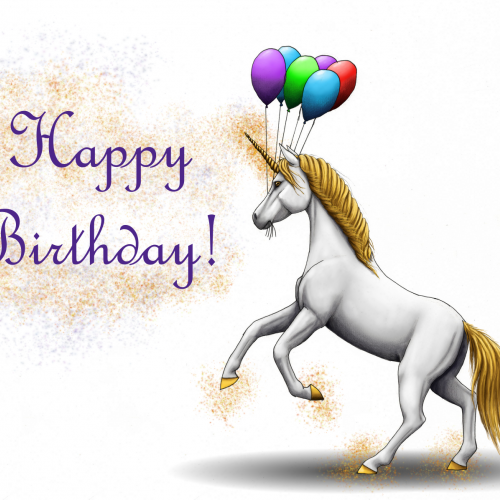
Balloonicorn

After a year of drawing pretty much nothing due to artblock/burnout that came after a few years of battling my mind to be able to draw, this drawing marked me finally being able to return to art this November 2023 with a fresh mindset of less perfectionisim and more focus on my own enjoyment of the process. I had a limited timespan to work on this, a gift for my grandmother's 80th birthday, as I only began the process the day before I needed to email it across. Compared to the months it has typically taken me to finish anything in more recent years, this presented an extra motivation to abandon "perfect" in favour of "good enough". It's not as detailed as some of my prior works, but given the limited timespan and that I'm out of practice I am nonetheless happy with the result. As usual, I combined a graphite and ink drawing with digital colour+shading.

  • 6
  • 1
  • 0
Spearmint Chalk Spearmint Chalk
Enlarge
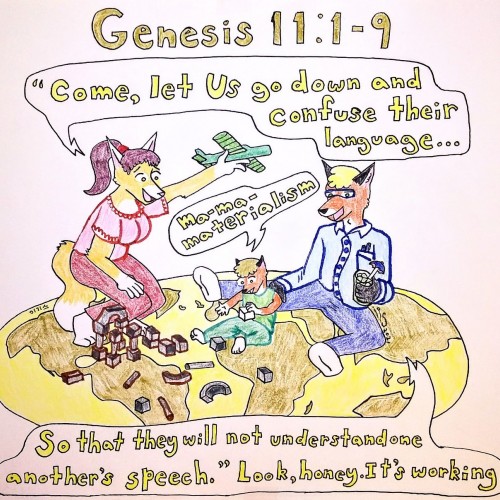
The Fall of the Tower of Babble

I take a lot of Genesis as an allegory for birth and maturation, both individually and collectively. The Garden of Eden could easily be interpreted as the womb, and we are all cast out of it at some point. Genesis 2:24 says "This is why a man leaves his father and mother and bonds with his wife, and they become one flesh." Though people use this passage to refer to the tradition of marriage, I think that it speaks to something much, much deeper than that. Literally, when two people copulate, they create a child that is of one flesh. They do not "become one flesh" because they engage in a ritual institution and are now "to be viewed as comprising a single identity," but they literally become one flesh because their genetic compositions are joined into a new being (Mark 10:8 and the two shall become one flesh.’ So they are no longer two but one flesh. 9 What therefore God has joined together, let no man separate.”). That being said, I read somewhere once that babies born in every part of the world make phonetic sounds from pretty much every language in the world. It is only after a period of time that they start to key in on certain sounds that the people around them are making, and it is only after that that children key in enough to start developing more advanced language skills (typically). However, in this original state, there is a freedom. There are no assumptions. There is an innocence in that state. There is a lack of judgement. There comes a point at which babies/young children begin to mimic and to incorporate what they are experiencing from the creatures around them into themselves. To small creatures with an undeveloped sense of self or reality, the caregivers around them may as well be gods, at least from their perspective. They will learn from these gods around them and will begin to embody their cultural beliefs, their language, their idiosyncrasies, and their perceptions, often on a deeply unconscious level. Adults contribute to that quite thoroughly and somewhat consciously. (Genesis 1:26 Then God said, “Let Us make mankind in Our image, according to Our likeness..") (Genesis 11:7 7 Go to, let us go down, and there confound their language, that they may not understand one another's speech.) In our own way as individuals, we are each a Tower of Babel, and at some point, for each of us, that Tower fell. Barriers to communication of so many kinds were created for and/or by us. Perhaps we still spend time constructing new barriers and thinking up new ways to distance ourselves from the rest of our kind. I chose to use the phrase "materialism" to express how children engender these attributes of caregivers and others alike. However, this can easily be exchanged for a phrase like "socialism," or "corporate capitalism," or nearly any other thing that you can probably think of. Children are like sponges. They soak up even more than we realize. Most widespread religions in the world have some form of renunciation belief or ritual wherein an individual must 'cast off' the old self and put on the new. This is because, regardless of where or when a child is born in the world, the perspectives of the people around them raising them will likely leave much to be desired. It is necessary for beings to continue to learn, and this often entails a serious consideration of what was instilled into them at an earlier time. It is quintessential that we question and evaluate these things since the state of the world will have changed by the time that we reach maturation. The ideas that people gave us may apply to a world that is already different. The story of the Tower of Babel may refer to a state that earlier humans lived in, perhaps on a shared continent, in which the manners in which they communicated were similar. Then, at some point, perhaps these same peoples went off on their travels and developed new languages. In a funny way, we seem to do that as individuals. At some point, we strike out on our own, even if only a little. Though we may differ on surface level behaviors and in the symbols that we use to describe the human experience, human beings are more or less fundamentally the same. We let our differences create so, so, so many barriers between ourselves and other beings. Just think of all of the harm that things like xenophobia, racism, intolerance, and a lack of an ability to communicate verbally with one another have done to our species. Even beyond that, just think of how easily we dismiss the inner lives and inner experiences of creatures different than ourselves simply because they do not communicate verbally with us in our preferred tongue. Research is overwhelmingly in support of other beings communicating with others of their kind, whether we as individuals acknowledge it or not.. Some of us are just really into denial about it. We could achieve remarkably wonderful things, if only we would learn to recognize the similarities of our experiences. (Matthew 19:6 So they are no longer two, but one flesh. Therefore what God has joined together, let no one separate.”)

  • 3
  • 1
  • 0
crais robert crais robert
Enlarge
The House of Ryman: A Family of Artists

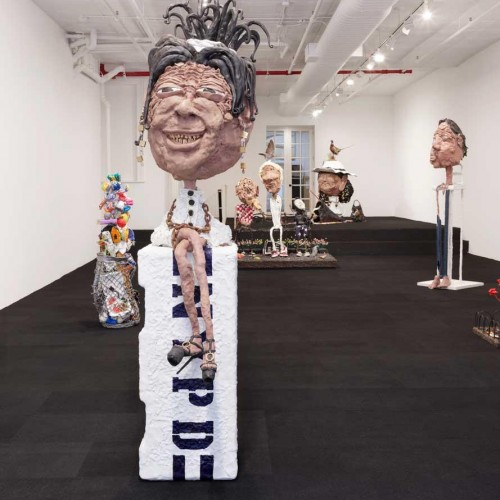
Take the Rymans, for instance. There is Robert Ryman (1930 – 2019), the patriarch whose paintings are indisputable icons of the modernist canon. Then there are his wives and children. Ethan Ryman (b. 1964) is the oldest of Robert’s three artist children. Though his mother was not an artist, Lucy Lippard (b. 1937) was still a scrappy and eloquent art critic, a feminist, a social activist, and an environmentalist. Ethan’s meticulously considered and crafted artworks might be characterized as somewhere between photography and sculpture, the abstract and the (f)actual. Though Lippard and Ryman divorced just six years after their 1961 marriage, their son is arguably the closest to his father’s methodologies if not his medium, and was certainly the last to become a visual artist. Robert Ryman went on to marry fellow artist Merrill Wagner (b. 1935) in 1969 and they had two sons. Though Wagner is more quietly acknowledged than Ryman, her boundless practice includes sculpture, painting, drawing, installation, and more. With an emphasis on materiality, her sites are indoors and out, her styles alternating. Will Ryman (b. 1969) is the elder son of Robert and Merrill. He started out as an actor and playwright though he too eventually assumed a visual art practice to become a sculptor. He is best known for his large-scale public artworks and theatrical installations that focus on the figurative and psychological, at times absurdist, narratives. Cordy Ryman (b. 1971) is the youngest, and the only one of the three who knew that he was going to be a visual artist early on. His work is abstract, the sophistication understated, and his output is prolific. With his mother’s DIY flair, his homely materials seem sourced from the overflow of construction projects, lumberyards, and Home Depot. Ethan Ryman said that, when he was young, he didn’t want to be a visual artist. Instead, he pursued music and acting, producing records for Wu-Tang Clan, among others, getting “my ears blown out.” But he was always surrounded by artists—Sol LeWitt, Carl Andre, Jan Dibbetts, William Anastasi, and countless others at his mother’s place on Prince Street in SoHo and at the Rymans’s 1847 Greek Revival brownstone on 16th Street in Manhattan, where everyone was often seated around the family dinner table. He would spend part of most weekends in the highly stimulating chaos that reigned there—birds, dogs, plants, toys, art, people, everywhere. “While nowhere near as overwhelming, I was also constantly exposed to artists, writers and other creative folks at my Mom’s place.” “While nowhere near as overwhelming, I was also constantly exposed to artists, writers and other creative folks at my Mom’s place.” Ethan Ryman Lippard was “a powerhouse.” She took Ethan on her lecture tours, readings, conferences, galleries, studios, wherever she had to go. And while that almost always breeds rebellion, at some point, he began noticing all the art around them—both what it looked like and how it was made. He began to take photographs of buildings and realized that “abstract color fields were all around us.” He also began to notice his father and Wagner’s work more carefully—how sensitively it was executed and how reactive it was to its surroundings. “Once you’re interested, you notice. When I asked my dad questions, I would most likely get a one-word response. I had to go to his lectures for answers where he broke down modern art for me. After listening to him, it seemed to me we should all be painting, otherwise what were we doing with our lives?” Will Ryman, on the other hand, said that all his work has a narrative component. His background is in theatre and his interests have always been film and plays, his narratives about New York City and American culture and history. “It’s a city I love,” he said. “I try to observe culture in a bare-bones way and I’ve always been interested in telling stories—we’re the only species that tells stories to each other. It comes from an intuitive, cathartic place in me. I want to stay away from preconceived notions, although that’s not completely possible. I have no plan except to do something honest, with a little bit of a political bent and humor but I’m not an activist. I’m interested in exploring a culture and its flaws as an interaction between human beings.” His interests and his work are very different from his last name. There is no connection to minimalism. He didn’t go to art school, drawn instead to theatre workshops and theatre troupes. “I didn’t become involved with the visual arts until my mid-thirties. It’s easy to say what I make is a reaction, but I dismiss that. And I also wouldn’t say it’s rebellious after twenty years.” Of his family, he said, “we’re a normal family, a close family, with all the dynamics and complications that go along with that. And while everyone who came to 16th Street were artists, they were also just family friends. I have no other measure for how a family interacts. It was just the way it was.” Cordy Ryman was the only one of the three who went to art school, earning a BFA from the School of Visual Arts, but it was reportedly awkward for him, since all his teachers knew his parents. “When I started making abstract paintings, it was kind of push and pull but it became more interesting to me than my earlier figurative or narrative work. That’s when I started to know where I came from. I realized that I had a visual memory, and the language was there, a language I didn’t know I knew. We all had different ways of working; our processes are very different and it’s hard to compare us. Ethan and I use a similar inherited language but he thinks about what he does more. I work very fast, the ideas come from the process itself. I work in two or three modes simultaneously and bounce around.” At home, they were around Wagner’s work since her studio was there. “Will and I were always in her studio, helping her, going to her installation sites with her, adjusting her boulders or whatever the project was she was working on. That was special and made a deep impression, but I didn’t realize it then.” All five Rymans have in common an acute consciousness of space and of place as an integral component of their work. For the brothers, part of that consciousness might stem from their parents, but also from their attachment to their family home, which was a crucible of sorts for them, where everyone was an artist. To Cordy, the house was a “living, breathing thing, and the art in it felt alive, growing, and occupying any space that was available. It was the structure of our world. When I’m making work, it doesn’t need to be the most beautiful thing ever, but it needs to have its own life, its own space, like the art we grew up with.” And the next generation of Rymans, also all sons—what about them? Will said his son is still too young to know. Cordy thought the same about his two younger children; his oldest is in the art world, but not as an artist—so far. Ethan perhaps summed it up best: my two sons are artists; they just don’t know it yet.

  • 12
  • 1
  • 0
Shali J Shali J
Enlarge
Fauzie Henna Tattoo Stencil

With the Fauzie Stencil, we honor our Mother Earth. Let this geometric henna design remind you that you are connected with Mother. #hennastencil #hennatattoo #hennadesign #henna
  • 3
  • 1
  • 0
Ashima Bawa Ashima Bawa
Enlarge
The Cube with patterns

  • 246
  • 1
  • 0
Ashima Bawa Ashima Bawa
Enlarge
The circular powered orb and the pattern

  • 270
  • 1
  • 0
« Previous
Next »

Doodle Addicts

Navigate
  • Discover Art
  • Drawing Challenges
  • Weekly Drawing Prompts
  • Artist Directory
  • Art Marketplace
  • Resources
Other
  • News + Blog
  • About Us
  • Contact Us
Newsletter
© 2026 Doodle Addicts™ — All Rights Reserved Terms & Conditions / Privacy Policy / Community Guidelines
Add Doodle Addicts to your home screen to not miss an update!
Add to Home Screen