The European Goldfinch is a striking small finch with a distinctive red face and black-and-white head. Its wings are black with a bright yellow wing bar, while the body is mainly buff or light brown.
During the breeding season, the bill of male and female goldfinches is white, but at other times of the year, it is marked with a black tip.
Female goldfinches are very alike in appearance to males, and visually, it is hard to tell them apart from a distance. At close range, the sexes can be distinguished by the size of the red facial patch, with the females not extending past the eyes as it does in males of the species.
Juvenile goldfinches do not develop adults' red, white and black facial markings until the late summer or autumn after hatching. Until this point, they have streaky buff-brown markings on their heads. Info: Birdfact . com
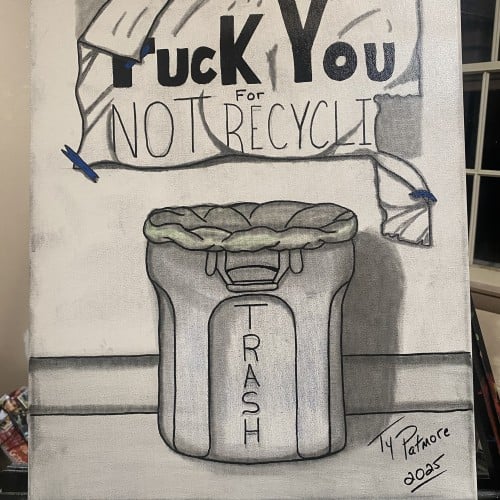
This artwork is part of my ongoing visual diary of factory life—small, overlooked corners turned into honest moments.
“Trash Talk” sits right between humor and grit… a reminder that even the most mundane places have something to say.
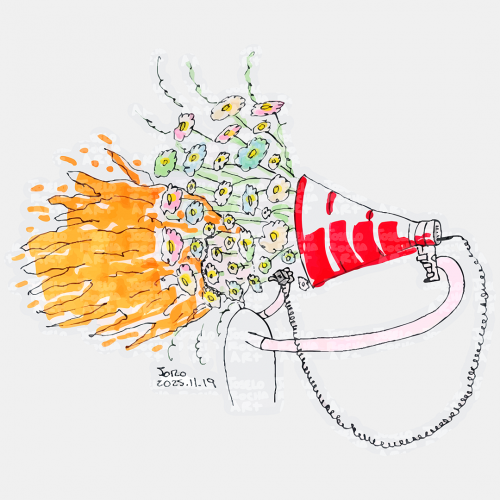
A woman holds a megaphone directly to her face and out of the megaphone burst an explosion of flowers to comunícate the message "be your biggest fan" in a playful, self love, confidence boost, way.
This piece critiques the modern tendency to hide identity behind brands and consumerism.
* Visual Focus: The mask is partially obscured by a fitted baseball cap, with the bill pulled down to cover one eye. The cap itself is a symbol of brand identity and fast-fashion culture. The uncovered eye retains an unsettling, almost mechanical gaze.
* Symbolism:
* The Cap: Represents the societal practice of hiding behind brands and allowing consumerism to dictate self-worth and block out unwanted truths. The act of seeing is deliberately curtailed.
* The Mask: Emphasizes that the consumer identity is often a façade-a manufactured mask that prevents others from truly
"seeing" the individual, while simultaneously restricting the individual's full sight of the world.
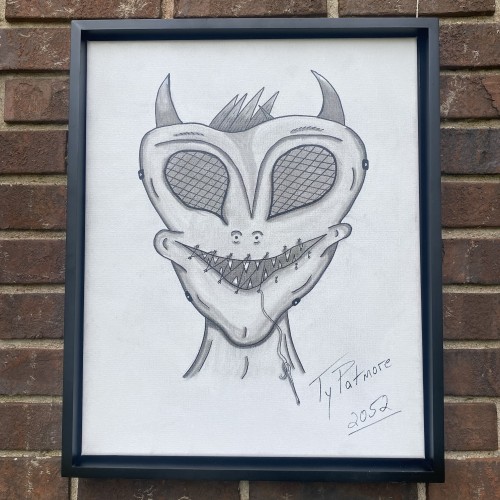
This portrait is the darkest in the series, examining the internal malice that persists even when communication is restricted, illustrating that evil doesn't require a loud voice.
* Visual Focus: The mask's mouth is horrifyingly held closed across the center by surgical thread and a needle, which only covers half of the wide, unnerving smile. The stitching reveals a set of sharp, feral teeth underneath. Disturbingly, a pair of prominent horns protrude from the top of the mask's head.
* Symbolism:
* The Stitched Mouth: Represents the idea of selective silence or the censorship of truth. The fact that the stitching only covers half the mouth highlights the "half-done" nature of modern morality. The revealed sharp teeth suggest that even in silence, the capacity for vicious, cutting, or "devilish" speech remains barely contained. Showed directly on the piece by the date being misleading.
* The Horns: A classic, unambiguous symbol of the Devil or pure malice. This is the figure's core identity—it suggests that even while hiding behind a neutral mask and being partially silenced, the individual's "tongue like the devil" and evil intent are still very much present, emphasizing the inherent corruption and hypocrisy behind the facade.
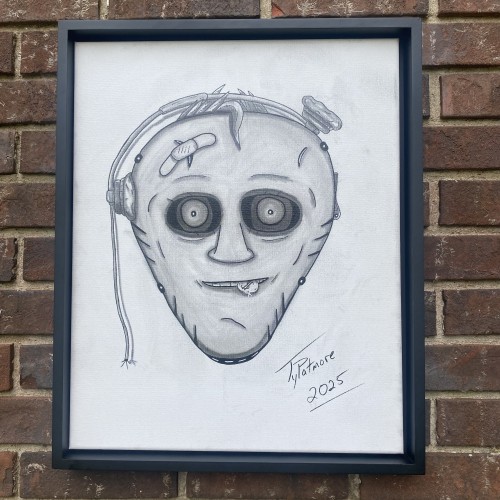
This figure explores how the relentless pursuit of monetary gain and digital distraction stifles genuine attention and moral listening.
* Visual Focus: The mask is equipped with a headphone covering a single ear. The headphone wire is visibly broken, frayed, and cut short, suggesting a deliberate disconnect or a failed attempt at communication. A small coin dangles conspicuously from the corner of the figure's mouth.
* Symbolism:
* The Headphones: Represent modern distraction and the ability to selectively "tune out" inconvenient truths or moral calls. The broken, frayed wire reinforces the idea of a failed connection to the real world.
* The Coin in the Mouth: Serves as a powerful, visceral metaphor for being "consumed by monetary means." It connects the act of speaking/listening to the theme of greed, suggesting that the voice and ear are functionally "plugged" or corrupted by the all-consuming focus on wealth. The refusal to hear moral guidance is dictated by the pursuit of money.
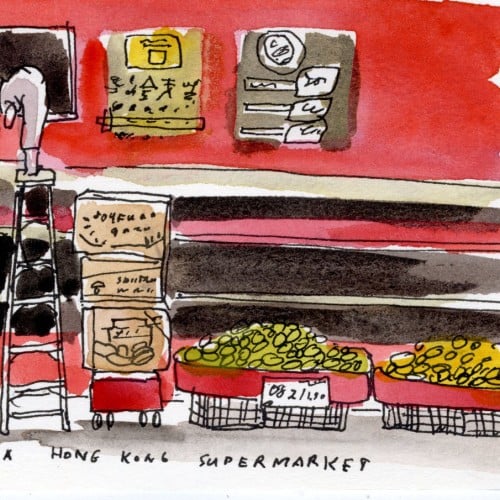
Now that I started to draw my photos, I noticed that I started taking different pictures. I am taking fewer "good" pictures - composition, color all went out the window. Instead, I am taking pictures of things that made me happy or just tickled my fancy.
A stack of blinis, made from my great-aunt's recipe. A book that I accidentally discovered that is so weird and funny. A secret compartment in the wall in a supermarket.