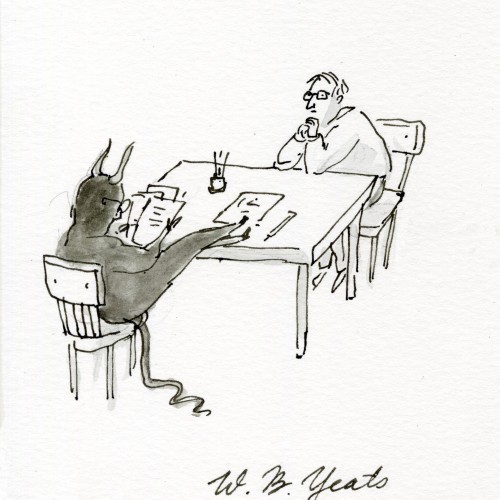
W. B. Yeats (1865–1939)
A lyric poem of eighty or more lines took him about three months of hard labor.
Fortunately, Yeats was not so careful about his other writing, like the literary criticism he did to earn extra money. “One has to give something of one’s self to the devil that one may live,” he said. “I give my criticism.”- From Daily Rituals: How Artists Work by Mason Currey
“Life is a long preparation for something that never happens.”
― W.B. Yeats
#dailyrituals #inktober #WBYeats @masoncurrey
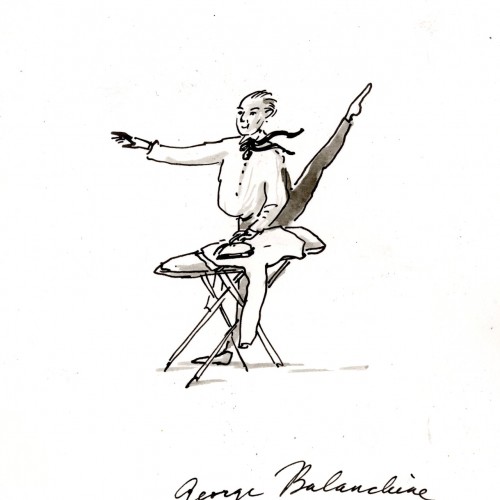
Woody Allen (b. 1935)
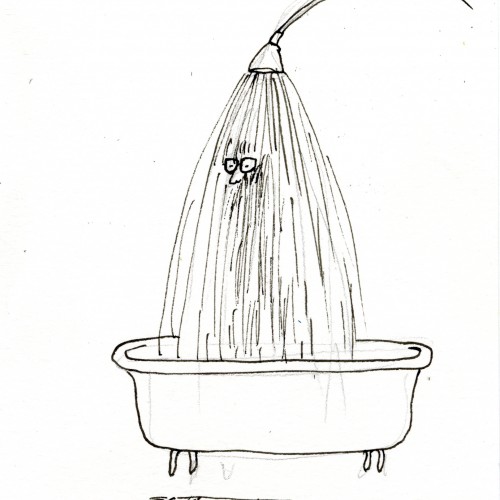
I’ve found over the years that any momentary change stimulates a fresh burst of mental energy. So if I’m in this room and then I go into the other room, it helps me. If I go outside to the street, it’s a huge help. If I go up and take a shower it’s a big help. So I sometimes take extra showers.
“I think in the cracks all the time,” he has said. “I never stop.”
- From Daily Rituals: How Artists Work by Mason Currey
“Some guy hit my fender the other day, and I said unto him, 'Be fruitful, and multiply'. But not in those words.”
― Woody Allen
#dailyrituals #inktober #Woody Allen @masoncurrey
Umberto Eco (b. 1932)
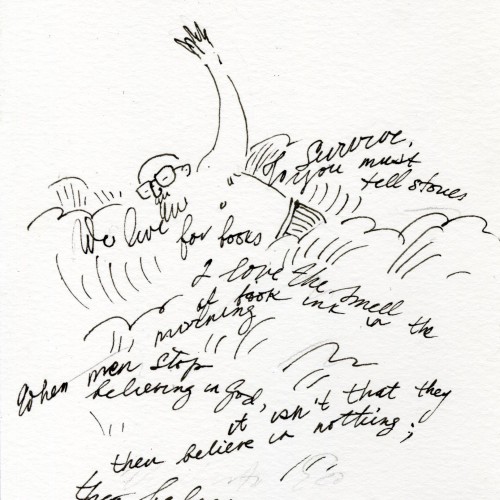
Eco says that he is able to be productive during the brief “interstices” in the day. He told The Paris Review’s interviewer: “This morning you rang, but then you had to wait for the elevator, and several seconds elapsed before you showed up at the door. During those seconds, waiting for you, I was thinking of this new piece I’m writing. I can work in the water closet, in the train. While swimming I produce a lot of things, especially in the sea. Less so in the bathtub, but there too.”
- From Daily Rituals: How Artists Work by Mason Currey
“When men stop believing in God, it isn’t that they then believe in nothing: they believe in everything.” ― Umberto Eco
#dailyrituals #inktober #UmbertoEco @masoncurrey
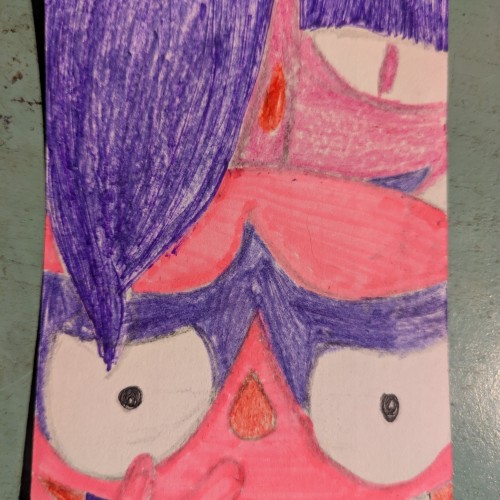
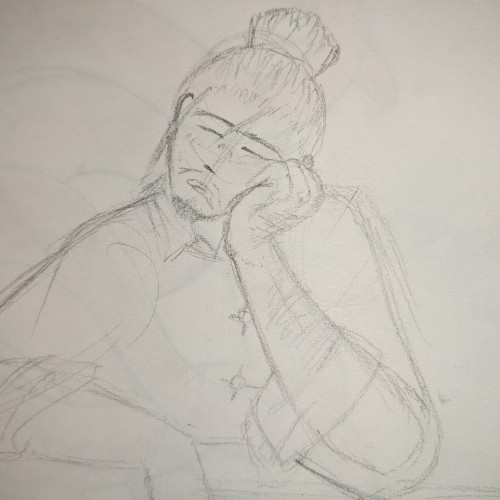
I was kinda bored when I drew this, so it came out in the art work. Incidentally, this guy looks a bit like a character in the nameless city series of graphic novels, which I finished reading recently. The first book is rather heavy handed, but the last two are much better by comparison.
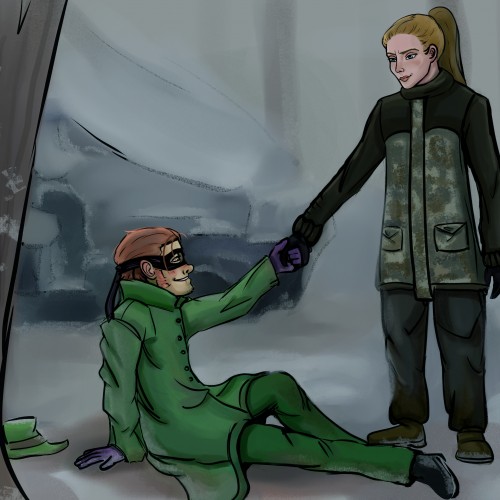
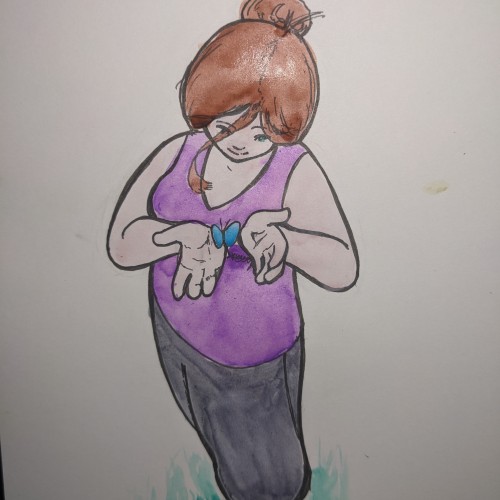
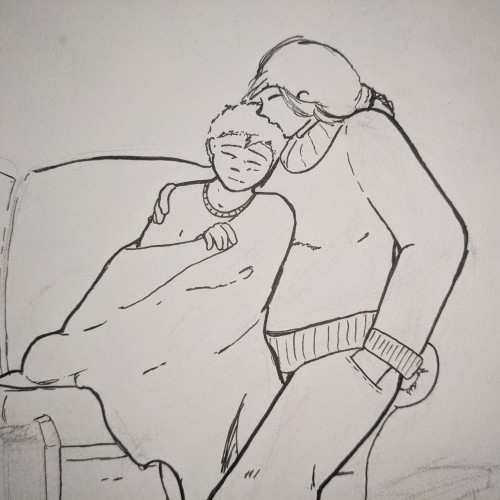
These are some OCs that Ive been working on for a while. Long story short, Maria is Zoey's widowed mother, and Zoey has cancer. Maria is struggling to keep the two of them afloat financially , especially because their health insurance sucks. Hoping to create a story that tugs the heartstrings!
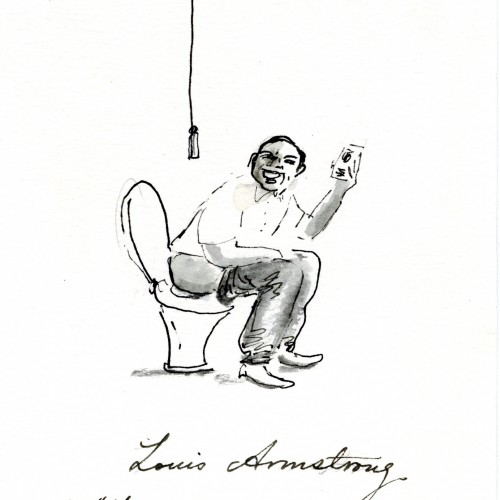
Louis Armstrong (1901–1971)
Armstrong relied on music to lull himself to sleep. Before he could get into bed, however, he had to administer the last of his daily home remedies, Swiss Kriss, a potent herbal laxative invented by the nutritionist Gayelord Hauser in 1922 (and still on the market today). Armstrong believed so strongly in its curative powers that he recommended it to all his friends, and even had a card printed up with a photo of himself sitting on the toilet, above the caption “Leave It All Behind Ya.”
- From Daily Rituals: How Artists Work by Mason Currey
“All music is folk music. I ain't never heard a horse sing a song.”
― Louis Armstrong
#dailyrituals #inktober #LouisArmstrong @masoncurrey
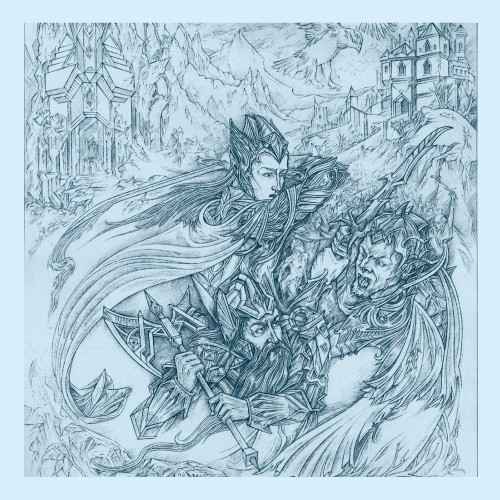
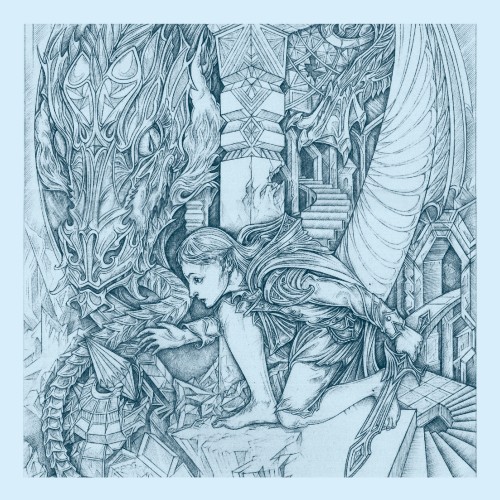
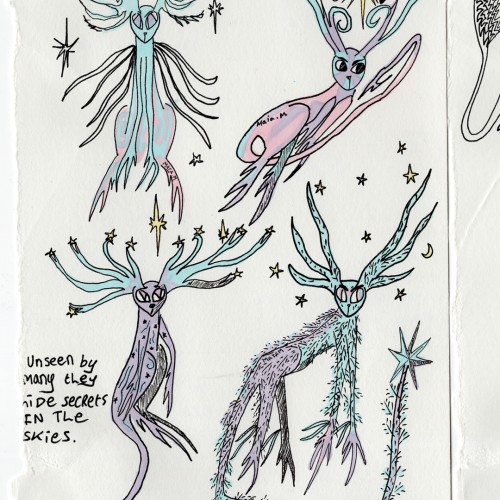
This is a story seed that I have not yet followed through on, probably won't for a while. I started drawing this mainly so that I could draw those front legs. I think I did pretty well on them, though my shading here needs work
I had this bizarre dream recently that I saw some
maniac driving in circles around my neighbourhood in what looked like a Reliant Robin, ready to crash into whatever they could at any given moment… yes, my mind (awake or asleep) works in weird ways but it gives me ideas so, hurray?
David Lynch (1946-2025)
I like things to be orderly,” Lynch told a reporter in 1990. For seven years I ate at Bob’s Big Boy. I would go at 2:30, after the lunch rush. I ate a chocolate shake and four, five, six, seven cups of coffee—with lots of sugar. And there’s lots of sugar in that chocolate shake. It’s a thick shake. In a silver goblet. I would get a rush from all this sugar, and I would get so many ideas! I would write them on these napkins. It was like I had a desk with paper. “
- From Daily Rituals: How Artists Work by Mason Currey
“I don't think it was pain that made [Vincent Van Gogh] great - I think his painting brought him whatever happiness he had.”
― David Lynch
Thank you for all your amazing art!
#dailyrituals #inktober #DavidLynch #goals @masoncurrey
2B pencil focusing on the eye, nose and mouth. The reflection today is a suggestion that we find what we look for, and we see what we want to see. Our family dinners include a sharing time of: 1. Who blessed you today? 2. Who did you bless today? and 3. What are you thankful for? It is suggested by some that if you focus on the abundance, you will not see so much of the lack, but if you focus on the lack, you will not be able to see the abundance so well. This was illustrated by the questions: "How many red cars did you see on the way to work this morning?" My answer was: "No Idea!" It is because I was not looking. If I was being given $100.00 for each red car I spotted, I would have certainly been looking, and maybe even getting creative with the definition of 'red'. What are you looking for? What are you finding?
Draped in delicate pencil strokes, this artwork elegantly portrays a historic city gate, standing as a timeless sentry to myriad untold stories. Each shaded contour brings forth the intricate details of the gate's architecture, echoing the urban landscape of a bygone era. The deft use of monochrome evokes a nostalgic journey through the annals of time, where every shadow and highlight adds to the depth and texture of this piece. This mesmerizing blend of artistry and history invites viewers to step into the past and embrace the serene splendor of the city's storied gateway.

So this is my darling Dolores. She is mixed cultures, Dad is Hispanic and mom is African American. She is a very mischievous character, she is a little girl you should be concerned about. But she does a BFF, he is in the works still. But when the kids see her coming, they get real nervous.


Joseph Cornell (1903–1972)
Cornell worked nights at the kitchen table, sorting and assembling materials for his boxes. It was not easy going. Some nights he felt too fatigued from his day job to concentrate on his art and would sit up reading instead, switching on the oven for warmth. In the mornings, his quarrelsome mother would scold him about the mess he’d left at the kitchen table; without a proper workroom, Cornell was forced to store his growing collection of magazine clippings and dime-store baubles out in the garage.
In 1940 Cornell finally mustered the courage to quit his job and pursue his art full-time—and even then his habits changed little. He still worked nights at the kitchen table, while his mother and brother slept upstairs. In the late morning he would head downtown for breakfast at his local Bickford’s restaurant, often satisfying his sweet tooth with a Danish or a slice of pie (and lovingly cataloging these indulgences in his diary).
- From Daily Rituals: How Artists Work by Mason Currey
#dailyrituals #inktober #JosephCornell @masoncurrey
It was a quick sketch i made for a person..I promised him a sketch but didn't fulfilled the promise for like 2 weeks then i choose to work on it..drew lines for 6-7 mins