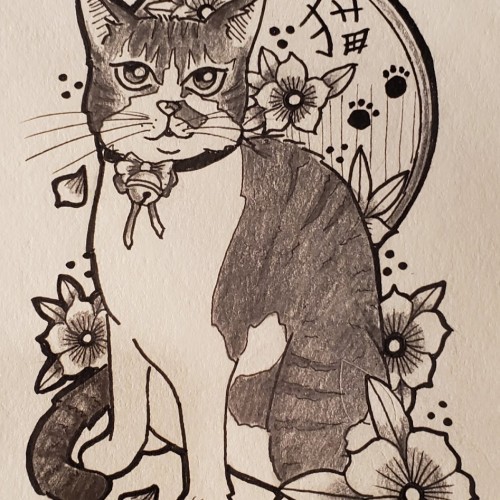
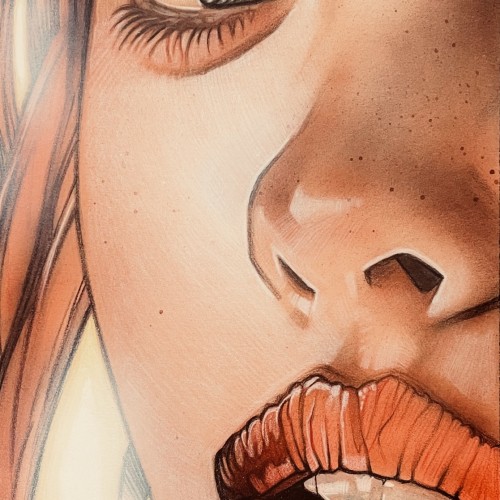
Pen and pencil tattoo design of my lucky cat, Ariel. This drawing was inspired by maneki-neko cats, neo-traditional tattoo style, anime styles, and my love for my Ariel.
Ps i hadn't drawn Cleetus from flamingo on their own in the Instagram era and last time i drew him instagram era and shoutout to u if u seen it back in 2024 Due busy drawing other YouTuber flamingo fanarts lolz
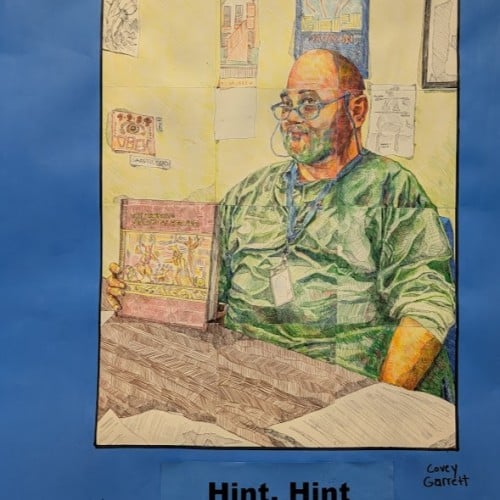
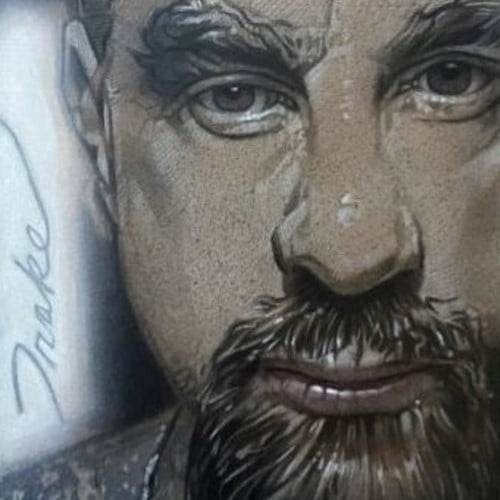
This portrait of Mr. Joshua Anderson—our resident Shakespeare whisperer—was drawn by student artist Covey Garrett as part of a school-wide tribute to our teachers. Students photographed, gridded, and drew 18x24” posters of their teachers, each paired with a favorite catchphrase. Mr. Anderson’s? A classic:
“Hint, hint. Wink, wink. Nudge, nudge.”
We think the Bard would approve.
"All the world's a stage, and all the men and women merely teachers..."
(okay, we may have paraphrased a bit).
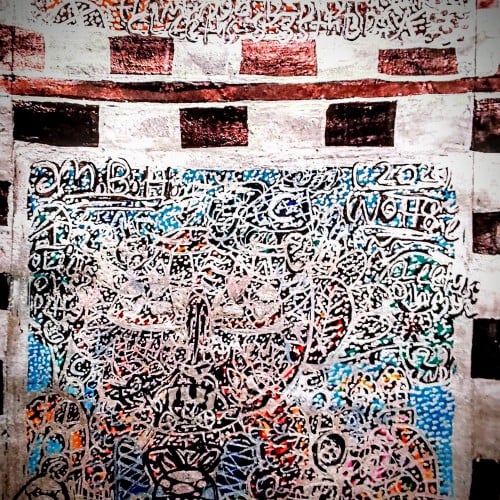
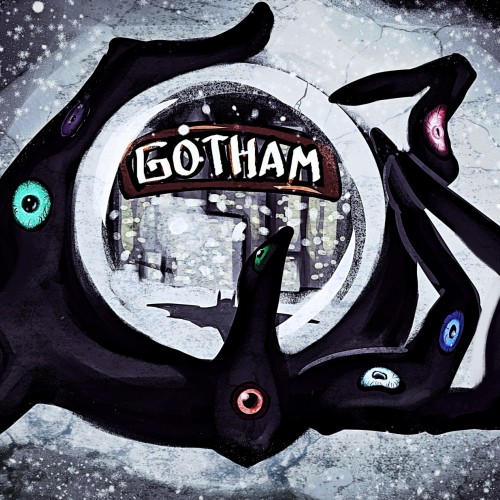
Father's (https://www.doodleaddicts.com/uploads/68546/cosmic-horror/) crooked hand, with six fingers (one looks like a fang) of different weird lengths (because He doesn't understand human anatomy well), holding a Gotham snow globe. And of course, the eyes. He loves eyes.
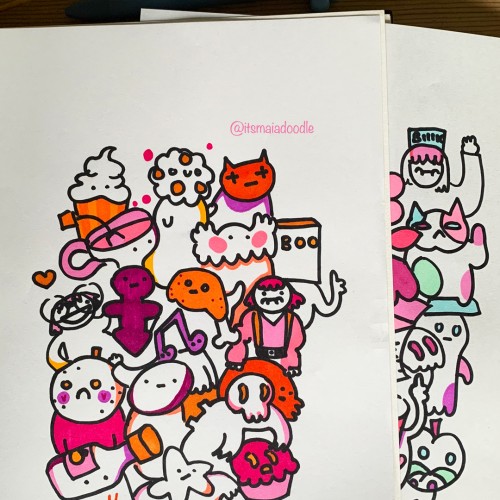
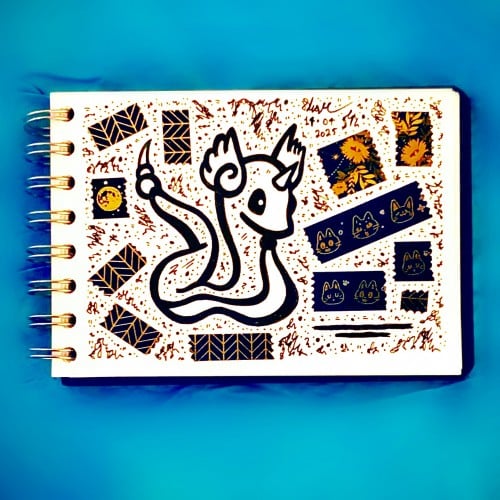
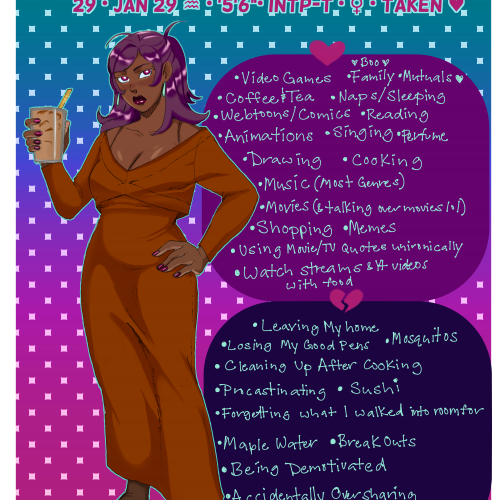
I made this fun little doodle for someone who likes Prince, ice cream, tea, cats, and horror movies (check out the guy with the paper hat that says BOO
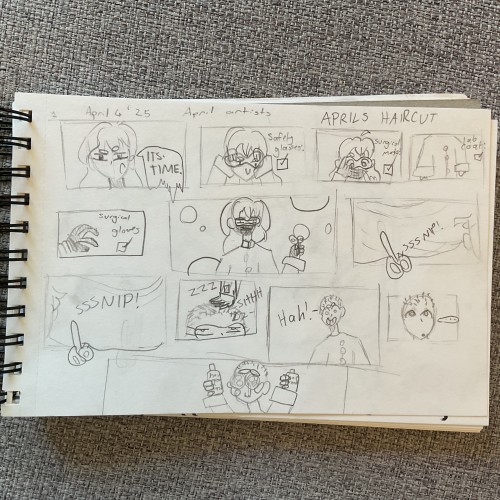
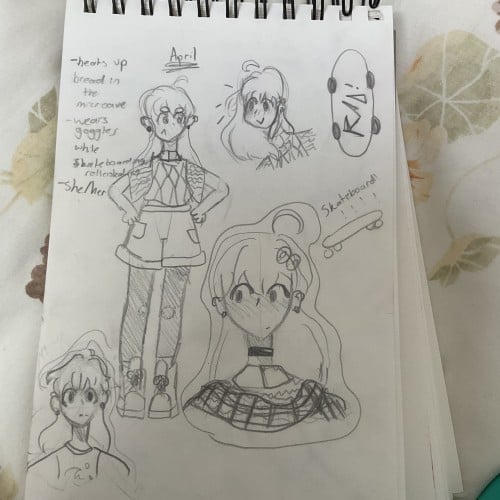
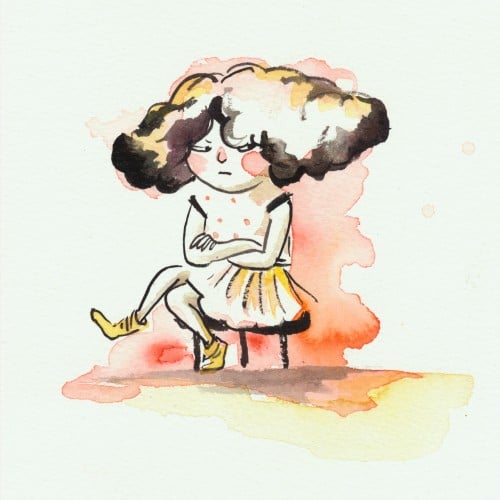
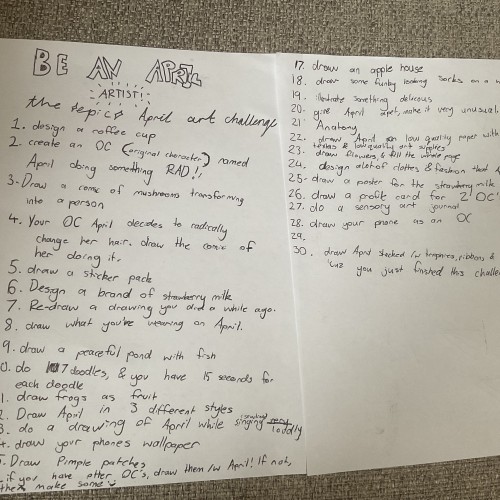
I’m doing this for the April artists challenge because the theme was that “your OC April decides to radically change their hair- draw a comic of them doing it”YIPEEEEEE
Mark Twain (1835–1910)
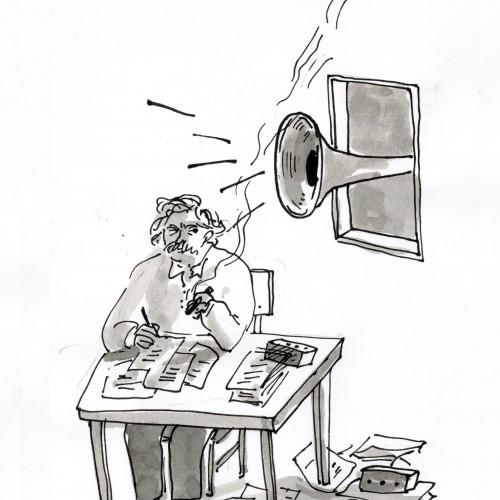
In the 1870s and ’80s, the Twain family spent their summers at Quarry Farm in New York, about two hundred miles west of their Hartford, Connecticut, home. Twain found those summers the most productive time for his literary work, especially after 1874, when the farm owners built him a small private study on the property. That same summer, Twain began writing The Adventures of Tom Sawyer. His routine was simple: he would go to the study in the morning after a hearty breakfast and stay there until dinner at about 5:00. Since he skipped lunch, and since his family would not venture near the study—they would blow a horn if they needed him—he could usually work uninterruptedly for several hours. “On hot days,” he wrote to a friend, “I spread the study wide open, anchor my papers down with brickbats, and write in the midst of the hurricane, clothed in the same thin linen we make shirts of.”
Whether or not he was working, he smoked cigars constantly. One of his closest friends, the writer William Dean Howells, recalled that after a visit from Twain, “the whole house had to be aired, for he smoked all over it from breakfast to bedtime.”
- From Daily Rituals: How Artists Work by Mason Currey
“Everyone is a moon, and has a dark side which he never shows to anybody.”
― Mark Twain
#dailyrituals #inktober #MarkTwain @masoncurrey
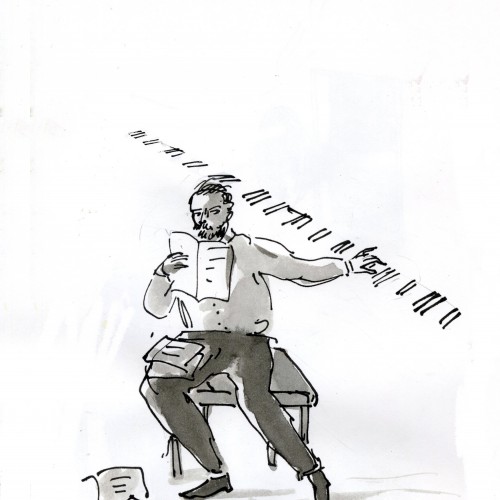
Pyotr Ilich Tchaikovsky (1840–1893)
At 9:30, Tchaikovsky set to work—composing at the piano only after he had dealt with any proofs or his correspondence, chores that he disliked. “Before setting about the pleasant task,” his brother noted, “Pyotr Ilich always hastened to get rid of the unpleasant.”
After lunch he went for a long walk, regardless of the weather. His brother writes, “Somewhere at sometime he had discovered that a man needs a two-hour walk for his health, and his observance of this rule was pedantic and superstitious, as though if he returned five minutes early he would fall ill, and unbelievable misfortunes of some sort would ensue.”
- From Daily Rituals: How Artists Work by Mason Currey
“Truly there would be reason to go mad were it not for music.”
― Peter Ilyich Tchaikovsky
“If you do not want to write, at least spit on a piece of paper, put it in an envelope, and send it to me. You are not taking any notice of me at all. God forgive you – all I wanted was a few words from you.”
― Pyotr Ilyich Tchaikovsky
#dailyrituals #inktober #PeterTchaikovsky @masoncurrey
Herman Melville (1819–1891)
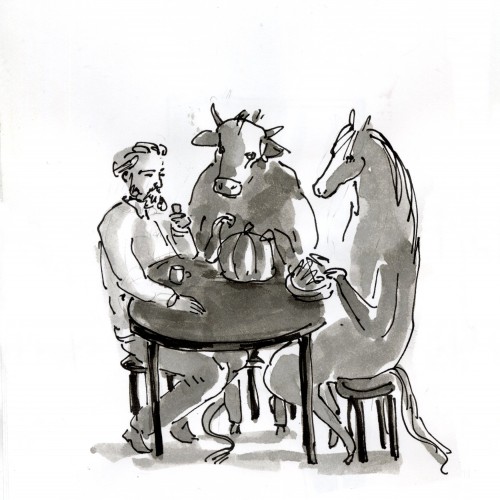
"I rise at eight—thereabouts—& go to my barn—say good-morning to the horse, & give him his breakfast. (It goes to my heart to give him a cold one, but it can’t be helped.) Then, pay a visit to my cow—cut up a pumpkin or two for her, & stand by to see her eat it—for it’s a pleasant sight to see a cow move her jaws—she does it so mildly & with such a sanctity."
- From Daily Rituals: How Artists Work by Mason Currey
“I would prefer not to.”
― Herman Melville, Bartleby the Scrivener
“A smile is the chosen vehicle of all ambiguities.”
― Herman Melville, Pierre; or, The Ambiguities
#dailyrituals #inktober #HermanMelville @masoncurrey
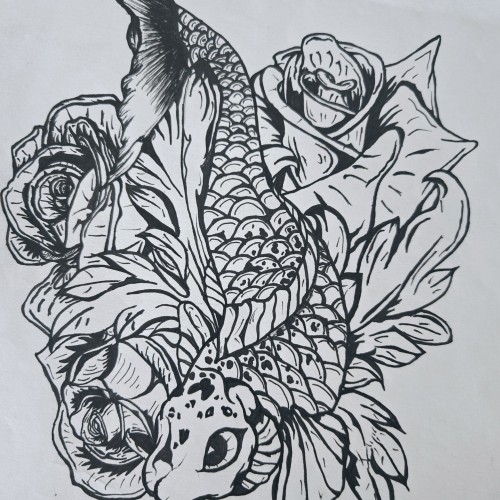
"Pisces Koi" is a bold and intricate black-and-white ink piece that blends symbolism with fluid motion. A koi fish, known for its resilience and transformation, weaves through a bed of blooming roses, creating a contrast between movement and stillness. The fine details in the scales and petals bring depth, making the composition feel alive.
The upward motion of the koi echoes the legend of perseverance—where a koi swimming upstream becomes a dragon—mirroring the Pisces spirit of adaptation and ambition. The roses introduce another layer, possibly symbolizing beauty, personal growth, or challenges that shape us.
This piece captures a sense of quiet strength and fluidity, speaking to those drawn to themes of transformation, water energy, and the balance between struggle and grace.
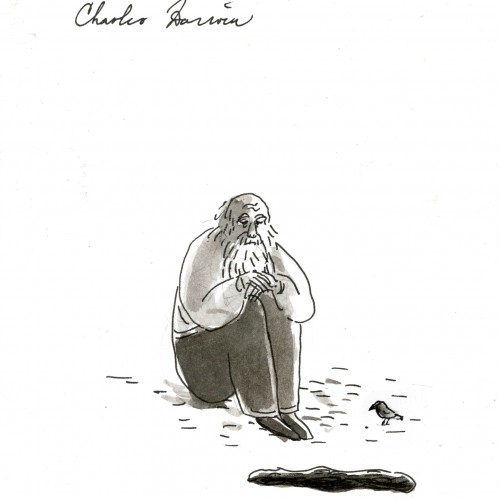
Charles Darwin (1809–1882)
From the time he arrived at Down House until 1859, when he finally published On the Origin of Species, Darwin led a double life, keeping his thoughts on evolution and natural selection to himself while bolstering his credentials in the scientific community.
Meanwhile, he divulged his secret theory to a very few confidants; he told one fellow scientist it was “like confessing a murder.”
- From Daily Rituals: How Artists Work by Mason Currey
“Ignorance more frequently begets confidence than does knowledge: it is those who know little, not those who know much, who so positively assert that this or that problem will never be solved by science.”
― Charles Darwin, The Descent of Man
#dailyrituals #inktober #CharlesDarwin @masoncurrey
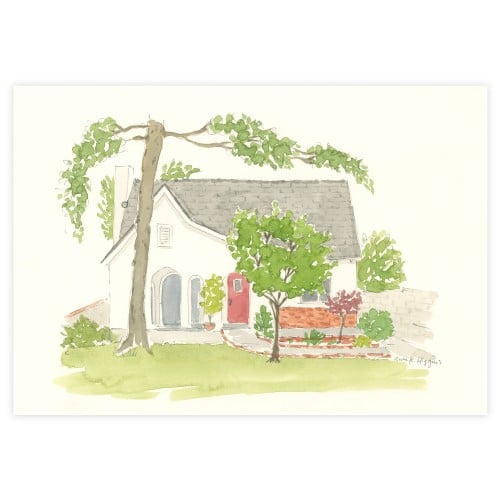
Artist @asherbingham.fineart initiated a project offering free paintings of homes lost in the recent Los Angeles fires. Since announcing this on IG, she has received over 1500 requests and enlisted volunteer artists nationwide to assist. This is one of 35 homes I've painted.