Previous
Next
logo logo
logo logo
  • Discover Art
    • Trending
    • Most Recent
    • Most Faves
    • Most Views
    • Curated Galleries
  • Drawing Challenges
    • See All Challenges
  • Drawing Prompts
  • Artists
    • Most Popular
    • Most Recent
    • Available For Hire
    • Artist Spotlight
  • More
    • Marketplace
    • Art Discussions
    • Resources
    • News + Blog
Login
Most Recent
Select an option
  • Most Relevant
  • Most Faves
  • Most Views
  • Most Comments
  • Most Recent
SEARCH RESULTS FOR

artist

Maia Doodle Maia Doodle
Enlarge
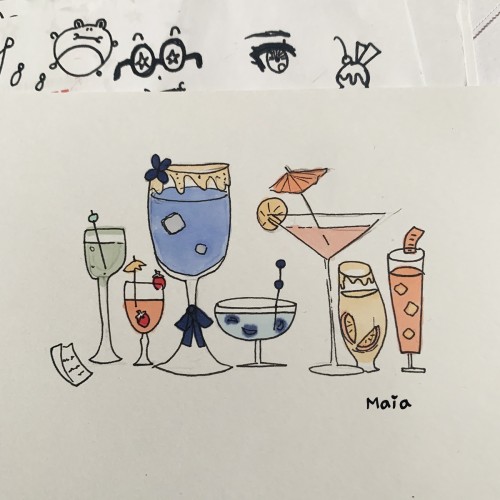
Festive sodas and fun beverages drawing

Delicious festive sodas and fun beverages! Just a quick sketch with markers—keeping it cheerful!

  • 17
  • 5
  • 2
Sabina Hahn Sabina Hahn
Enlarge
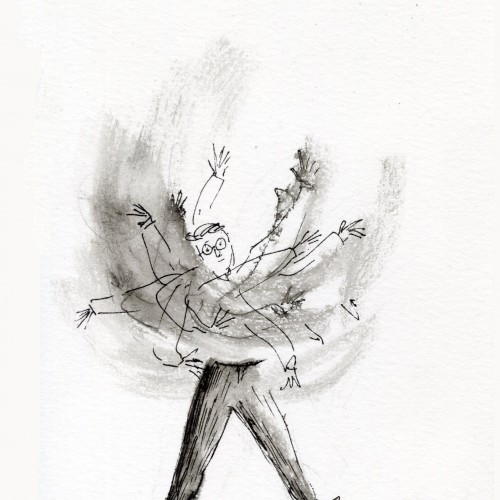
Dmitry Shostakovich (1906–1975)

Dmitry Shostakovich (1906–1975) Shostakovich’s contemporaries do not recall seeing him working, at least not in the traditional sense. The Russian composer was able to conceptualize a new work entirely in his head, and then write it down with extreme rapidity—if uninterrupted, he could average twenty or thirty pages of score a day, making virtually no corrections as he went. But this feat was apparently preceded by hours or days of mental composition—during which he “appeared to be a man of great inner tensions,” the musicologist Alexei Ikonnikov observed, “with his continually moving, ‘speaking’ hands, which were never at rest.” Shostakovich himself was afraid that perhaps he worked too fast. “I worry about the lightning speed with which I compose,” he confessed in a letter to a friend. Undoubtedly this is bad. One shouldn’t compose as quickly as I do. Composition is a serious process, and in the words of a ballerina friend of mine, “You can’t keep going at a gallop.” I compose with diabolical speed and can’t stop myself.… It is exhausting, rather unpleasant, and at the end of the day you lack any confidence in the result. But I can’t rid myself of the bad habit. - From Daily Rituals: How Artists Work by Mason Currey #dailyrituals #inktober #shostakovich @masoncurrey

  • 490
  • 8
  • 0
DeeDee  Joseph DeeDee Joseph
Enlarge
The Adams Sisters- Daphne, Primrose and Dalena

Primrose is the oldest, Daphne is the middle, and Dalena is the youngest. The outfits were found on Pinterest/Instagram. The background was hard to come up with. I referenced Martin Ivanov's Gotham City for the background. Their story is still in the works but I wanted to draw them anyway.

  • 31
  • 3
  • 2
Sabina Hahn Sabina Hahn
Enlarge
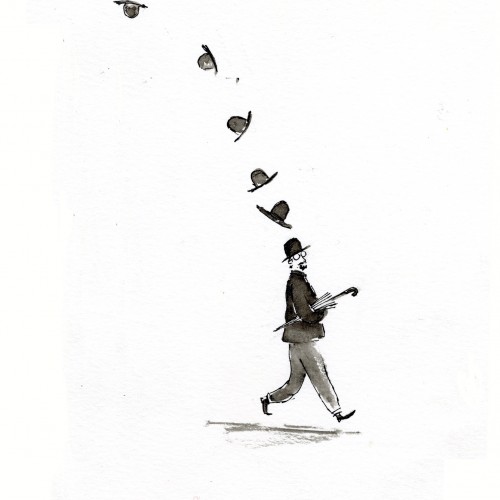
Erik Satie

Erik Satie (1866–1925) In 1898, Satie moved from Paris’s Montmartre district to the working-class suburb of Arcueil, where he would live for the rest of his life. Most mornings, however, the composer returned to the city on foot, walking a distance of about six miles to his former neighborhood, stopping at his favorite cafés along the way. According to one observer, Satie “walked slowly, taking small steps, his umbrella held tight under his arm. When talking he would stop, bend one knee a little, adjust his pince-nez and place his fist on his hip. Then he would take off once more, with small deliberate steps.” His dress was also distinctive: the same year that he moved to Arcueil, Satie received a small inheritance, which he used to purchase a dozen identical chestnut-colored velvet suits, with the same number of matching bowler hats. Locals who saw him pass by each day soon began calling him the Velvet Gentleman. The last train back to Arcueil left at 1:00 A.M., but Satie frequently missed it. Then he would walk the several miles home, sometimes not arriving until the sun was about to rise. Nevertheless, as soon as the next morning dawned, he would set off to Paris once more. The scholar Roger Shattuck once proposed that Satie’s unique sense of musical beat, and his appreciation of “the possibility of variation within repetition,” could be traced to this “endless walking back and forth across the same landscape day after day.” Indeed, Satie was observed stopping to jot down ideas during his walks, pausing under a streetlamp if it was dark. During the war the streetlamps were often extinguished, and rumor had it that Satie’s productivity dropped as a result. - From Daily Rituals: How Artists Work by Mason Currey

  • 360
  • 5
  • 0
Sabina Hahn Sabina Hahn
Enlarge
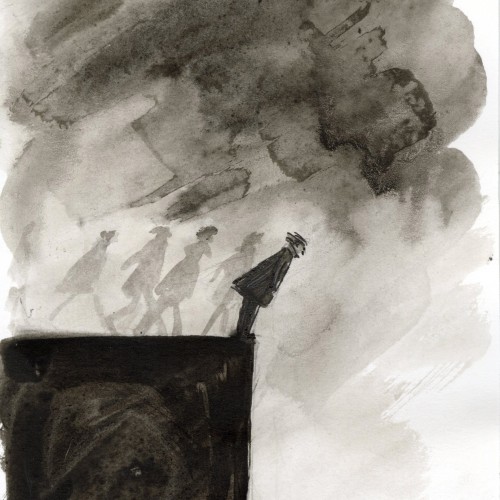
Samuel Beckett

Samuel Beckett (1906–1989) On a late-night walk near Dublin harbor, Beckett found himself standing on the end of a pier in the midst of a winter storm. Amid the howling wind and churning water, he suddenly realized that the “dark he had struggled to keep under” in his life—and in his writing, which had until then failed to find an audience or meet his own aspirations—should, in fact, be the source of his creative inspiration. “I shall always be depressed,” Beckett concluded, “but what comforts me is the realization that I can now accept this dark side as the commanding side of my personality. In accepting it, I will make it work for me.” - From Daily Rituals: How Artists Work by Mason Currey #dailyrituals #inktober #samuelbeckett @masoncurrey

  • 571
  • 11
  • 6
Sabina Hahn Sabina Hahn
Enlarge
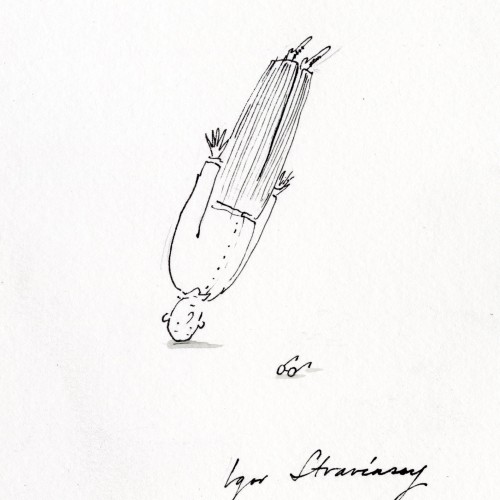
Igor Stravinsky

Igor Stravinsky (1882–1971) “I get up at about eight, do physical exercises, then work without a break from nine till one,” Stravinsky told an interviewer in 1924. Generally, three hours of composition were the most he could manage in a day, although he would do less demanding tasks—writing letters, copying scores, practicing the piano—in the afternoon. Unless he was touring, Stravinsky worked on his compositions daily, with or without inspiration, he said. He required solitude for the task, and always closed the windows of his studio before he began: “I have never been able to compose unless sure that no one could hear me.” If he felt blocked, the composer might execute a brief headstand, which, he said, “rests the head and clears the brain.” - From Daily Rituals: How Artists Work by Mason Currey

  • 425
  • 2
  • 1
Sabina Hahn Sabina Hahn
Enlarge
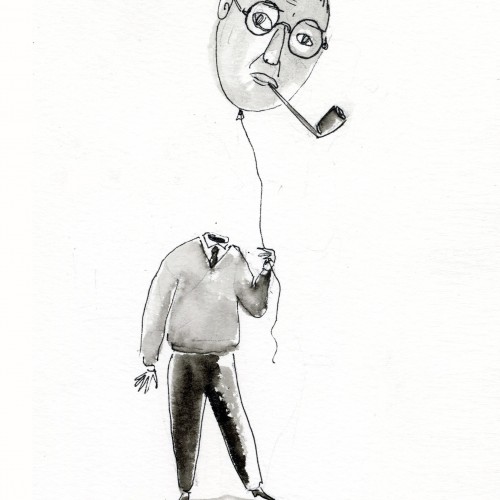
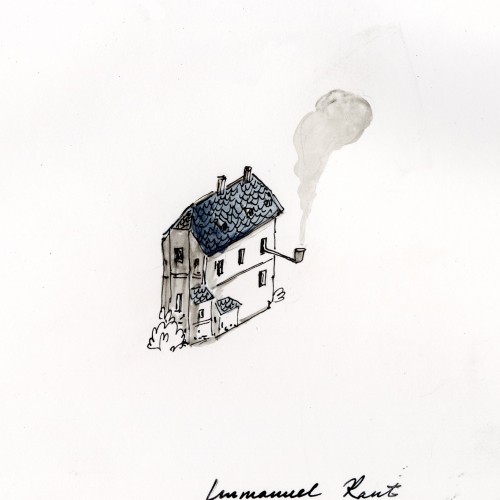
Immanuel Kant

Immanuel Kant (1724–1804) Kant’s biography is unusually devoid of external events. As Heinrich Heine wrote: The history of Kant’s life is difficult to describe. For he neither had a life nor a history. In actual fact, as Manfred Kuehn argues in his 2001 biography, Kant’s life was not quite as abstract and passionless as Heine and others have supposed…. If he failed to live a more adventurous life, it was largely due to his health: the philosopher had a congenital skeletal defect that caused him to develop an abnormally small chest, which compressed his heart and lungs and contributed to a generally delicate constitution. In order to prolong his life with the condition—and in an effort to quell the mental anguish caused by his lifelong hypochondria—Kant adopted what he called “a certain uniformity in the way of living and in the matters about which I employ my mind.” This routine was as follows: Kant rose at 5:00 A.M., after being woken by his longtime servant, a retired soldier under explicit orders not to let the master oversleep. Then he drank one or two cups of weak tea and smoked his pipe. According to Kuehn, “Kant had formulated the maxim for himself that he would smoke only one pipe, but it is reported that the bowls of his pipes increased considerably in size as the years went on.” - From Daily Rituals: How Artists Work by Mason Currey #dailyrituals #inktober #ImmanuelKant @masoncurrey

  • 435
  • 8
  • 2
TimShch TimShch
Enlarge
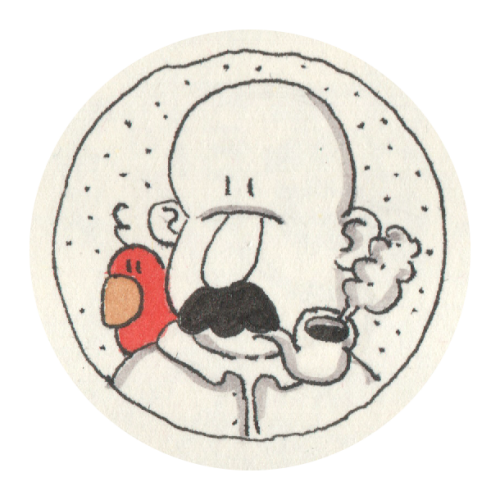
50heads #2

Artists I'm inspired by. For every head different material: pencil, ballpoint pen, brush pen, colored pencils + ink, watercolour

  • 76
  • 4
  • 0
Cameron Cameron
Enlarge
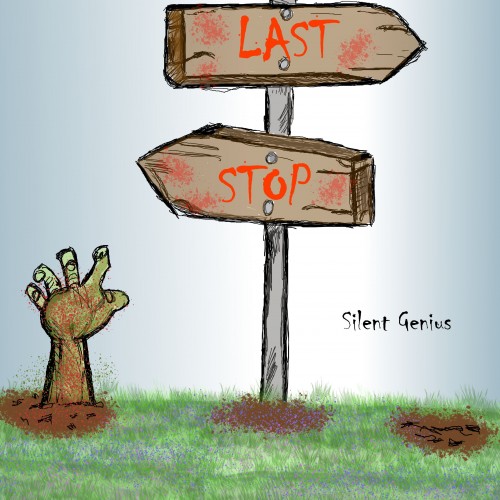
Last Stop

Illustration created in the Krita App.

  • 18
  • 2
  • 0
Piotr Piwko Piotr Piwko
Enlarge
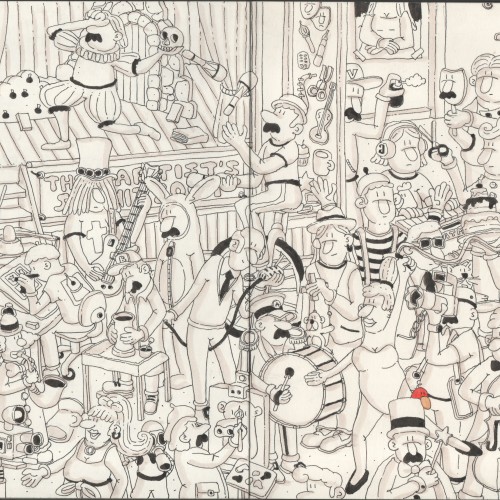
The Artists Summit 2024

  • 158
  • 5
  • 2
Steven Steven
Enlarge
Some drawings of mine
1/5

All my drawings are random ideas from my head. I actually just started drawing in pencil about a year ago. I love to normally use felt tip pens. I just hope all like what they see. We're all artists here so everyone should know that we are our own worst critics lol.

  • 4
  • 2
  • 0
Sabina Hahn Sabina Hahn
Enlarge
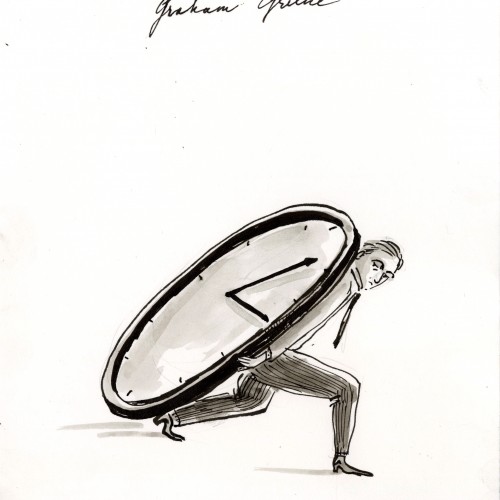
Joyce Carol Oates

Joyce Carol Oates (b. 1938) The first several weeks of a new novel, Oates has said, are particularly difficult and demoralizing: “Getting the first draft finished is like pushing a peanut with your nose across a very dirty floor.” From Daily Rituals: How Artists Work by Mason Currey #dailyrituals #inktober #JoyceCarolOates @masoncurrey

  • 569
  • 1
  • 0
DeeDee  Joseph DeeDee Joseph
Enlarge
Nap Queen goes to sleep once more

I wasn't feeling this one but I pushed and finished

  • 26
  • 2
  • 0
Will (Bampi) Edwards Will (Bampi) Edwards
Enlarge
Ella Ruby Cavalier King Charles Spaniel

My beautiful Ella "Ruby Cavalier King Charles Spaniel" is now finished. #cavalierkingcharlesspaniel #digitalartist #digitalart #dogportraitartist #wildlifeartist #haveaniceday #clipstudiopaintart #procreateart #sketchoftheday #sketchofday #doglovers #idrawdogs

  • 62
  • 2
  • 2
Simon Simon
Enlarge
Zombie Ride

Another halloween bike

  • 62
  • 2
  • 0
Abby Averitt Abby Averitt
Enlarge
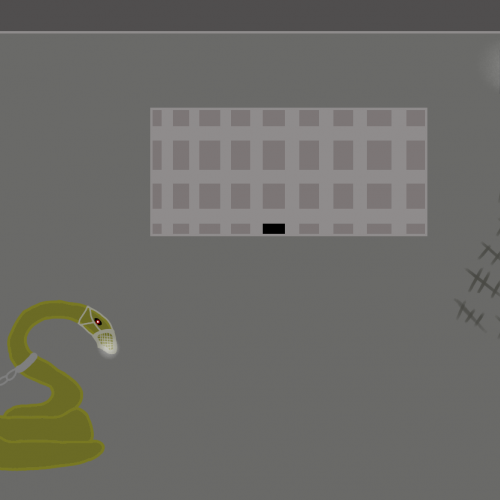
Serpentine Prison

I am a digital artist, and I just happened to stumble upon this art application, and I am very excited to share my artwork with y'all!

  • 17
  • 2
  • 3
Hua Yen Hua Yen
Enlarge
Skeleton Girl

  • 15
  • 4
  • 1
Sabina Hahn Sabina Hahn
Enlarge
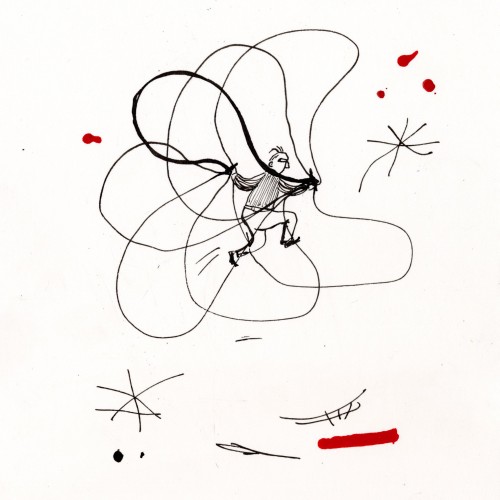
Joan Miró

Joan Miró (1893-1983) Miró always maintained a rigidly inflexible daily routine—both because he disliked being distracted from his work, and because he feared slipping back into the severe depression that had afflicted him as a young man, before he discovered painting. To help prevent a relapse, his routine always included vigorous exercise—boxing in Paris; jumping rope and Swedish gymnastics at a Barcelona gym; and running on the beach and swimming at Mont-roig, a seaside village where his family owned a farmhouse. Miró hated for this routine to be interrupted by social or cultural events. As he told an American journalist, “Merde! I absolutely detest all openings and parties! They’re commercial, political, and everybody talks too much. They get on my tits!” From Daily Rituals: How Artists Work by Mason Currey

  • 572
  • 6
  • 0
Hermit Hermit
Enlarge
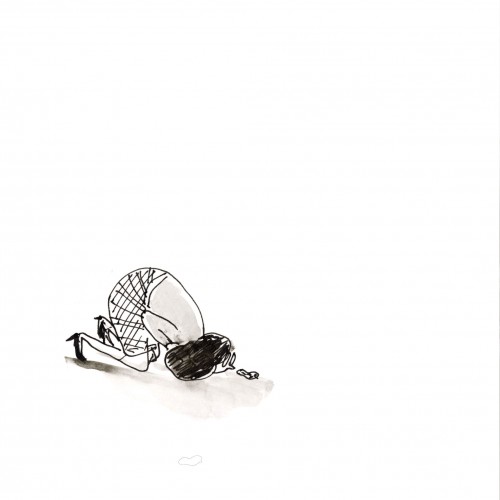
SACRED COW

(Gel Fineliner on A5 Paper) A simple image to show that sacred cows, of all kinds, should not be immune in the eyes of any artist.

  • 593
  • 3
  • 0
Will (Bampi) Edwards Will (Bampi) Edwards
Enlarge
Sumatran Tiger Cub

I've been going through my sketches, both completed and incomplete, and found a drawing of a young Sumatran Tiger that I began working on around two years ago, but never completed. I'm actually relieved that I didn't draw it earlier, as it has allowed me to gain more experience in illustrating this stunning creature, which is unfortunately a species at risk of extinction. A few facts about the Sumatran Tigers... The Sumatran tiger Panthera tigris sumatrae*, the smallest tiger subspecies, is critically endangered and stands as the final surviving species of island tigers. Poaching poses a significant danger to Sumatran tigers as hunters target them for their skin, bones, and canines. Additionally, habitat loss caused by oil palm, coffee, and acacia plantations, further endangers these big cats by reducing their prey availability and pushing them closer to human habitations. It is estimated that there are fewer than 400 mature individual tigers in Sumatra in isolated pockets of protected land. Three of the protected areas are classified as UNESCO World Heritage Sites but all are in danger of losing this status due to threats from poaching, illegal logging, agricultural encroachment, and planned road building. It is for these reasons the Sumatran tiger is classified in the most severe IUCN status: Critically endangered. Description: The Sumatran tiger is the smallest and darkest tiger subspecies and tends to be more bearded and maned than the other subspecies. Male tigers can expect to reach somewhere in the region of 120kg and 8ft from head to tail vs females who average 91kg and 7ft length. Breeding: Female tigers are sexually mature at about 3 or 4 years of age, and males at about 4 to 5 years. Mating may occur any time during the year, but it most frequently takes place from November to April. The information was obtained from conservewildcats.org. Thank you. #indonesia #criticallyendangered #sumatrantiger #amateurartist #tigerdrawing #tigersketch #tigercub #sketchadayapp #october2024

  • 118
  • 4
  • 0
Hermit Hermit
Enlarge
CBA - FIVE

(Gel Fineliner on A5 Paper) The fifth, and last, of these small CBA images, and even an artist can find better things to do when they get bored of doing artwork, but don't worry, they always return to it.

  • 367
  • 2
  • 0
Hermit Hermit
Enlarge
CBA - FOUR

(Gel Fineliner on A5 Paper) An artist isn't being stroppy when they don't want to do any work. It's literally because they "can't be arsed!"

  • 393
  • 3
  • 0
Hermit Hermit
Enlarge
CBA - THREE

(Gel Fineliner on A5 Paper) Words that are used by the halfhearted artist to someone who asks far too much and pays far too little!

  • 198
  • 3
  • 0
Hermit Hermit
Enlarge
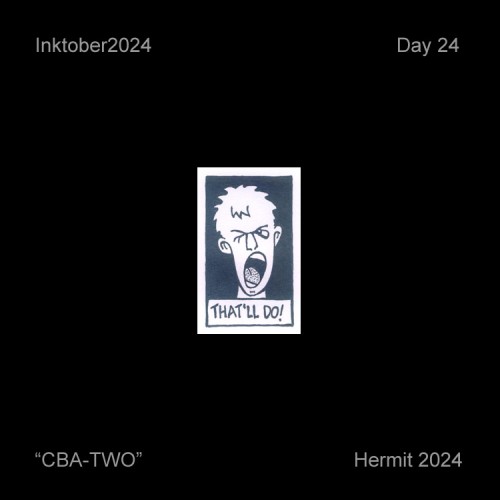
CBA - TWO

(Gel Fineliner on A5 Paper) The second of five small drawings which are meant to show what happens when an artist gets bored of a subject. You draw something halfheartedly and think "That'll do!" XD

  • 320
  • 3
  • 0
Hermit Hermit
Enlarge
CBA - ONE

(Gel Fineliner on A5 Paper) The central image is small because it is that small (about 4cm). It's the first of five which represents that point every artist gets to where they say to themselves: "I really CAN'T BE ARSED doing this!" and casually knock out anything. I thought it was apt for the "encouraging" nature of Inktober ;P

  • 197
  • 4
  • 0
Kurtis D Edwards Kurtis D Edwards Plus Member
Enlarge
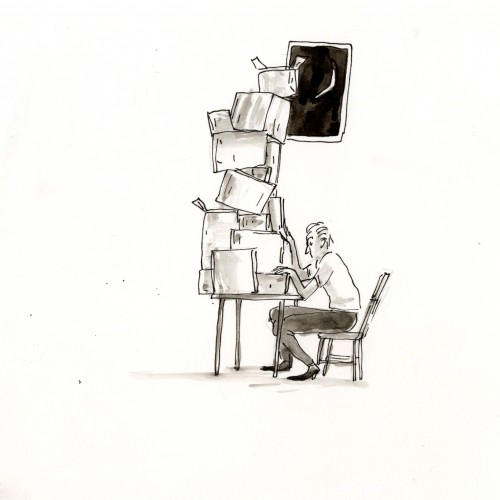
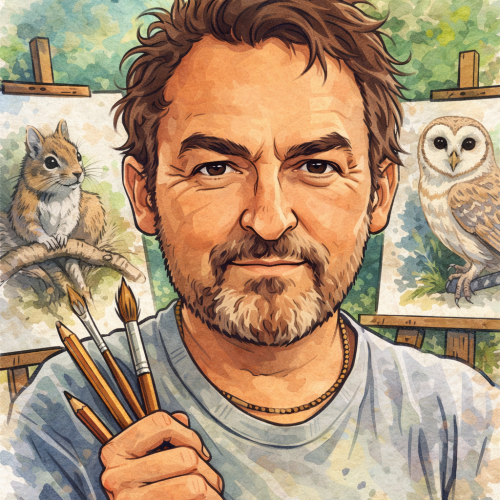
Busy artist

2nd project for a portrait collage course. Made in Rebelle

  • 183
  • 4
  • 1
Derek Howell Derek Howell
Enlarge
KISS Destroyer

KISS Destroyer album cover original artist Ken Kelly . First post

  • 13
  • 4
  • 2
Hermit Hermit
Enlarge
THE TWART

(Gel Fineliner on A5 Paper) A "Twart" is someone who tries far too hard to be an artist. Each carries the metaphorical book: "The ABC Book on How To Be An Artist" Ticking off various points they think will make them such. You can usually tell who they are by the cheesy, inoffensive work they produce and a false, bohemian, facade. Because they think that's what artist are like.

  • 701
  • 3
  • 2
Sabina Hahn Sabina Hahn
Enlarge
Ludwig van Beethoven

Ludwig van Beethoven (1770–1827) Beethoven rose at dawn and wasted little time getting down to work. His breakfast was coffee, which he prepared himself with great care—he determined that there should be sixty beans per cup, and he often counted them out one by one for a precise dose. From Daily Rituals : How Artists Work by Mason Currey. #dailydrawing #dailyritual #beethoven #coffee #inktober @masoncurrey

  • 281
  • 4
  • 0
Sabina Hahn Sabina Hahn
Enlarge
Wolfgang Amadeus Mozart

Wolfgang Amadeus Mozart In a 1782 letter to his sister, he gave a detailed account of these hectic days in Vienna: "My hair is always done by six o’clock in the morning and by seven I am fully dressed. I then compose until nine. From nine to one I give lessons. Then I lunch..." From "Daily Rituals: How Artists Work", edited and with text by Mason Currey.

  • 433
  • 3
  • 0
« Previous
Next »

Doodle Addicts

Navigate
  • Discover Art
  • Drawing Challenges
  • Weekly Drawing Prompts
  • Artist Directory
  • Art Marketplace
  • Resources
Other
  • News + Blog
  • About Us
  • Contact Us
Newsletter
© 2026 Doodle Addicts™ — All Rights Reserved Terms & Conditions / Privacy Policy / Community Guidelines
Add Doodle Addicts to your home screen to not miss an update!
Add to Home Screen