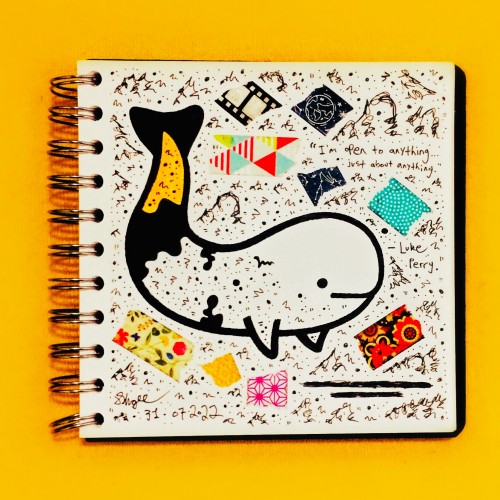
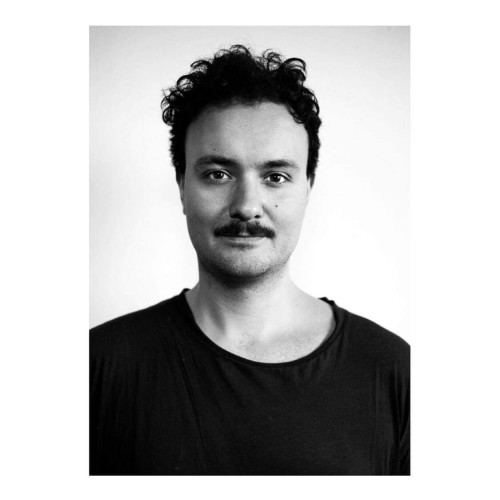
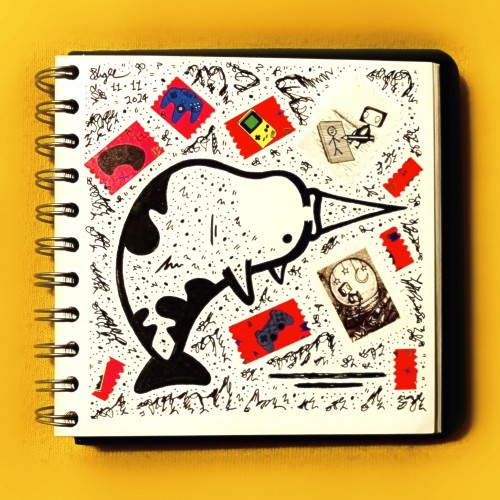
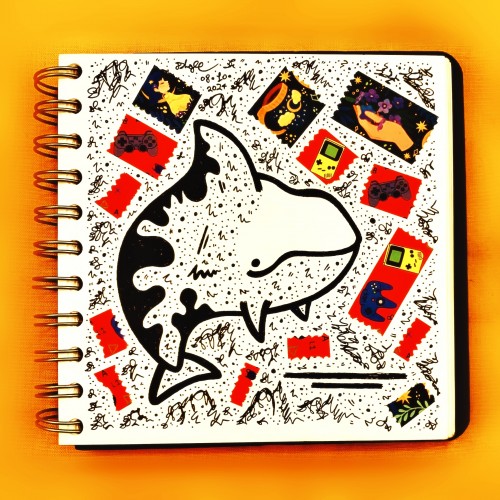
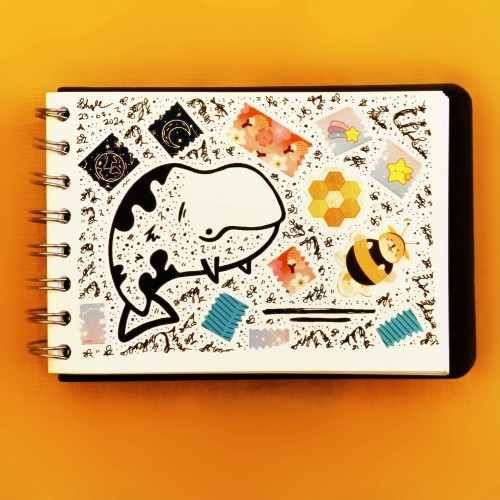
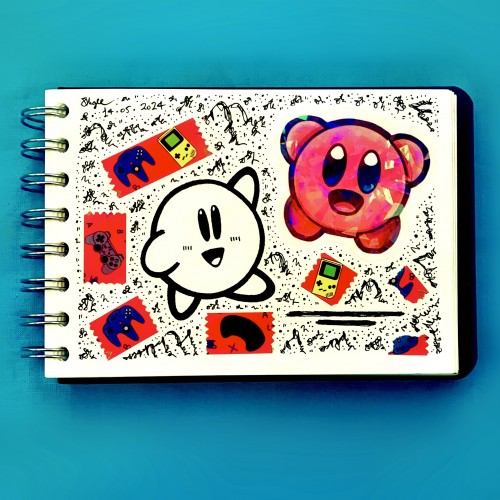
A handful of Brit flicks have been showing up on Disney+ lately, and one of them I watched recently had Luke Perry of all folks in it... the film in question is called ‘The Beat Beneath My Feet’ in case you’re curious.
In all seriousness though, British films with American actors in them as a lead/central character will forever and always fascinate me, much like Luke Perry’s birth name did! Rest well good sir and thanks for everything.
A tiger wearing a teal suit and top hat is depicted against a muted background, giving an elegant and whimsical appearance. The animal's serious expression is emphasized by the formal attire.
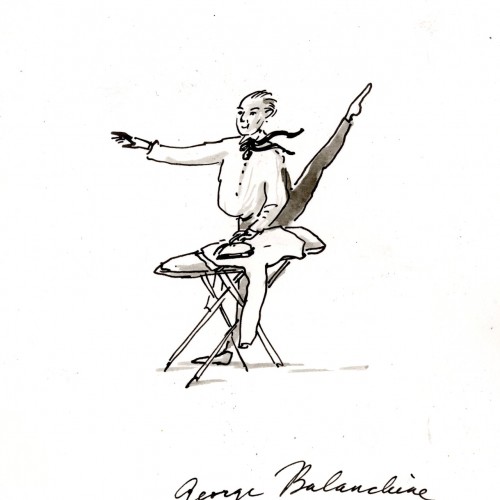
George Balanchine (1904–1983)
Balanchine liked to do his own laundry. “When I’m ironing, that’s when I do most of my work,” he once said. The choreographer rose early, before 6:00 A.M., made a pot of tea, and read a little or played a hand of Russian solitaire while he gathered his thoughts. Then he did his ironing for the day (he did his own washing too, in a portable machine in his Manhattan apartment) and, between 7:30 and 8:00, phoned his longtime assistant for a rundown of the day’s schedule.
- From Daily Rituals: How Artists Work by Mason Currey
“I like to do things certain ways and I disagree with everybody but I don't even want to argue.”
― George Balanchine
#dailyrituals #inktober #balanchine @masoncurrey
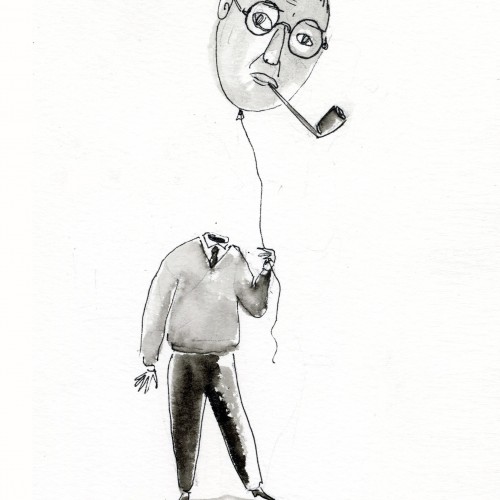
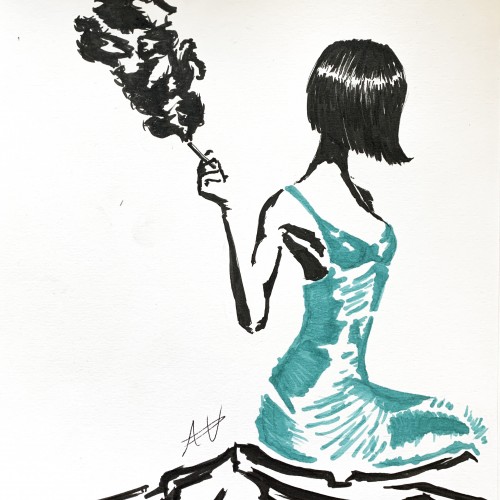
Jean-Paul Sartre (1905–1980)
By the 1950s, too much work on too little sleep—with too much wine and cigarettes—had left Sartre exhausted and on the verge of collapse. Rather than slow down, however, he turned to Corydrane, a mix of amphetamine and aspirin then fashionable among Parisian students, intellectuals, and artists (and legal in France until 1971, when it was declared toxic and taken off the market). The prescribed dose was one or two tablets in the morning and at noon. Sartre took twenty a day, beginning with his morning coffee and slowly chewing one pill after another as he worked. For each tablet, he could produce a page or two of his second major philosophical work, The Critique of Dialectical Reason.
The biographer Annie Cohen-Solal reports, “His diet over a period of twenty-four hours included two packs of cigarettes and several pipes stuffed with black tobacco, more than a quart of alcohol—wine, beer, vodka, whisky, and so on—two hundred milligrams of amphetamines, fifteen grams of aspirin, several grams of barbiturates, plus coffee, tea, rich meals.”
- From Daily Rituals: How Artists Work by Mason Currey
#dailyrituals #inktober #jeanPaulSartre @masoncurrey
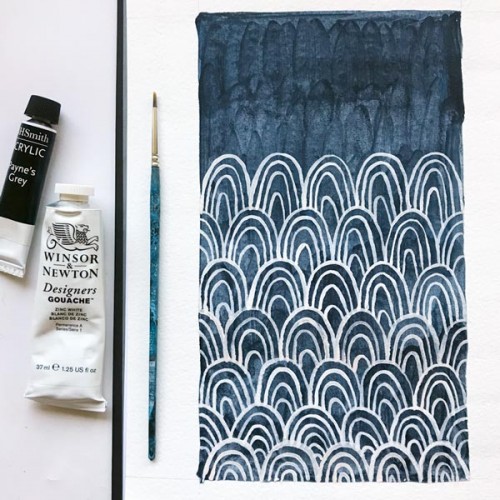
Following the daily painting challenge with Lisa Congdon over at CreativeBug though I haven't quite managed to keep up daily. Still, it's wonderful picking the brush up again and splashing around with paint!
Had to squeeze in some drawing earlier on yesterday before editing the photos I captured at Friday night’s gig with Ozric Tentacles and friends. Fantastic stuff that was!
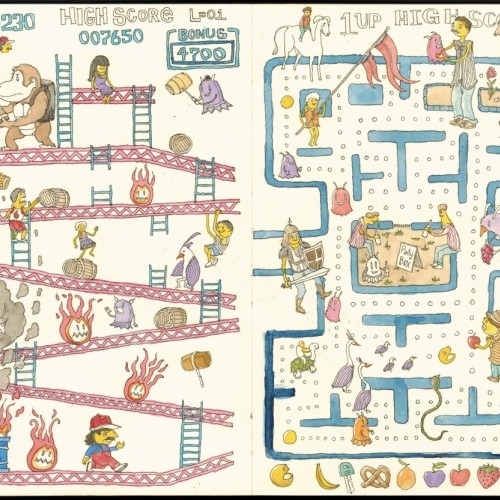
Way back in '88 I was staying up late,
Playing games like Donkey Kong (and of course Pac-Man was great!)
Smashing barrels, chomping dots, chased by Blinky, eating Clyde-
Climbing ladders, jumping fire all to make that princess mine!
The materials that Meir uses in her works are not of the refined and so she is called an “arte povere” artist. At times she describes her work as someone dealing in alchemy - work develops as in a trial laboratory with different techniques and materials. She says, “ at times the artistic work process is a sort of puzzle demanding the filling in of all the empty squares “.
Some of her work focuses on women, and they incorporate criticism and cultural protest.
Meir has strong opinions about recycling and environmental protection that is represented in her works by use of materials and shapes. In her work she reacts to contemporary art that communicates with the eco system, waste, and she also searches for different worlds. Her works are made up of layers upon colorful layers that when we look at them it becomes clear that the mound of waste she chose is not coincidental. It actually becomes a colorful kaleidoscope of utopia.
Jaffa Meir is a multifaceted, autodidact artist working in painting, sculpture, photography, product design, carpets and furniture, painting on textile, and computer graphics.
The structural composition of some of the works is influenced also by her many years of working in the architects’ office.
Meir also worked in the developing of ideas within the field of ecosystems and recycling for factories such as Coca Cola, and during this process came up with ideas for designing parks and public game spaces using industrial waste products.