Previous
Next
logo logo
logo logo
  • Discover Art
    • Trending
    • Most Recent
    • Most Faves
    • Most Views
    • Curated Galleries
  • Drawing Challenges
    • See All Challenges
  • Drawing Prompts
  • Artists
    • Most Popular
    • Most Recent
    • Available For Hire
    • Artist Spotlight
  • More
    • Marketplace
    • Art Discussions
    • Resources
    • News + Blog
Login
Most Views
Select an option
  • Most Relevant
  • Most Faves
  • Most Views
  • Most Comments
  • Most Recent
SEARCH RESULTS FOR

bird

E K Lindgren E K Lindgren
Enlarge
The Solution

Pen and ink flat colored illustration, 2020 When you need to solve that calculation and you don't have batteries, use a slide rule! No batteries required! By the way, the rooster's name is Sriracha. He is one hot bird!

  • 90
  • 2
  • 0
Rowan Rowan
Enlarge
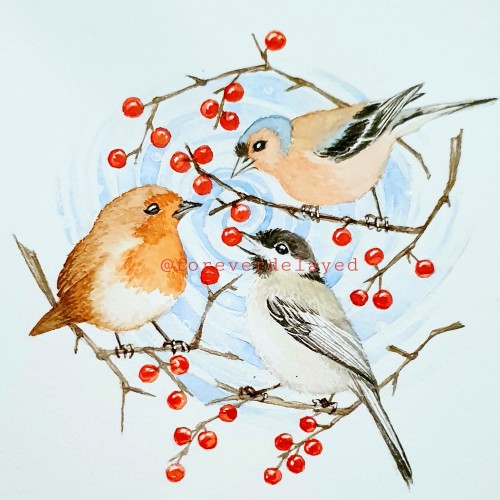
Three Birds

A fun commission in watercolour :)

  • 90
  • 7
  • 2
Reece139 Reece139
Enlarge
Acrylic Owl

1st acrylic bird. It was a practice painting for an art project.

  • 90
  • 5
  • 3
Myriam O. Myriam O.
Enlarge
Kestrel #2

  • 90
  • 4
  • 0
Dane Mullen Dane Mullen Plus Member
Enlarge
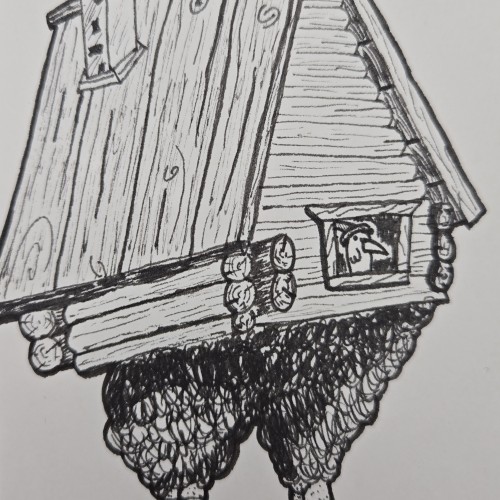
Scribbles: Birdhouse

Lindsey's prompt: License Plate

  • 88
  • 1
  • 0
Kathryn Shuff Kathryn Shuff
Enlarge
Toucan Play at This

I had the best time drawing these and actually made them into stickers. I should draw birds more.

  • 88
  • 31
  • 4
Rebecca Gibson Rebecca Gibson
Enlarge
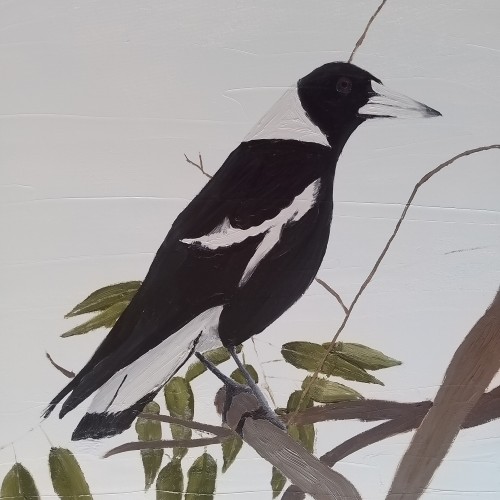
One Last Song

The Australian Magpie

  • 87
  • 1
  • 2
Will (Bampi) Edwards Will (Bampi) Edwards
Enlarge
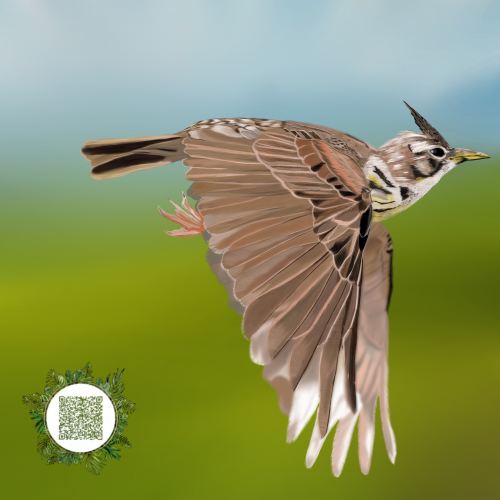
Calandra Lark

I just finished the Calandra Lark. Here are some facts about this beautiful bird... Appearance: It's a large lark, about 17.5-20 cm long, with a robust build, a heavy bill, and noticeable pale eyebrows . Its plumage is mainly greyish-brown streaked above and white below, with large black patches on the breast sides. Habitat: This species is found in open plains, steppes, pastures, and dry cereal cultivations. It's mainly resident in the west of its range but Russian populations migrate further south in winter. Diet: Their main food source is seeds, but they also consume insects when nesting. Behaviour: Calandra Larks are known to be gregarious outside the breeding season, often forming large flocks. Song: Their song is considered musical and slower than the Skylark's. It has been historically popular as a cagebird.

  • 87
  • 8
  • 0
Stephen Stephen
Enlarge
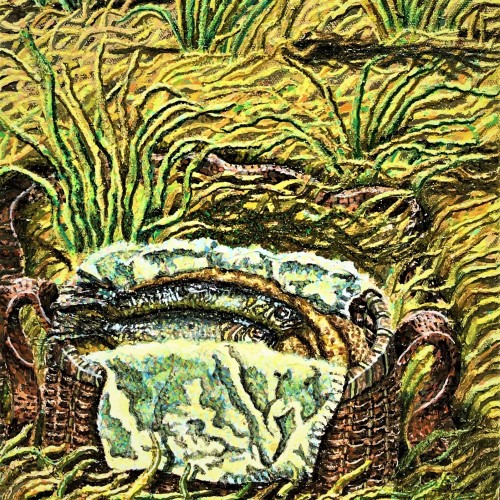
Fed by a Miracle of Compassion

Fed by a Miracle of Compassion Medium: Acrylic on canvas Size: 11”x14” Year: 2019 Artist: Stephen J. Vattimo Matthew 14:13-21 New American Standard Bible (NASB) Five Thousand Fed 13 Now when Jesus heard about John, He withdrew from there in a boat to a secluded place by Himself; and when the [a]people heard of this, they followed Him on foot from the cities. 14 When He went [b]ashore, He saw a large crowd, and felt compassion for them and healed their sick. 15 When it was evening, the disciples came to Him and said, “This place is desolate and the hour is already [c]late; so send the crowds away, that they may go into the villages and buy food for themselves.” 16 But Jesus said to them, “They do not need to go away; you give them something to eat!” 17 They *said to Him, “We have here only five loaves and two fish.” 18 And He said, “Bring them here to Me.” 19 Ordering the [d]people to [e]sit down on the grass, He took the five loaves and the two fish, and looking up toward heaven, He blessed the food, and breaking the loaves He gave them to the disciples, and the disciples gave them to the crowds, 20 and they all ate and were satisfied. They picked up what was left over of the broken pieces, twelve full baskets. 21 There were about five thousand men who ate, besides women and children. This illustration is part of a mural about the ministry of Jesus of Nazareth. The mural consists 9 images that depict the Miracles of Compassion Christ worked that are recorded in the Bible and He continues to perform in the world today. Understanding the symbolism in the painting. The basket of to fish and bread sits in the grass; Jesus had instructed His disciples to have the people sit down in the grass. Dead grass: the event took place in a desolate place. Historical and cultural illustration. Basket design: In the first century in the middle east people traveled on foot and when on a long journey they carried food with them. The common lunch pal during this time period was most likely a small wicker style basket with a removable lid, and a leather strap attached to it. So, a person can sling it across their shoulder for comfortable transportation. The basket would most likely be lined with a cloth wrap around the food to protect it from dust and bugs. The fish and bread: In John 6:1-15 which mentions the same event, tell us the 2 fish and five loaves of bread belong to boy, so most likely his meal was that of a poor person. The common fish that was eaten by the poor in this region and time period, were sardines. The five loaves of bread: Were most likely a type of flat bread which is commonly consumed by middle eastern people. The Bible verse that best communicates the message of this illustration is: Matthew 6:25-33 New American Standard Bible (NASB) The Cure for Anxiety 25 “For this reason I say to you, [n]do not be worried about your [o]life, as to what you will eat or what you will drink; nor for your body, as to what you will put on. Is not life more than food, and the body more than clothing? 26 Look at the birds of the [p]air, that they do not sow, nor reap nor gather into barns, and yet your heavenly Father feeds them. Are you not worth much more than they? 27 And who of you by being worried can add a single [q]hour to his [r]life? 28 And why are you worried about clothing? Observe how the lilies of the field grow; they do not toil nor do they spin, 29 yet I say to you that not even Solomon in all his glory clothed himself like one of these. 30 But if God so clothes the grass of the field, which is alive today and tomorrow is thrown into the furnace, will He not much more clothe you? You of little faith! 31 Do not worry then, saying, ‘What will we eat?’ or ‘What will we drink?’ or ‘What will we wear for clothing?’ 32 For the Gentiles eagerly seek all these things; for your heavenly Father knows that you need all these things. 33 But [s]seek first [t]His kingdom and His righteousness, and all these things will be [u]added to you. Written by Stephen J. Vattimo 3/25/2019

  • 87
  • 1
  • 0
Will (Bampi) Edwards Will (Bampi) Edwards
Enlarge
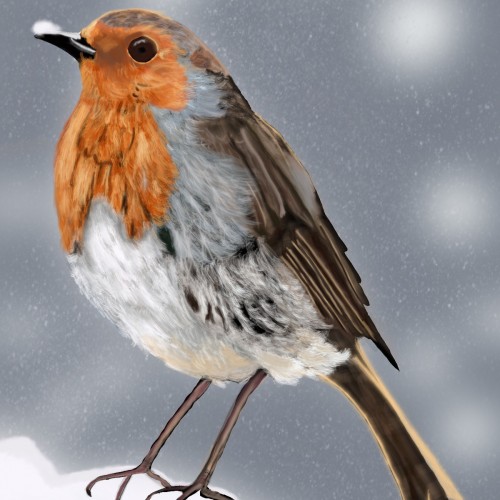
A European Red Robin

A European Red Robin… Digitally drawn using Acrylic brushes on iPad with iArtbook Pro app.

  • 86
  • 5
  • 1
KrystalKreations KrystalKreations
Enlarge
Simplistic Bird

  • 86
  • 2
  • 0
Manan sheel Manan sheel
Enlarge
Blue Bird

Blue Bird, using brush pens....:)

  • 86
  • 4
  • 2
Will (Bampi) Edwards Will (Bampi) Edwards
Enlarge
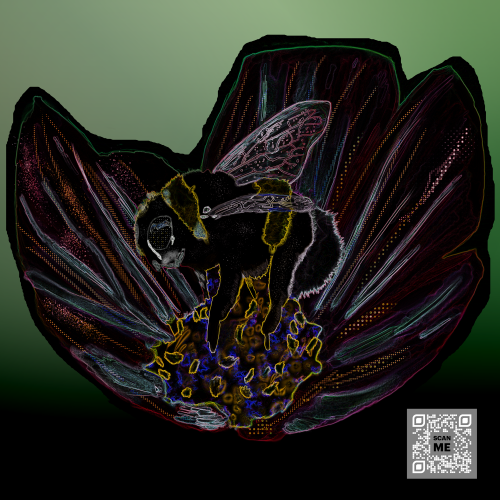
Bumblebee

Flight of the bumblebee The lifecycle begins in spring, when rising temperatures awaken a queen bumblebee that has been hibernating alone in the soil. The queen will have spent the entire winter underground, using up reserves of energy stored as fat in her body. When she first emerges, she feeds on flowers, drinking nectar to gain energy. She will then begin to search for a suitable nest site. Frequent nesting sites include holes in the ground, tussocky grass, bird boxes and under garden sheds.

  • 85
  • 1
  • 2
Bleu Hope Bleu Hope Plus Member
Enlarge
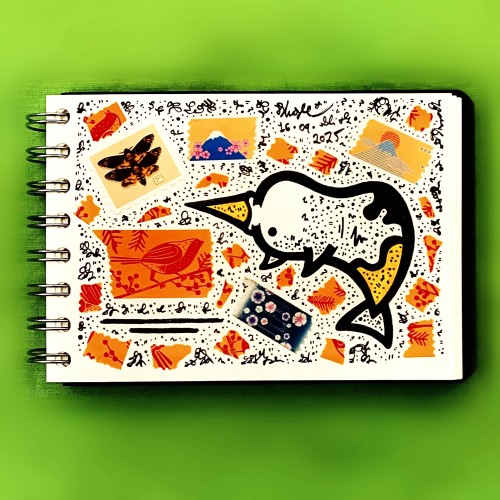
“Bird Bingo”, September 2025.

Indeed, much bird bingo is being played here!

  • 84
  • 3
  • 0
ChadKiley ChadKiley
Enlarge
Early Birds

  • 84
  • 2
  • 0
Myriam O. Myriam O.
Enlarge
Ferruginous hawk #2

Ferruginous hawk #2

  • 84
  • 6
  • 1
Rebecca Gibson Rebecca Gibson
Enlarge
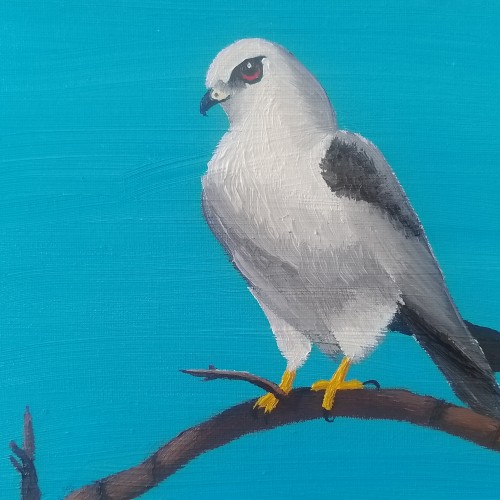
Kite in Blue

The Black-Shouldered Kite.

  • 82
  • 7
  • 0
ChadKiley ChadKiley
Enlarge
Yard Birds

  • 82
  • 6
  • 0
Will (Bampi) Edwards Will (Bampi) Edwards
Enlarge
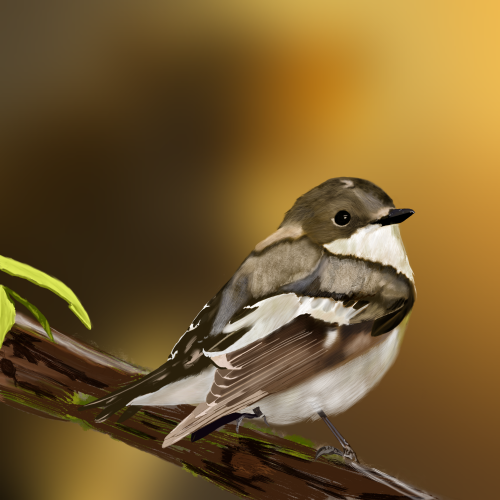
Female Pied Flycatcher

A Female Pied Flycatcher Ficedula Hypoleuca… The Pied Flycatcher is a summer migrant to the UK. As the name suggests, it feeds on flies that are caught by making a quick dash from an obvious perch. There are around 40,000 pairs in the UK each summer. The Pied Flycatcher is a small unmistakable bird that often sits with drooped wings. It spends its winter in Africa. Identification: Adult Adult males and females share the same plumage pattern but are different colours. Male Pied Flycatchers are small and chunky,13cm in length and are black and white all over, they are quite unmistakable. The upperparts are black and white, tail is black with white base to outer tail feathers, rump is a slightly paler, back is jet black, wings are black with white wing patch (tertials) The nape and head is black except for small white patch above the black bill. Chin and throat white, extending to form a half collar. The entire underparts are white, ie; chin, throat, breast, belly and undertail coverts. Legs, bill and eye black. Females are brown versions of the male although tail is dark, no obvious white patch over the bill and the collar is less distinct. #piedflycatcher #brd #birdart #birdartist #birdsketch #birddrawing #bampidraws #birdlovers

  • 81
  • 6
  • 1
WaterproofFade-Proof WaterproofFade-Proof
Enlarge
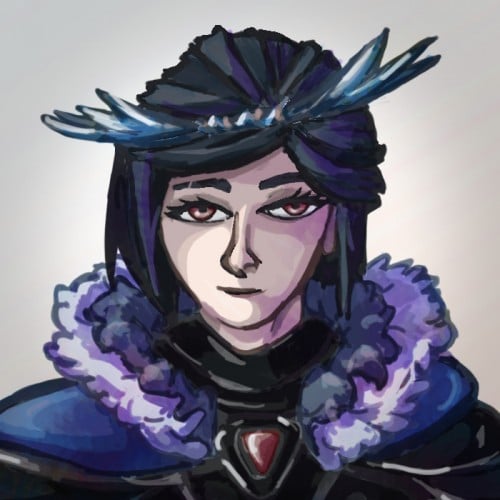
King Florin in the Snow

This was an attempt to add more motion to my drawing and play around with telling a story. This features one of my characters, a king of a northern nation that reveres birds, in a harrowing fight.

  • 81
  • 6
  • 2
Dane Mullen Dane Mullen Plus Member
Enlarge
Scribbles: Birdhouses

Lindsey's prompt: School

  • 80
  • 1
  • 0
Kfir Weizman Kfir Weizman
Enlarge
2 birds

  • 80
  • 6
  • 2
Dane Mullen Dane Mullen Plus Member
Enlarge
Scribbles: Birdhouses

Lindsey's prompt: Fantasy

  • 79
  • 2
  • 0
Myriam O. Myriam O.
Enlarge
Bird in a cage

Mixed media

  • 79
  • 6
  • 0
Myriam O. Myriam O.
Enlarge
Shrike in pencil #2

Shrike in pencil #2

  • 79
  • 4
  • 2
Myriam O. Myriam O.
Enlarge
Shrike in pencil

Shrike in pencil

  • 79
  • 10
  • 0
Dane Mullen Dane Mullen Plus Member
Enlarge
Scribbles: Birdhouses

Lindsey's prompt: Creepy

  • 78
  • 5
  • 2
Rebecca Gibson Rebecca Gibson
Enlarge
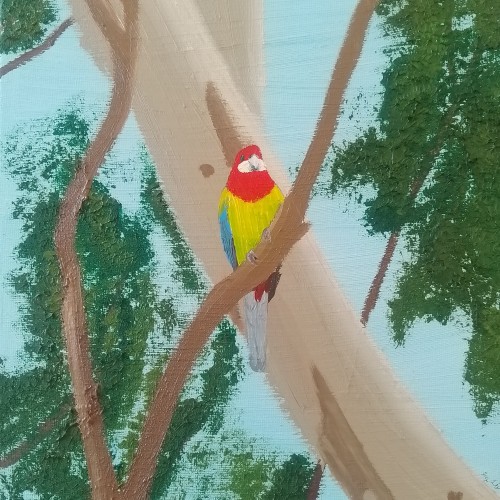
Bush Jewel

The Eastern Rosella

  • 78
  • 4
  • 0
Will (Bampi) Edwards Will (Bampi) Edwards
Enlarge
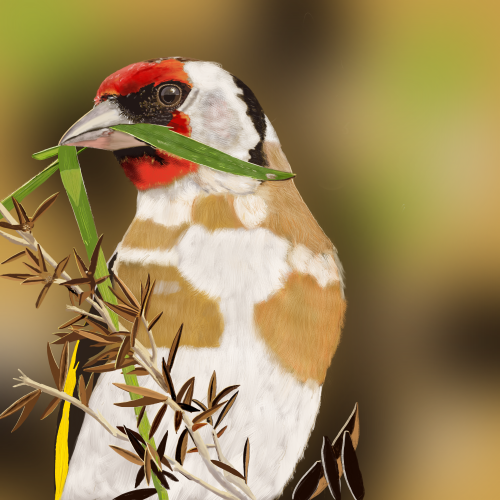
The European Goldfinch

The European Goldfinch is a striking small finch with a distinctive red face and black-and-white head. Its wings are black with a bright yellow wing bar, while the body is mainly buff or light brown. During the breeding season, the bill of male and female goldfinches is white, but at other times of the year, it is marked with a black tip. Female goldfinches are very alike in appearance to males, and visually, it is hard to tell them apart from a distance. At close range, the sexes can be distinguished by the size of the red facial patch, with the females not extending past the eyes as it does in males of the species. Juvenile goldfinches do not develop adults' red, white and black facial markings until the late summer or autumn after hatching. Until this point, they have streaky buff-brown markings on their heads. Info: Birdfact . com

  • 77
  • 7
  • 0
Riley Kane Riley Kane
Enlarge
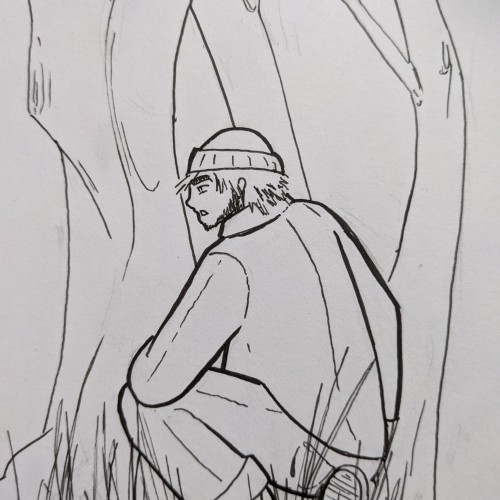
Crouch

As awesome as summer and winter are, I love the transitional seasons the best, especially fall. It's the best time to do sports, orienteering, bird watching, hikes. The crisp air feels so good, and I love the rustle of the dead leaves and grasses on a windy day. While sometimes I get sad to see the branches bare, I also love looking at and analyzing their structure. I find it fascinating that a tree can go from this mighty, fluttering thing to a spindly, knobby structure and remain fundamentally unchanged. It's a bit of a miracle

  • 77
  • 5
  • 0
« Previous
Next »

Doodle Addicts

Navigate
  • Discover Art
  • Drawing Challenges
  • Weekly Drawing Prompts
  • Artist Directory
  • Art Marketplace
  • Resources
Other
  • News + Blog
  • About Us
  • Contact Us
Newsletter
© 2026 Doodle Addicts™ — All Rights Reserved Terms & Conditions / Privacy Policy / Community Guidelines
Add Doodle Addicts to your home screen to not miss an update!
Add to Home Screen