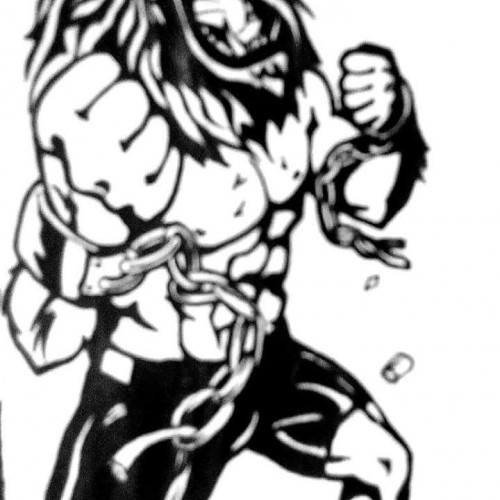
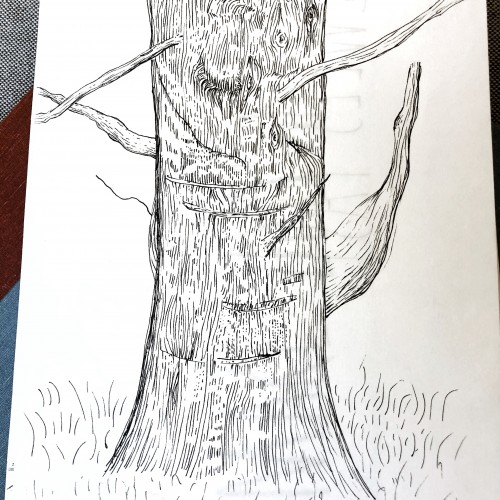
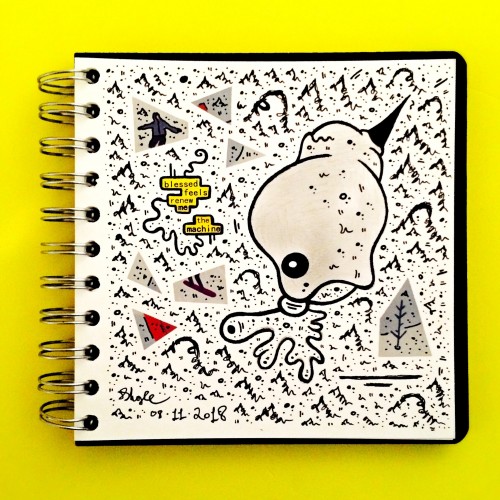
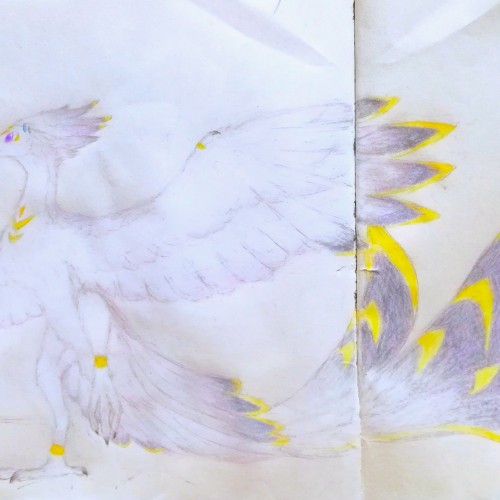
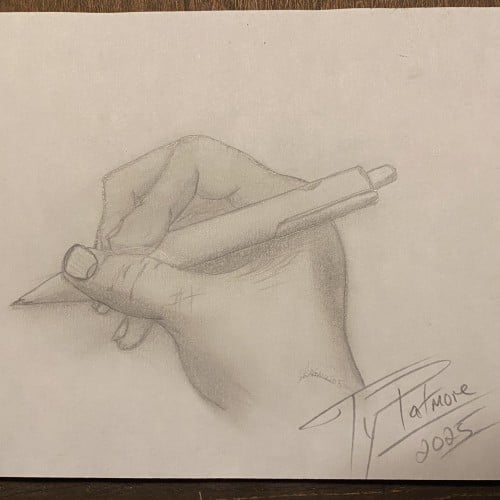
I wanted to challenge myself to draw something which is anatomically hard. I chose Breakdance as subject because it had been my passion for 16 years but I had to put an end to it due to my chronic injury.
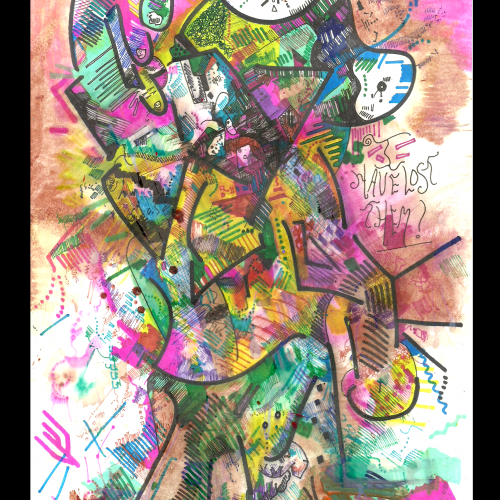
Thank you for checking my work out. This work is Inspired by an instinct to survive and strive to conquer all obstacles that hold me back in life, especially from my Art. This is pencil drawing on paper then pen work then some editing using android app.
Horrid ways for which sorrow follow further down the dim lights of life. What lines must be crossed as glass seem to puncture minds swollen? A strangeness emerges beneath our shadows.
Imperfect Lines, Honest Presence
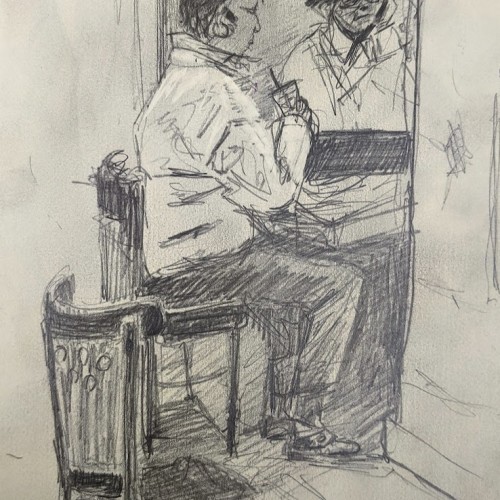
This sketch is not perfect—and that’s exactly why it’s alive. The bold figure, the dissolving hat, the tilted chair: all of it feels unfinished, fleeting, caught in motion. It’s what the Japanese call wabi-sabi—finding beauty in the imperfect, the impermanent, the incomplete.
But there’s something deeper here too. A quick sketch is not just what the eye records. It’s what the soul permits. To draw without fixing, without polishing, is to admit the world will not hold still for us. Life slips past. The lines break off. And yet, somehow, the essence remains.
When you sketch this way, you are not the master of the moment—you are its guest. The pencil does not carve permanence; it pays attention. The act of drawing becomes an act of being present, of honoring what is already vanishing.
So here’s a challenge: grab a pencil and sketch someone near you in sixty seconds. Do not erase. Do not perfect. Let the lines falter. When you finish, ask yourself: What truth did the imperfection reveal?
Perhaps presence itself is the real art.
Just before the Christmas rush really intensifies and we bid 2024 adieu, it’s time for me to break in another sketchbook… Given the timing of it all, and life in general right now, the name “The Watt Nows” seems very pertinent for this new volume!
Ten days back (April 7th) was my 30th birthday! Been up to my eyeballs in photography projects since then and only just got some breathing space to draw... always good to be back after a break, however big or small.
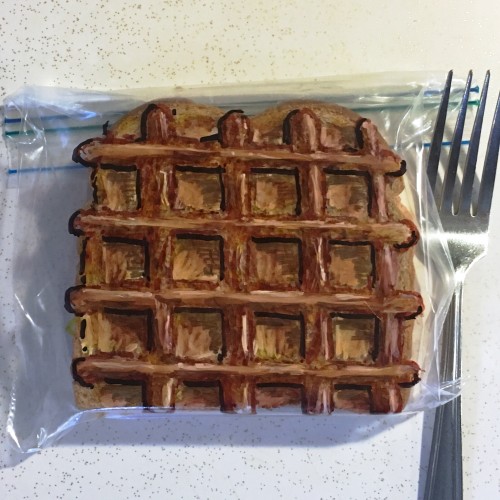
Filling my belly with the remnants of the night prior’s takeaway (almost always on Sunday mornings) before the day job starts is fast becoming a ritual of mine’s lately, hence the name of this one. The joys, eh?
Fun fact: This, some 34 years ago, nearly became the title of Pixar’s first short “The Adventures Of André & Wally B.”.
You learn something new every day folks...
Hey Boos! Haha lol I felt like I needed to post something before Christmas break (two weeks with no school) so yeah. Merry christmas ya'll!!!!! Love ya'll!!!!!! BYEEEEEE!!!!!!!!!
Hey boos! This is gonna be my last drawing for a while. I'm going on Thanksgiving break at school soooo yeah :D Can't be on here at home cause I don't have a Chromebook haha. Anyway hope ya'll have an awesome thanks giving.
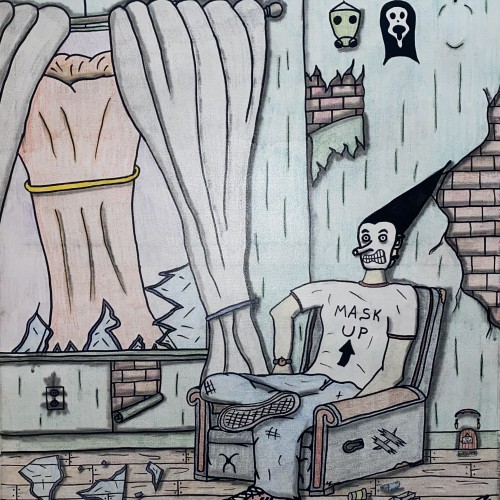
"Mask Up" by Ty Tatmore (2024) is a powerful and unsettling piece of contemporary social commentary. This work throws the viewer into a scene of post-apocalyptic anxiety where an individual, wearing a striking conical hairdo and a defiant "MASK UP" t-shirt, sits amidst the wreckage of a dilapidated room.
The artist uses dark humor and surreal imagery to explore the cultural tensions surrounding public health mandates and personal responsibility. The sign "CHOOSE WISELY!!" acts as a stark warning, while symbols like the gas mask and the Scream mask and also wearing a mask suggest a spectrum of survival and fear. The massive explosion breaking through the window is a haunting, almost surreal symbol of the unstoppable outside forces impacting daily life.
With its raw, graphic style and intense atmosphere, this painting is a memorable and thought-provoking statement that captures the isolation, uncertainty, and dark irony of living through a moment of global crisis.
Mark Twain (1835–1910)
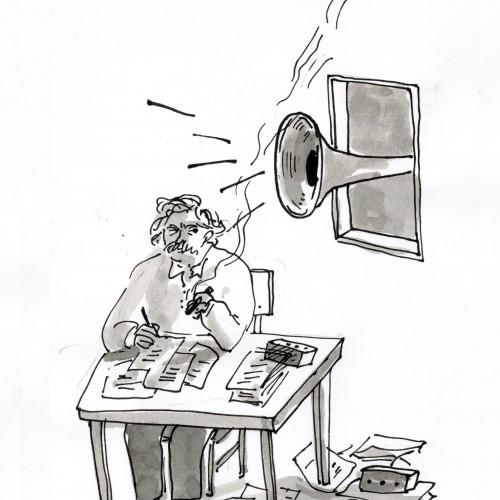
In the 1870s and ’80s, the Twain family spent their summers at Quarry Farm in New York, about two hundred miles west of their Hartford, Connecticut, home. Twain found those summers the most productive time for his literary work, especially after 1874, when the farm owners built him a small private study on the property. That same summer, Twain began writing The Adventures of Tom Sawyer. His routine was simple: he would go to the study in the morning after a hearty breakfast and stay there until dinner at about 5:00. Since he skipped lunch, and since his family would not venture near the study—they would blow a horn if they needed him—he could usually work uninterruptedly for several hours. “On hot days,” he wrote to a friend, “I spread the study wide open, anchor my papers down with brickbats, and write in the midst of the hurricane, clothed in the same thin linen we make shirts of.”
Whether or not he was working, he smoked cigars constantly. One of his closest friends, the writer William Dean Howells, recalled that after a visit from Twain, “the whole house had to be aired, for he smoked all over it from breakfast to bedtime.”
- From Daily Rituals: How Artists Work by Mason Currey
“Everyone is a moon, and has a dark side which he never shows to anybody.”
― Mark Twain
#dailyrituals #inktober #MarkTwain @masoncurrey
Herman Melville (1819–1891)
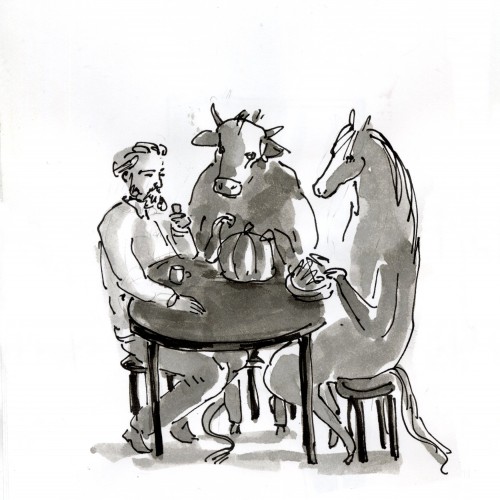
"I rise at eight—thereabouts—& go to my barn—say good-morning to the horse, & give him his breakfast. (It goes to my heart to give him a cold one, but it can’t be helped.) Then, pay a visit to my cow—cut up a pumpkin or two for her, & stand by to see her eat it—for it’s a pleasant sight to see a cow move her jaws—she does it so mildly & with such a sanctity."
- From Daily Rituals: How Artists Work by Mason Currey
“I would prefer not to.”
― Herman Melville, Bartleby the Scrivener
“A smile is the chosen vehicle of all ambiguities.”
― Herman Melville, Pierre; or, The Ambiguities
#dailyrituals #inktober #HermanMelville @masoncurrey
Turns out, leprechauns don’t need rainbows to find pot (of gold) in Amsterdam—just a solid set of wheels. This guy’s off to chase some lucky breaks, one tiny pedal at a time.
Illustration by me, because St. Patrick’s Day needed more bikes.
Igor Stravinsky (1882–1971)
“I get up at about eight, do physical exercises, then work without a break from nine till one,” Stravinsky told an interviewer in 1924. Generally, three hours of composition were the most he could manage in a day, although he would do less demanding tasks—writing letters, copying scores, practicing the piano—in the afternoon.
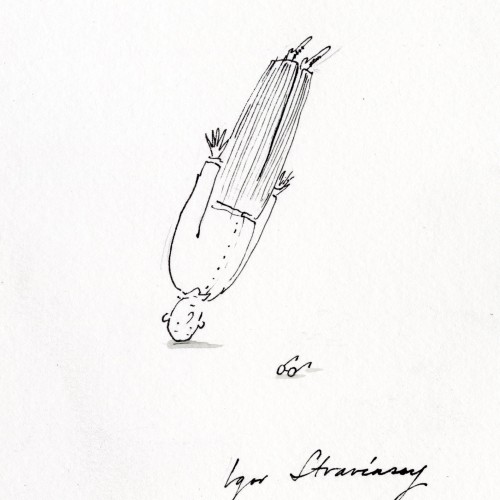
Unless he was touring, Stravinsky worked on his compositions daily, with or without inspiration, he said. He required solitude for the task, and always closed the windows of his studio before he began: “I have never been able to compose unless sure that no one could hear me.” If he felt blocked, the composer might execute a brief headstand, which, he said, “rests the head and clears the brain.”
- From Daily Rituals: How Artists Work by Mason Currey