Way back in '88 I was staying up late,
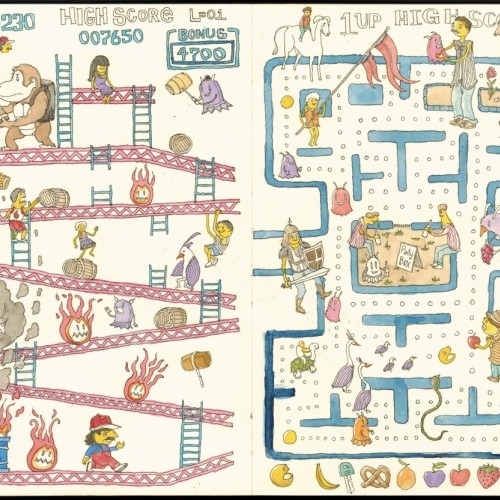
Playing games like Donkey Kong (and of course Pac-Man was great!)
Smashing barrels, chomping dots, chased by Blinky, eating Clyde-
Climbing ladders, jumping fire all to make that princess mine!
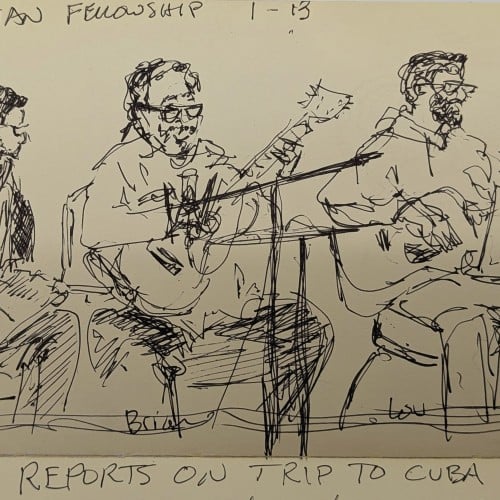
Sunday morning, more than a decade ago.
Music, fellowship, and reports about what God was doing here and there.
Some things are worth remembering. We learn from looking back—
but we must live forward.
The tables were covered in white paper. Crayons, pastels, and smooth sticks waited quietly. Then came Lucy’s glittery purse—her 8-year-old hands had filled it with stones to pass along, one by one, to the strangers around the table.
We traced them. Pushed them. Held them.
Then we let the colors lead:
-Red for emotion.
-Yellow for curiosity.
-Blue for memory.
Each color came with music, with story, with space.
At the Museum of Wisconsin Art, we made marks not for meaning but for presence.
Thank you to Ann Marie and MOWA for the invitation and trust. And thank you to the participants—some new friends, some old students—for showing up and making lines that listened before they spoke.
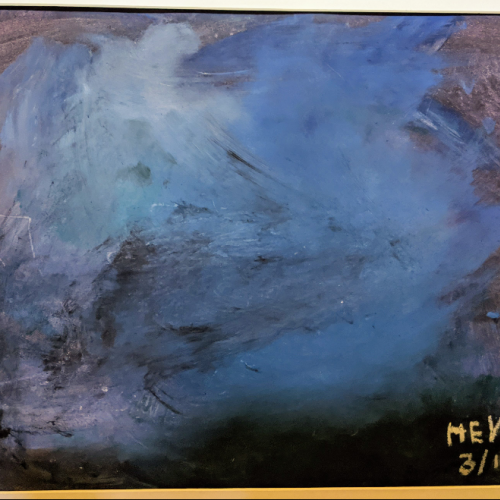
4 year old Henry engaged fully with thick applications of watercolor and oil pastels. He said it was a stormy sea with a small boat. This was at the onset of the pandemic, when we were all a bit uncertain and confined to our homes. I was reminded of an insight by Kierkegaard written in the early 1800s: “When the sailor is out on the sea and everything is changing around him, as the waves are continually being born and dying, he does not stare into the depths of these, since they vary. He looks up at the stars. And why? Because they are faithful – as they stand now, they stood for the patriarchs, and will stand for coming generations. By what means then does he conquer changing conditions? Through the eternal: By means of the eternal, one can conquer the future, because the eternal is the foundation of the future.”
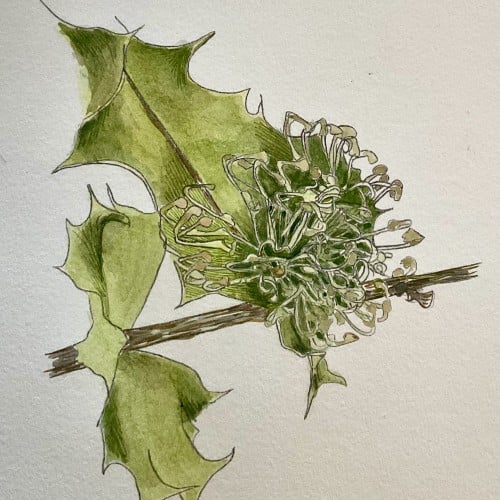
Watercolour painting of a Prickly Hakea. I started drawing different plants last month from the area where I live. This month I am turning them into watercolours, with the Hakea being one of the first.
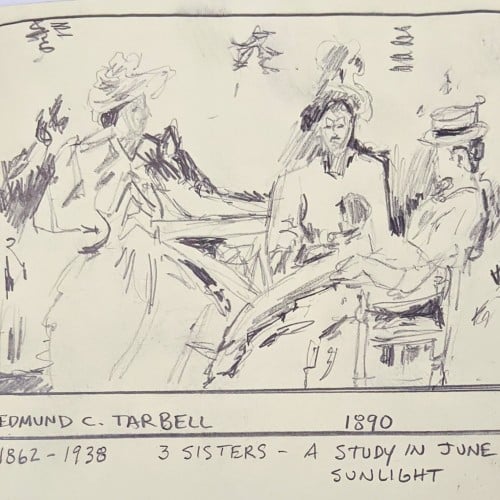
This quick sketch of an impressionist painting is a reminder to me of how we cannot see anything until we are taught to see it. I was enjoying the painting because of the way Tarbell captured light, when a man and his wife joined me. The man said to his wife: "This is a wonderful painting, but I wonder whose lap the baby is on.". I was shocked because I was not able to see the baby till he mentioned that there was one. I noticed that it was indeed difficult to tell whose lap it was on. It was a transformative and humbling experience.