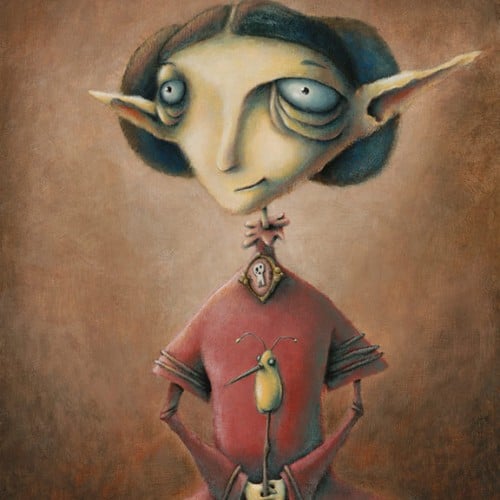
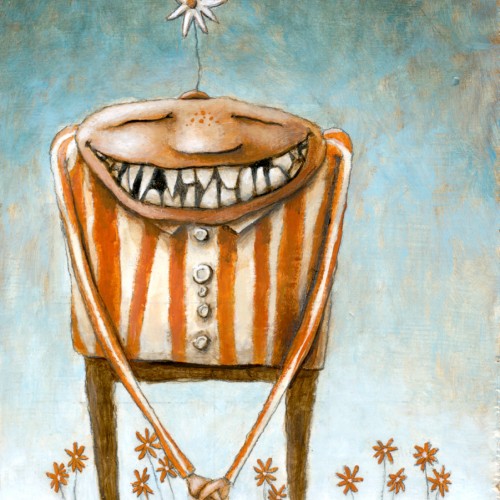
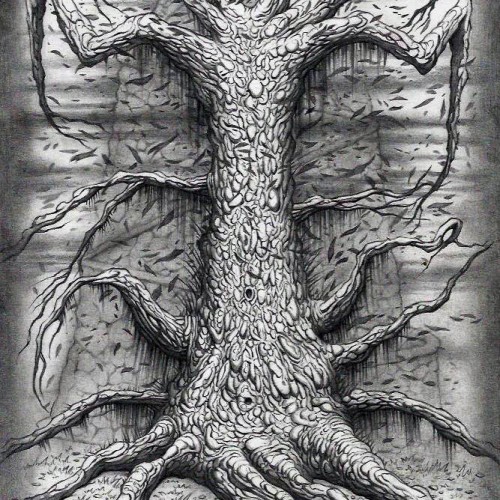
Done 2022. This is my latest artwork so far as i have 2 color pencil ARTS in the making. with lead pencil on 9x12 bristol original up for sale $45+s/h . if interested leave a comment or jungmeister4@yahoo.com. ALSO THERE IS STORY TO THIS DEVIL'S TREE AND IT IS REAL STORY. DO NOT SCARED AS YOU READING YOU WILL BE OK.
This is one sinister looking tree, and according to the locals, who told us of its legends, everyone in the vicinity of Bernards Township seems to have a story about it. They say that at one time a farmer killed his entire family, then went to the tree to hang himself. According to some, numerous suicides and murders occurred around the evil arbor. Supposedly anyone who tries to cut down the tree comes to an untimely end, as it is now cursed. It is said that the souls of those killed at the spot give the tree an unnatural warmth, and even in the dead of winter no snow will fall around it.
When Weird NJ visited the Devil’s Tree we noticed evidence that many attempts had been made over the years to fell the unholy oak, but all have failed. The tree stands all alone in the middle of a large field off Mountain Road. Its trunk has been severely scared by axes and chain saws, some wounds appearing to be quite old. Why no one has yet been successful in toppling the timber we cannot say for sure. Nor do we know what has become of those who have tried.
One Weird NJ reader described the Devil’s Tree to us this way: There’s a big field and right near the road is the tree. It’s the only thing in the field. Supposedly it’s a portal to hell and a sentinel guards it. He drives an old black Ford or pick-up truck and will chase you down the road until a certain point. You will see headlights one second, and the next nothing – the car is just gone.
Another local told us that the inherent unholiness of the Devil’s Tree is the result of the evil that men do, and should not to be blamed on the Devil.
Devil’s Tree is a KKK Hangout
There is a very evil truth to the mythology of the Devil’s Tree. At one time, Bernards Township was one of the central headquarters of the KKK in New Jersey – they held many demonstrations in our town and held many meetings throughout the hills. As per KKK policy, often they would lynch local African-Americans to set an example, not only to other African-Americans, but also as an example of their principles and resolve.
The Devil’s Tree was more secluded in those times before the developments spread across the rural countryside like a blight. It stood in a very isolated area of woods and fields, far from the prying eyes of the police. The evil energy around the tree comes from the souls of dead men and women who were killed by this vile organization. If you look at the tree you can see the left most branch extends almost parallel to the ground. This was the hanging branch. Pretty freaky and true stuff.
To freak ourselves out, sometimes my friends and I would drive down the road at night telling ghost stories. When the moon is a full red harvest moon, and the wind is blowing just right, it looks like there might be bodies hanging from the branch, slowly swaying in the breeze.” –Rob S.
One of our readers reported that at times there have been bodies seen hanging from that branch, though they turned out to be merely uniformed dummies of rival high school football players hung in effigy by the local home team.
The Devil’s Tree Will Break You
At the time of our arrival to the Devil’s Tree, there was a six foot noose hanging from the big branch, which extends out of one side. We noticed what looked like claw marks from a person or very large animal. To get a better view, myself and a friend climbed the tree to see if any unique marks were further up.
After we climbed up, we were sitting on the branch trying to remove the noose. As we sat on the branch, we began to hear noises coming from inside the tree. When these noises grew even louder, a big bang sounded and a burst of energy came from the tree sending myself and my friend flying into the air. When I crashed to the ground, I landed on my ankle, breaking it in 2 places. –Steve K.
The Devil’s Tree and Heat Rock
Right next to the Devil’s Tree, there is a rock. It is very warm. Some people call it Heat Rock. People say it is the gate to hell. –Elmo M.
No Snow at the Devil’s Tree
We went to the Devil’s Tree in December when the ground was snow-covered. However, an eight by twelve foot circle of ground around the tree was totally bone dry. Later, when we were driving home, one of our friends thought he was cool because he took a piece of bark off of the tree and had it on him in the car. We pulled the car over, yelled at him, and made him throw it out the window! –Damian
The Mark of the Devil
My friends and I went up to the Devil’s Tree one night and got out of the car and touched the it. Afterward we went to Applebee’s to get something to eat and everyone that was sitting at the table suddenly had all of our hands turn black! We don’t know why, but it took us two and a half hours to get the blackness off of our hands! –Melissa C.
The Children of the Tree
We have all heard the story of not messing with Devil’s Tree, so we were smart and didn’t mock the tree. We went right next to the tree, and put our ears next to the bark. We heard sounds of screaming and children playing. –Matt W.
A Shocking Experience
I went up to the Devil’s Tree this past mischief night with two of my friends (both of whom were girls). I just wanted to scare them. I told them all the stories and tall tales that went along with it. I parked the car and proceeded to get out and walk to the tree. I got within arms distance and reached out and touched it as I had many times before… it’s kind of like a ritual I have.
When I placed my hand on the tree, a single strike of lightning illuminated the sky. I don’t know what caused it to happen, but when I touched the tree, the lightning struck, and when I took my hand off, the lightning disappeared. It could’ve been coincidence, or could have been paranormal proof of the legend’s truth. Either way I thought it was cool and it scares the hell out of me now. –Brian D.
Don’t Pee on the Devil’s Tree!
I am reminded of an incident which occurred about 8 years back, when I was in high school, concerning the Devil’s Tree. We had all heard the legend of this infamous spot and there was much talk of it around my school. One night, my friends and I decided to pay it a visit and see for ourselves how true the legends were. We headed out and came upon the tree. We all began to have very bad feelings and decided to scrap our idea of actually getting out of the car and approaching the scene. We turned around and left without incident. About a week or so later, the talk of the tree began to escalate and one of the kids in the popular crowd began saying that it was all a bunch of bullshit. A few days later, his mind would be changed forever.
This guy and a carload of other rowdy types decided to go up to see the tree that weekend. On Friday night, they began their journey up the mountain to see what it was all about. A friend of mine was in that car, and his story is as follows.
Apparently, after cruising back and forth several times, the kids were getting bad vibes and wanted to leave. The kid who was driving, and who was the one proclaiming in school that the story was bullshit became angry at the “wimps” for having bad feelings. He stated to his friends that he was going to prove once and for all that the story was nothing and that he wasn’t fazed by it.
He pulled his car over on the side of the road, right before the bend and got out. Marching up to the tree, he began yelling challenges to the so-called spirits. Nothing happened, so to further prove his fearlessness, he pulled down his pants and urinated all over the base of the tree. Still, nothing happened. He muttered an “I told you so” and got back into the car.
After starting the car, he began to drive towards the bend in the road slowly. Suddenly, without warning, the gas pedal of the car became floored and the car sped up all by itself. Surprised at what was happening, the guy was unable to control the car and it skidded out and collided into a tree. The kids in the car sustained minor injuries but the car was totaled.
I showed the stories of the Devil’s Tree featured in your magazines to my sister. As I read the tales aloud she became very pale when I got the part about the headlights which follow you then go out suddenly. I asked her what was wrong and she replied, “Oh my God – I went up there about a year ago and got chased out by the same black pick-up truck. It was severely tailgating me and when we got a short distance away, the lights were just suddenly gone.” She and I have never gone back since then.
I am open for commission using color pencil or lead pencil for original artwork of subject matters such as Sci-fi, Fantasy, Horror, Comics, Fanart, NSFW, Surreal art, Whimsical art, Abstract art, and Tattoo designs. Sizes range from 8.5x11, 9x12, 11x14, 11x17.
The Commission rate starts from $20 and up. if interested leave a comment or jungmeister4@yahoo.com
MY CALENDAR FOR SALE: https://www.artwanted.com/artist.cfm?ArtID=115637&Tab=Calendar