Previous
Next
logo logo
logo logo
  • Discover Art
    • Trending
    • Most Recent
    • Most Faves
    • Most Views
    • Curated Galleries
  • Drawing Challenges
    • See All Challenges
  • Drawing Prompts
  • Artists
    • Most Popular
    • Most Recent
    • Available For Hire
    • Artist Spotlight
  • More
    • Marketplace
    • Art Discussions
    • Resources
    • News + Blog
Login
Most Relevant
Select an option
  • Most Relevant
  • Most Faves
  • Most Views
  • Most Comments
  • Most Recent
SEARCH RESULTS FOR

diy

Jim Bradshaw Jim Bradshaw Plus Member
Enlarge
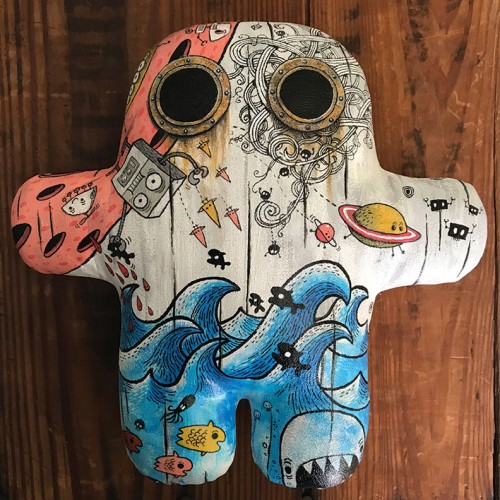
The Moon and the Sea
1/2

Here is my submission to the 10th anniversary Plushform show at Rotofugi Gallery. I was invited by Shawn @shawnimals to participate in this fun show. He is the creator of the Plushform DIY plush figure being customized by 40 artists at Rotofugi, a designer toy store gallery in Chicago. The original Plushform show was in 2008. I was waiting for their official announcement before posting my final so I could link people to the site for more info. I was told they are working on it and will announce soon. This will be for sale at the show.

  • 1,839
  • 95
  • 8
Sleepy Castle Sleepy Castle
Enlarge
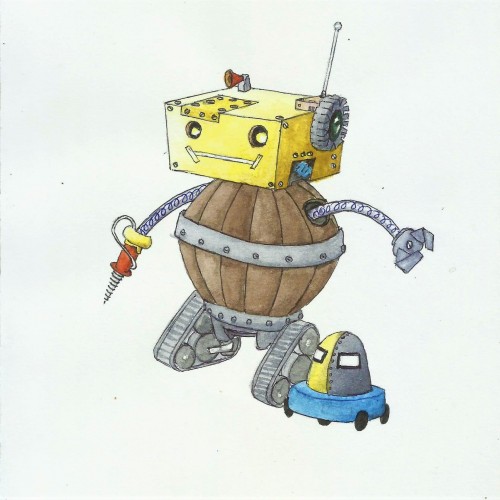
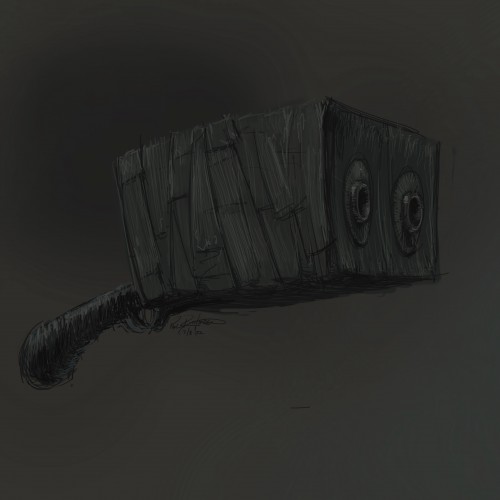
DIY Robot assistant

  • 26
  • 10
  • 0
dwardelle dwardelle
Enlarge
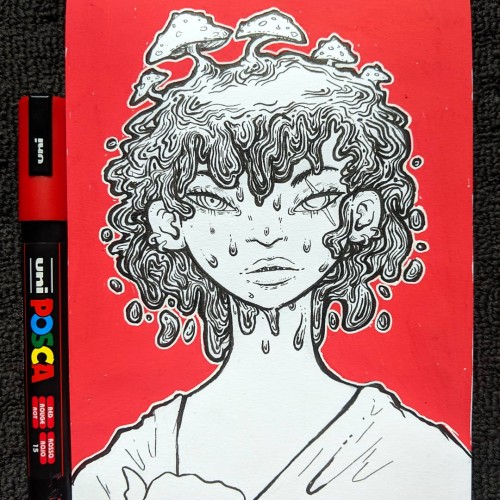
diy mushroom garden

I can grow my own garden. I did this drawing in a stillman and birn alpha sketchbook with a kuretake bimoji pen (+ the posca paint pen for the background). Thank you for looking!

  • 39
  • 8
  • 0
Anastasija Oprisnaka Anastasija Oprisnaka
Enlarge
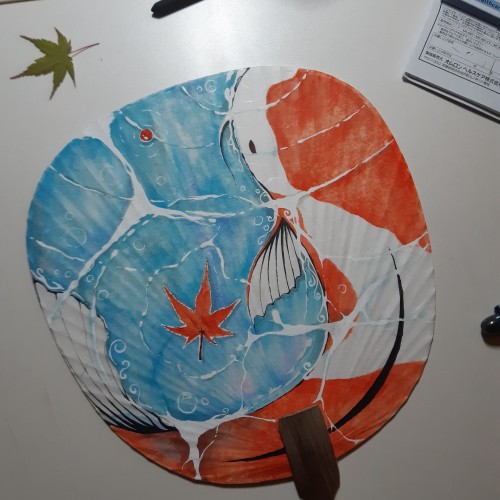
Koi and Momiji fan

DIY fan sold in Daiso for 100 yen. Koi and Momiji - Hiroshima symbols

  • 10
  • 6
  • 1
Safiera Wulandari Safiera Wulandari
Enlarge
Dominique

Fan art of Dominique Diyose | 2018 | Watercolor on aquarelle paper

  • 87
  • 4
  • 0
Ty patmore Ty patmore
Enlarge
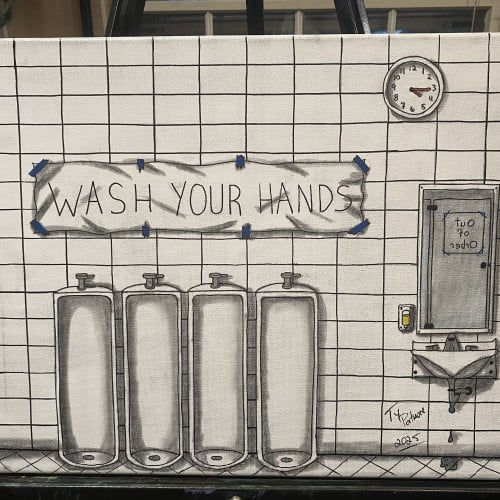
Hygiene is Elementary

In this memory-driven piece, Patmore reconstructs the bathroom from his third-grade elementary school, capturing the sterile brightness, the tiled repetition, and the institutional reminder to “WASH YOUR HANDS.” But the scene is not pristine — a leaky sink, an out-of-order stall, and a taped-up sign reveal the quiet decay behind childhood places we assume were orderly and safe. Patmore blends nostalgia with unease, transforming a simple restroom into a study of what it means to grow up: how the lessons we learn early (“hygiene,” discipline, responsibility) stay with us even after the walls begin to crack. The small pop of blue tape emphasizes the DIY fragility of rules meant to guide us. This piece stands at the intersection of memory and maintenance — of spaces, of bodies, and of ourselves.

  • 9
  • 3
  • 0
Josh Gee Josh Gee
Enlarge
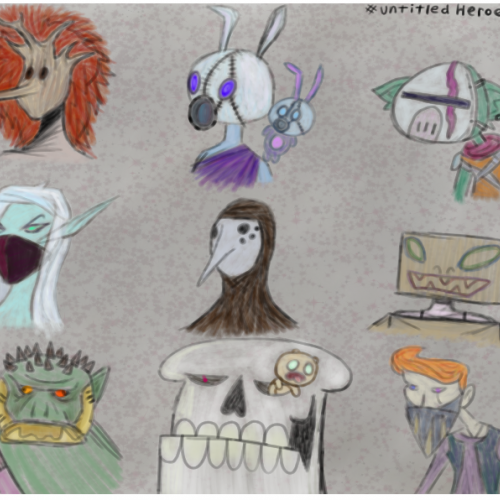
masks in Norn, a pin try

  • 264
  • 3
  • 2
Beata Moryl Beata Moryl
Enlarge
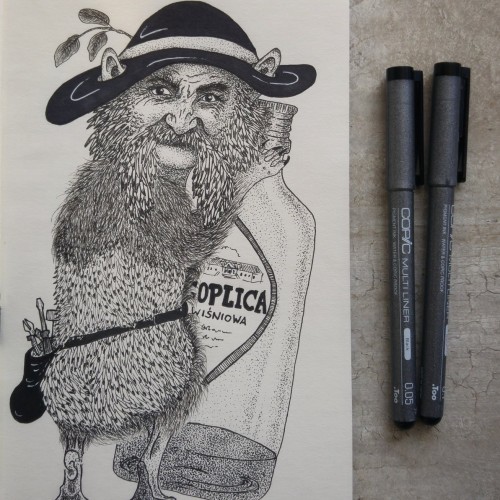
Urszyg

Urszyg [oorshig] – a daimon watching over garden cabins, summer houses, dachas, etc. He’s very fond of DIY projects, grilled dishes (although he wouldn’t say: „No“ to a good cat food). Unfortunately, he also likes strong beverages (particularly if they have a cherry flavor). For this reason, not all of his repairs and DIY projects can be considered successful. Generally, however, he is a good soul and I can‘t say anything bad about him.

  • 26
  • 3
  • 0
James rehkop James rehkop
Enlarge
RELY ON THE BEST: DIGITAL RESOLUTION SERVICES IS YOUR TOP SOLUTION.

I am a developer, and coding is my world. But when it comes to, say, the "life" part of life skills? Not so much. After a grueling 72-hour coding marathon, fueled by nothing but caffeine and questionable decisions, I made a mistake I now regret on a cosmic level: I spilled coffee on my external hard drive, the very drive that stored access to my digital wallet, holding a significant sum. At first, I told myself it wasn't that bad; surely a little splash wouldn't be a big deal, right? With confidence in my tech skills, I turned to the internet for answers. One search result boldly asked: "Can you dry a hard drive in the microwave?" Spoiler alert: absolutely not. Don’t try this under any circumstance. I’m lucky I didn’t end up with melted plastic or worse. After my solo data recovery efforts failed catastrophically, panic set in. This wasn't just lost files, this was years of effort, wiped in a moment. That’s when I found Digital Resolution Services. Desperate and admittedly a bit embarrassed, I reached out, hoping for a miracle. From the moment they answered, I could tell I was in capable hands. The team was calm, professional, and reassuring, never once mocking my questionable DIY methods (which, looking back, I probably deserved). Instead, they got straight to work, applying specialized tools and expertise to my situation. The process wasn’t easy. It involved long nights, constant updates, and a rollercoaster of emotions. But Digital Resolution Services never gave up. They stayed committed, persistent, and focused every step of the way. When they finally restored access to my wallet, I was overwhelmed with relief not just because the funds were safe, but because I could finally sleep without stress. That experience taught me something valuable: sometimes, it’s not about being the expert in everything, it's about knowing when to trust the right ones. Now, I keep my coffee and hard drive far apart. And every time I take a sip of that morning brew, I remember: if your data matters, don’t gamble, reach out to professionals like Digital Resolution Services. TELEGRAM: @DIGITALRESOLUTIONSERVICES WHATSAPP: +1 (361) 260 8628

  • 5
  • 2
  • 0
Mandy Mandy
Enlarge
Day 1 Paloma

Day 1: Paloma! My accidental quarantine kind of cocktail! I love grapefruit and I usually use it in a DIY Gatorade but quarantine necessity has found me adding some "cleaning" vodka. (I don't normally drink vodka but I keep some around for natural cleaning). I bought these grave-etcher brushes from @retrosupply awhile ago and finally tested them out. Digging it! Also practiced working in illustrator with the iPad mirrored. A little buggy and rough for someone who has only worked with a mouse.

  • 143
  • 2
  • 0
crais robert crais robert
Enlarge
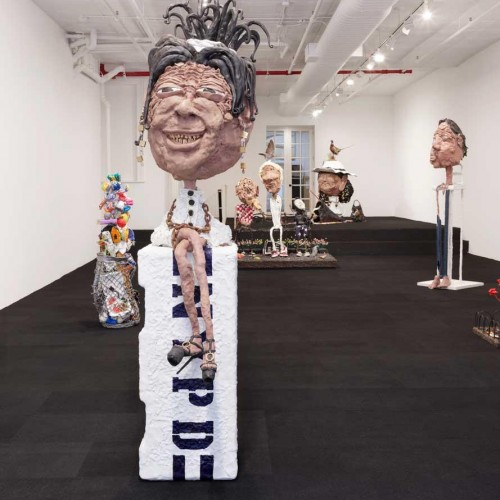
The House of Ryman: A Family of Artists

Take the Rymans, for instance. There is Robert Ryman (1930 – 2019), the patriarch whose paintings are indisputable icons of the modernist canon. Then there are his wives and children. Ethan Ryman (b. 1964) is the oldest of Robert’s three artist children. Though his mother was not an artist, Lucy Lippard (b. 1937) was still a scrappy and eloquent art critic, a feminist, a social activist, and an environmentalist. Ethan’s meticulously considered and crafted artworks might be characterized as somewhere between photography and sculpture, the abstract and the (f)actual. Though Lippard and Ryman divorced just six years after their 1961 marriage, their son is arguably the closest to his father’s methodologies if not his medium, and was certainly the last to become a visual artist. Robert Ryman went on to marry fellow artist Merrill Wagner (b. 1935) in 1969 and they had two sons. Though Wagner is more quietly acknowledged than Ryman, her boundless practice includes sculpture, painting, drawing, installation, and more. With an emphasis on materiality, her sites are indoors and out, her styles alternating. Will Ryman (b. 1969) is the elder son of Robert and Merrill. He started out as an actor and playwright though he too eventually assumed a visual art practice to become a sculptor. He is best known for his large-scale public artworks and theatrical installations that focus on the figurative and psychological, at times absurdist, narratives. Cordy Ryman (b. 1971) is the youngest, and the only one of the three who knew that he was going to be a visual artist early on. His work is abstract, the sophistication understated, and his output is prolific. With his mother’s DIY flair, his homely materials seem sourced from the overflow of construction projects, lumberyards, and Home Depot. Ethan Ryman said that, when he was young, he didn’t want to be a visual artist. Instead, he pursued music and acting, producing records for Wu-Tang Clan, among others, getting “my ears blown out.” But he was always surrounded by artists—Sol LeWitt, Carl Andre, Jan Dibbetts, William Anastasi, and countless others at his mother’s place on Prince Street in SoHo and at the Rymans’s 1847 Greek Revival brownstone on 16th Street in Manhattan, where everyone was often seated around the family dinner table. He would spend part of most weekends in the highly stimulating chaos that reigned there—birds, dogs, plants, toys, art, people, everywhere. “While nowhere near as overwhelming, I was also constantly exposed to artists, writers and other creative folks at my Mom’s place.” “While nowhere near as overwhelming, I was also constantly exposed to artists, writers and other creative folks at my Mom’s place.” Ethan Ryman Lippard was “a powerhouse.” She took Ethan on her lecture tours, readings, conferences, galleries, studios, wherever she had to go. And while that almost always breeds rebellion, at some point, he began noticing all the art around them—both what it looked like and how it was made. He began to take photographs of buildings and realized that “abstract color fields were all around us.” He also began to notice his father and Wagner’s work more carefully—how sensitively it was executed and how reactive it was to its surroundings. “Once you’re interested, you notice. When I asked my dad questions, I would most likely get a one-word response. I had to go to his lectures for answers where he broke down modern art for me. After listening to him, it seemed to me we should all be painting, otherwise what were we doing with our lives?” Will Ryman, on the other hand, said that all his work has a narrative component. His background is in theatre and his interests have always been film and plays, his narratives about New York City and American culture and history. “It’s a city I love,” he said. “I try to observe culture in a bare-bones way and I’ve always been interested in telling stories—we’re the only species that tells stories to each other. It comes from an intuitive, cathartic place in me. I want to stay away from preconceived notions, although that’s not completely possible. I have no plan except to do something honest, with a little bit of a political bent and humor but I’m not an activist. I’m interested in exploring a culture and its flaws as an interaction between human beings.” His interests and his work are very different from his last name. There is no connection to minimalism. He didn’t go to art school, drawn instead to theatre workshops and theatre troupes. “I didn’t become involved with the visual arts until my mid-thirties. It’s easy to say what I make is a reaction, but I dismiss that. And I also wouldn’t say it’s rebellious after twenty years.” Of his family, he said, “we’re a normal family, a close family, with all the dynamics and complications that go along with that. And while everyone who came to 16th Street were artists, they were also just family friends. I have no other measure for how a family interacts. It was just the way it was.” Cordy Ryman was the only one of the three who went to art school, earning a BFA from the School of Visual Arts, but it was reportedly awkward for him, since all his teachers knew his parents. “When I started making abstract paintings, it was kind of push and pull but it became more interesting to me than my earlier figurative or narrative work. That’s when I started to know where I came from. I realized that I had a visual memory, and the language was there, a language I didn’t know I knew. We all had different ways of working; our processes are very different and it’s hard to compare us. Ethan and I use a similar inherited language but he thinks about what he does more. I work very fast, the ideas come from the process itself. I work in two or three modes simultaneously and bounce around.” At home, they were around Wagner’s work since her studio was there. “Will and I were always in her studio, helping her, going to her installation sites with her, adjusting her boulders or whatever the project was she was working on. That was special and made a deep impression, but I didn’t realize it then.” All five Rymans have in common an acute consciousness of space and of place as an integral component of their work. For the brothers, part of that consciousness might stem from their parents, but also from their attachment to their family home, which was a crucible of sorts for them, where everyone was an artist. To Cordy, the house was a “living, breathing thing, and the art in it felt alive, growing, and occupying any space that was available. It was the structure of our world. When I’m making work, it doesn’t need to be the most beautiful thing ever, but it needs to have its own life, its own space, like the art we grew up with.” And the next generation of Rymans, also all sons—what about them? Will said his son is still too young to know. Cordy thought the same about his two younger children; his oldest is in the art world, but not as an artist—so far. Ethan perhaps summed it up best: my two sons are artists; they just don’t know it yet.

  • 12
  • 1
  • 0
Paul Richardson Paul Richardson
Enlarge
DIY shotgun

Influenced by today's news.

  • 8
  • 1
  • 0
Jenna Reed Jenna Reed
Enlarge
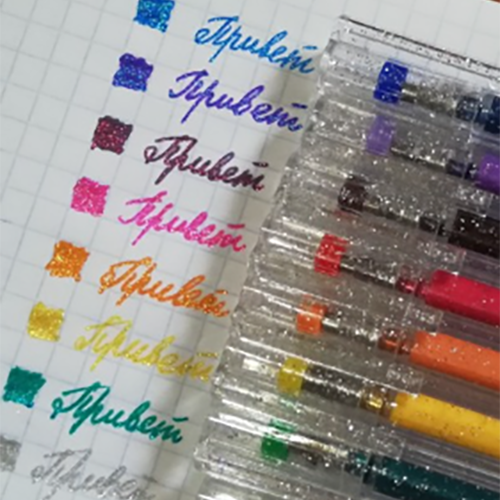
Best Early Christmas Present from My Husband!

Hey I normally don't post on forums but I recently received these set of gel pens and am personally recommending these to anyone looking for a last minute Christmas gift! https://www.magicpensusa.com/products/magic-pen-diy-gel-pens

  • 9
  • 1
  • 0
Beresford Beresford
Enlarge
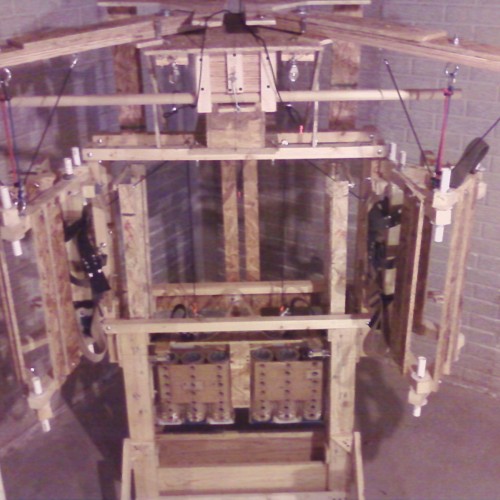
Industrial Art Project

What was created? A concept exerciser (aka: homemade workout machine) made mostly out of wood components, that was a contraption full of hinges, pulleys, weights, and grips (see pin 1). With my system, a person could perform both the butterfly and lat pull down exercises and transition between them with minimal effort. The unit stood about 8 feet tall and was about 6 ft wide when the butterfly arms were connected to it. Why was it created? I have always been fascinated with weight training machine design. I had a bench press weight set at home that did not come with a butterfly attachment, so I decided to make one of my own. I was able to get a steady supply of material (scrap wood) from a local source and constructed a workout routine by stacking columns of weight (instead of accumulating weight plates) in a moving grid generating even or uneven resistance (see pin 3). I also consider what I made could be a benefit to others since it does: (1) represent an extension of DIY culture (i.e. advancing individual knowledge, learning new skills, and the feeling of satisfaction that comes from building from your own ideas), (2) how to apply simple machine principles (i.e. pulleys, leverage, changing the direction or amount of force, etc.) in making a project and, (3) promote woodworking (which allows a person to be creative and is a wonderful medium for artistic expression). What makes it special? What makes my work distinctive concerns the butterfly arms and the weight container. Butterfly Attachment The butterfly attachment arms can be quick disconnected and re-mounted easily. The jackknife motion that the butterfly arms travel in as they flex forward and return to their starting position is an original conception. Weight Grid (see pin 3) Unlike traditional stacked weight plate machines, a person is allowed to make a variety of pattern configurations on the grid (X,□, /,\, —, etc.) by using cup shaped ballast inserts (up to 24) that changes the amount of force a user exerts for each repetition (see figure 2). An individual can position the weights in organized horizontal/vertical patterns or treat them more as random objects in the load basket. In their current form my system’s weight supplements are ½ pound each (about 2 ¾ inches long and 1 14/16 inches in diameter): making them easy to manage. If solid roll stock were used in their construction, they would be estimated to weigh 2 ½ to 2 ¾ pounds (see pin 2). When not in use, weights can be placed in the grid case for compact storage. As a point of fact, the sight holes cut into the drop tubes were drilled by hand with a fixture and not with the use of a drill press. At one point, I contemplated that one could focus on certain muscle groups in the upper body by placing inserts on the weight grid in particular patterns (X,□, /,\, —, etc.). This may have been beneficial for those in need of rehabilitation (through segregation of muscle areas that needed treatment) in such disciplines as Kinesiology or Physical Therapy. What was learned creating it? I learned how much ideas on paper can change drastically when fabricated physically. I learned how challenging it was to develop removable butterfly arms that hang and pivot in mid air. The exerciser’s weight box glides up and down on a vertical guide. I researched various ways of how to make that move while keeping the friction between the connectors on the weight box and the track surface it to a minimum. This was in order to make the climb and drop motion as fluid and controlled as possible. I considered using various sprays, waxes, greases, lacquers, covers, wheels, and even ball bearings to accomplish that. I ended up sanding the inside of the track extensively and then mounted small furniture mover inserts to the weight box on its four corners for a successful connection. Therefore, I learned here how important considering a variety of ideas provides solution to a problem. If I were to start over and do things again? I probably would have done some more background research in the areas of Fluid Dynamics or Biomechanics. I figure, if I had consulted with people in those areas, the time it took to design and redesign the overall unit as well as the weight box might not have taken about 3 years to fully complete. Miscellaneous In the back the machine was a counterweight of tube sand (60 lbs.). Without that, the whole thing would have toppled forward when trying to use it. Thank you for your time. Best Regards. Matthew Link: https://www.pinterest.com/meb206/industrial-art-project/

  • 14
  • 1
  • 0
La Lin La Lin
Enlarge
DIY Zine I

https://www.behance.net/gallery/60260485/DIY-Zine-2017

  • 6
  • 1
  • 0
indira govindan indira govindan
Enlarge
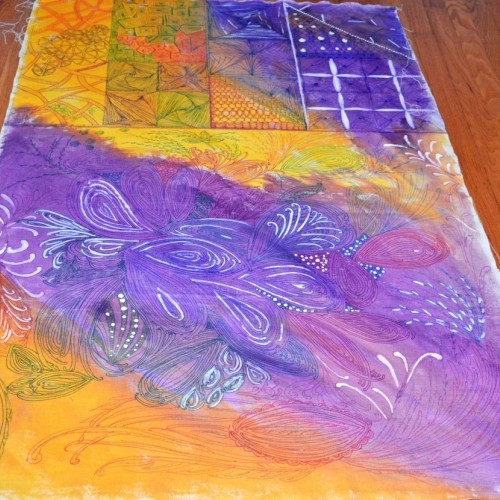
Untitled

Doodled and painted canvas floor cloth. You will find step-by-step instructions on my blog here: http://dharmakarmaarts.blogspot.com/2017/02/diy-painted-and-doodled-canvas-floor.html

  • 1,167
  • 0
  • 0

Doodle Addicts

Navigate
  • Discover Art
  • Drawing Challenges
  • Weekly Drawing Prompts
  • Artist Directory
  • Art Marketplace
  • Resources
Other
  • News + Blog
  • About Us
  • Contact Us
Newsletter
© 2026 Doodle Addicts™ — All Rights Reserved Terms & Conditions / Privacy Policy / Community Guidelines
Add Doodle Addicts to your home screen to not miss an update!
Add to Home Screen