On a cozy sofa, four cats enjoy a relaxing evening with pizza and drinks, surrounded by a playful atmosphere. The words "CATURDAY NIGHT" are boldly displayed above them, emphasizing the laid-back vibe.
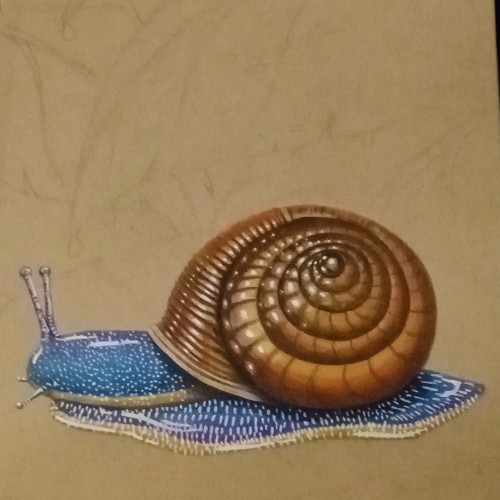
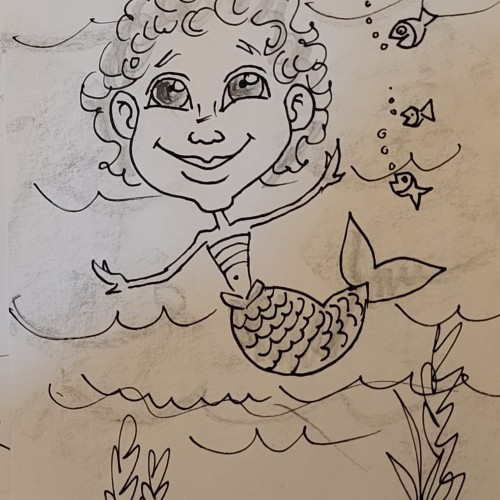
This one's still in progress . I'm trying different pencils out and for this I'm using Amazon basics . They're a bit tricky to work with but so far I think it's coming out ok ...
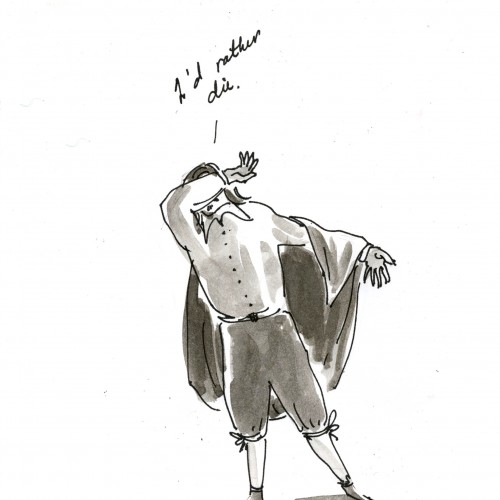
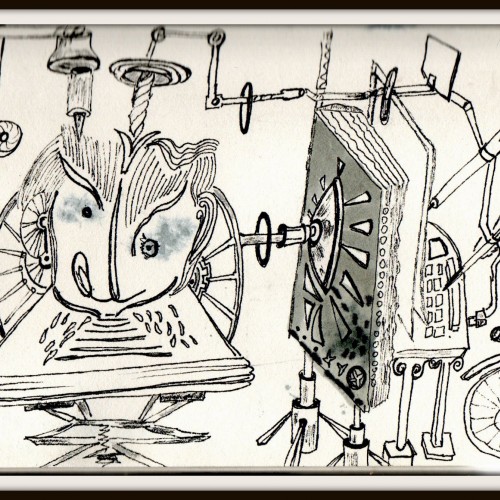
René Descartes (1596–1650)
Descartes was a late riser. The French philosopher liked to sleep until mid-morning, then linger in bed, thinking and writing, until 11:00 or so.
His comfortable bachelor’s life ended abruptly in late 1649, Descartes accepted a position in the court of Queen Christina of Sweden.
Descartes accepted a position in the court of Queen Christina of Sweden,Arriving in Sweden, in time for one of the coldest winters in memory, Descartes was notified that his lessons to Queen Christina would take place in the mornings—beginning at 5:00 A.M. He had no choice but to obey. But the early hours and bitter cold were too much for him. After only a month on the new schedule, Descartes fell ill, apparently of pneumonia; ten days later he was dead.
- From Daily Rituals: How Artists Work by Mason Currey
“Dubito, ergo cogito, ergo sum.
(English: "I doubt, therefore I think, therefore I am")”
― Rene Descartes
#dailyrituals #inktober #reneDescartes @masoncurrey #wouldratherdiethangetupearly
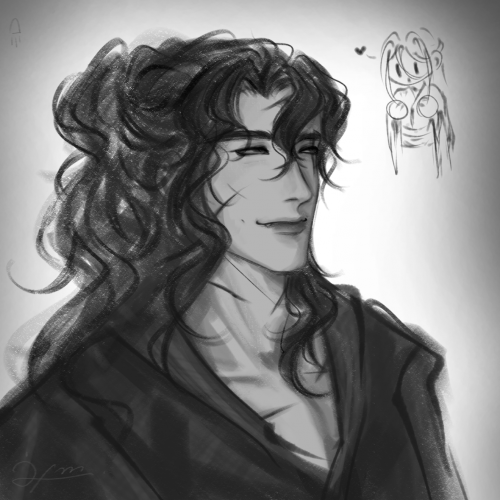
I think I should say that I do not speak English, and I use a translator...o(iДi)o ••• I've been gone a long time. And I'm with my original character! This is Vivien Shaw, nicknamed "the prophet." He can predict the future, travel through time, and many other things, he-he! (*´▽`)ノノ Well, what else can I say about him... Yes, perhaps there is nothing? Ah, good night to me!.. (*´﹀`*)
I haven't been here for a long time... I'm back with new art! I tried to draw it in the same ✨Chinese✨ style, ha-ha! I like it, I think it's not bad for the first time. o(〃^▽^〃)o This is my character (my friend and I share), but it seems to me that the translator translates his name incorrectly, so I'm not inserting it here. o(╥﹏╥) P.S.: smiles at his husband, he-he-he. (☞ ͡ ͡° ͜ ʖ ͡ ͡°)☞
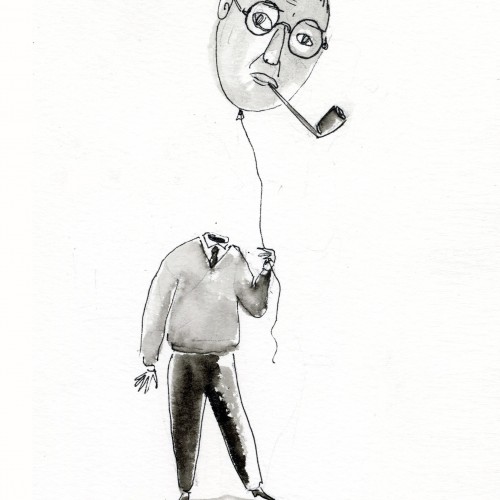
Jean-Paul Sartre (1905–1980)
By the 1950s, too much work on too little sleep—with too much wine and cigarettes—had left Sartre exhausted and on the verge of collapse. Rather than slow down, however, he turned to Corydrane, a mix of amphetamine and aspirin then fashionable among Parisian students, intellectuals, and artists (and legal in France until 1971, when it was declared toxic and taken off the market). The prescribed dose was one or two tablets in the morning and at noon. Sartre took twenty a day, beginning with his morning coffee and slowly chewing one pill after another as he worked. For each tablet, he could produce a page or two of his second major philosophical work, The Critique of Dialectical Reason.
The biographer Annie Cohen-Solal reports, “His diet over a period of twenty-four hours included two packs of cigarettes and several pipes stuffed with black tobacco, more than a quart of alcohol—wine, beer, vodka, whisky, and so on—two hundred milligrams of amphetamines, fifteen grams of aspirin, several grams of barbiturates, plus coffee, tea, rich meals.”
- From Daily Rituals: How Artists Work by Mason Currey
#dailyrituals #inktober #jeanPaulSartre @masoncurrey
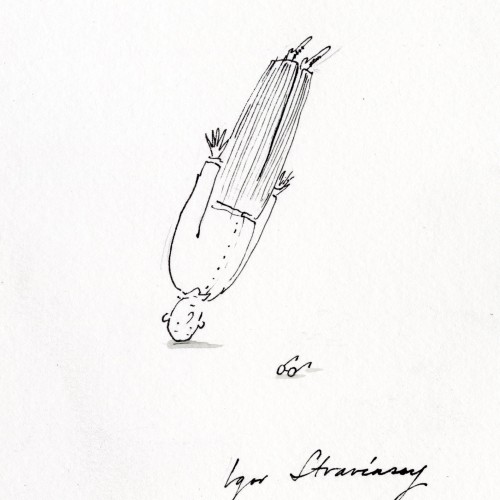
Igor Stravinsky (1882–1971)
“I get up at about eight, do physical exercises, then work without a break from nine till one,” Stravinsky told an interviewer in 1924. Generally, three hours of composition were the most he could manage in a day, although he would do less demanding tasks—writing letters, copying scores, practicing the piano—in the afternoon.
Unless he was touring, Stravinsky worked on his compositions daily, with or without inspiration, he said. He required solitude for the task, and always closed the windows of his studio before he began: “I have never been able to compose unless sure that no one could hear me.” If he felt blocked, the composer might execute a brief headstand, which, he said, “rests the head and clears the brain.”
- From Daily Rituals: How Artists Work by Mason Currey