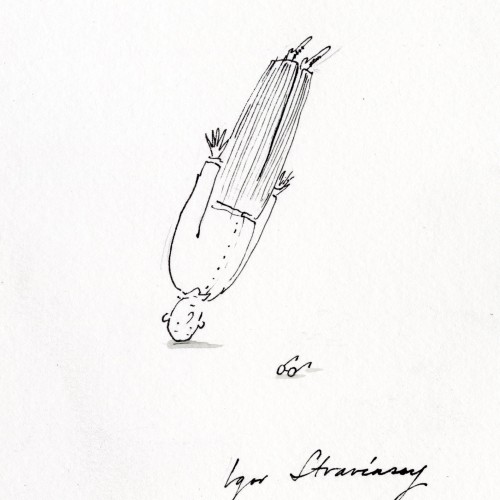
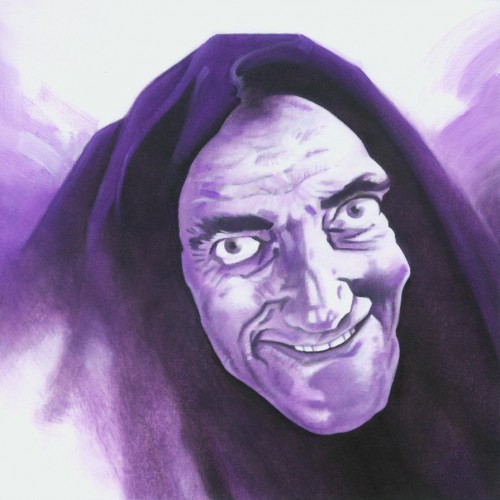
Igor Stravinsky (1882–1971)
“I get up at about eight, do physical exercises, then work without a break from nine till one,” Stravinsky told an interviewer in 1924. Generally, three hours of composition were the most he could manage in a day, although he would do less demanding tasks—writing letters, copying scores, practicing the piano—in the afternoon.
Unless he was touring, Stravinsky worked on his compositions daily, with or without inspiration, he said. He required solitude for the task, and always closed the windows of his studio before he began: “I have never been able to compose unless sure that no one could hear me.” If he felt blocked, the composer might execute a brief headstand, which, he said, “rests the head and clears the brain.”
- From Daily Rituals: How Artists Work by Mason Currey
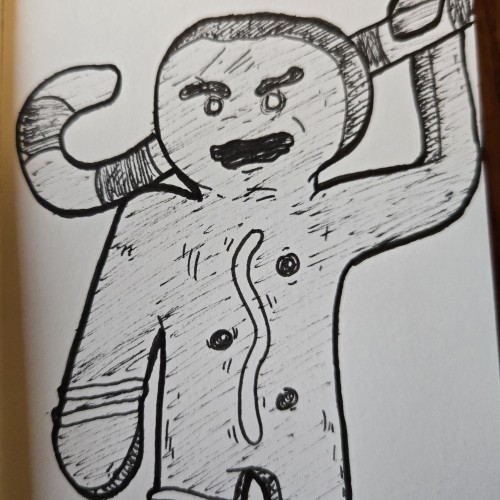
para el día 14 de Fruitecember hoy le toca a pastel de manzana
para este día decidí dibujar a hello Kitty comiendo una rebanada de su comida favorito el pastel de manzana
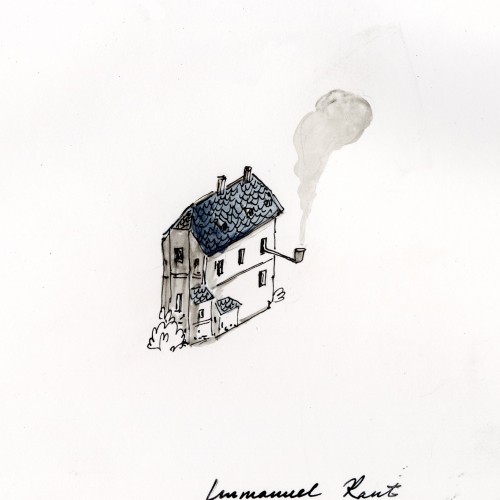
Immanuel Kant (1724–1804)
Kant’s biography is unusually devoid of external events.
As Heinrich Heine wrote: The history of Kant’s life is difficult to describe. For he neither had a life nor a history.
In actual fact, as Manfred Kuehn argues in his 2001 biography, Kant’s life was not quite as abstract and passionless as Heine and others have supposed…. If he failed to live a more adventurous life, it was largely due to his health: the philosopher had a congenital skeletal defect that caused him to develop an abnormally small chest, which compressed his heart and lungs and contributed to a generally delicate constitution. In order to prolong his life with the condition—and in an effort to quell the mental anguish caused by his lifelong hypochondria—Kant adopted what he called “a certain uniformity in the way of living and in the matters about which I employ my mind.”
This routine was as follows: Kant rose at 5:00 A.M., after being woken by his longtime servant, a retired soldier under explicit orders not to let the master oversleep. Then he drank one or two cups of weak tea and smoked his pipe. According to Kuehn, “Kant had formulated the maxim for himself that he would smoke only one pipe, but it is reported that the bowls of his pipes increased considerably in size as the years went on.”
- From Daily Rituals: How Artists Work by Mason Currey
#dailyrituals #inktober #ImmanuelKant @masoncurrey
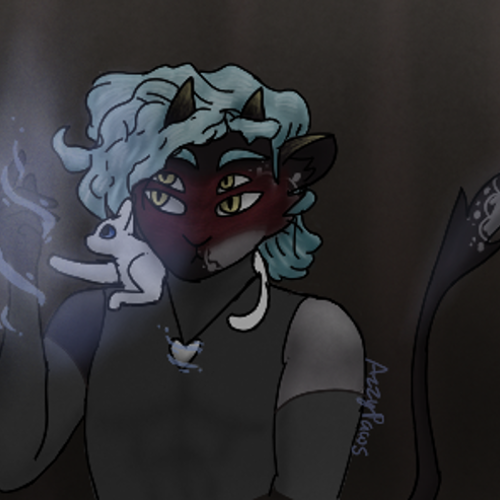
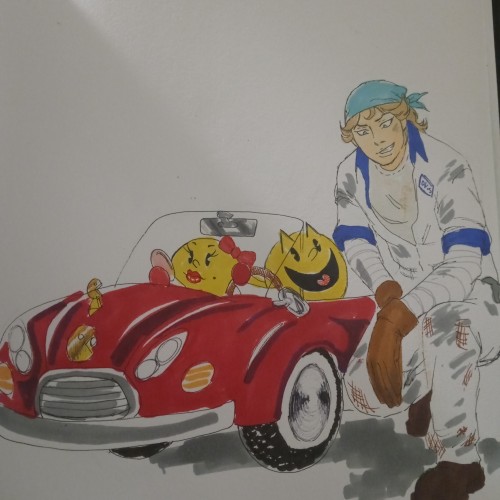
Drawn and colored by me, inspiration from a pause oc challenge on YouTube. Zayn is an escaped lab experiment with water elemental abilities. The cat on his shoulder is Raya, a stray that frequented the lab that he befriended. Zayn is a human with animalistic features and four eyes, marking him as unnatural. He is an original character, not based off of anything.
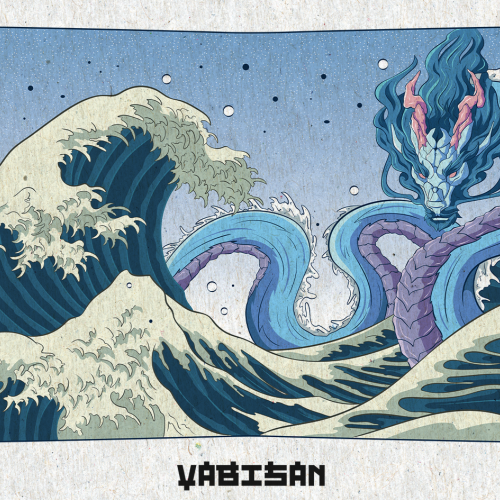
I've always found it so Satisfying to draw Dragons! I love dragons, whether it's for a personal project or a clean wok, Dragons are the subject I enjoy the most and love to explore in so many ways ♥
This was an illustration for a Traditional Action Gamepad with its big buttons, this work is so old, and I improved a lot after it, but its simplicity remains lovely to me and maybe I will remake it with my improvement level right now and make a comparison.
This is my 2023 OC Paxton. It's hard to call him my character when he looks like several black-haired protagonists of a Shonen anime lol. I made him very young even though he's a married man and father of two children. I'm still drawing his wife she has several designs and styles
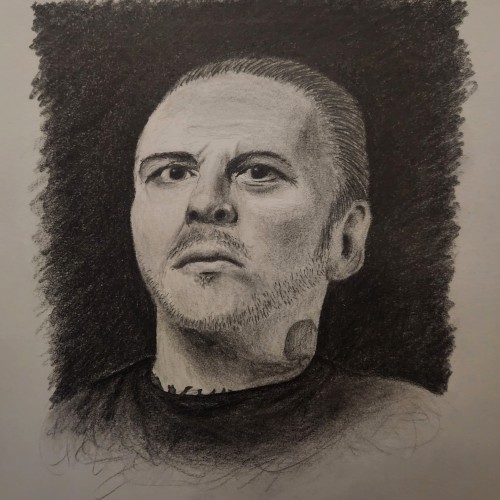
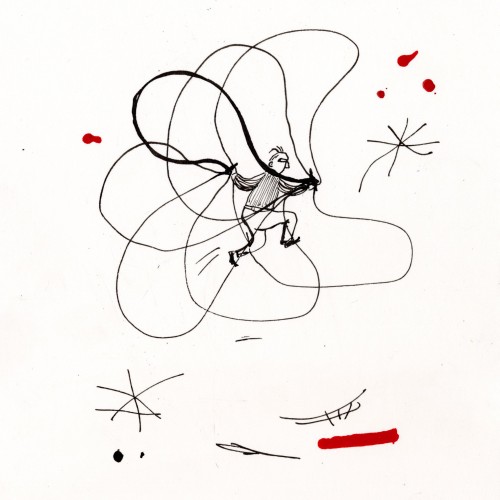
Joan Miró (1893-1983)
Miró always maintained a rigidly inflexible daily routine—both because he disliked being distracted from his work, and because he feared slipping back into the severe depression that had afflicted him as a young man, before he discovered painting. To help prevent a relapse, his routine always included vigorous exercise—boxing in Paris; jumping rope and Swedish gymnastics at a Barcelona gym; and running on the beach and swimming at Mont-roig, a seaside village where his family owned a farmhouse.
Miró hated for this routine to be interrupted by social or cultural events. As he told an American journalist, “Merde! I absolutely detest all openings and parties! They’re commercial, political, and everybody talks too much. They get on my tits!”
From Daily Rituals: How Artists Work by Mason Currey
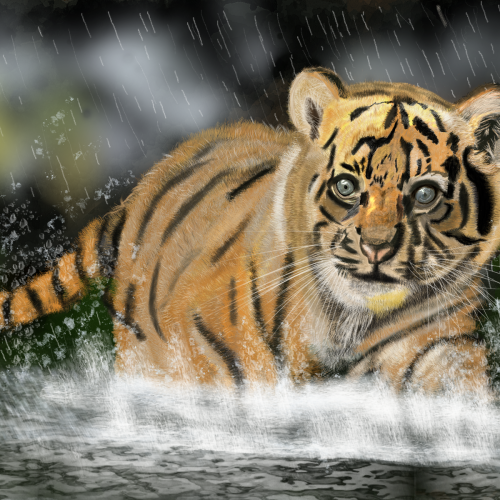
I've been going through my sketches, both completed and incomplete, and found a drawing of a young Sumatran Tiger that I began working on around two years ago, but never completed. I'm actually relieved that I didn't draw it earlier, as it has allowed me to gain more experience in illustrating this stunning creature, which is unfortunately a species at risk of extinction.
A few facts about the Sumatran Tigers...
The Sumatran tiger Panthera tigris sumatrae*, the smallest tiger subspecies, is critically endangered and stands as the final surviving species of island tigers. Poaching poses a significant danger to Sumatran tigers as hunters target them for their skin, bones, and canines. Additionally, habitat loss caused by oil palm, coffee, and acacia plantations, further endangers these big cats by reducing their prey availability and pushing them closer to human habitations.
It is estimated that there are fewer than 400 mature individual tigers in Sumatra in isolated pockets of protected land. Three of the protected areas are classified as UNESCO World Heritage Sites but all are in danger of losing this status due to threats from poaching, illegal logging, agricultural encroachment, and planned road building. It is for these reasons the Sumatran tiger is classified in the most severe IUCN status: Critically endangered.
Description: The Sumatran tiger is the smallest and darkest tiger subspecies and tends to be more bearded and maned than the other subspecies. Male tigers can expect to reach somewhere in the region of 120kg and 8ft from head to tail vs females who average 91kg and 7ft length.
Breeding: Female tigers are sexually mature at about 3 or 4 years of age, and males at about 4 to 5 years. Mating may occur any time during the year, but it most frequently takes place from November to April. The information was obtained from conservewildcats.org. Thank you.
#indonesia #criticallyendangered #sumatrantiger #amateurartist #tigerdrawing #tigersketch #tigercub #sketchadayapp #october2024
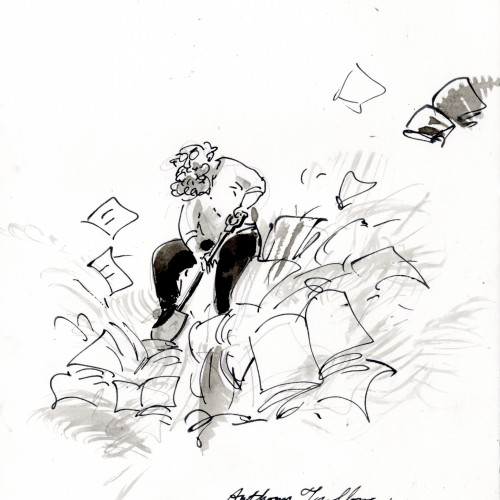
Anthony Trollope (1815–1882)
"All those I think who have lived as literary men,—working daily as literary labourers,—will agree with me that three hours a day will produce as much as a man ought to write.
...
"I always began my task by reading the work of the day before, an operation which would take me half an hour, and which consisted chiefly in weighing with my ear the sound of the words and phrases.…
This division of time allowed me to produce over ten pages of an ordinary novel volume a day, and if kept up through ten months, would have given as its results three novels of three volumes each in the year..."
From Daily rituals by Mason Currey
#dailyrituals #inktober #anthonyTrollope @masoncurrey
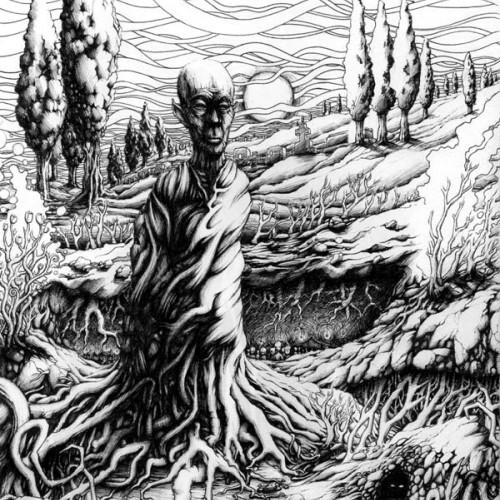
This captivating ink drawing features a fantasy character standing still, deeply rooted to the earth and seamlessly merged with nature. Surrounded by a complex web of trees and plants, the figure embodies the essence of the natural world. In the background, a mesmerizing sunset casts a warm glow over abstract waves of clouds, creating a harmonious blend of light and shadow. This artwork symbolizes the profound connection between humanity and the environment, inviting viewers to reflect on the beauty of nature.
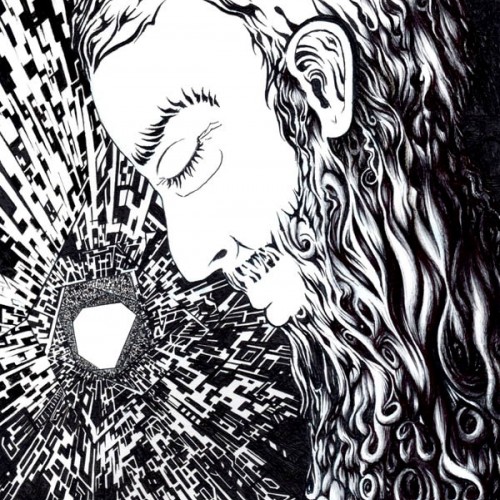
This black and white ink drawing portrays an aged man with a beard lost in deep contemplation within a futuristic spaceship setting. The subtle hints of sadness on his face are contrasted against the vastness of space, where the Milky Way is barely visible in the background. The artwork evokes feelings of isolation and reflection, inviting viewers to ponder the human experience amidst the cosmos.
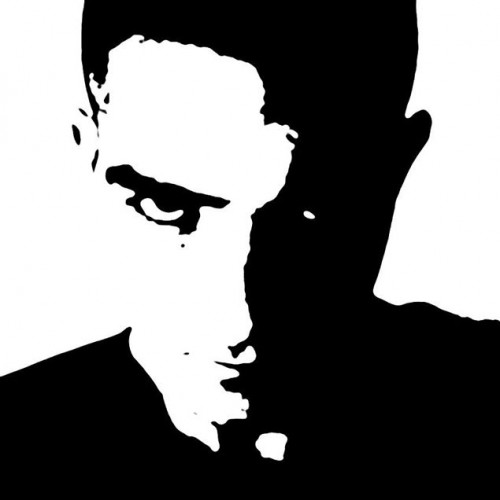
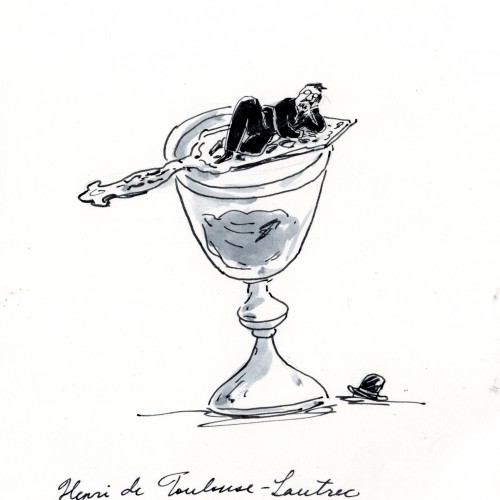
Henri de Toulouse-Lautrec (1864-1901)
Toulouse-Lautrec drank constantly and slept little. After a long night of drawing and binge-drinking, he would often wake early to print lithographs, then head to a café for lunch and several glasses of wine. Returning to his studio, he would take a nap to sleep off the wine, then paint until the late afternoon, when it was time for aperitifs.
(One of his inventions was the Maiden Blush, a combination of absinthe, mandarin, bitters, red wine, and champagne. He wanted the sensation, he said, of “a peacock’s tail in the mouth.”)
From Daily rituals by Mason Currey
#dailyrituals #inktober #henriToulouseLautrec @masoncurrey