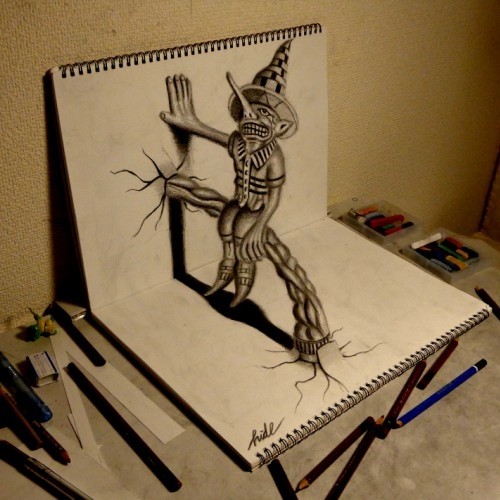
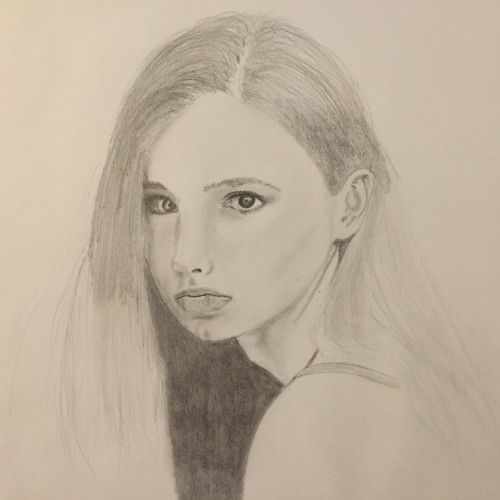
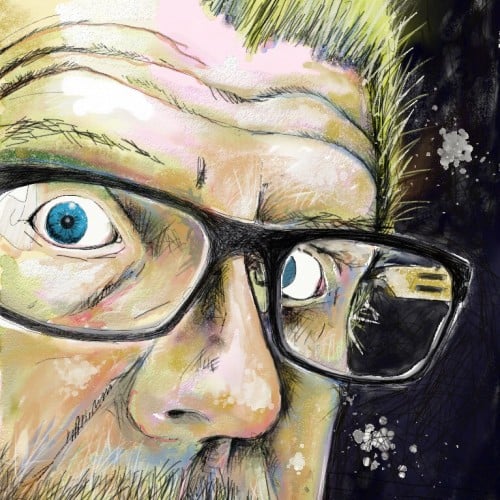
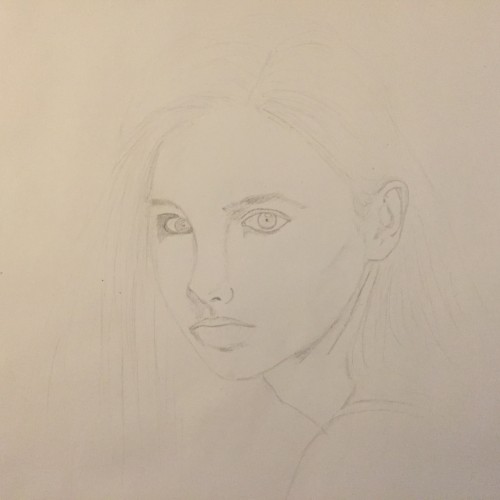
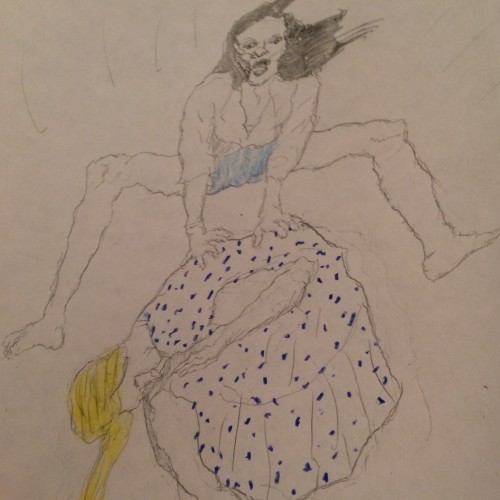
Progression image 4 of 6. 11x14 Marker paper, Medium Graphite Pencils (asst. B-5B). This is where I felt the piece coming together. I spent a lot of time working on her left eye.
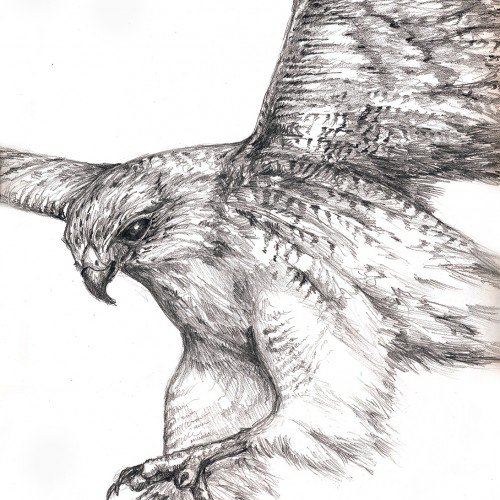
This is a graphite pencil drawing of a hunting hawk somewhat loosely based on a photo. The reference photo is from: Birds of Prey by Paul D. Frost (Paragon Books Ltd 2006) and credited to Martin B Withers/FLPA. I found the book in the Goodwill a couple of month ago and was much inspired by the beautiful photographs.
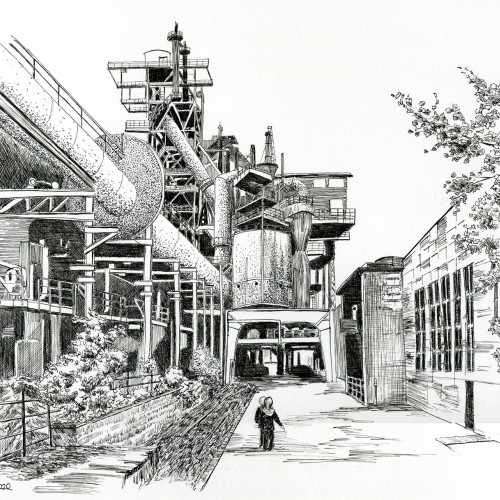
Landschaftpark Duisburg-Nord, Germany. This abandoned steel mill is transformed into a industrial heritage centre and landscape park. It's a great location for photographers and urban sketchers.
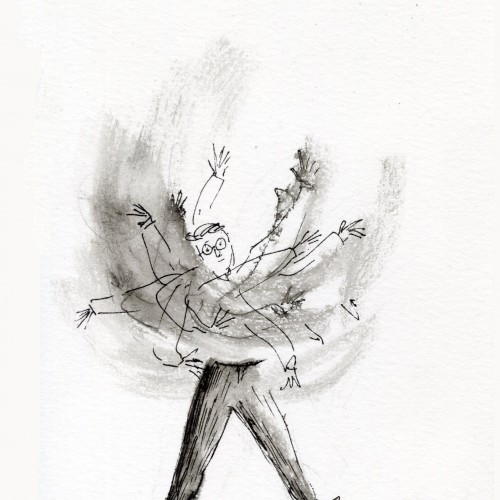
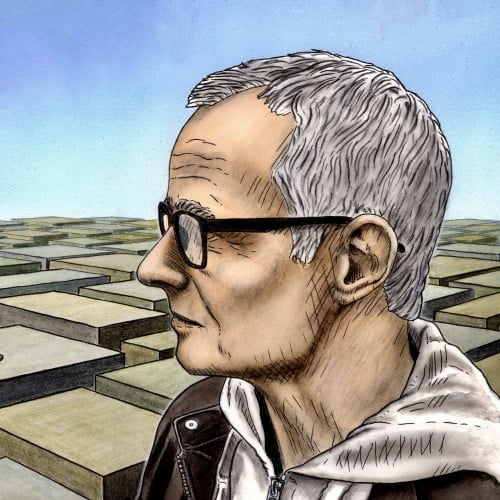
Dmitry Shostakovich (1906–1975)
Shostakovich’s contemporaries do not recall seeing him working, at least not in the traditional sense. The Russian composer was able to conceptualize a new work entirely in his head, and then write it down with extreme rapidity—if uninterrupted, he could average twenty or thirty pages of score a day, making virtually no corrections as he went.
But this feat was apparently preceded by hours or days of mental composition—during which he “appeared to be a man of great inner tensions,” the musicologist Alexei Ikonnikov observed, “with his continually moving, ‘speaking’ hands, which were never at rest.”
Shostakovich himself was afraid that perhaps he worked too fast. “I worry about the lightning speed with which I compose,” he confessed in a letter to a friend. Undoubtedly this is bad. One shouldn’t compose as quickly as I do. Composition is a serious process, and in the words of a ballerina friend of mine, “You can’t keep going at a gallop.” I compose with diabolical speed and can’t stop myself.… It is exhausting, rather unpleasant, and at the end of the day you lack any confidence in the result. But I can’t rid myself of the bad habit.
- From Daily Rituals: How Artists Work by Mason Currey
#dailyrituals #inktober #shostakovich @masoncurrey
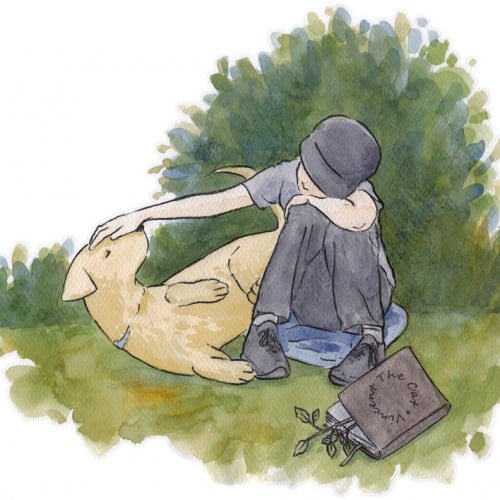
Satch’s perhaps the most resourceful dog on the planet. His legs are fast, his nose is keen, his mind is set, but the world has grown too complicated for a dog even as well-equipped as Satch. His owners got lost and he does not know how to find them in this never-ending maze of smells and sounds.
Thankfully, he stumbled upon Neal. He will know what to do.
I am delighted to share that I Am a Dragon! has been named to the Pennsylvania Center for the Book's 2024 Baker's Dozen: Thirteen Best Books for Family Literacy!
Here is the list
( I am in such a good company!):
- “10 Dogs” by Emily Gravett
- “ABC and You and Me” by Corinna Luyken
- “Bear with Me” illustrated by Kerascoët, Sebastien Cosset and Marie Pommepuy,
- “The Concrete Garden” by Bob Graham
- “How to Count to ONE (And Don't Even THINK About Bigger Numbers!)” by Caspar Salmon and illustrated by Matt Hunt
- “I Am a Dragon! A Squabble and a Quibble” by Sabina Hahn, published by HarperCollins.
- “If I Was a Horse” by Sophie Blackall
- “The Kitten Story” by Emily Jenkins and illustrated by Brittany Cicchese
- “Mr. S” by Monica Arnaldo
- “Night in the City” by Julie Downing
- “Ruffles and the Cozy, Cozy Bed” by David Melling
- “Simon and the Better Bone” by Corey R. Tabor
- “You Go First” by Ariel Bernstein and illustrated by Marc Rosenthal