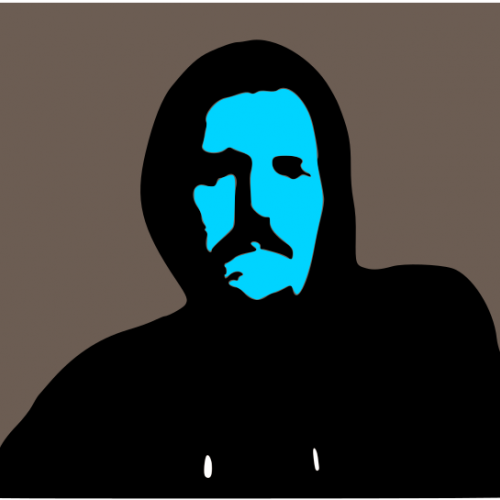
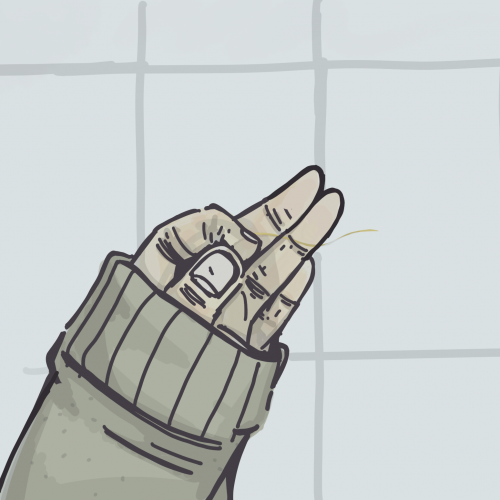
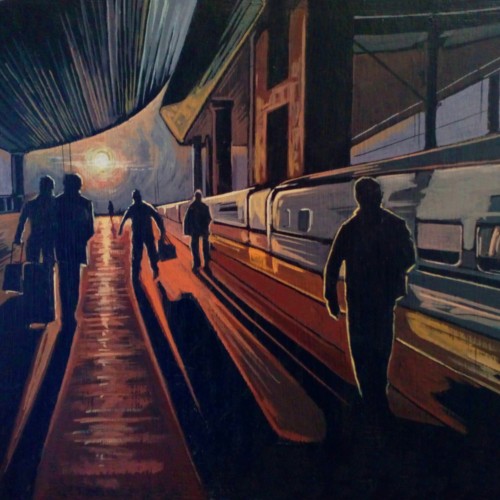
David Lynch (1946-2025)
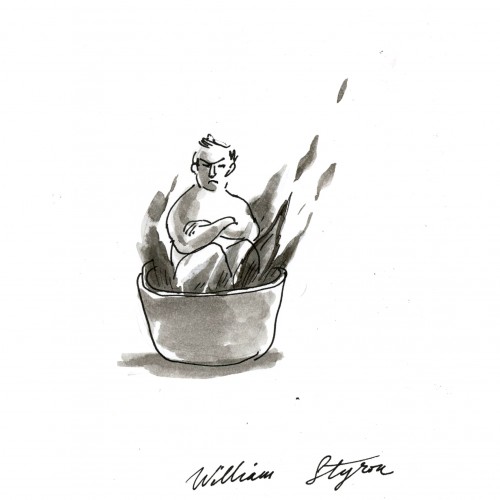
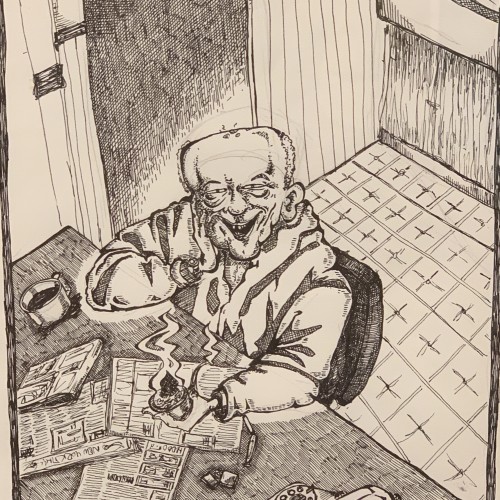
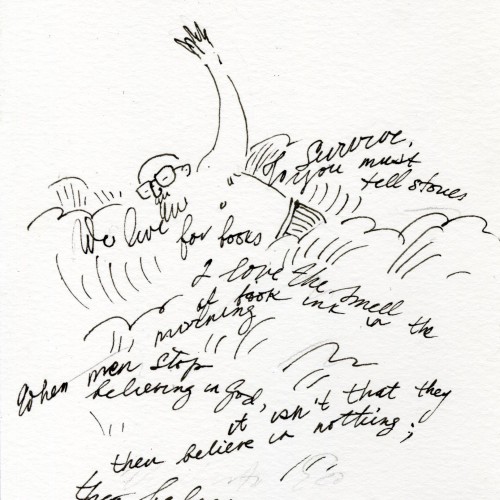
I like things to be orderly,” Lynch told a reporter in 1990. For seven years I ate at Bob’s Big Boy. I would go at 2:30, after the lunch rush. I ate a chocolate shake and four, five, six, seven cups of coffee—with lots of sugar. And there’s lots of sugar in that chocolate shake. It’s a thick shake. In a silver goblet. I would get a rush from all this sugar, and I would get so many ideas! I would write them on these napkins. It was like I had a desk with paper. “
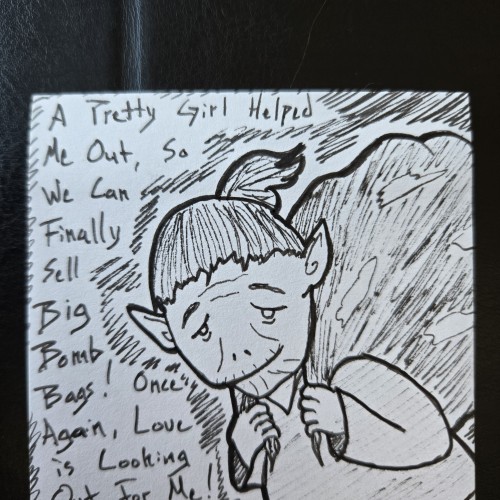
- From Daily Rituals: How Artists Work by Mason Currey
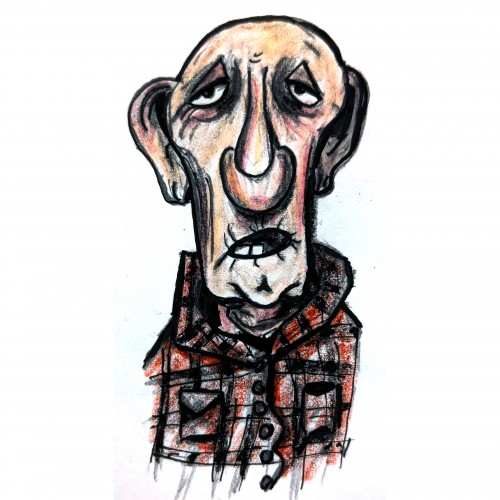
“I don't think it was pain that made [Vincent Van Gogh] great - I think his painting brought him whatever happiness he had.”
― David Lynch
Thank you for all your amazing art!
#dailyrituals #inktober #DavidLynch #goals @masoncurrey
Taking some inspiration from some things me and my girlfriend talked about regarding old highs in one’s past and asking yourself if revisiting them later on in life is worth it… the usual stuff I guess.
Draped in delicate pencil strokes, this artwork elegantly portrays a historic city gate, standing as a timeless sentry to myriad untold stories. Each shaded contour brings forth the intricate details of the gate's architecture, echoing the urban landscape of a bygone era. The deft use of monochrome evokes a nostalgic journey through the annals of time, where every shadow and highlight adds to the depth and texture of this piece. This mesmerizing blend of artistry and history invites viewers to step into the past and embrace the serene splendor of the city's storied gateway.
This is a major redesign of an OC that I came up with a while back. She's a hardened battle general, fighting on the worst day of her life. The assault has failed, soldiers have been lost, and the darkness has used memories of her husband to lure her to her doom. She's not going to go down easy.
School art. At my previous school, during lessons, I created what I call 'folder art' (doodles on school folders) This particular piece features doodles of girls, celebrating girl power
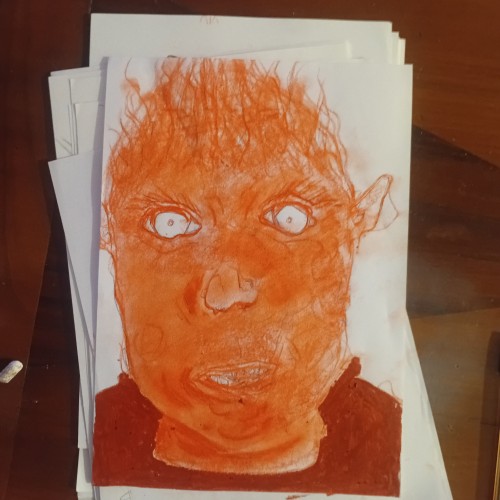
Joseph Cornell (1903–1972)
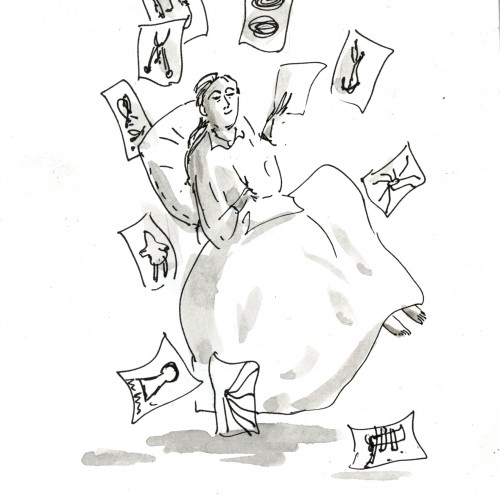
Cornell worked nights at the kitchen table, sorting and assembling materials for his boxes. It was not easy going. Some nights he felt too fatigued from his day job to concentrate on his art and would sit up reading instead, switching on the oven for warmth. In the mornings, his quarrelsome mother would scold him about the mess he’d left at the kitchen table; without a proper workroom, Cornell was forced to store his growing collection of magazine clippings and dime-store baubles out in the garage.
In 1940 Cornell finally mustered the courage to quit his job and pursue his art full-time—and even then his habits changed little. He still worked nights at the kitchen table, while his mother and brother slept upstairs. In the late morning he would head downtown for breakfast at his local Bickford’s restaurant, often satisfying his sweet tooth with a Danish or a slice of pie (and lovingly cataloging these indulgences in his diary).
- From Daily Rituals: How Artists Work by Mason Currey
#dailyrituals #inktober #JosephCornell @masoncurrey
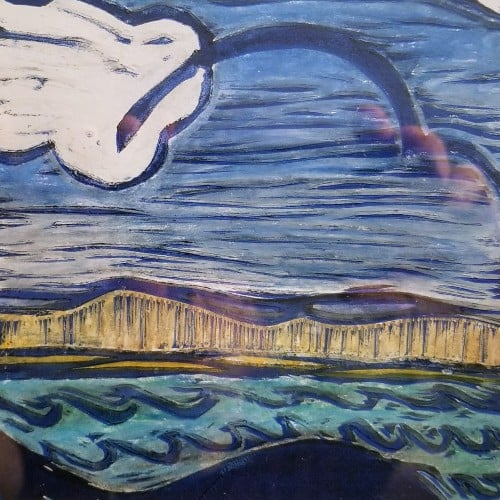
4 year old Henry engaged fully with thick applications of watercolor and oil pastels. He said it was a stormy sea with a small boat. This was at the onset of the pandemic, when we were all a bit uncertain and confined to our homes. I was reminded of an insight by Kierkegaard written in the early 1800s: “When the sailor is out on the sea and everything is changing around him, as the waves are continually being born and dying, he does not stare into the depths of these, since they vary. He looks up at the stars. And why? Because they are faithful – as they stand now, they stood for the patriarchs, and will stand for coming generations. By what means then does he conquer changing conditions? Through the eternal: By means of the eternal, one can conquer the future, because the eternal is the foundation of the future.”
“By all means grow old, but don’t mature. Remain childlike, retain wonder, the ability to be flabbergasted by something.” - Billy Connolly.
Happy new year Doodle addicts!
"Like maggots in a dog's carcass, they fill me, my children..."
A cosmic being known as "The Sleeper", "The Ugly", but most often he is proudly called "The Father".
"Like maggots in a dog's carcass, they fill me, my children..."
A cosmic being known as "The Sleeper", "The Ugly", but most often he is proudly called "The Father".
I SWEAR I made him before I knew about Barbatos.
Anyway, The Father sleeps deep beneath Gotham and unwittingly poisons the city and its population with his toxic aura. He is known to his cult as the God of Madness and Chaos. He simply cannot control his influence on those around, which makes him a villain of a tragic fate. I figured his existence would be a good enough explanation for why Gotham is such a rotten piece of society, with very creative supervillains who loves to be so extra and why they not executed horribly for everything they've done. The cult of his worshippers is quite old and includes a huge number of people trying to keep him asleep, because if he wakes up and gets out of his prison, it will be the end of the city, and maybe not only the city...
I should point out: he's not actually a god, he's an alien, and he's not the embodiment of "chaos and madness" - he's a cosmic horror, most likely mentally ill and therefore his aura is toxic. He didn't create the villains or Batman, but his aura affected the environment in which they were created.
Primrose is the oldest, Daphne is the middle, and Dalena is the youngest. The outfits were found on Pinterest/Instagram. The background was hard to come up with. I referenced Martin Ivanov's Gotham City for the background. Their story is still in the works but I wanted to draw them anyway.
Teddy Bear's Change of Seasons - Sophie's Christmas included!
Is beautifully written and illustrated, Teddy Bear’s Change of Seasons includes four charming stories, wonderfully rolled into one children’s novel.
Teddy Bear and his friends create magical ways to explore and learn about the snow-white, wonderful world they live in, which changes from summer to autumn and into an unforgettable Christmas.
Teddy’s journey of self-discovery through four seasons, Christmas included, begins in a magnificent old-growth forest, but Teddy is stuck inside a dark and lonely place.
His dreams look far away and out of reach, until Teddy rescues a small mouse, who is desperate for help.
From this one act of kindness, Teddy's life changes in ways he never imagined, bringing him close friends, a new loving family and the kind of challenges and adventures other teddies have never encountered before.
This is a dream of a book, the perfect snuggle-down bedtime story, accompanied by hot, sleepy cocoa.
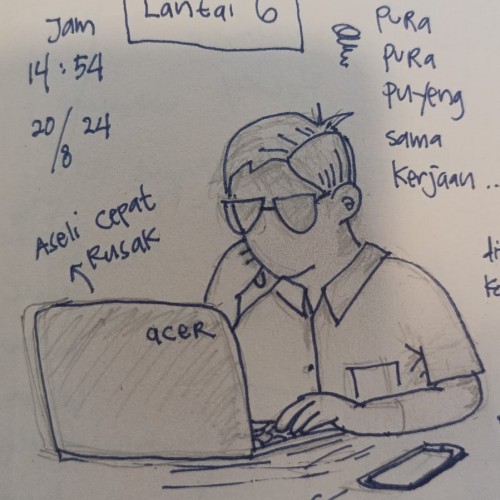
Igor Stravinsky (1882–1971)
“I get up at about eight, do physical exercises, then work without a break from nine till one,” Stravinsky told an interviewer in 1924. Generally, three hours of composition were the most he could manage in a day, although he would do less demanding tasks—writing letters, copying scores, practicing the piano—in the afternoon.
Unless he was touring, Stravinsky worked on his compositions daily, with or without inspiration, he said. He required solitude for the task, and always closed the windows of his studio before he began: “I have never been able to compose unless sure that no one could hear me.” If he felt blocked, the composer might execute a brief headstand, which, he said, “rests the head and clears the brain.”
- From Daily Rituals: How Artists Work by Mason Currey
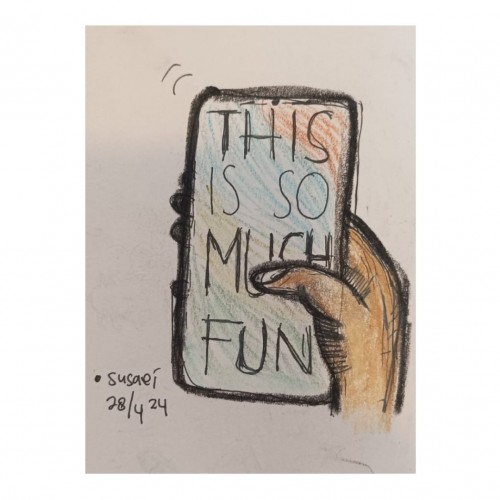
Immanuel Kant (1724–1804)
Kant’s biography is unusually devoid of external events.
As Heinrich Heine wrote: The history of Kant’s life is difficult to describe. For he neither had a life nor a history.
In actual fact, as Manfred Kuehn argues in his 2001 biography, Kant’s life was not quite as abstract and passionless as Heine and others have supposed…. If he failed to live a more adventurous life, it was largely due to his health: the philosopher had a congenital skeletal defect that caused him to develop an abnormally small chest, which compressed his heart and lungs and contributed to a generally delicate constitution. In order to prolong his life with the condition—and in an effort to quell the mental anguish caused by his lifelong hypochondria—Kant adopted what he called “a certain uniformity in the way of living and in the matters about which I employ my mind.”
This routine was as follows: Kant rose at 5:00 A.M., after being woken by his longtime servant, a retired soldier under explicit orders not to let the master oversleep. Then he drank one or two cups of weak tea and smoked his pipe. According to Kuehn, “Kant had formulated the maxim for himself that he would smoke only one pipe, but it is reported that the bowls of his pipes increased considerably in size as the years went on.”
- From Daily Rituals: How Artists Work by Mason Currey
#dailyrituals #inktober #ImmanuelKant @masoncurrey
I've always found it so Satisfying to draw Dragons! I love dragons, whether it's for a personal project or a clean wok, Dragons are the subject I enjoy the most and love to explore in so many ways ♥
This was an illustration for a Traditional Action Gamepad with its big buttons, this work is so old, and I improved a lot after it, but its simplicity remains lovely to me and maybe I will remake it with my improvement level right now and make a comparison.
This is my 2023 OC Paxton. It's hard to call him my character when he looks like several black-haired protagonists of a Shonen anime lol. I made him very young even though he's a married man and father of two children. I'm still drawing his wife she has several designs and styles