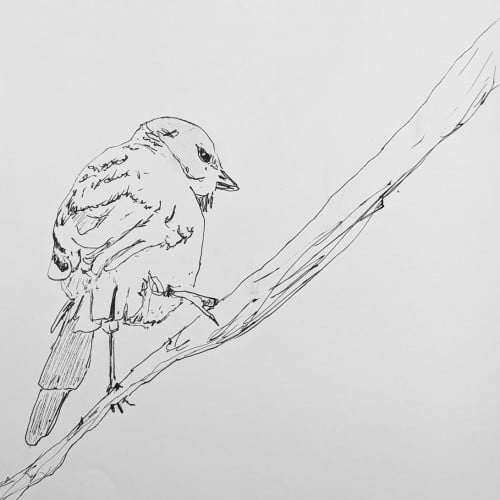
A simple ink sketch of a bird at rest. Sometimes the quiet moments—watching, pausing, waiting—are the deepest teachers. This drawing is part of my exploration of what I call the Quiet Practices—small ways of living from the inside out.
If you’d like to see more of my reflections, I share them here: https://forming20.com/
Tuesday morning drawing.
Fun fact, I listen to the Dead a lot while drawing and painting. It puts me in a good mindset. Just like listening to jazz, you get lost in the melodies and when you come out of it there is something there. Sometimes it garbage, but every once in a while you get something worth sharing.
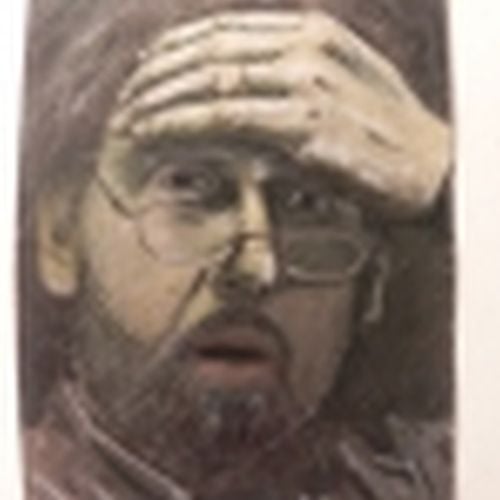
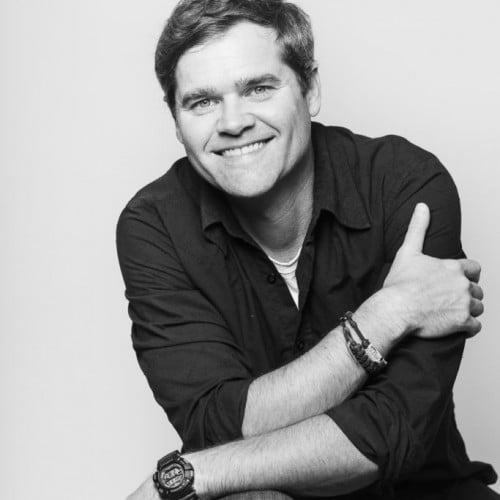
It has been a delight to share with my students the incredible resource of people. Over the years, I’ve had the great privilege of connecting them with inspiring individuals such as Lois Ehlert, Dave Nice, Gregory Martens, Colette Odya Smith, and—as seen in this “Behind the Professor” sketch—Dr. Gaylund Stone. There’s something powerful about the presence of someone who lives their craft with humility and depth. In moments like these, my students are reminded that more is often caught than taught.
I am an art teacher with a master’s degree—trained by brilliant professors who believed that art could do more than decorate walls. I offer safe spaces for teenagers to grow—nourishing soil where their imaginations can take root.
And yet… I am assigned to hallway duty.
This is compulsory education, after all.
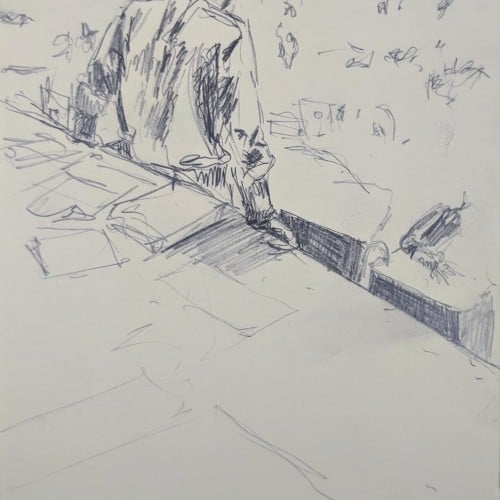
So I sit—posted like a sentinel—watching young lives stream past.
“Get to class,” I say with a smile and a nudge.
The system wants attendance; I’m hungry for presence.
Armed not with a whistle or clipboard, but with a pen—
my scribble’s soft insurgency.
The hallway stretches out like a geometric hymn.
Columns and corners chant structure.
Teenagers swirl past—half-formed galaxies of limbs and laughter—
their orbits chaotic, their gravity pulling time forward.
I begin to draw.
Not their tardiness, but their motion.
A shoulder. A blur of sneakers.
A tilted head chasing freedom.
Feet flickering like seconds.
Each mark a pulse.
Each smudge a breath.
My paper becomes a seismograph of seeing—
trembling gently through the mundane.
This isn’t about making art for a frame or a feed.
It’s about refusing to leak away in the fluorescent hum of obligation.
It’s a quiet mutiny against the clock.
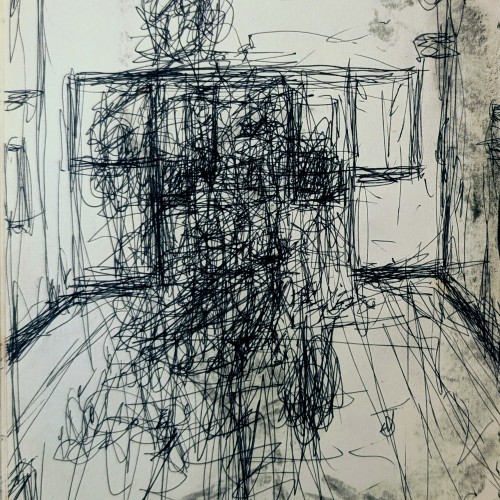
I do this on long car rides, too (passenger side, mind you).
Letting the lines grow wild, jagged, and unapologetic.
Not for polish—
but for presence.
This is how I remember I’m still alive.
Still growing.
Still watching.
Still choosing to see.
Because sometimes mental health looks like
a piece of scrap paper,
a moving pen,
and the simple, sacred act of
marking time with wonder.
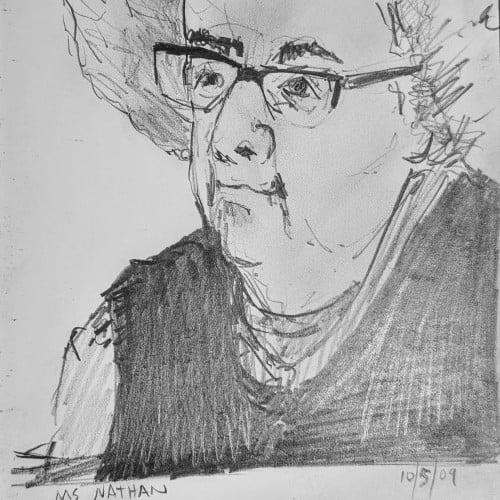
Ms. Nathan was a play production teacher with flair and a big personality. She wore colorful clothing and loud socks that never matched. Her joyful, chortling laugh filled the room—or the hallway—wherever she happened to be.
Staff meetings and PD days have always been strong invitations for observational drawings. Over the years, I’ve found that there are many boxes to check in a wide variety of systems. I often created my own boxes—and checked them with sketches of my colleagues.
This one goes out to the colorful Ms. Nathan.
Taking some inspiration from some things me and my girlfriend talked about regarding old highs in one’s past and asking yourself if revisiting them later on in life is worth it… the usual stuff I guess.
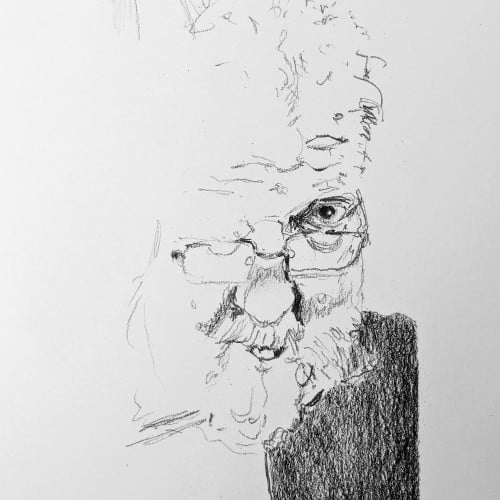
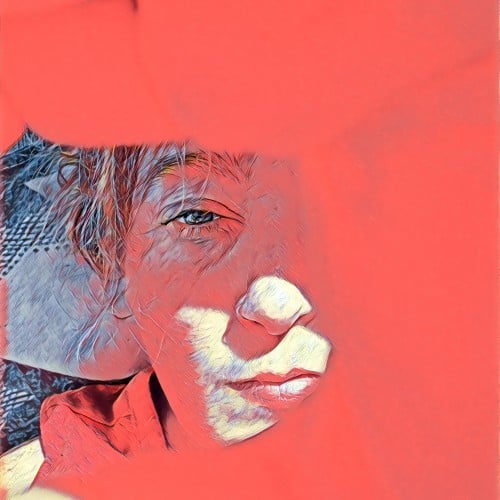
2B pencil focusing on the eye, nose and mouth. The reflection today is a suggestion that we find what we look for, and we see what we want to see. Our family dinners include a sharing time of: 1. Who blessed you today? 2. Who did you bless today? and 3. What are you thankful for? It is suggested by some that if you focus on the abundance, you will not see so much of the lack, but if you focus on the lack, you will not be able to see the abundance so well. This was illustrated by the questions: "How many red cars did you see on the way to work this morning?" My answer was: "No Idea!" It is because I was not looking. If I was being given $100.00 for each red car I spotted, I would have certainly been looking, and maybe even getting creative with the definition of 'red'. What are you looking for? What are you finding?
Sketched while watching the Mariners get knocked out of playoff contention. Colored on the computer. I did a hue changing little animation with it if you check my Instagram. :)
I generally make marks on something every day, but I'm really TRYING to do it purposefully in one single journal at a time. I also have super ADHD, which means I pretty much never go up to my actual studio and usually only use what's out on my desk, because out-of-sight-out-of-mind.
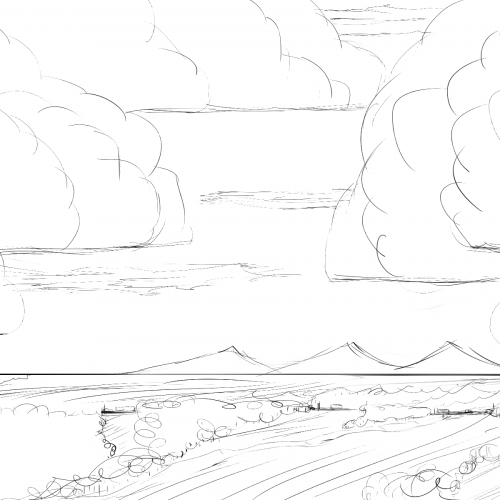
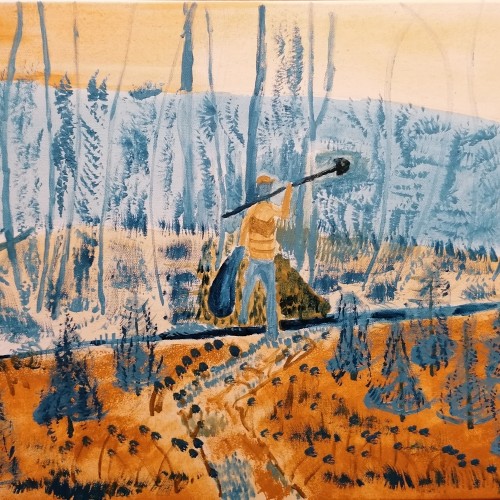
A landscape that I did about my father while he was alive. He was a sheep farmer and he planted tress on his hill farm.This is done in memory of him as he died from cancer.Its a finished piece and based on sketches I did. Its an acrylic painting and 1/10 in a body of work.
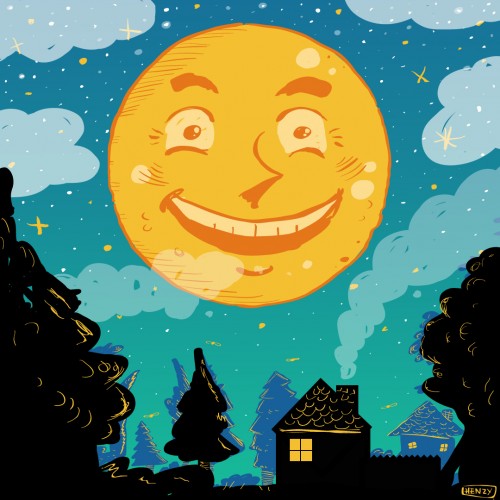
I had something bum me out a little bit today. Nobody’s fault but it is what it is. So I decided to draw this up. I’m ready for fall and fall beers! I love to sit out under the moon once the temperature drops a bit and have some marzen lagers and other fall drinks. I felt like this captured the moment perfectly. I am excited for music fest in @havertownlife havertown tomorrow. I heard @levantebrewing will be pouring at brick and brew so I’ll be there sucking back some suds. I’m glad I forced myself to learn #adobeillustrator I’ve come a long way. Since then I have been able to help other artists that don’t use Illustrator or vectors and I am pretty proud of that, because when I was in their place it always felt like a huge struggle.
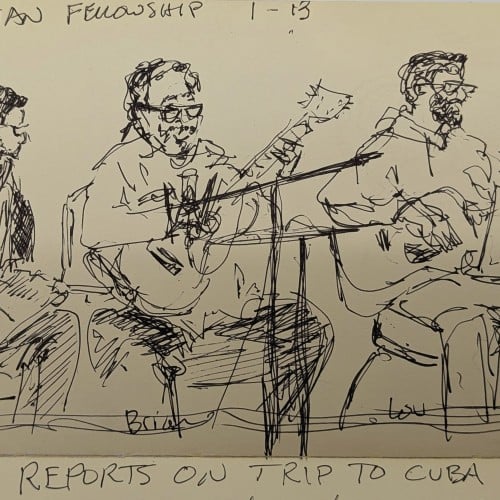
Sunday morning, more than a decade ago.
Music, fellowship, and reports about what God was doing here and there.
Some things are worth remembering. We learn from looking back—
but we must live forward.
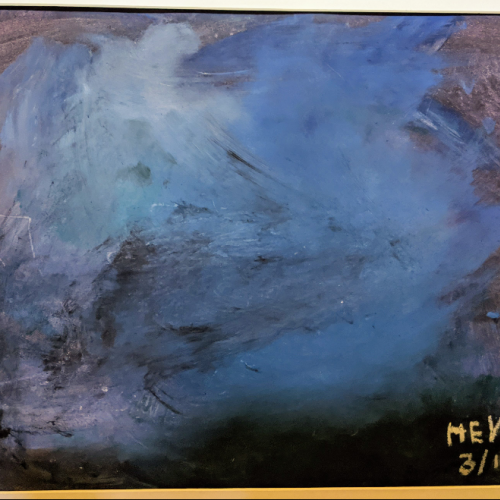
4 year old Henry engaged fully with thick applications of watercolor and oil pastels. He said it was a stormy sea with a small boat. This was at the onset of the pandemic, when we were all a bit uncertain and confined to our homes. I was reminded of an insight by Kierkegaard written in the early 1800s: “When the sailor is out on the sea and everything is changing around him, as the waves are continually being born and dying, he does not stare into the depths of these, since they vary. He looks up at the stars. And why? Because they are faithful – as they stand now, they stood for the patriarchs, and will stand for coming generations. By what means then does he conquer changing conditions? Through the eternal: By means of the eternal, one can conquer the future, because the eternal is the foundation of the future.”
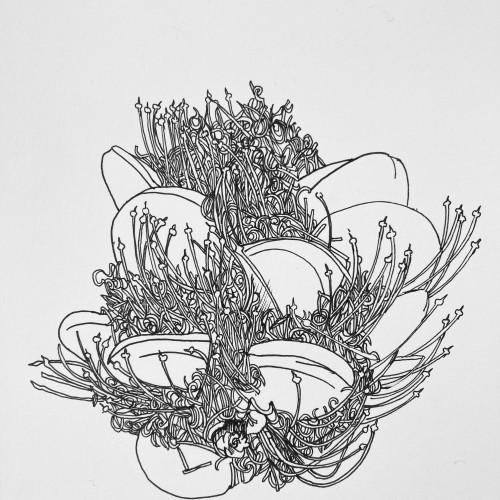
Many people walk past plants either without noticing them or with just a glance. For the Walmajarri people in the Kimberley region of Western Australia, and many other Indigenous groups, plants provide a source of food and medicine. These outlines are of plants that are used by Walmajarri people as either food or medicine. For most people they remain a mystery, hence the outline only.