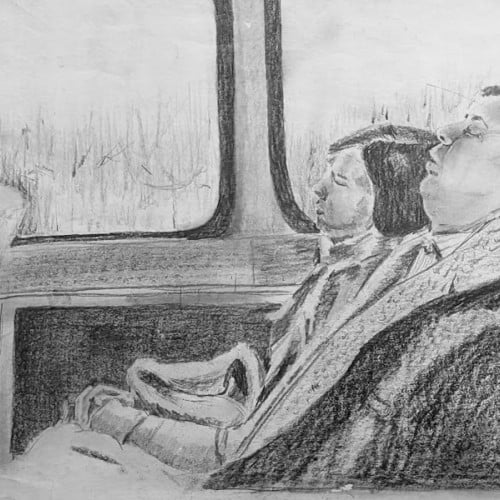
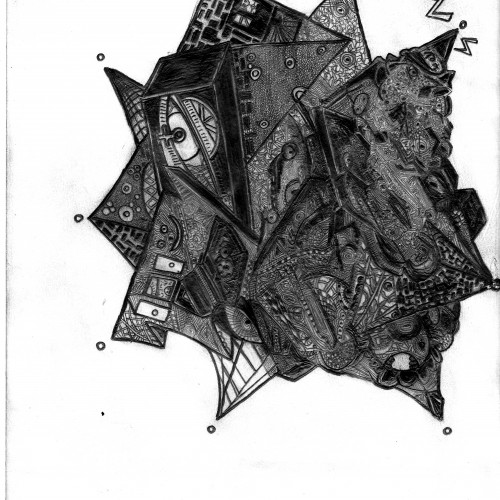
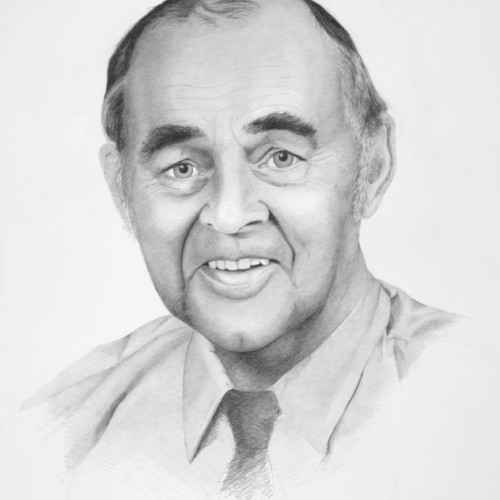
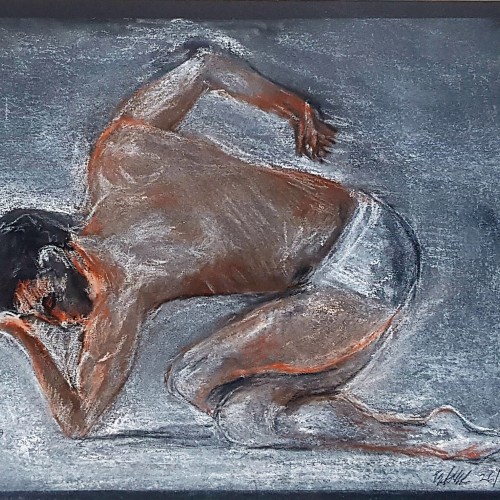
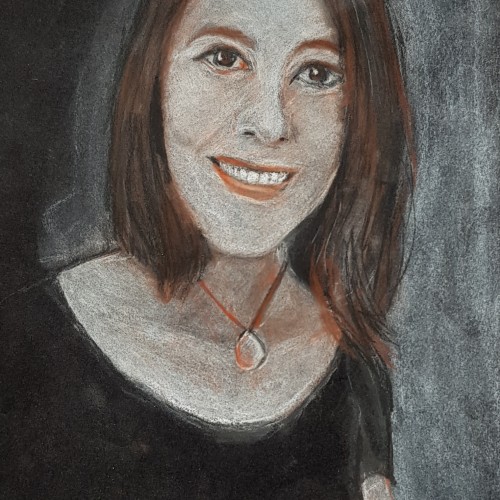
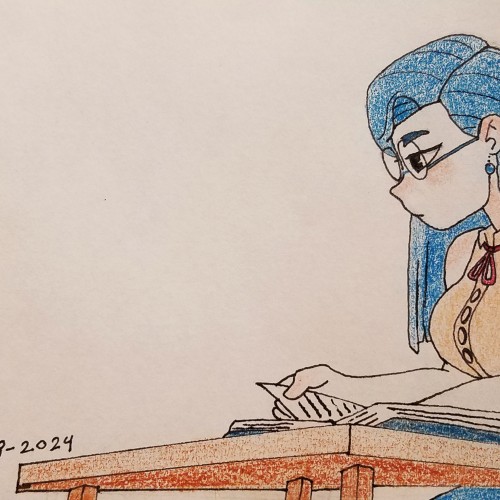
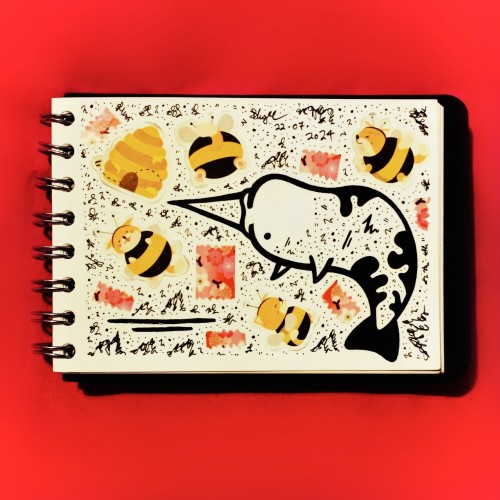
A quick sketch filled in later with charcoal and ebony pencil. "The sweetness and delights of the resting-place are in proportion to the pain endured on the Journey. Only when you suffer the pangs and tribulations of exile will you truly enjoy your homecoming." -Rumi
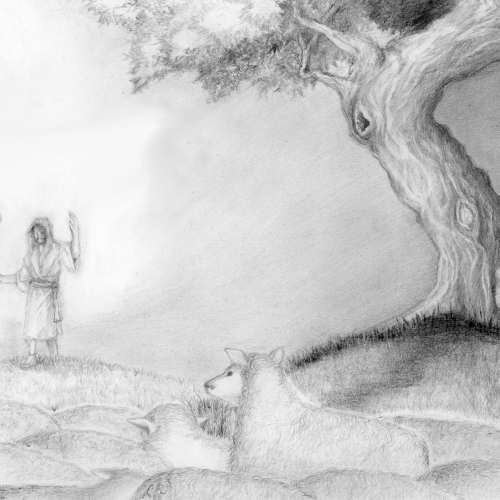
"The one who enters by the gate is the shepherd of the sheep. The gatekeeper opens the gate for him, and the sheep listen to his voice. He calls his own sheep by name and leads them out. When he has brought out all his own, he goes on ahead of them, and his sheep follow him because they know his voice. But they will never follow a stranger; in fact, they will run away from him because they do not recognize a stranger’s voice." - John 10:2-5 (NIV). And, apparently, they really do: https://www.youtube.com/watch?v=e45dVgWgV64
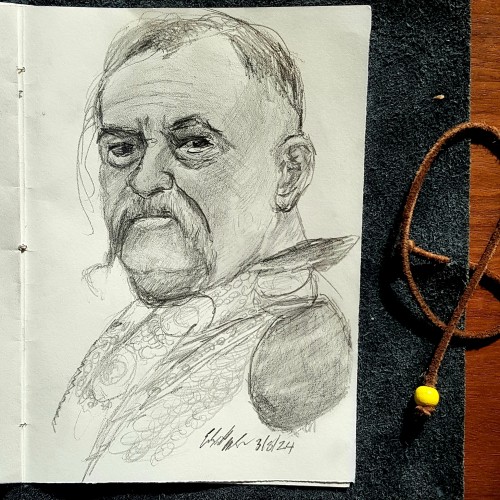
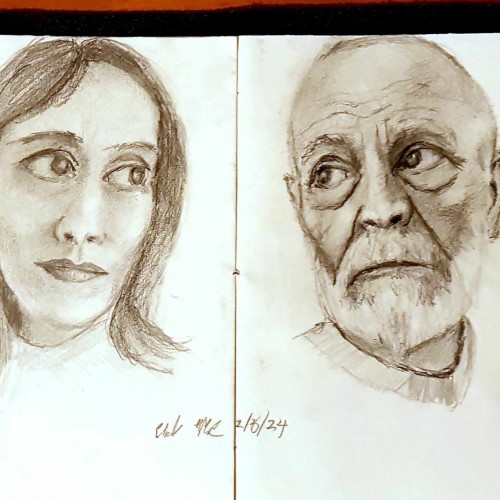
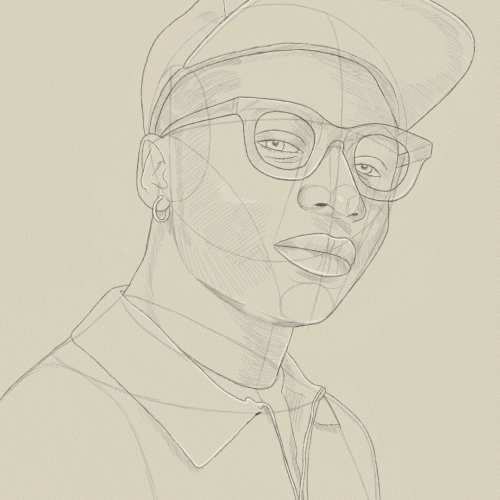
I have given my students the problem of creating 100 self portraits in 20 days on 5x7 in paper. The challenge is to create something other than an image that depicts a 'dead-pan' stare. When the brain is given a problem, it goes to work immediartely to solve that problem. I have seen some wonderful solutions. This is a tall order for teens who are sensative to judgment and still developing in thier perception. It has generated wonderful discussions of self-awareness, world view, and judgment. Those who engage in the exercise in an authentic manner have only good things to say about the experience. It is not an exercise for everyone. We are on a journey. Be Bold! Be Honest! Draw what you see. Draw what you think. -Peace
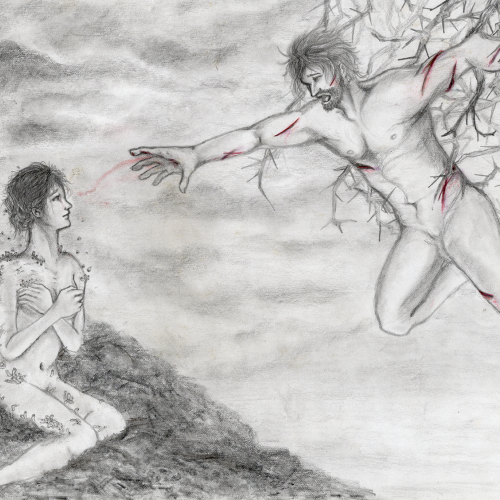
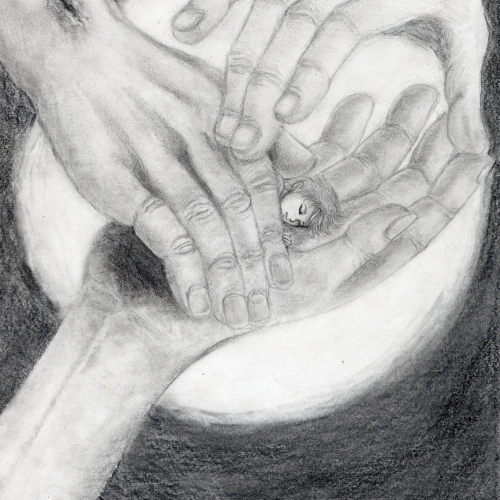
A homage to Michelangelo's "Creation of Adam", in which Christ, the second Adam, emptied himself of His divine stature, and took the form of a lowly servant, enduring the shame of the cross (Philippians 2:6-8), so that He may redeem His bride, the church.
Further references: Ezekiel 16:8, Isaiah 6:10, 1 John 4:10
Isaiah 41:10 - "Fear not, for I am with you; be not dismayed, for I am your God; I will strengthen you, I will help you, I will uphold you with my righteous right hand."
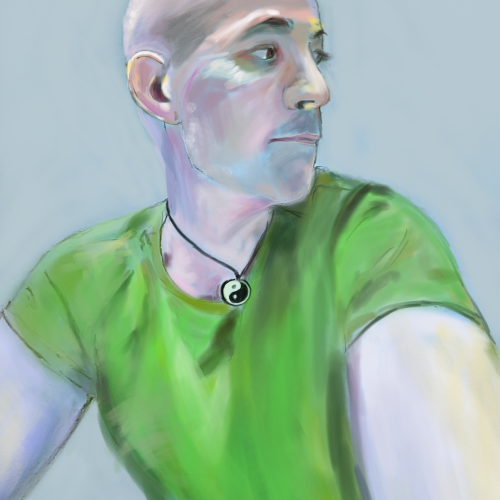
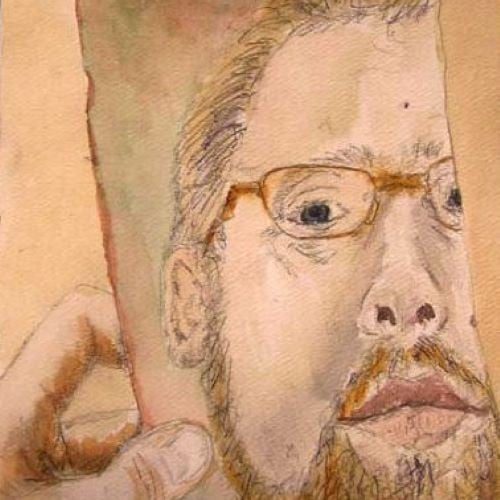
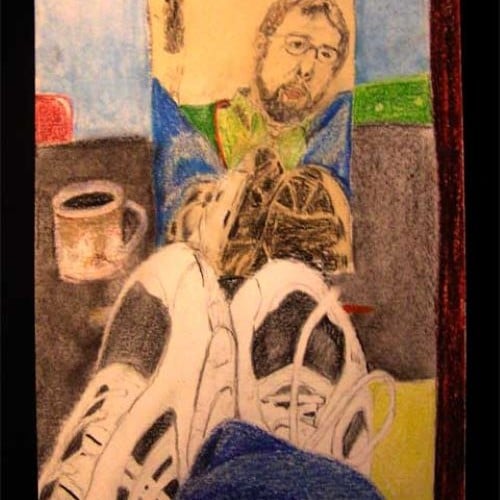
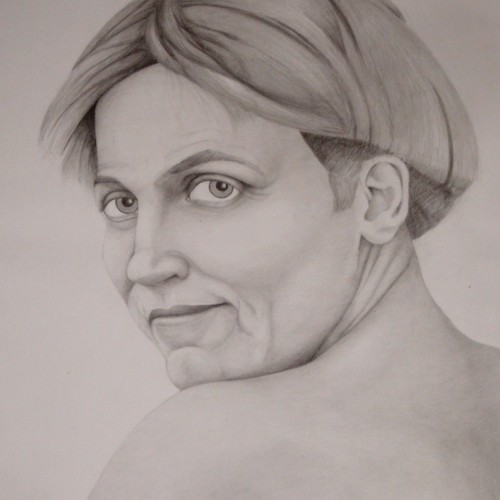
Color Pencil over Gesture. It was a contemplative day in the art classroom. Students were drawing self portraits and I had time to join them. Our discussion was on 'Reflection'. The image we see of ourselves in the mirror is not what people see when they look at us. They see the reverse. The mole on my cheek is on the other side of my face, if you were to look at me in person. This leads to discussions of perception and reality. It can be fun and humbling. We cannot live only by sight. We must have a faith of some sort. This reminds me of the Michael Feldman Public Radio Program called: "Whad'Ya Know?" It opens with the audience shouting: "Whad'd Ya Know?" and Michael replying: "Not Much! You?". We do not know much, I think, as much as we like to pretend that we think we do.
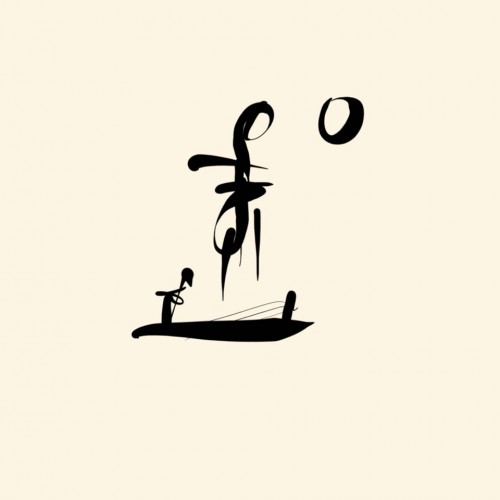
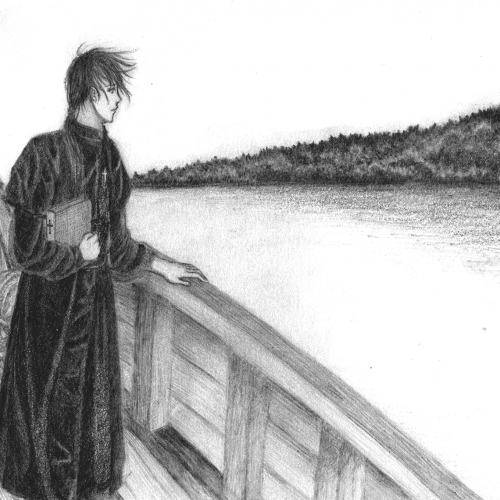
Konishi Mansho (1600 - 1644), the last ordained priest to serve in Japan during the prohibition era of the Tokugawa Shogunate (think of the Shusaku Endo novel, "Silence", which was adapted to film by Martin Scorsese in 2016). Exiled from his homeland in 1614, he eventually made his way to Rome and enter a convent to be ordained as a priest. He would later to his home country to minister to the persecuted Christians there, only to be arrested and martyred in 1644. I tried to mimic a traditional ink painting style to invoke the melancholic feel of this homecoming journey.
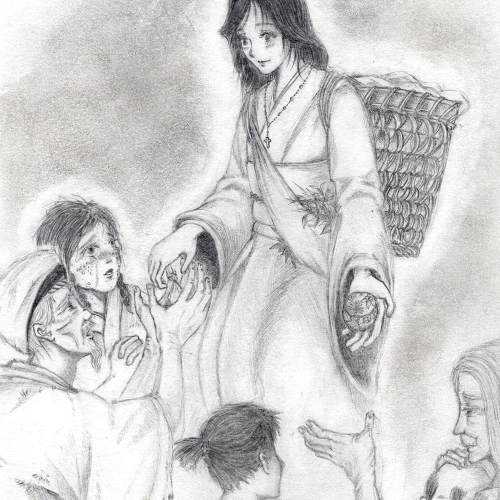
Julia Ota, a Korean girl who was brought back to Japan during the Imjin Wars (1592-1598). She was adopted by one of the Japanese commanders, Konishi Yukinaga, and was baptized as a Christian in 1596. She eventually became a lady-in-waiting to Tokugawa Ieyasu, but was later exiled to Izu Islands for refusing to recant her faith. Wherever she went, she became admired for her charity and evangelism, and she was revered as divinity on the islands up after her death up to the 20th century.
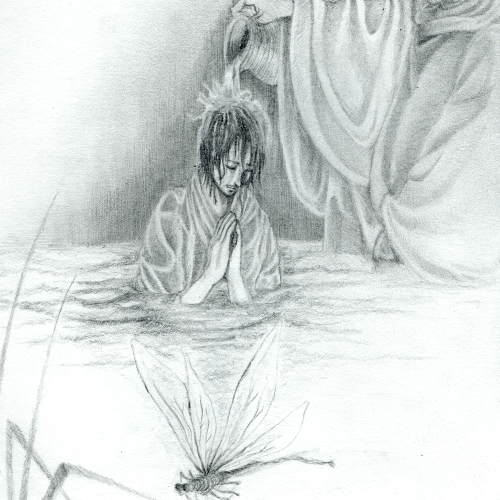
Water heals and purifies. It also kills and destroys.
Few symbols encompass both the life-giving and death-dealing properties of water as the sacrament of baptism, which represents both the passing of the old self and their rebirth as a new creature (Romans 6:3-11).
Here, the image of death & rebirth is also reinforced by a dragonfly motif; the dragonfly spends the first years of its life in the deep waters as a nymph, and is completely transformed into a new being as it rises to the surface.
Unlike butterflies, a dragonfly undergoes several molting processes after its emergence, showing that, while the creature is already made new, it is not yet perfected, and must grow in its new identity through what is called progressive sanctification.
The work's title refers to the Christian daimyo, Konishi Yukinaga, whose baptismal name is Augustine, and is the primary subject of this image.