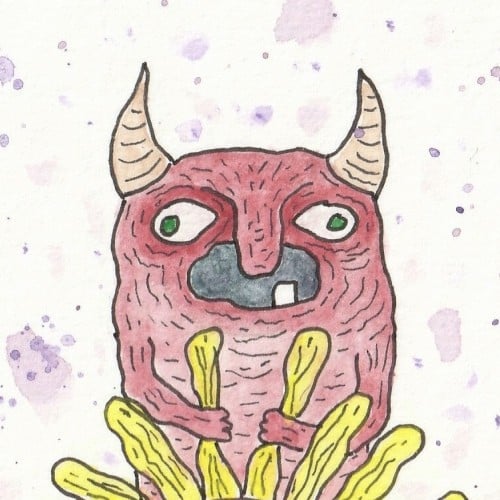
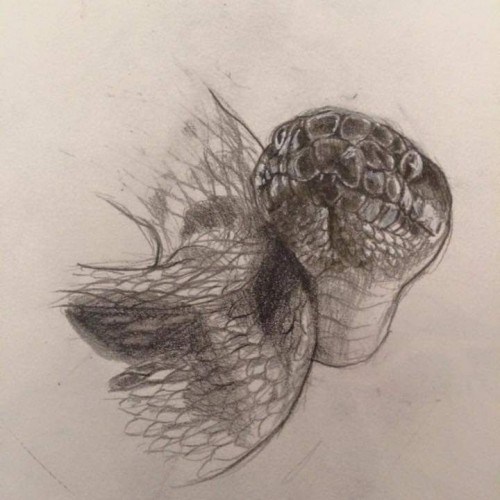
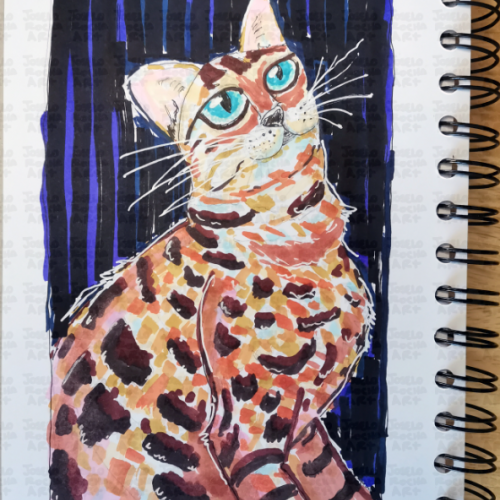
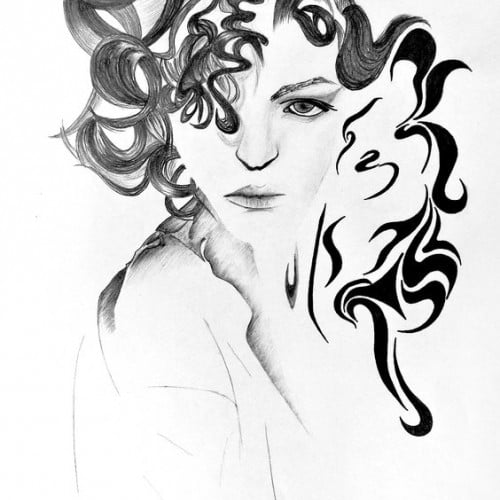
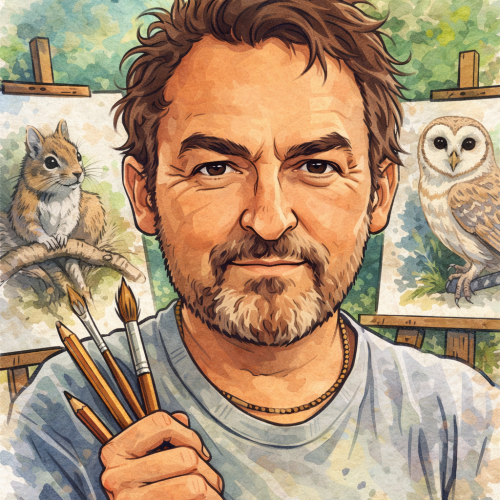
2B pencil focusing on the eye, nose and mouth. The reflection today is a suggestion that we find what we look for, and we see what we want to see. Our family dinners include a sharing time of: 1. Who blessed you today? 2. Who did you bless today? and 3. What are you thankful for? It is suggested by some that if you focus on the abundance, you will not see so much of the lack, but if you focus on the lack, you will not be able to see the abundance so well. This was illustrated by the questions: "How many red cars did you see on the way to work this morning?" My answer was: "No Idea!" It is because I was not looking. If I was being given $100.00 for each red car I spotted, I would have certainly been looking, and maybe even getting creative with the definition of 'red'. What are you looking for? What are you finding?
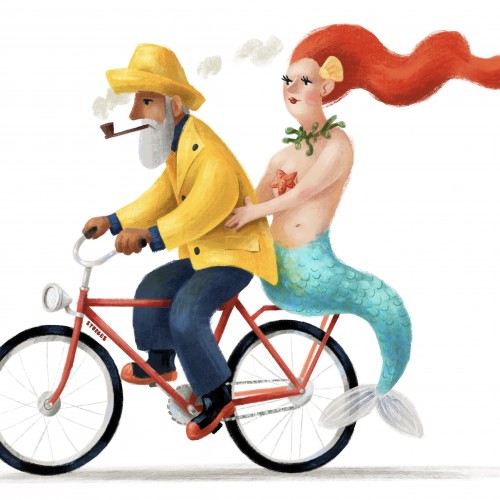
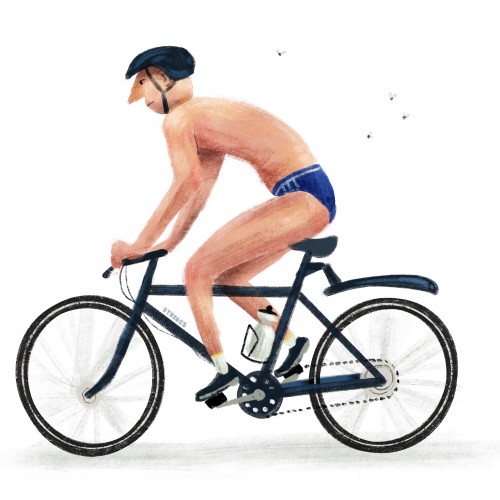
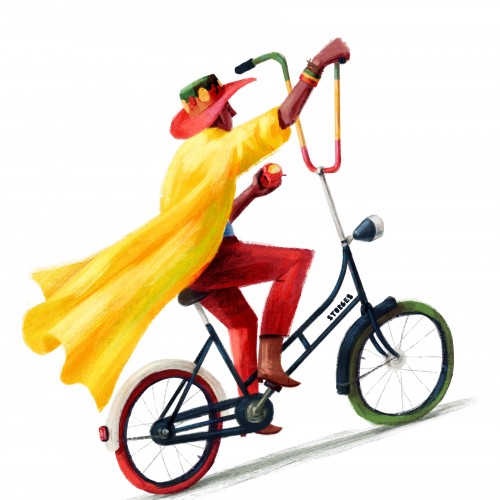
From my series Bikes of Amsterdam. Normally it's cyclists I have spotted around town but this is a little day dreaming. Who knows what's lurking in all the canals.
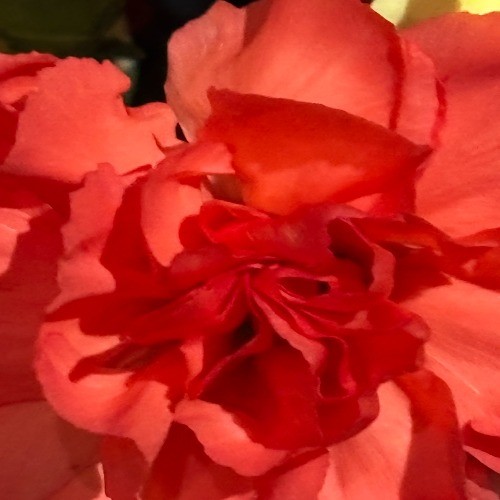
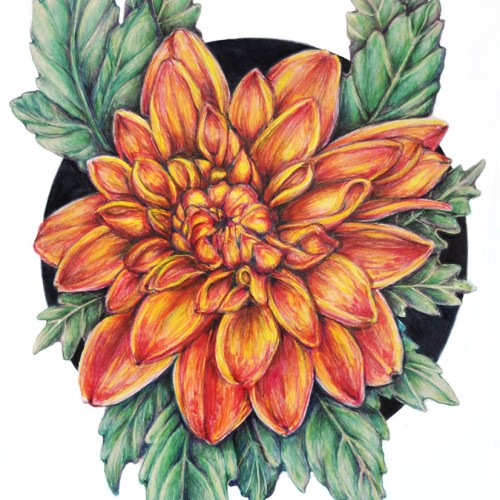
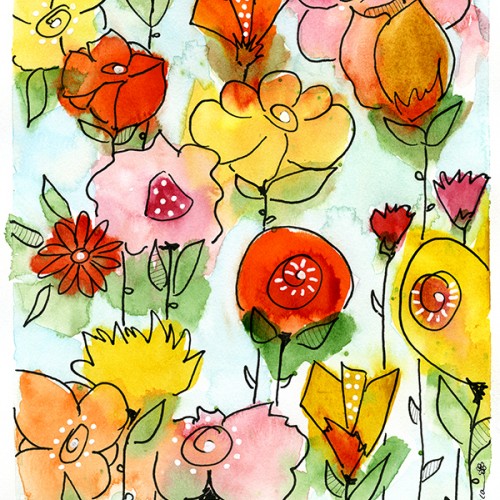
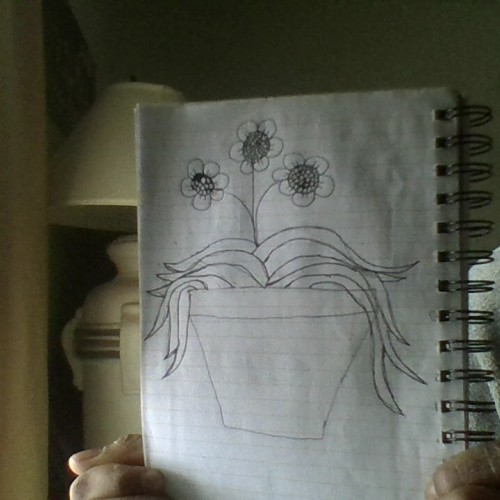
Love dahlias, not just because they are so ornate, but also because they bloom so very late. The tuberous begonias and potted dahlias are still in full bloom at the start of November, how cool is THAT? (For the northern hemisphere and 47th parallel, no less!) This is a stylized drawing in colored pencils.
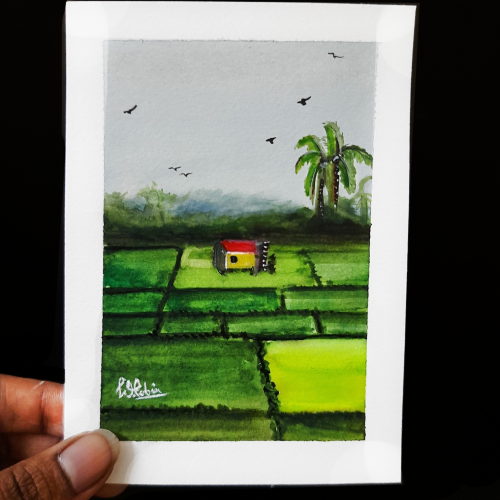
Actually I saw this scene when I was traveling in bus early morning. In the foggy outskirts of city. I spotted this farm. I loved the one small patch of farm with Greeny patch.
Couldn't paint the fog, but tried to give the sky a feel of foggy.
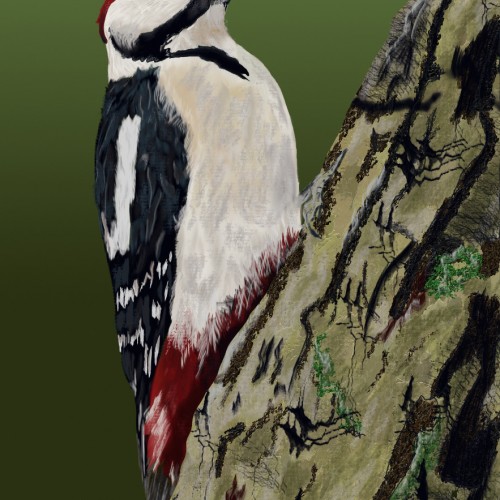
The Lesser Spotted Woodpecker is the smallest and least common of the UK's three species of woodpecker. It is most often found in the tops of trees where it creeps along branches in search of insects. Found in England, but rare in the north. Absent from Scotland and Ireland. Its 'drumming' is much quieter and less vigorous than that of the Great Spotted Woodpecker; its presence is often only given away by this or their call.
The lesser spotted woodpecker is small in size, being not much bigger than a house sparrow. Males are black and white, with a red crown cap, and females are plain black and white. They both have a distinctive white ladder marking down their black back.
**Did you know?**
There are now believed to be less than 3,000 pairs breeding annually in the UK compared to nearly 45,000 greater spotted woodpeckers.