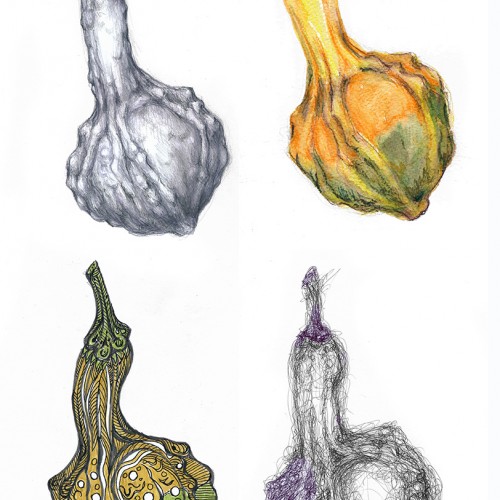
I modified the challenge a wee bit. I didn't use the same paper for the various drawings since I was using (top row, left to right) hard graphite pencils (3H to HB), watercolor pencils, (bottom row, left to right) brush pens and ballpoint pen. These media work best on very different paper textures and moisture absorbing qualities. The second picture shows the object of my study --- and the apparatus I use to hold botanical subjects. "Third hand" tools are very useful and cheap. This one was under $10 and serves my purposes well. Just FYI. (Each drawing/painting was scanned and composited in Photoshop.)
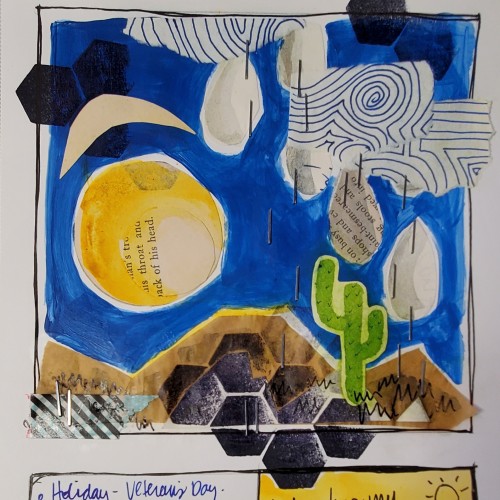
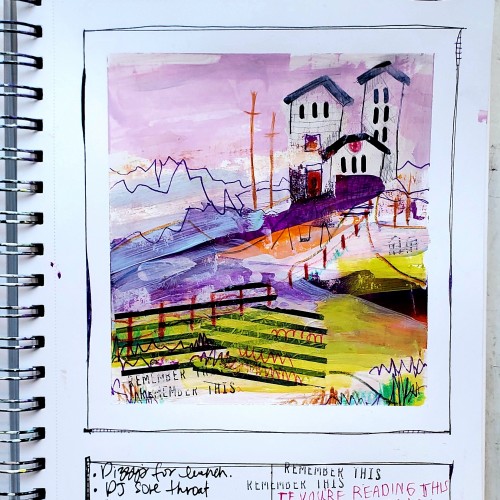
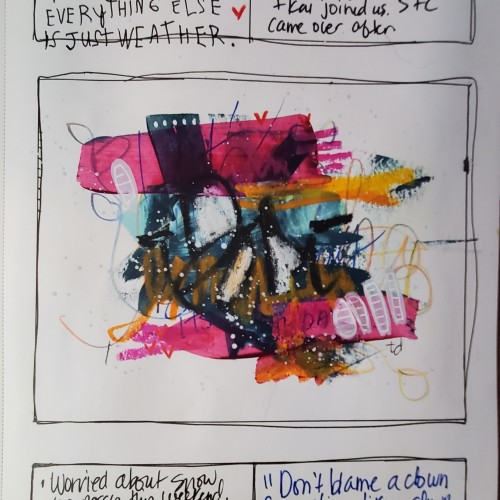
I do generally put pen (or some kind of tool), to paper (or some kind of surface), every day, but I'm really TRYING to do it purposefully in one singular location (journal). Here is a successful attempt from that particular day.
I'm also super lazy, which means I never go up to my actual studio and only use what's out on my computer desk.
I do generally put pen (or some kind of tool), to paper (or some kind of surface), every day, but I'm really TRYING to do it purposefully in one singular location (journal). Here is a successful attempt from that particular day.
I'm also super lazy, which means I never go up to my actual studio and only use what's out on my computer desk.
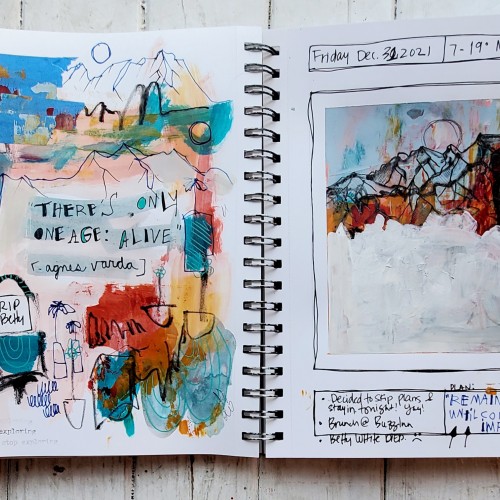
I do generally put pen (or some kind of tool), to paper (or some kind of surface), every day, but I'm really TRYING to do it purposefully in one singular location (journal). Here is a successful attempt from that particular day. I'm also super lazy, which means I never go up to my actual studio and only use what's out on my computer desk. *including the whole spread, as sometimes I like the "waste" page most.
I do generally put pen (or some kind of tool), to paper (or some kind of surface), every day, but I'm really TRYING to do it purposefully in one singular location (journal). Here is a successful attempt from that particular day.
I'm also super lazy, which means I never go up to my actual studio and only use what's out on my computer desk.
I do generally put pen (or some kind of tool), to paper (or some kind of surface), every day, but I'm really TRYING to do it purposefully in one singular location (journal). Here is a successful attempt from that particular day. I'm also super lazy, which means I never go up to my actual studio and only use what's out on my computer desk.
I do generally put pen (or some kind of tool), to paper (or some kind of surface), every day, but I'm really TRYING to do it purposefully in one singular location (journal). Here is a successful attempt from that particular day.
I'm also super lazy, which means I never go up to my actual studio and only use what's out on my computer desk.
I do generally put pen (or some kind of tool), to paper (or some kind of surface), every day, but I'm really TRYING to do it purposefully in one singular location (journal). Here is a successful attempt from that particular day.
I'm also super lazy, which means I never go up to my actual studio and only use what's out on my computer desk.
I do generally put pen (or some kind of tool), to paper (or some kind of surface), every day, but I'm really TRYING to do it purposefully in one singular location (journal). Here is a successful attempt from that particular day.
I'm also super lazy, which means I never go up to my actual studio and only use what's out on my computer desk.
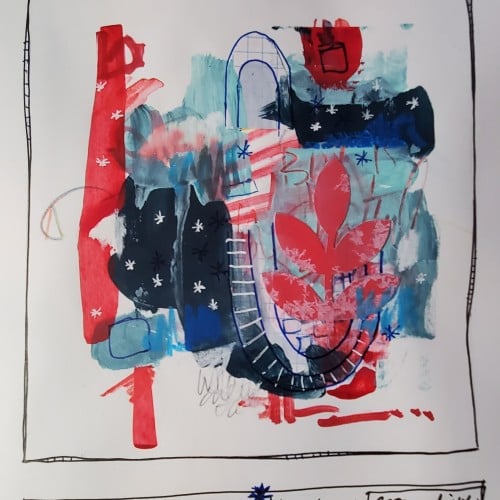
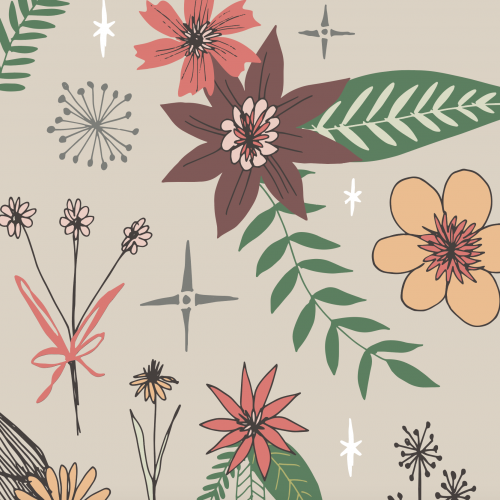
A painting created in one of my favourite programs Rebelle 6 pro. this was more of an experiment than a full on planned painting - the stencil feature is an interesting tool
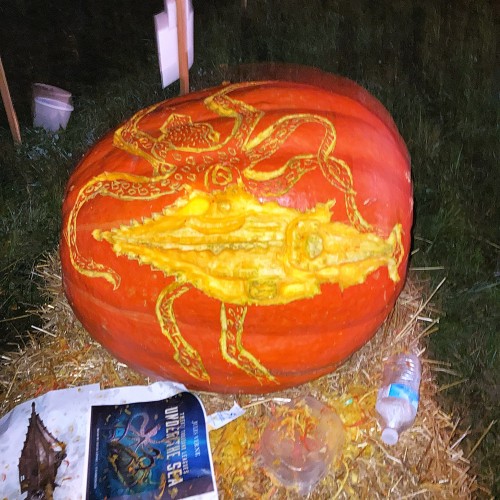
This is a pumpkin carving of the infamous Nautilus submarine, owned by the pirate captain Nemo . Who sunk ship that supported war, ramming them with his submarine. In this tale Nemo's ship gets attacked by a monstrous giant squid. I caved this design at the Chadds Ford Historical Society's Great Pumpkin Carve contest and event. This is a live carve event. Artist have no idea what kind of pumpkin they will be given to carve. No knowledge of shape, color, size, or condition. Competitors must create their design with manual hand tools. Cavers have 6 hours to create their master pieces, to be considered to qualify to be judged, to compete for the prize. The size of the average pumpkin is from 200 to 400 pounds, and their wall are about 5 inched thick. It took me 6 hours to carve my pumpkin design. Stephen J. Vattimo 10/18/2021
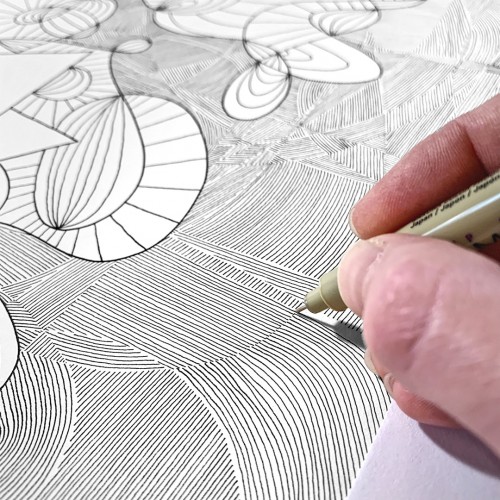
Zoomed in shot of "I'll Sleep When I'm Dead". Created in 2012. Size: 22” x 30” / Micron Pens on Archival Paper. This piece was all drawn freehand - no rulers or measuring tools were used to create this artwork. 2019 kinda looked like this. It had a lot going on. Lots of changes. A close friend of mine predicted 2019 would be "The year of change", and she was right… at least up in my neck of the woods. Anyway, it has been full of good, fun and challenging things – all worth while. Excited to dive into 2020.
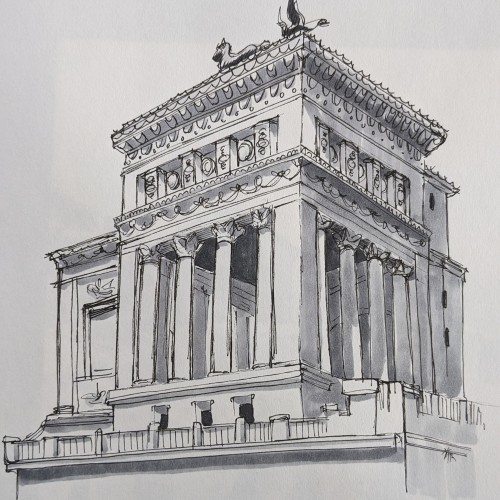
Part of my challenge to myself to sketch directly in ink this month, and to play around with using alcohol markers for value (a new tool in my arsenal).
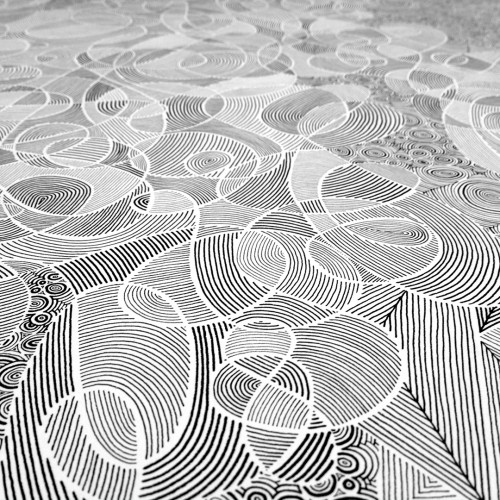
Zoomed in shot of "Pattern Interrupt". 2020. Size: 32" x 40" / Micron pens on archival museum board. This piece was all drawn freehand - no rulers or measuring tools were used to create this artwork.
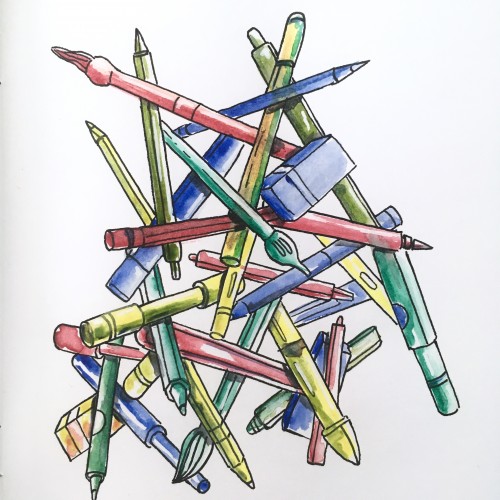
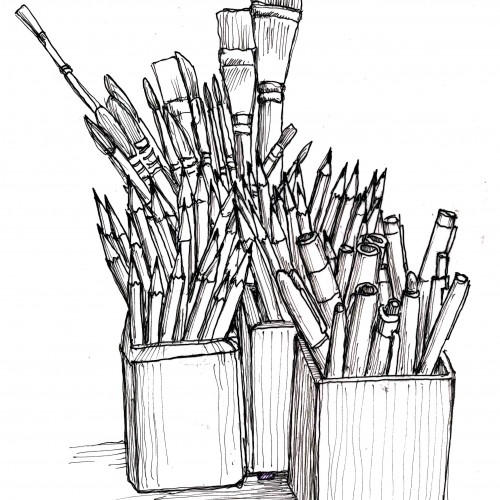
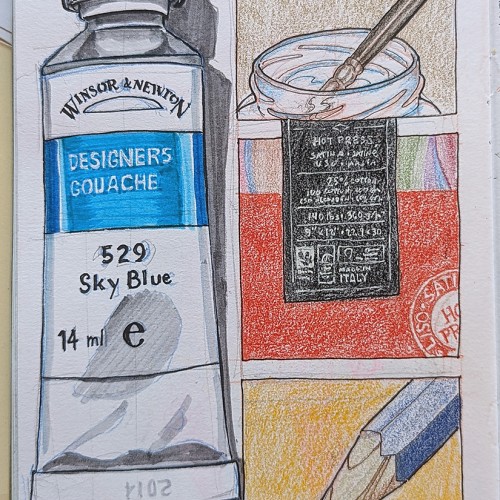
The clutter on my drawing table.. I tend to use pencils the most, with pens a close second and sometimes brushes. This is the neat look---when everything is put away in its box. More often than not, they are a bit more scattered on the surface. Micron pen drawing.
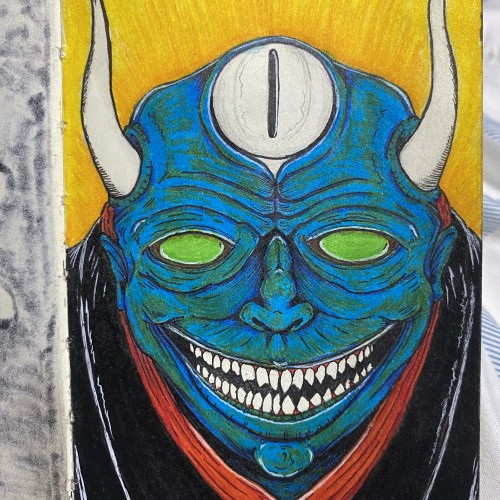
Dreaming of that face again, its bright and blue and shimmering. Grinning wide, and comforting me with its three warm and wild eyes — tool - third eye (#embracingnightmares)