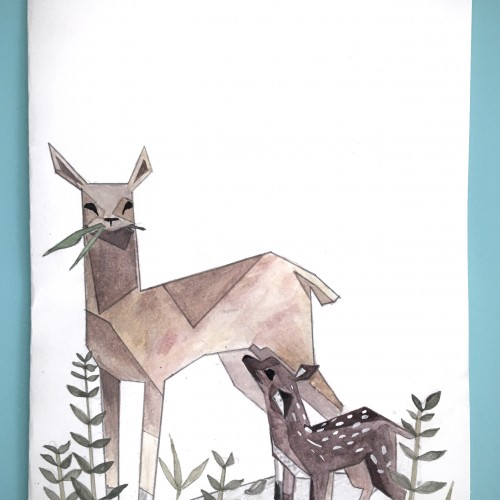
A geometrically stylized Doe and fawn illustration intended for the purposes of a greeting card. Materials used: Water soluble colored pencil, graphite pencil
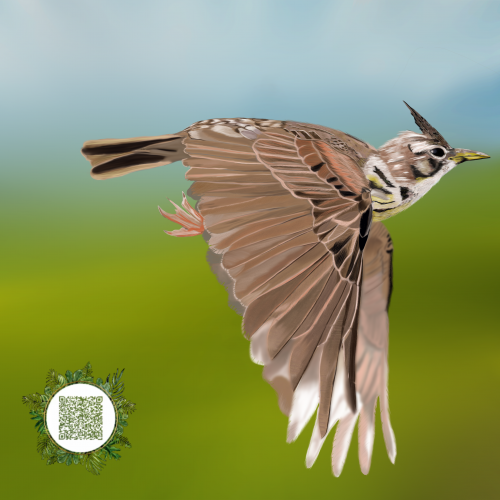
I just finished the Calandra Lark. Here are some facts about this beautiful bird...
Appearance: It's a large lark, about 17.5-20 cm long, with a robust build, a heavy bill, and noticeable pale eyebrows
. Its plumage is mainly greyish-brown streaked above and white below, with large black patches on the breast sides.
Habitat: This species is found in open plains, steppes, pastures, and dry cereal cultivations. It's mainly resident in the west of its range but Russian populations migrate further south in winter.
Diet: Their main food source is seeds, but they also consume insects when nesting.
Behaviour: Calandra Larks are known to be gregarious outside the breeding season, often forming large flocks.
Song: Their song is considered musical and slower than the Skylark's. It has been historically popular as a cagebird.
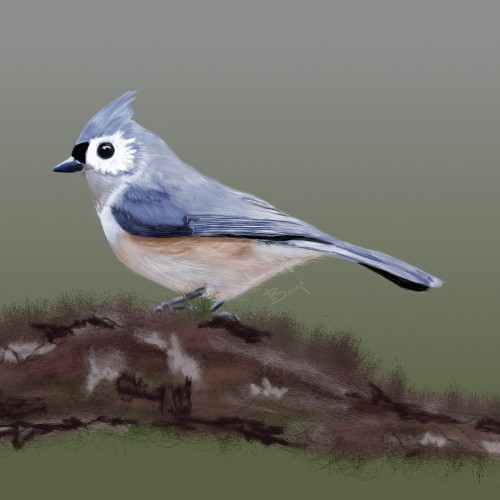
My latest sketch using Corel Painter 2021 on PC with digital pencil. The Tufted Titmouse (Baeolophus bicolor) is a small, grey-plumed songbird, easily recognized for the crest of grey feathers atop its head, its big black eyes, black forehead, and its rust-coloured flanks. They are quite common throughout the eastern part of North America, so if you're in that geographical region and want to catch a glimpse of a Tufted Titmouse, it may not be that difficult to find.
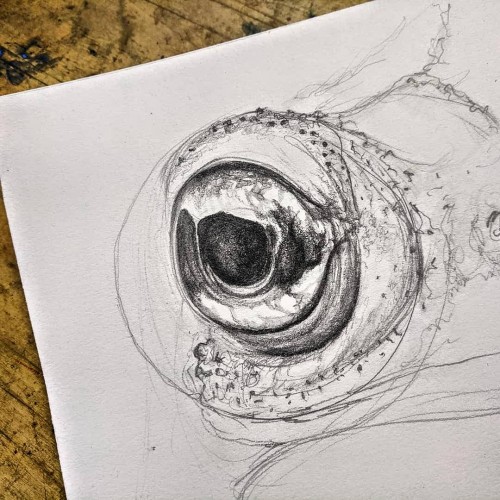
Putting the painting of the newt aside for now.
It was not going as I hoped (see previous post)...I still have ideas but feel like I need to work on some things before progressing. Thinking it was the eyes, so decided to work on some studies. These creatures do have fascinating eyes!
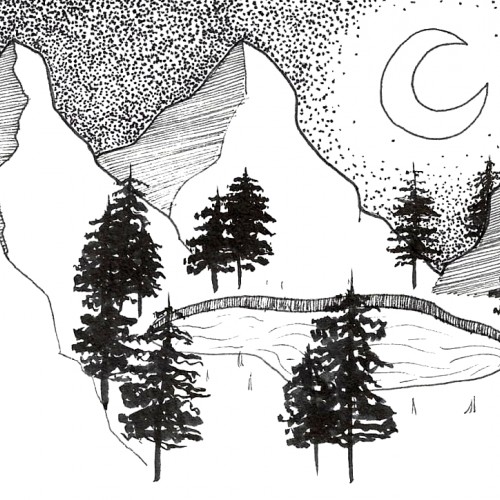
I took an hour or two and drew some owls while watching the 7th Harry Potter movie. The black (it's actually dark purple) ink is in a Platinum Preppy refillable marker (I SWEAR BY THESE -- you just need the ONE and can keep putting ink in it) (https://www.gouletpens.com/collections/other-writing-instruments/products/platinum-preppy-refillable-marker-black?variant=11884751487019) and the green is in an extra-fine Lamy Al-Star (https://www.gouletpens.com/products/lamy-al-star-fountain-pen-bluegreen?variant=11884855885867).
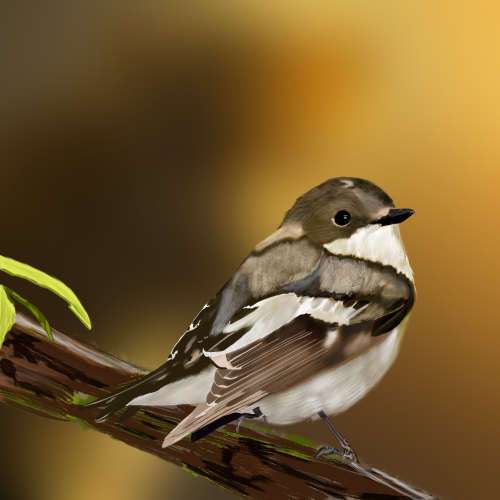
A Female Pied Flycatcher Ficedula Hypoleuca…
The Pied Flycatcher is a summer migrant to the UK.
As the name suggests, it feeds on flies that are caught by making a quick dash from an obvious perch. There are around 40,000 pairs in the UK each summer. The Pied Flycatcher is a small unmistakable bird that often sits with drooped wings. It spends its winter in Africa.
Identification:
Adult
Adult males and females share the same plumage pattern but are different colours.
Male Pied Flycatchers are small and chunky,13cm in length and are black and white all over, they are quite unmistakable.
The upperparts are black and white, tail is black with white base to outer tail feathers, rump is a slightly paler, back is jet black, wings are black with white wing patch (tertials)
The nape and head is black except for small white patch above the black bill. Chin and throat white, extending to form a half collar.
The entire underparts are white, ie; chin, throat, breast, belly and undertail coverts. Legs, bill and eye black.
Females are brown versions of the male although tail is dark, no obvious white patch over the bill and the collar is less distinct. #piedflycatcher #brd #birdart #birdartist #birdsketch #birddrawing #bampidraws #birdlovers
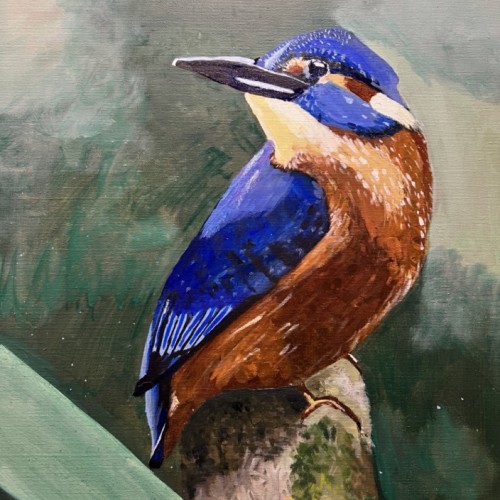
Fisher Friends, an oil painting of a Kingfisher, is inspired by cherished childhood memories spent by the River Tyne. This piece pays homage to the joy of growing up close to nature—the serene beauty of the river, the excitement of spotting wildlife, and the rare delight of seeing a Kingfisher.
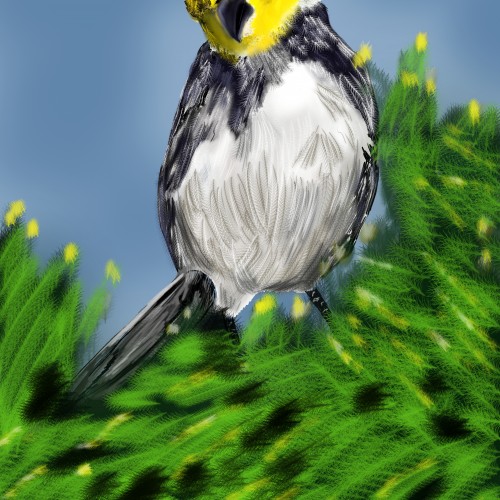
**ENDANGERED SPECIES** This small bird the Golden Cheeked Warbler #goldencheekedwarbler #endangeredspecies also known as the #GoldFinchofTexas lives and breeds in Central Texas particularly somewhere around the Edwards Plateau, Lampasas Cut Plain and Central Mineral Region. The main reason of the threat and decrease of this small bird’s population is mainly because of ranching, agriculture and land development. At present, there is no known record of the number of Golden Cheeked Warblers remaining.
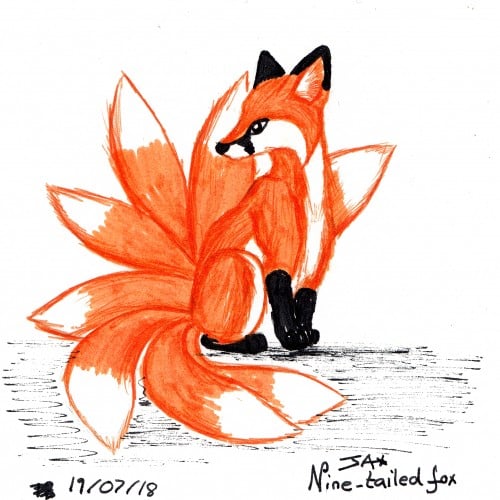
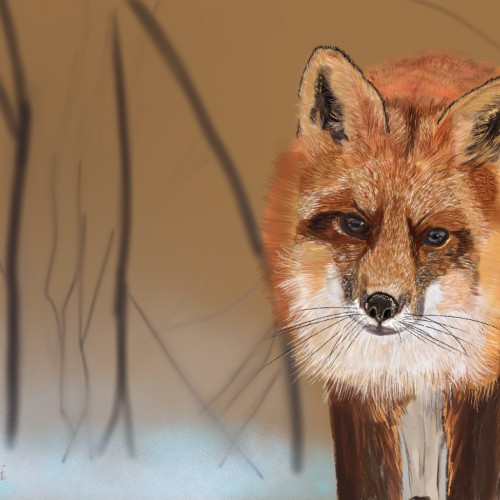
**Are Red Foxes Endangered?**
Currently, red foxes do not have such a status. The IUCN claims that the mammals’ population is stable and does not consider red foxes to be endangered. In fact, they also say that their highest population density is in the UK. Up to 30 red foxes per square 0.5km can exist. However, in the UK the red fox population has fallen by about 41% from 1995 until 2017.
There are several large threats to the red fox population, mainly habitat losses and fragmentations, plus exploitation and hunting. Habitat loss is the most serious of them all. Luckily for the species, they are very adaptable and can live in different conditions, which is also one of the reasons foxes have been regular visitors to urbanised areas and people’s yards. They come to look for food, which their natural habitat offers less of.
In the UK, there are some strict rules about dealing with foxes on your property and you can get a serious fine or even get jailed if you do not follow them.