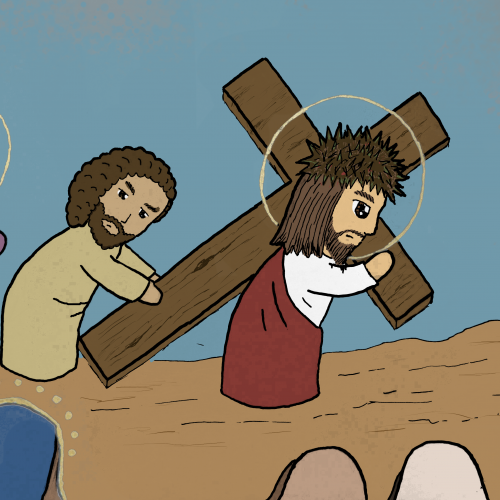
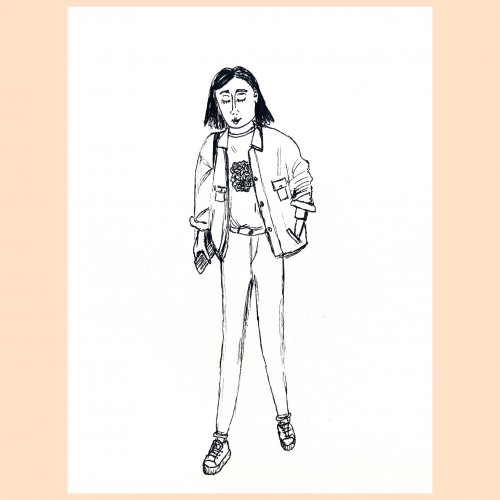
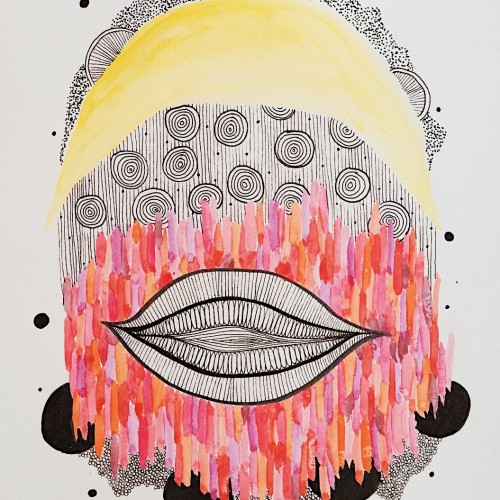
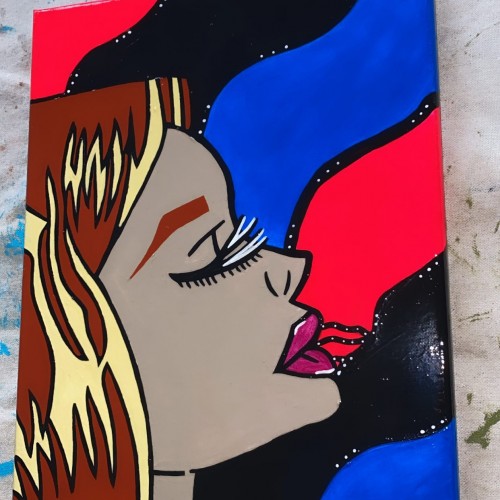
Fourth Sorrowful Mystery: The carrying of the cross. So I basically have 5 stations of the cross combined into one. The carrying of the cross (2nd station), When he sees our Blessed Mother (4), Simon of Cyrene forced to help (5), St. Veronica wipes his face (6), he meets the women (8). In between these are the 3 times he fell, the first station of his condemation and then the striping before the final mystery of the Rosary.
"And they compelled a passer-by, Simon of Cyrene, who was coming in from the country, the father of Alexander and Rufus, to carry his cross. And they brought him to the place called Golgotha (which means the place of a skull)" (Mk 15:21-22).
"By accepting in his human will that the Father's will be done, he accepts his death as redemptive, for 'he himself bore our sins in his body on the tree' (1 Pt 2:24)" (CCC, 612).
Our Father, 10 Hail Marys (contemplating the mystery), Glory be to the Father.
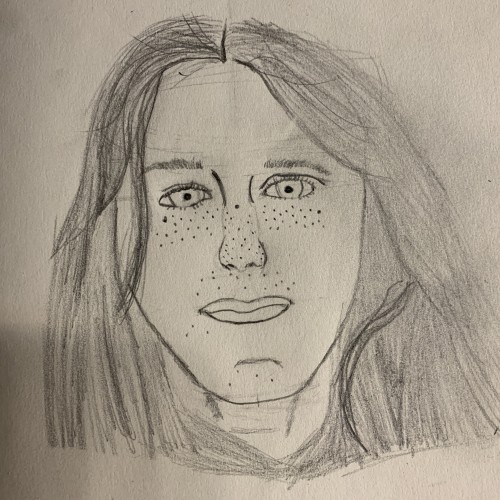
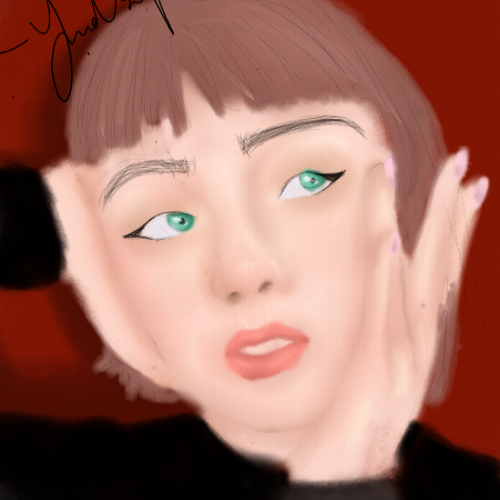
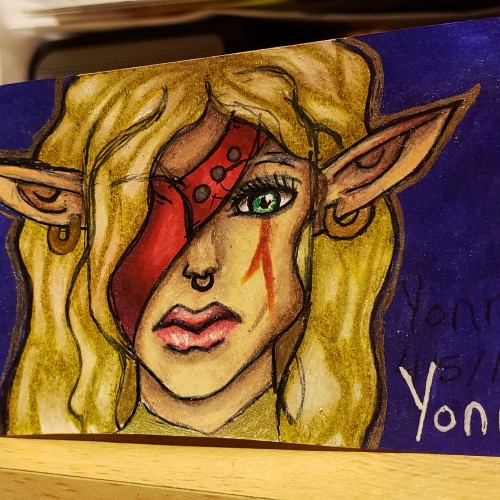
Coloring practice! Looked up a lot of references for the lighting, and despite not looking like the reference I'd say I've leveled up with colored pencils. I almost never use prismas except for hair, but this time prismas colored the entire lass. This here's Yonn Goldheart Afflora, savior of Galantra, basically she's the braveheart of her country. The dirt on her face speaks of 1000 hunts and the loss of her eye shows the extent of her bravery and sacrifice. I'm thinking her chapter should be explained in a short story, yes? For legends get passed along in story over fire and wine!
I highly recommend the book, Gender and Competition: How Men and Women Approach Work and Play Differently, by Kathleen J. DeBoer.
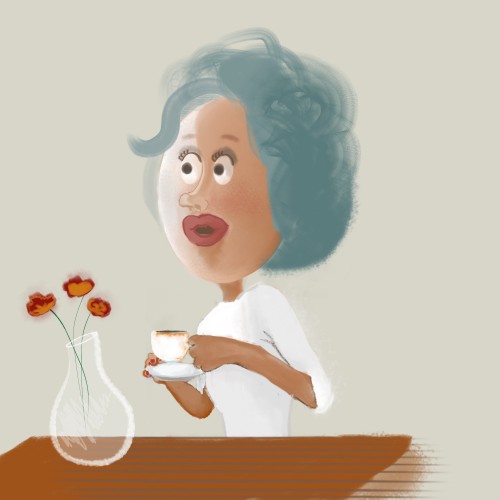
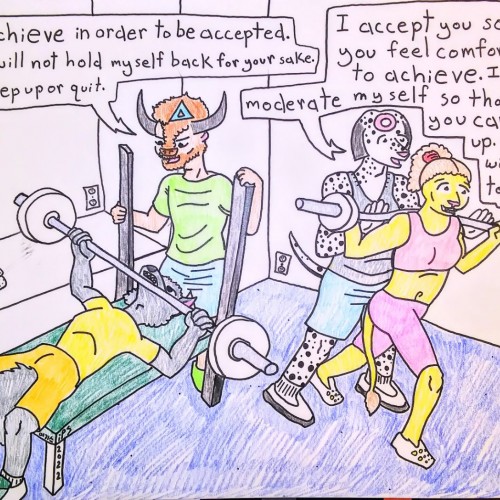
In it, among other things, she elucidates that those with a conceptually masculine perspective (regardless of sex) are drawn to thinking of the world in hierarchies, which I have represented here with a triangle in the mind of the spotter on the left. She elaborates that those with a conceptually feminine perspective (again, regardless of sex) are draw to thinking of the world in webs, which I have represented here with a circle.
Those that think more masculine-ly are more likely to expect beginners in a sport or field to prove themselves in the group. They will often not "hold their punches" (i.e. curb their ability) to make newcomers comfortable. All members of the group are expected to "earn their keep," in a sense. When a member of the group exceeds expectations, they move up in the hierarchy.
Contrary to that, those that think more feminine-ly likely show acceptance and approval to beginners in order to foster an environment in which they will perform. They will often adjust their skills so that newcomers can more readily "keep up." When a member of the group exceeds expectations, they are expected to raise the status of the group as a whole. The playing field is "flattened" in that sense.
I am not advocating for either perspective, but I will share that I have a more conceptually feminine perspective, and that I have previously left groups whose members have a more masculine perspective.
Kathleen's book really helped me personally to understand the motivations of people that I genuinely did not understand prior to reading the book. It put a lot into perspective for me, and I hold fewer grudges these days.
Cheers, fam~