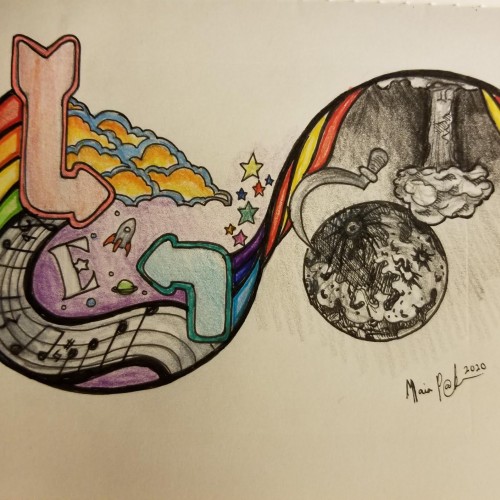
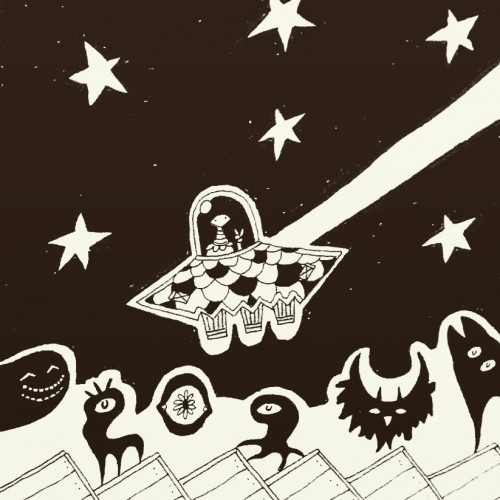
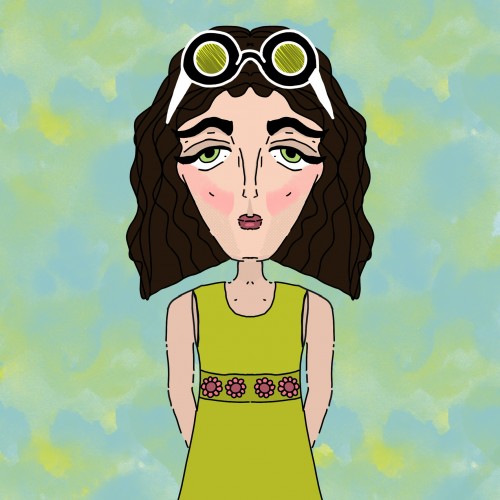
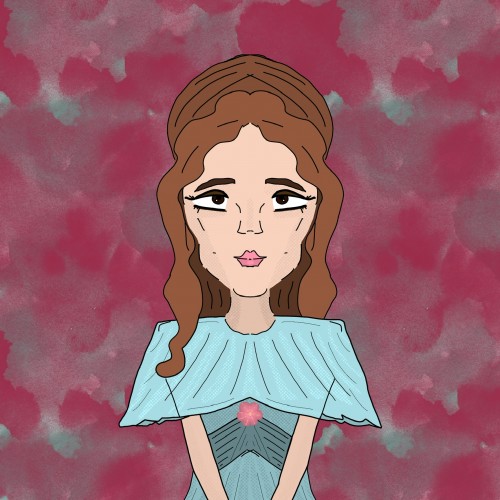
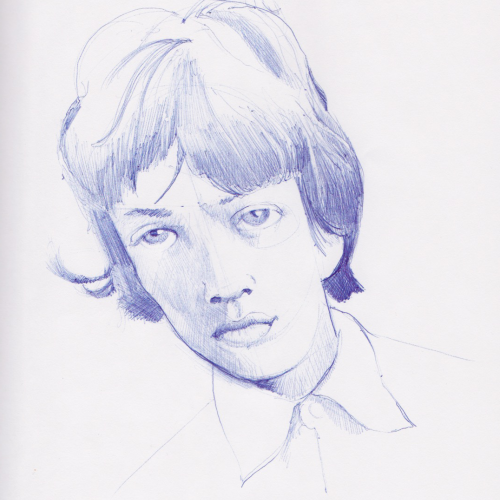
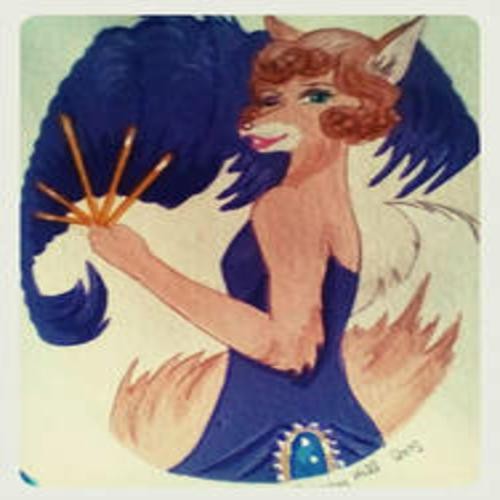
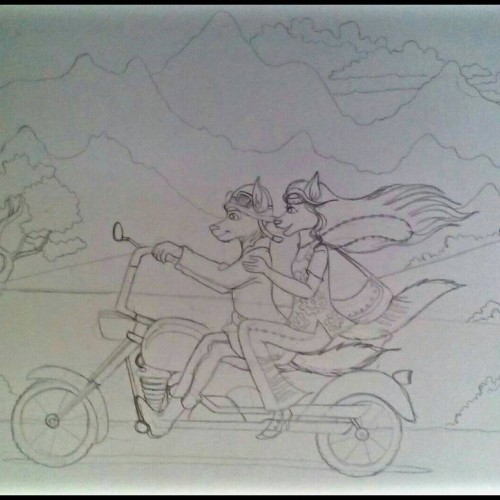
I'll be honest, this prompt stumped me a little bit, I wasn't sure where to go with it. Here's my take on it, reflecting the 50s and 60s vibrant music scene and the Cold War shadowing it.
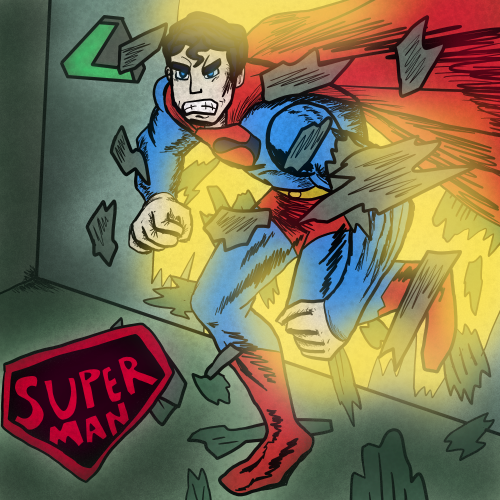
My work is influenced by the American illustrators of the 1960s and 70s, as well as comic art from around the world. Please get in touch to discuss your latest project and how I can help.
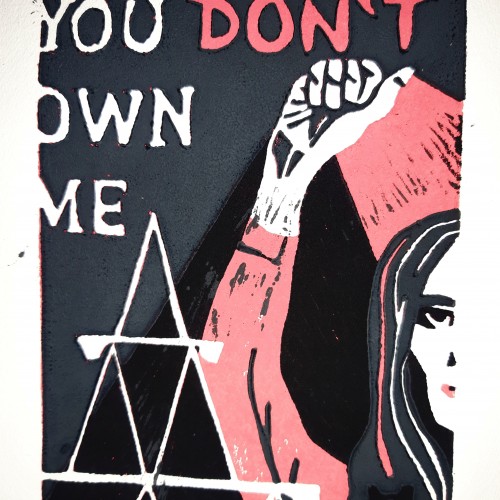
Starring Lesley Gore: You don't own me (1963). Let me tell you a story about women struggling to build careers in "man areas" as if building a house of cards. About a 17-year old girl singing a feminist anthem written by men in the 60s music industry dominated by men. About a young female journalist called Gloria who was supposed to write in "Womens' pages" only. About the same woman shouting out to the pink hats in 2017 as she already did to women in the 70s. Tricolor linoprint using one lino plate. December, 2020.
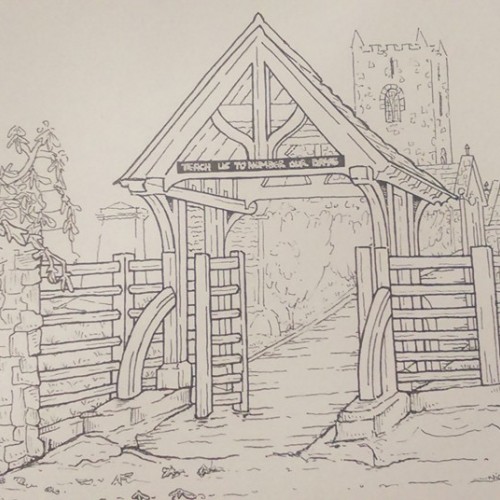
Pen drawing of the gate into St Cedmas Church in Larne, Northern Ireland. I got married in the church in 2004. My wife’s parents were married here too in the 1960s.
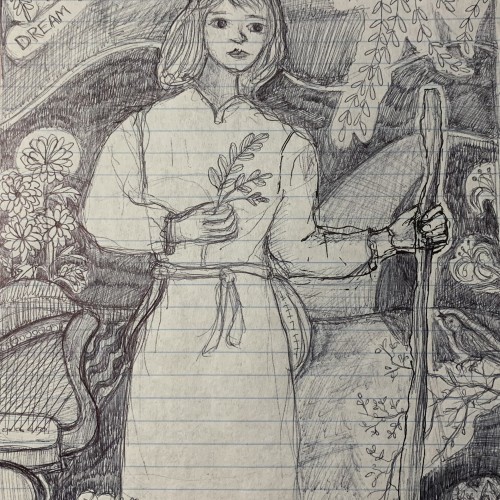
In this drawing, I was striving to capture the spirit of contemplation and reflection, a sort of spiritual sojourn, an ancient practice of pilgrimage, focusing on subjects of transcendent nature, and exploring destinations of spiritual significance. (words taken from scholarlysojourns.com). It is a self-portrait (me as a 14-year-old boy). We had just moved from Mequon to Rhinelander. It was then that I began to romanticize the natural beauty of Mequon. But at the same time, I was falling in love with the beauty of Rhinelander. In this picture, I am walking through the countryside of Mequon. The stringed musical instruments symbolize my love for the progressive classical and folk-tinged acoustic and orchestral music that was coming out of England in the late 60s and early 70s, specifically the quieter pieces of music performed by the Moody Blues, Emerson Lake and Palmer, Yes, and Jethro Tull. A song called Reasons for Waiting by Jethro Tull is a good accompanying piece for this drawing.
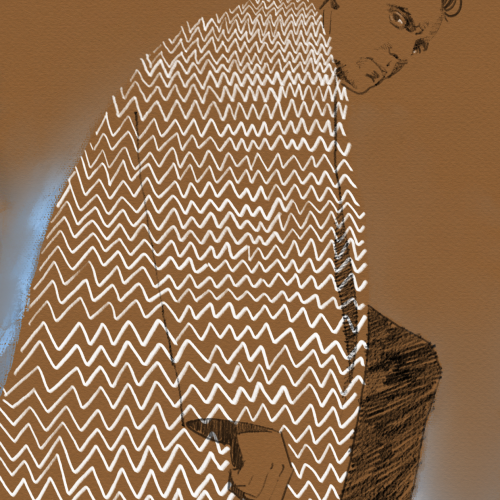
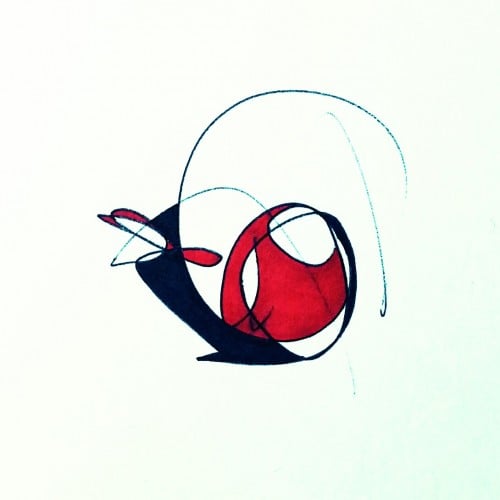
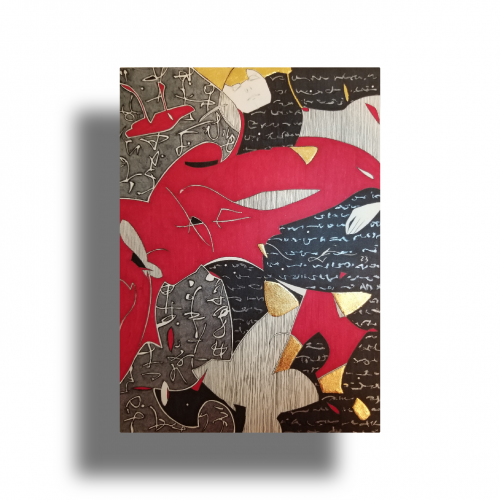
The idea is to show a figure crossing over two ` scripts’ with a bilingual suggestion. By standing in between worlds, we see opposing viewpoints.
Many artists have incorporated typography as symbols in their paintings since the 60s, but no one has attempted to approach lines in this `written’ manner. How different it is are the two writing styles of the East and the West; one with angular lines while the other in a smooth flow! This work juxtaposes the symbolism of cultures – script. At the same time, it questions the need to grasp the full meaning of the script to appreciate the aesthetic flow of calligraphic lines.