Previous
Next
logo logo
logo logo
  • Discover Art
    • Trending
    • Most Recent
    • Most Faves
    • Most Views
    • Curated Galleries
  • Drawing Challenges
    • See All Challenges
  • Drawing Prompts
  • Artists
    • Most Popular
    • Most Recent
    • Available For Hire
    • Artist Spotlight
  • More
    • Marketplace
    • Art Discussions
    • Resources
    • News + Blog
Login
Most Views
Select an option
  • Most Relevant
  • Most Faves
  • Most Views
  • Most Comments
  • Most Recent
SEARCH RESULTS FOR

bird

Carol Wolf Carol Wolf
Enlarge
Watch the birdy

  • 14
  • 6
  • 2
k librandi k librandi
Enlarge
bird skull necklace

I made this one some time ago, but I still like it.

  • 14
  • 4
  • 0
susanne susanne
Enlarge
Winter birds

42x30 cm, acrylics on paper

  • 14
  • 2
  • 1
Anjana Mistry Anjana Mistry
Enlarge
African Crane

Bird study #09 - African Crane. Scratch/scraper board

  • 14
  • 4
  • 2
Lea Cook Lea Cook
Enlarge
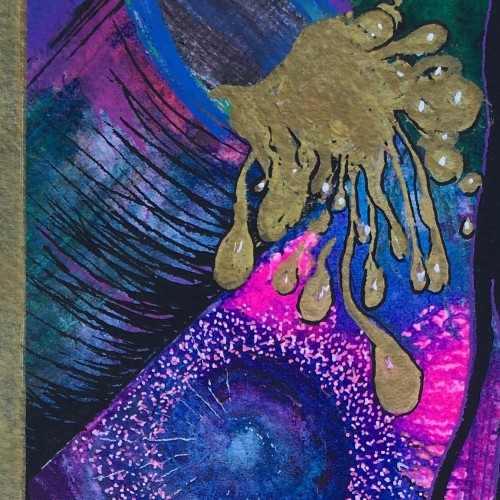
Hummingbird Girl

Watercolor with Mission Gold paints

  • 14
  • 1
  • 2
Drusilla de Veer Drusilla de Veer
Enlarge
Bird in Flight

  • 14
  • 2
  • 0
Dane Mullen Dane Mullen Plus Member
Enlarge
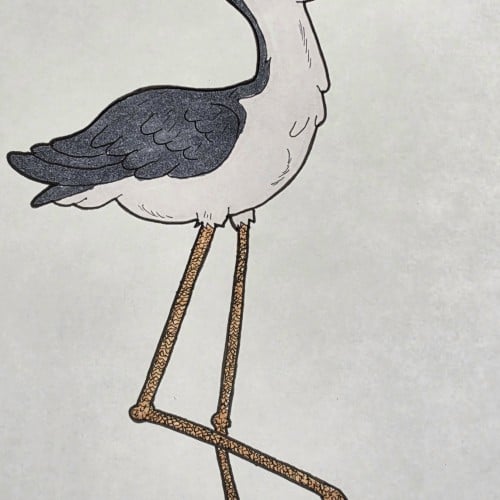
Scribbles: Shore Birds

Lindsey's prompt: Black Necked Stilt

  • 13
  • 2
  • 0
Holly Holly
Enlarge
Sea bird

Idk man the pen gave out halfway so the lines aren’t even but wtvr

  • 13
  • 2
  • 1
Helen Kidwell Helen Kidwell
Enlarge
Nicaragua Map

An illustrated map of Nicaragua featuring Volcán Concepción of Ometepe and some of the country's most iconic wildlife: spider monkey, jaguar, and motmot bird.

  • 13
  • 3
  • 2
Kathrin Werner Kathrin Werner
Enlarge
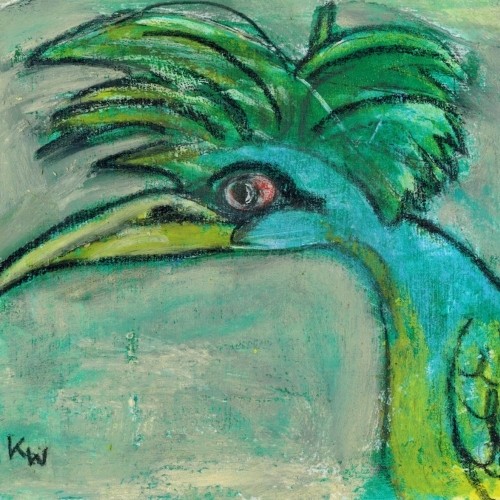
Bird with hut

Fineliner and watercolor, 3.1*4.1''

  • 13
  • 1
  • 2
Diana Bukowski Diana Bukowski
Enlarge
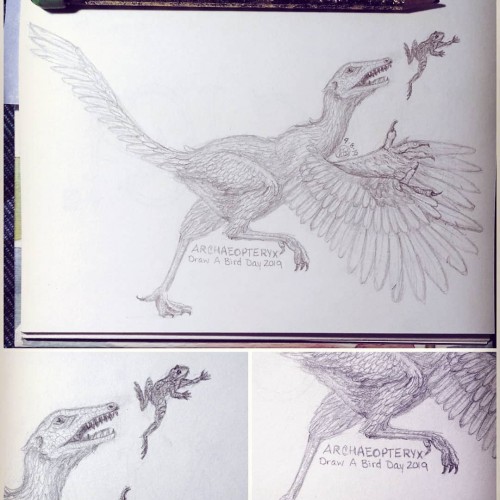
Archaeopteryx and Frog

Today is Draw a Bird Day. I drew an archaeopteryx, the first bird. And Might Could Draw Today's prompt is frog. So I drew a frog too. This picture makes me happy. Don't worry, the frog gets away and the dinosaur finds something else to eat. ^_~

  • 13
  • 3
  • 2
Hiker Hiker
Enlarge
Canada Goose

0.5mm HB pencil, sketch paper 8x12

  • 13
  • 4
  • 1
John Tim John Tim
Enlarge
Bird Man

  • 13
  • 0
  • 0
Dane Mullen Dane Mullen Plus Member
Enlarge
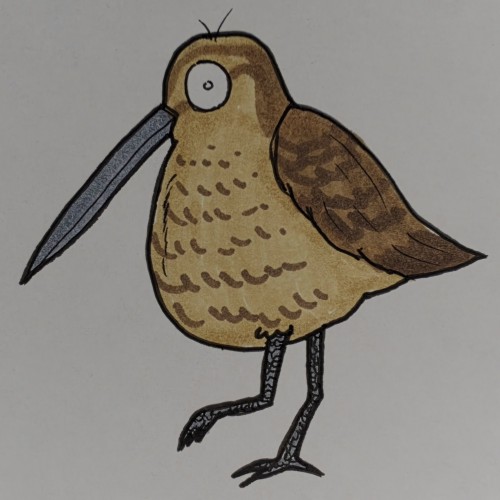
Scribbles: Shore Birds

Lindsey's prompt: Snipe

  • 12
  • 3
  • 0
Matthew Zinn Matthew Zinn
Enlarge
Hummingbirds

A colored pencil commission I've been working on . Finally finished today ...

  • 12
  • 4
  • 1
Guilhem Guilhem
Enlarge
Another watercolor doodle

Another watercolor doodle, orange and blue birds

  • 12
  • 2
  • 1
The Ginger Cat The Ginger Cat
Enlarge
Cat and Red Robins

  • 12
  • 6
  • 2
Joanne Vernon Joanne Vernon
Enlarge
Bird on a swing #2

Added a bit of colour to existing collage.

  • 12
  • 3
  • 0
crais robert crais robert
Enlarge
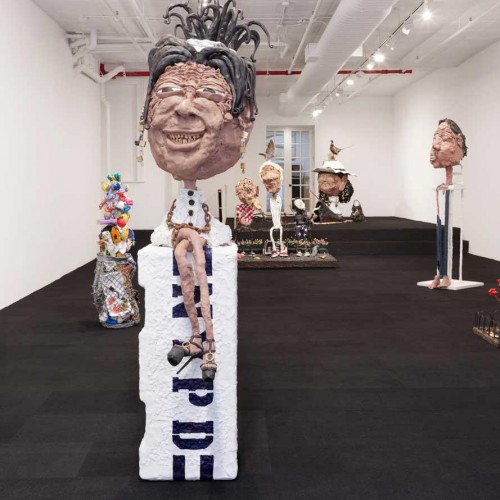
The House of Ryman: A Family of Artists

Take the Rymans, for instance. There is Robert Ryman (1930 – 2019), the patriarch whose paintings are indisputable icons of the modernist canon. Then there are his wives and children. Ethan Ryman (b. 1964) is the oldest of Robert’s three artist children. Though his mother was not an artist, Lucy Lippard (b. 1937) was still a scrappy and eloquent art critic, a feminist, a social activist, and an environmentalist. Ethan’s meticulously considered and crafted artworks might be characterized as somewhere between photography and sculpture, the abstract and the (f)actual. Though Lippard and Ryman divorced just six years after their 1961 marriage, their son is arguably the closest to his father’s methodologies if not his medium, and was certainly the last to become a visual artist. Robert Ryman went on to marry fellow artist Merrill Wagner (b. 1935) in 1969 and they had two sons. Though Wagner is more quietly acknowledged than Ryman, her boundless practice includes sculpture, painting, drawing, installation, and more. With an emphasis on materiality, her sites are indoors and out, her styles alternating. Will Ryman (b. 1969) is the elder son of Robert and Merrill. He started out as an actor and playwright though he too eventually assumed a visual art practice to become a sculptor. He is best known for his large-scale public artworks and theatrical installations that focus on the figurative and psychological, at times absurdist, narratives. Cordy Ryman (b. 1971) is the youngest, and the only one of the three who knew that he was going to be a visual artist early on. His work is abstract, the sophistication understated, and his output is prolific. With his mother’s DIY flair, his homely materials seem sourced from the overflow of construction projects, lumberyards, and Home Depot. Ethan Ryman said that, when he was young, he didn’t want to be a visual artist. Instead, he pursued music and acting, producing records for Wu-Tang Clan, among others, getting “my ears blown out.” But he was always surrounded by artists—Sol LeWitt, Carl Andre, Jan Dibbetts, William Anastasi, and countless others at his mother’s place on Prince Street in SoHo and at the Rymans’s 1847 Greek Revival brownstone on 16th Street in Manhattan, where everyone was often seated around the family dinner table. He would spend part of most weekends in the highly stimulating chaos that reigned there—birds, dogs, plants, toys, art, people, everywhere. “While nowhere near as overwhelming, I was also constantly exposed to artists, writers and other creative folks at my Mom’s place.” “While nowhere near as overwhelming, I was also constantly exposed to artists, writers and other creative folks at my Mom’s place.” Ethan Ryman Lippard was “a powerhouse.” She took Ethan on her lecture tours, readings, conferences, galleries, studios, wherever she had to go. And while that almost always breeds rebellion, at some point, he began noticing all the art around them—both what it looked like and how it was made. He began to take photographs of buildings and realized that “abstract color fields were all around us.” He also began to notice his father and Wagner’s work more carefully—how sensitively it was executed and how reactive it was to its surroundings. “Once you’re interested, you notice. When I asked my dad questions, I would most likely get a one-word response. I had to go to his lectures for answers where he broke down modern art for me. After listening to him, it seemed to me we should all be painting, otherwise what were we doing with our lives?” Will Ryman, on the other hand, said that all his work has a narrative component. His background is in theatre and his interests have always been film and plays, his narratives about New York City and American culture and history. “It’s a city I love,” he said. “I try to observe culture in a bare-bones way and I’ve always been interested in telling stories—we’re the only species that tells stories to each other. It comes from an intuitive, cathartic place in me. I want to stay away from preconceived notions, although that’s not completely possible. I have no plan except to do something honest, with a little bit of a political bent and humor but I’m not an activist. I’m interested in exploring a culture and its flaws as an interaction between human beings.” His interests and his work are very different from his last name. There is no connection to minimalism. He didn’t go to art school, drawn instead to theatre workshops and theatre troupes. “I didn’t become involved with the visual arts until my mid-thirties. It’s easy to say what I make is a reaction, but I dismiss that. And I also wouldn’t say it’s rebellious after twenty years.” Of his family, he said, “we’re a normal family, a close family, with all the dynamics and complications that go along with that. And while everyone who came to 16th Street were artists, they were also just family friends. I have no other measure for how a family interacts. It was just the way it was.” Cordy Ryman was the only one of the three who went to art school, earning a BFA from the School of Visual Arts, but it was reportedly awkward for him, since all his teachers knew his parents. “When I started making abstract paintings, it was kind of push and pull but it became more interesting to me than my earlier figurative or narrative work. That’s when I started to know where I came from. I realized that I had a visual memory, and the language was there, a language I didn’t know I knew. We all had different ways of working; our processes are very different and it’s hard to compare us. Ethan and I use a similar inherited language but he thinks about what he does more. I work very fast, the ideas come from the process itself. I work in two or three modes simultaneously and bounce around.” At home, they were around Wagner’s work since her studio was there. “Will and I were always in her studio, helping her, going to her installation sites with her, adjusting her boulders or whatever the project was she was working on. That was special and made a deep impression, but I didn’t realize it then.” All five Rymans have in common an acute consciousness of space and of place as an integral component of their work. For the brothers, part of that consciousness might stem from their parents, but also from their attachment to their family home, which was a crucible of sorts for them, where everyone was an artist. To Cordy, the house was a “living, breathing thing, and the art in it felt alive, growing, and occupying any space that was available. It was the structure of our world. When I’m making work, it doesn’t need to be the most beautiful thing ever, but it needs to have its own life, its own space, like the art we grew up with.” And the next generation of Rymans, also all sons—what about them? Will said his son is still too young to know. Cordy thought the same about his two younger children; his oldest is in the art world, but not as an artist—so far. Ethan perhaps summed it up best: my two sons are artists; they just don’t know it yet.

  • 12
  • 1
  • 0
Pankaj Pankaj
Enlarge
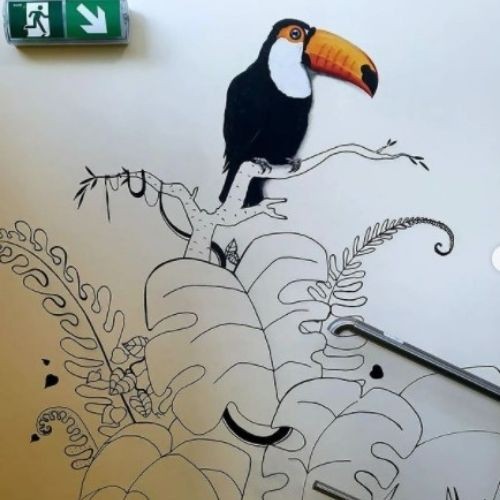
The implementation of the project for the Akademos kindergarten in Poznań has ended.

The implementation of the project for the Akademos kindergarten in Poznań has ended. The idea behind the project was to create a jungle staircase in which children will be able to cover something new every day while walking down the corridor. Many animals, reptiles and insects are hidden in the thicket of plants. So that the number of details and small elements does not overwhelm the space, we used a black and white combination with small colorful accents, which are also to stimulate the imagination of children. Realistically painted birds are an additional decorative element, which can be a background for photo sessions. Many thanks to @czapski.gallery for providing colorful paints, as well as to the kindergarten team who supported the activities.

  • 12
  • 5
  • 1
Jaroslaw Jaroslaw
Enlarge
little bird

For a good start of 2021

  • 12
  • 10
  • 0
Sarah Sarah
Enlarge
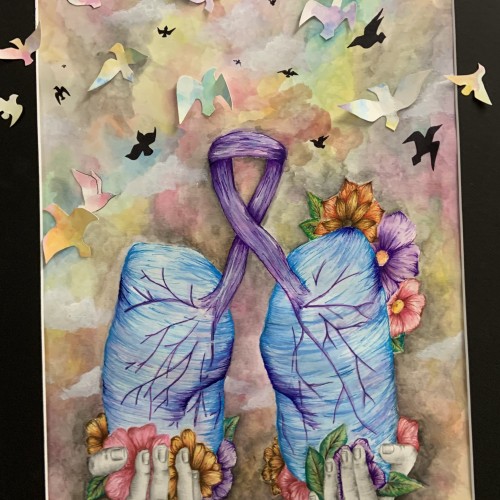
Breathtaking

A pair of lungs being given in hands that represents my donors hands. The lungs are surrounded in flowers to symbolize the beautiful gift of organ donations. The lungs are also being represented with birds flying to symbolize life. This painting goes from dark at the bottom to lighter colors at the top to symbolize the darkness of someone’s death being transferred to saving of someone else’s life from their selfless act. I’m a lung recipient, and this is the story of my selfless donor!

  • 12
  • 5
  • 1
Pratima Sanpal Pratima Sanpal
Enlarge
BIRD

Watercolor Bird Painting :)

  • 12
  • 1
  • 0
Kristin Middleton Kristin Middleton
Enlarge
Ode to a cracked Sparrows egg

Ode to an egg that cracked in a storm the other day: A little life for you imagined in that funny way us people do.
  • 12
  • 3
  • 0
Bobby-Joe Cole Bobby-Joe Cole
Enlarge
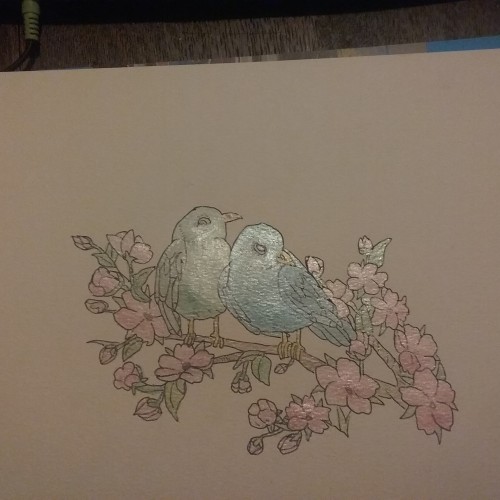
Glitter watercolour painting of blue birds

i use glitter watercolour paints to do my blue birds,

  • 12
  • 5
  • 0
Tides SeaWielder Tides SeaWielder
Enlarge
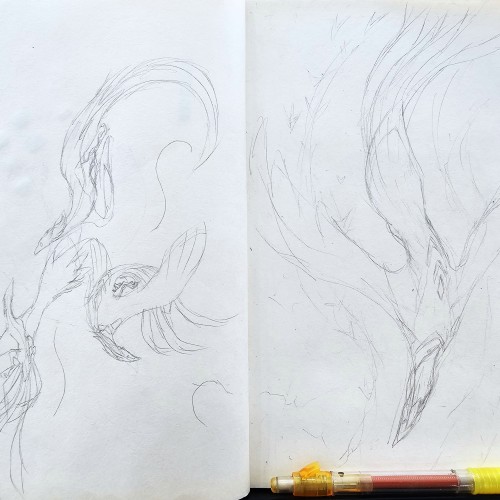
Blaze

A phoenix who is pretty competitive and doesn't care about personal injury, Blaze is my fourth character upload.

  • 12
  • 5
  • 0
Jana Cechova Jana Cechova
Enlarge
A prehistoric bird

Gouache - an excursion to the prehistory

  • 12
  • 5
  • 0
susanne susanne
Enlarge
winter birds

birds skating in winter, acrylics on paper, 420 x 300 mm,

  • 12
  • 2
  • 0
Sharon Birch Sharon Birch
Enlarge
Street Birds

Street Birds, digital

  • 12
  • 2
  • 0
Juice_Lime Juice_Lime
Enlarge
Scribbles: Important Curvy Lines

After yet another afternoon of mind-drifting, I found something I wasn't expecting. One thing over the years, memories are bound to forgotten if I don't recognise its importance in practice. In this case, it was a basic yet very crucial element for my dynamic pieces: curly lines. Continuing from the "spirit" of that character drawing yesterday, I started early today with trying to draw the character in its updated form. Suddenly, I ran into a roadblock: I was unable to bring it to life. Running through nearly a dozen sketches, something felt missing. A bit frustrated, I just lounged around the place and listened to some music played on my phone. Turning it off after a while to prevent the media distraction trap, I just started to let my thoughts wander and looked through different things, asking myself some things... My work felt a little blocky lately. It almost felt like I was focusing too much using certain details as a starting point to improvise from. This results in me struggling to build outwards into a full picture. Often, I find myself losing track of the original concept, which frustrates me. One thought then got into my head. It was something I enjoyed in the past years, which was the concept of "Flow". Suddenly, I felt signs of an answer. The original drawing "White Bird" came into my mind, reminding me of how I started drawing that important piece. I still have a strong impression on how I started it. It started as flowy lines to carve out an outline, vibe, or energy, or whatever my mind finds to describe. Later, I would slowly narrow out the details and sharpen its precision, almost like carving a figure out of nothing. And there it was. Sketching the core or skeleton of an idea, adding the main shape, before narrowing down the to details and precision. A very basic skill in drawing that I have forgotten, as dumb as a nitwit. If I had the core idea there from the start, I wouldn't have lost it right? Putting it into practice, I saw its immediate effects. Curly lines were the only thing I used, and suddenly the White Bird was flying and "alive" again as it should be. Man, I have recorded these for years, within my personal achieve of sketches. Yet, I somehow forgot them like an idiot? I am just speechless. It almost feels like I am back to square one, although there was a takeaway. I have learned the lesson of forgetting this basic practice, which led me astray for all these months. Seriously, I really have to remember how important it is. Putting that aside, I have noticed that I have these 2 styles. One was that "start from a detail and spread out", and the other was the "start from the big picture and narrow down". I had instances of success in both, which gave me a slight dilemma on which to choose. It is obvious that I can't limit myself to either, that would be falling for the stupidity of Duality. My own solution, would be to use either when the situation calls. I can't forget either, I just need to know when is the correct time to use it... ==

  • 11
  • 1
  • 0
« Previous
Next »

Doodle Addicts

Navigate
  • Discover Art
  • Drawing Challenges
  • Weekly Drawing Prompts
  • Artist Directory
  • Art Marketplace
  • Resources
Other
  • News + Blog
  • About Us
  • Contact Us
Newsletter
© 2026 Doodle Addicts™ — All Rights Reserved Terms & Conditions / Privacy Policy / Community Guidelines
Add Doodle Addicts to your home screen to not miss an update!
Add to Home Screen