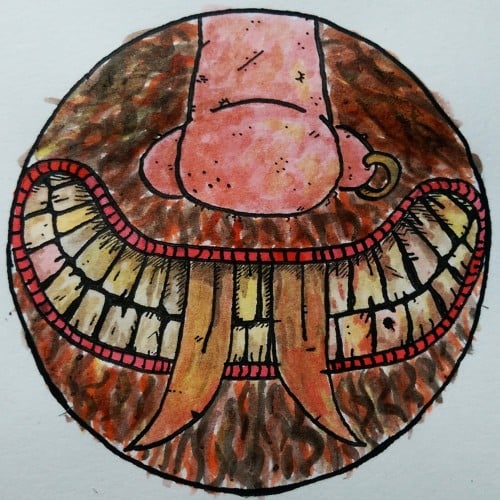
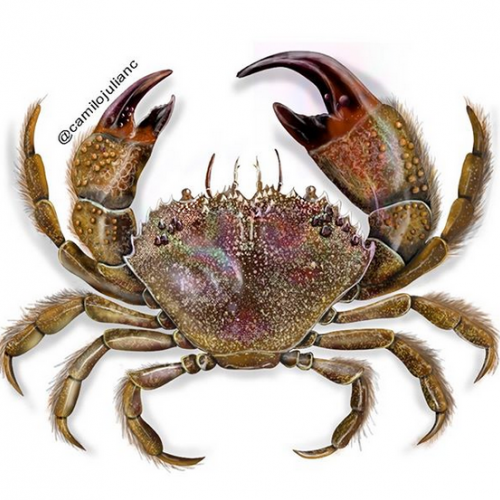
Yellow Crab (Eriphia verrucosa) is typically brownish green or brownish red in colour with yellow spots. It has very strong, asymmetric chelipeds, the larger ones typycally bering rounded tuberbles in front of the upper articulation of the carpus. More like this on: https://www.instagram.com/camilojulianc/
I am delighted to share that I Am a Dragon! has been named to the Pennsylvania Center for the Book's 2024 Baker's Dozen: Thirteen Best Books for Family Literacy!
Here is the list
( I am in such a good company!):
- “10 Dogs” by Emily Gravett
- “ABC and You and Me” by Corinna Luyken
- “Bear with Me” illustrated by Kerascoët, Sebastien Cosset and Marie Pommepuy,
- “The Concrete Garden” by Bob Graham
- “How to Count to ONE (And Don't Even THINK About Bigger Numbers!)” by Caspar Salmon and illustrated by Matt Hunt
- “I Am a Dragon! A Squabble and a Quibble” by Sabina Hahn, published by HarperCollins.
- “If I Was a Horse” by Sophie Blackall
- “The Kitten Story” by Emily Jenkins and illustrated by Brittany Cicchese
- “Mr. S” by Monica Arnaldo
- “Night in the City” by Julie Downing
- “Ruffles and the Cozy, Cozy Bed” by David Melling
- “Simon and the Better Bone” by Corey R. Tabor
- “You Go First” by Ariel Bernstein and illustrated by Marc Rosenthal
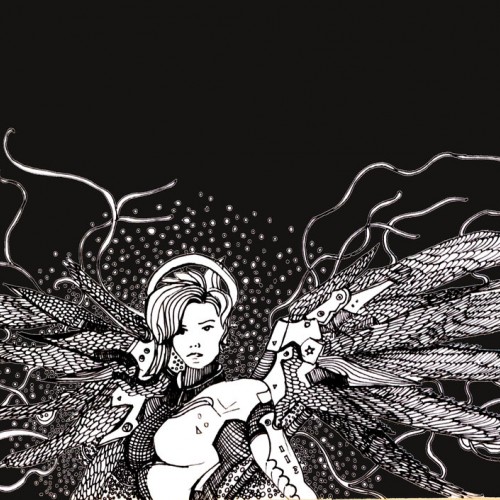
I decided to illustrated a picture of @justinhofman published in Sept 19 of 2017 in @natgeo about the pollution and how animals are suffering for our ways of using plastic. This seahorse was captured in the waters of Sumbawa Besar, Indonesia. “The art of pollution”.
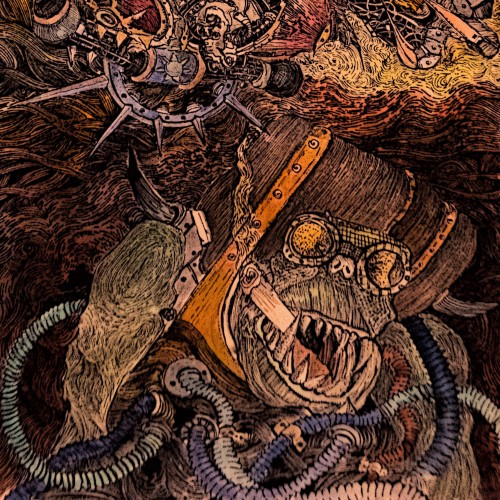
The Orks, also called Greenskins, are a savage, warlike, green-skinned race of humanoids who are spread all across the Milky Way Galaxy. They share many features with Warhammer Fantasy Orcs (and were initially called "Space Orcs" to distinguish them). They are seen by their enemies (pretty much everyone else in the universe) as savage, warlike, and crude, but they are the most successful species in the whole galaxy, outnumbering possibly every other intelligent race, even Mankind (with the very plausible exception of the Tyranids).
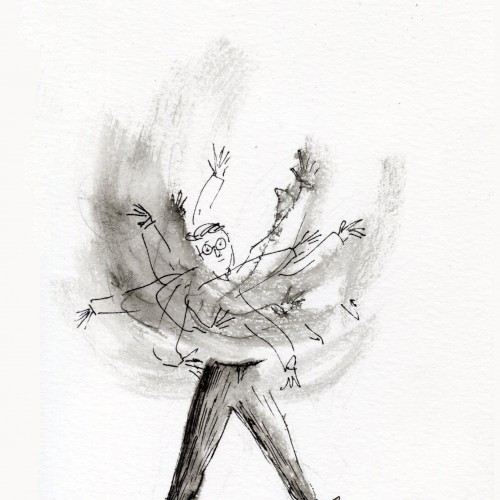
Dmitry Shostakovich (1906–1975)
Shostakovich’s contemporaries do not recall seeing him working, at least not in the traditional sense. The Russian composer was able to conceptualize a new work entirely in his head, and then write it down with extreme rapidity—if uninterrupted, he could average twenty or thirty pages of score a day, making virtually no corrections as he went.
But this feat was apparently preceded by hours or days of mental composition—during which he “appeared to be a man of great inner tensions,” the musicologist Alexei Ikonnikov observed, “with his continually moving, ‘speaking’ hands, which were never at rest.”
Shostakovich himself was afraid that perhaps he worked too fast. “I worry about the lightning speed with which I compose,” he confessed in a letter to a friend. Undoubtedly this is bad. One shouldn’t compose as quickly as I do. Composition is a serious process, and in the words of a ballerina friend of mine, “You can’t keep going at a gallop.” I compose with diabolical speed and can’t stop myself.… It is exhausting, rather unpleasant, and at the end of the day you lack any confidence in the result. But I can’t rid myself of the bad habit.
- From Daily Rituals: How Artists Work by Mason Currey
#dailyrituals #inktober #shostakovich @masoncurrey
This one is called "Geometric Flower and Vines." I did this very early on in my junior year Astronomy class. I have it available as posters, prints, clothing, and more on Redbubble, Society6, Fine Art America, Zazzle, and Threadless. If you're interested, check out those sites via this link: https://linktr.ee/okhismakingart
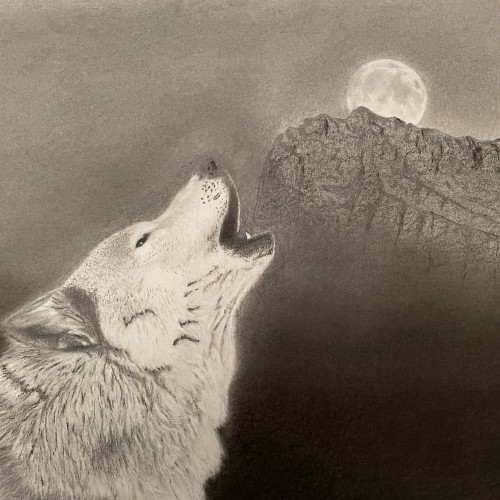
Had some doubts on this one. Originally planned for more in the back and foreground. Felt it might take away from the wolf as the focal point. Graphite pencils. Black was charcoal pencils.
I do indeed have some news! I posted a bit ago that I had submitted a sketchbook to the Brooklyn Art Library and it's finally published. If you want to check it out, you can find it here or you can click on "my website" in my profile:
https://www.sketchbookproject.com/library/S326078
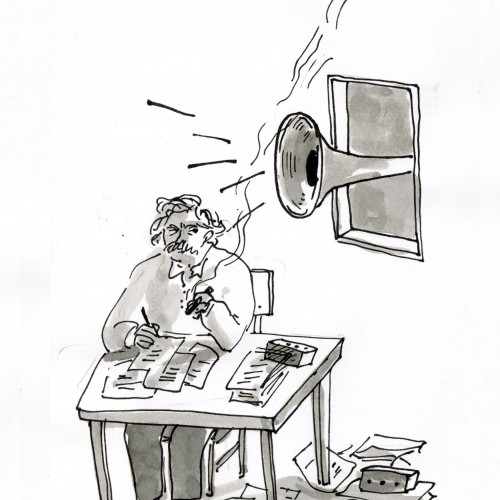
Mark Twain (1835–1910)
In the 1870s and ’80s, the Twain family spent their summers at Quarry Farm in New York, about two hundred miles west of their Hartford, Connecticut, home. Twain found those summers the most productive time for his literary work, especially after 1874, when the farm owners built him a small private study on the property. That same summer, Twain began writing The Adventures of Tom Sawyer. His routine was simple: he would go to the study in the morning after a hearty breakfast and stay there until dinner at about 5:00. Since he skipped lunch, and since his family would not venture near the study—they would blow a horn if they needed him—he could usually work uninterruptedly for several hours. “On hot days,” he wrote to a friend, “I spread the study wide open, anchor my papers down with brickbats, and write in the midst of the hurricane, clothed in the same thin linen we make shirts of.”
Whether or not he was working, he smoked cigars constantly. One of his closest friends, the writer William Dean Howells, recalled that after a visit from Twain, “the whole house had to be aired, for he smoked all over it from breakfast to bedtime.”
- From Daily Rituals: How Artists Work by Mason Currey
“Everyone is a moon, and has a dark side which he never shows to anybody.”
― Mark Twain
#dailyrituals #inktober #MarkTwain @masoncurrey
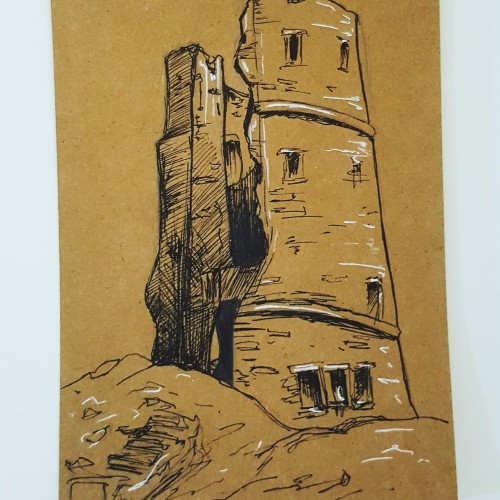
I'm having trouble with the web site lately.. I try to upload things and it just stuck in the uploading page instead of posting the pic. Anyway this is one of ma favorite drawing from inktober. Let me know witch one of my inktober drawings is your favotire in the comments!