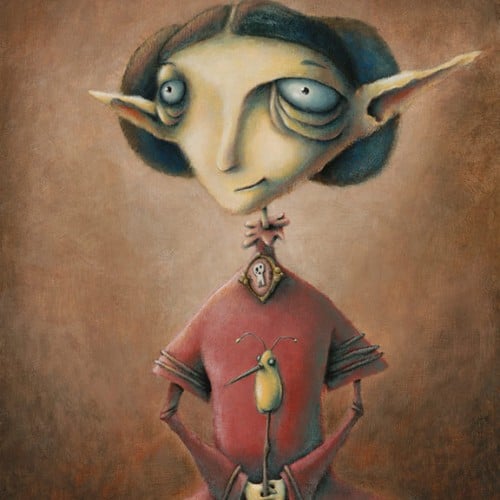
Mark Twain (1835–1910)
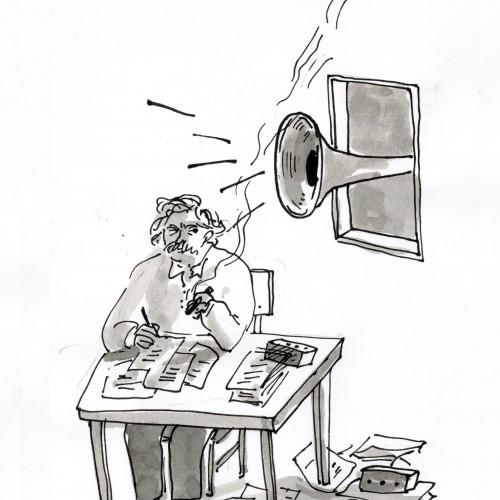
In the 1870s and ’80s, the Twain family spent their summers at Quarry Farm in New York, about two hundred miles west of their Hartford, Connecticut, home. Twain found those summers the most productive time for his literary work, especially after 1874, when the farm owners built him a small private study on the property. That same summer, Twain began writing The Adventures of Tom Sawyer. His routine was simple: he would go to the study in the morning after a hearty breakfast and stay there until dinner at about 5:00. Since he skipped lunch, and since his family would not venture near the study—they would blow a horn if they needed him—he could usually work uninterruptedly for several hours. “On hot days,” he wrote to a friend, “I spread the study wide open, anchor my papers down with brickbats, and write in the midst of the hurricane, clothed in the same thin linen we make shirts of.”
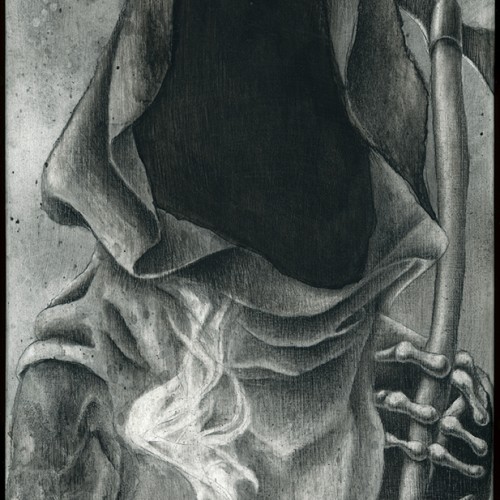
Whether or not he was working, he smoked cigars constantly. One of his closest friends, the writer William Dean Howells, recalled that after a visit from Twain, “the whole house had to be aired, for he smoked all over it from breakfast to bedtime.”
- From Daily Rituals: How Artists Work by Mason Currey
“Everyone is a moon, and has a dark side which he never shows to anybody.”
― Mark Twain
#dailyrituals #inktober #MarkTwain @masoncurrey
From the new hit story , VAMPIRE LIE ! Check it out on Youtube NOW !!!
https://www.youtube.com/watch?v=IzyJOln6GqE&list=PLg2kpnoxhhsvpihWDKsPLbbAB2iVwhfL1&index=4
The Black-and-yellow Broadbill (Eurylaimus ochromalus) is a species of bird in the Eurylaimidae family. It is found in Brunei, Indonesia, Malaysia, Myanmar, Singapore, and Thailand. Reference: @hokduan. More like this on: https://www.instagram.com/camilojulianc/
Wolfgang Amadeus Mozart
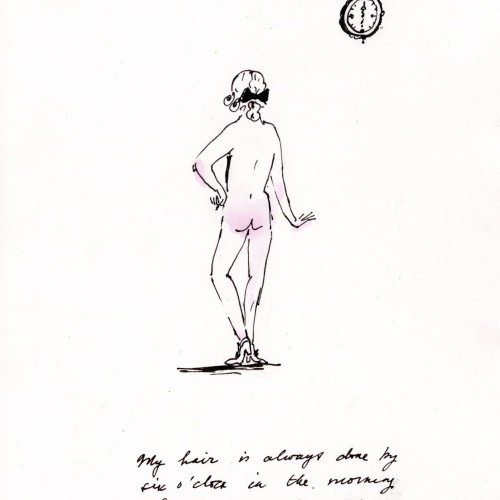
In a 1782 letter to his sister, he gave a detailed account of these hectic days in Vienna:
"My hair is always done by six o’clock in the morning and by seven I am fully dressed. I then compose until nine. From nine to one I give lessons. Then I lunch..."
From "Daily Rituals: How Artists Work", edited and with text by Mason Currey.
First OFFICIAL Commission! 8x10, Watercolor and Pen. Hey everyone! This time, I'm actually back. First off, let me say I was not planning to fall off the face of the Earth again. At the time I last posted, I had a little less than a month of school left and I had hoped I could wrap up all my final projects early and be done. I was wrong. My teachers assigned more and I had work due up to the day before school ended, but I survived! Since my last post, I do have some updates. 1. I did indeed graduate high school! I was very lucky my school not only had a ceremony, but it was at Soldier Field. (I'm very happy to say I graduated Summa Cumme Laude and with the honors of completing the Alpha STEM and the Arts program.) 2. I also got an Instagram! I'll be using it not only to post final pieces but also as a way to post progress. {@mapalomar.arts} With regards to this painting, it is my first official commission, past commissions were from people I knew (family or friends) but this one isn't. I can say I'm pretty proud of the end result, especially as a person who doesn't consider themself a watercolor artist, it's not too shabby. :) Anyway, I hope this piece will have a safe journey all the way to its new home in Massachusetts.
Igor Stravinsky (1882–1971)
“I get up at about eight, do physical exercises, then work without a break from nine till one,” Stravinsky told an interviewer in 1924. Generally, three hours of composition were the most he could manage in a day, although he would do less demanding tasks—writing letters, copying scores, practicing the piano—in the afternoon.
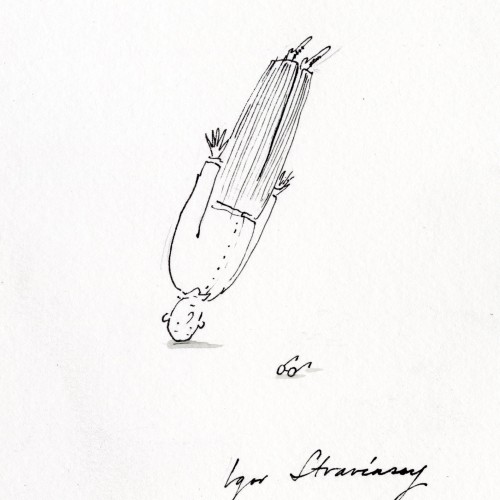
Unless he was touring, Stravinsky worked on his compositions daily, with or without inspiration, he said. He required solitude for the task, and always closed the windows of his studio before he began: “I have never been able to compose unless sure that no one could hear me.” If he felt blocked, the composer might execute a brief headstand, which, he said, “rests the head and clears the brain.”
- From Daily Rituals: How Artists Work by Mason Currey