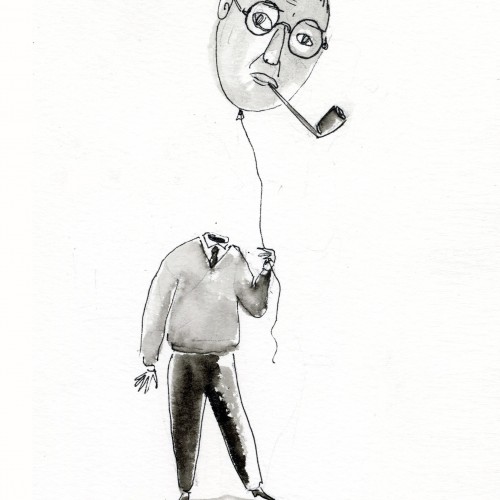
Jean-Paul Sartre (1905–1980)
By the 1950s, too much work on too little sleep—with too much wine and cigarettes—had left Sartre exhausted and on the verge of collapse. Rather than slow down, however, he turned to Corydrane, a mix of amphetamine and aspirin then fashionable among Parisian students, intellectuals, and artists (and legal in France until 1971, when it was declared toxic and taken off the market). The prescribed dose was one or two tablets in the morning and at noon. Sartre took twenty a day, beginning with his morning coffee and slowly chewing one pill after another as he worked. For each tablet, he could produce a page or two of his second major philosophical work, The Critique of Dialectical Reason.
The biographer Annie Cohen-Solal reports, “His diet over a period of twenty-four hours included two packs of cigarettes and several pipes stuffed with black tobacco, more than a quart of alcohol—wine, beer, vodka, whisky, and so on—two hundred milligrams of amphetamines, fifteen grams of aspirin, several grams of barbiturates, plus coffee, tea, rich meals.”
- From Daily Rituals: How Artists Work by Mason Currey
#dailyrituals #inktober #jeanPaulSartre @masoncurrey
I generally make marks on something every day, but I'm really TRYING to do it purposefully in one single journal at a time. I also have super ADHD, which means I pretty much never go up to my actual studio and usually only use what's out on my desk, because out-of-sight-out-of-mind.
I generally make marks on something every day, but I'm really TRYING to do it purposefully in one singular location (journal). Here is a successful attempt from that particular day. I'm also super lazy, which means I never go up to my actual studio and only use what's out on my computer desk.
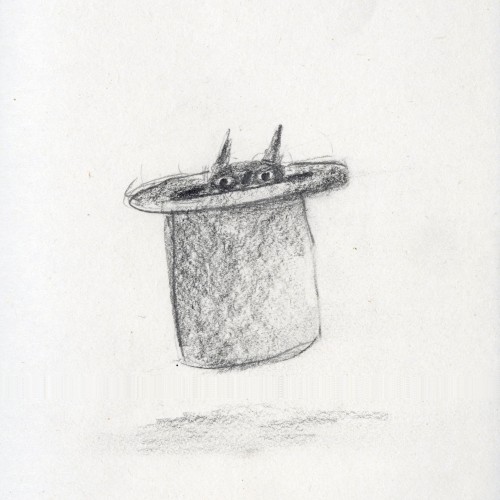
Some days you are the Rabbit, thought Cat, some days you are the Hat.
https://www.instagram.com/p/CZhA4apLyXw/?utm_medium=copy_link
#dailydrawing #cat #pencil #magic
I generally make marks on something every day, but I'm really TRYING to do it purposefully in one single journal at a time. I also have super ADHD, which means I pretty much never go up to my actual studio and usually only use what's out on my desk, because out-of-sight-out-of-mind.
I do generally put pen (or some kind of tool), to paper (or some kind of surface), every day, but I'm really TRYING to do it purposefully in one singular location (journal). Here is a successful attempt from that particular day.
I'm also super lazy, which means I never go up to my actual studio and only use what's out on my computer desk.
I do generally put pen (or some kind of tool), to paper (or some kind of surface), every day, but I'm really TRYING to do it purposefully in one singular location (journal). Here is a successful attempt from that particular day.
I'm also super lazy, which means I never go up to my actual studio and only use what's out on my computer desk.
I generally make marks on something every day, but I'm really TRYING to do it purposefully in one single journal at a time. I also have super ADHD, which means I pretty much never go up to my actual studio and usually only use what's out on my desk, because out-of-sight-out-of-mind.
Louise Bourgeois (1911–2010)
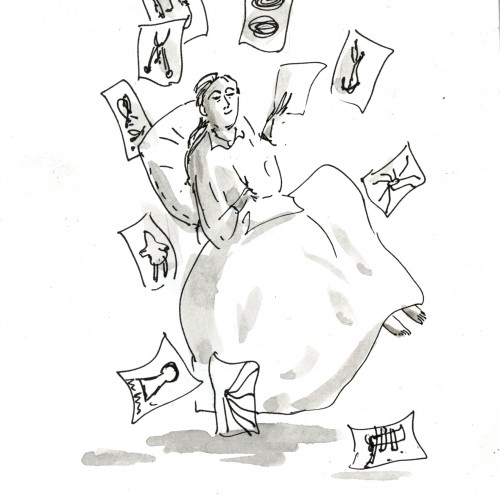
“My life has been regulated by insomnia,” Bourgeois told an interviewer in 1993. “It’s something that I have never been able to understand, but I accept it.” Bourgeois learned to use these sleepless hours productively, propped up in bed with her “drawing diary,” listening to music or the hum of traffic on the streets.
“Each day is new, so each drawing—with words written on the back—lets me know how I’m doing,” she said. “I now have 110 drawing-diary pages, but I’ll probably destroy some.
- From Daily Rituals: How Artists Work by Mason Currey
“I am not what I am, I am what I do with my hands...”
― Louise Bourgeois
“Every day you have to abandon your past or accept it, and then, if you cannot accept it, you become a sculptor.”
― Louise Bourgeois
#dailyrituals #inktober #LouiseBourgeois @masoncurrey
Umberto Eco (b. 1932)
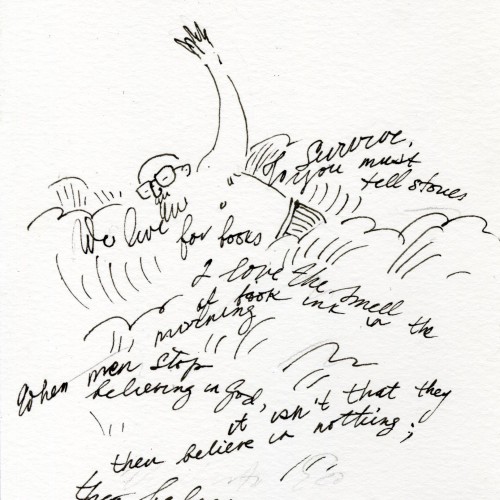
Eco says that he is able to be productive during the brief “interstices” in the day. He told The Paris Review’s interviewer: “This morning you rang, but then you had to wait for the elevator, and several seconds elapsed before you showed up at the door. During those seconds, waiting for you, I was thinking of this new piece I’m writing. I can work in the water closet, in the train. While swimming I produce a lot of things, especially in the sea. Less so in the bathtub, but there too.”
- From Daily Rituals: How Artists Work by Mason Currey
“When men stop believing in God, it isn’t that they then believe in nothing: they believe in everything.” ― Umberto Eco
#dailyrituals #inktober #UmbertoEco @masoncurrey
P. G. Wodehouse (1881–1975)
Once, when he was beginning a Wooster-Jeeves novel, he experimented with using a Dictaphone. After he had dictated the equivalent of a page, he played it back to check it over. What he heard sounded so terribly unfunny that he immediately turned off the machine and went back to his pad and pencil.
After this, according to the biographer Robert McCrum, “he might snooze a bit in his armchair, have a bath, and do some more work, before the evening cocktail (sherry for her, a lethal martini for him) at six, which they took in the sun parlour, overlooking the garden.
- From Daily Rituals: How Artists Work by Mason Currey
“He had just about enough intelligence to open his mouth when he wanted to eat, but certainly no more.”
― P.G. Wodehouse
#dailyrituals #inktober #PGWodehouse @masoncurrey
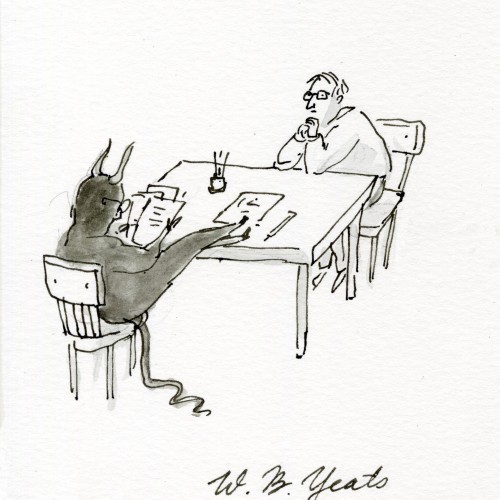
W. B. Yeats (1865–1939)
A lyric poem of eighty or more lines took him about three months of hard labor.
Fortunately, Yeats was not so careful about his other writing, like the literary criticism he did to earn extra money. “One has to give something of one’s self to the devil that one may live,” he said. “I give my criticism.”- From Daily Rituals: How Artists Work by Mason Currey
“Life is a long preparation for something that never happens.”
― W.B. Yeats
#dailyrituals #inktober #WBYeats @masoncurrey
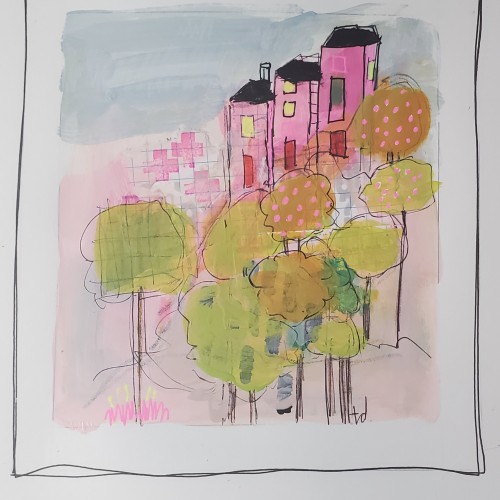
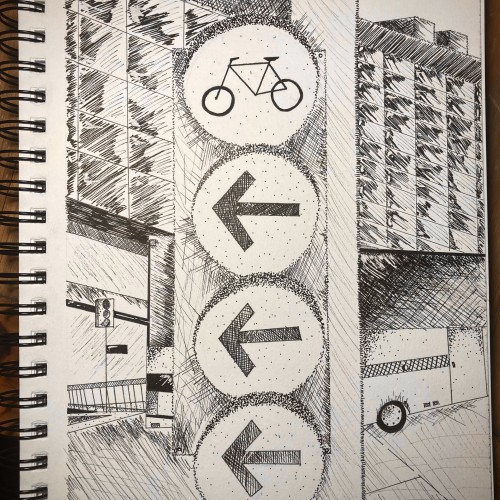
I’ve really been enjoying ink lately - whether pen or Micron inks - it’s been a fun style to try. This was interesting, something different to a typical city street view.
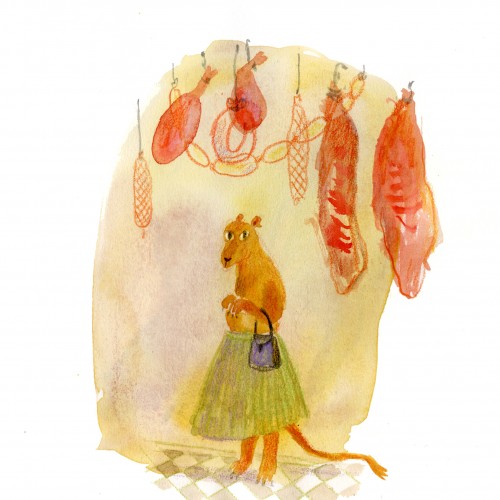
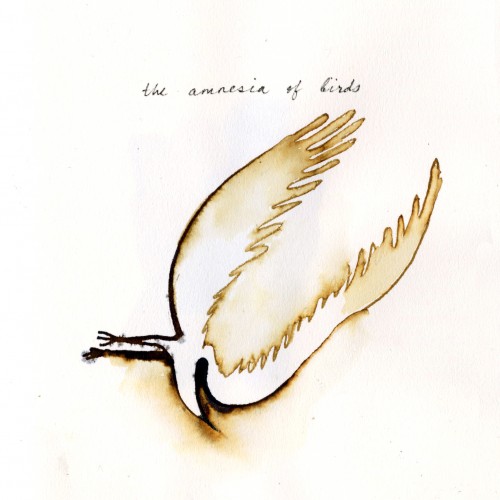
The amnesia of birds.
A misread sentence that is very obviously better than the original, because I can't even imagine what the original might have been.
#dailydrawing #doodle #amnesia #accidentalpoetry
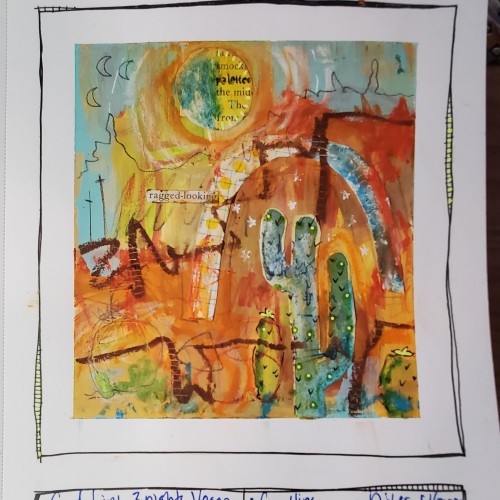
On this gloomy day I am thankful for generous friends and bright colors.
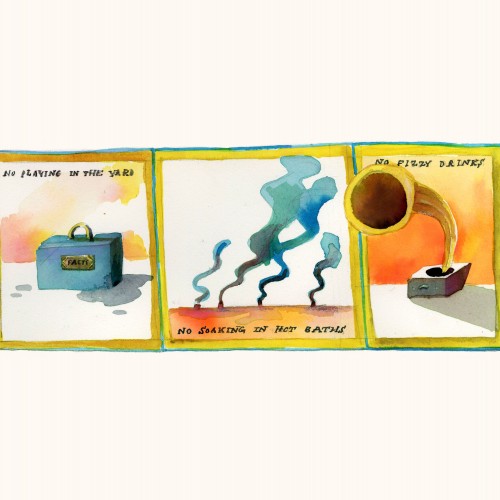
No playing in the yard, no soaking in hot baths, no fizzy drinks.
I am playing with Dr. Ph. Martin watercolors, format and shapes.
#dailydrawing #watercolorink #playing #watercolor
Nikola Tesla (1856–1943)
After he had started his own company, Tesla arrived at the office at noon. Immediately, his secretary would draw the blinds; Tesla worked best in the dark and would raise the blinds again only in the event of a lightning storm, which he liked to watch flashing above the cityscape from his black mohair sofa.
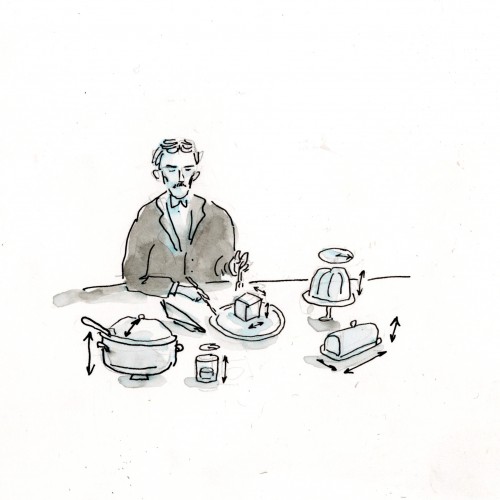
Tesla ate alone, and phoned in his instructions for the meal in advance. Upon arriving, he was shown to his regular table, where eighteen clean linen napkins would be stacked at his place. As he waited for his meal, he would polish the already gleaming silver and crystal with these squares of linen, gradually amassing a heap of discarded napkins on the table. And when his dishes arrived—served to him not by a waiter but by the maître d’hôtel himself—Tesla would mentally calculate their cubic contents before eating, a strange compulsion he had developed in his childhood and without which he could never enjoy his food.
- From Daily Rituals: How Artists Work by Mason Currey
“Of all things, I liked books best.”
― Nikola Tesla
“One must be sane to think clearly, but one can think deeply and be quite insane.”
― Nikola Tesla
#dailyrituals #inktober #NikolaTesla @masoncurrey
Joseph Cornell (1903–1972)
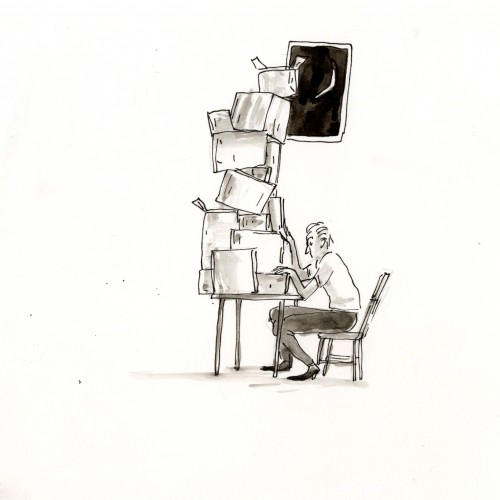
Cornell worked nights at the kitchen table, sorting and assembling materials for his boxes. It was not easy going. Some nights he felt too fatigued from his day job to concentrate on his art and would sit up reading instead, switching on the oven for warmth. In the mornings, his quarrelsome mother would scold him about the mess he’d left at the kitchen table; without a proper workroom, Cornell was forced to store his growing collection of magazine clippings and dime-store baubles out in the garage.
In 1940 Cornell finally mustered the courage to quit his job and pursue his art full-time—and even then his habits changed little. He still worked nights at the kitchen table, while his mother and brother slept upstairs. In the late morning he would head downtown for breakfast at his local Bickford’s restaurant, often satisfying his sweet tooth with a Danish or a slice of pie (and lovingly cataloging these indulgences in his diary).
- From Daily Rituals: How Artists Work by Mason Currey
#dailyrituals #inktober #JosephCornell @masoncurrey
Playing vr everyday. My mind is just blown daily. Spent 30minutes in hell on the last level of rush of blood, could get use to being down there. For real though, vr is just a must try for anyone.
Herman Melville (1819–1891)
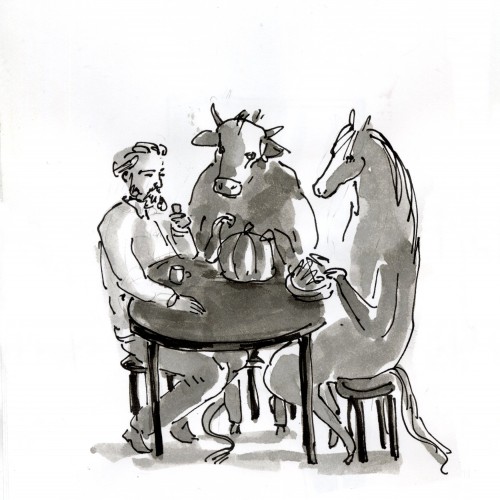
"I rise at eight—thereabouts—& go to my barn—say good-morning to the horse, & give him his breakfast. (It goes to my heart to give him a cold one, but it can’t be helped.) Then, pay a visit to my cow—cut up a pumpkin or two for her, & stand by to see her eat it—for it’s a pleasant sight to see a cow move her jaws—she does it so mildly & with such a sanctity."
- From Daily Rituals: How Artists Work by Mason Currey
“I would prefer not to.”
― Herman Melville, Bartleby the Scrivener
“A smile is the chosen vehicle of all ambiguities.”
― Herman Melville, Pierre; or, The Ambiguities
#dailyrituals #inktober #HermanMelville @masoncurrey
George Balanchine (1904–1983)
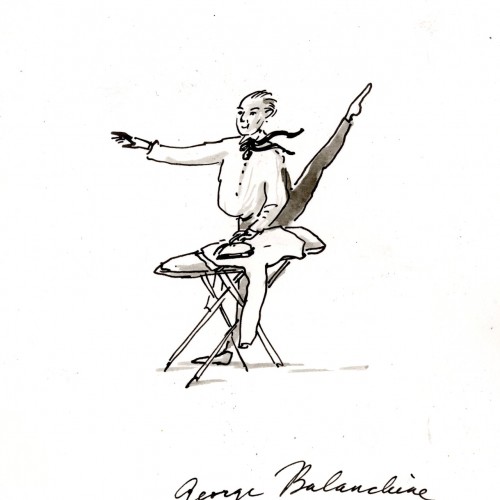
Balanchine liked to do his own laundry. “When I’m ironing, that’s when I do most of my work,” he once said. The choreographer rose early, before 6:00 A.M., made a pot of tea, and read a little or played a hand of Russian solitaire while he gathered his thoughts. Then he did his ironing for the day (he did his own washing too, in a portable machine in his Manhattan apartment) and, between 7:30 and 8:00, phoned his longtime assistant for a rundown of the day’s schedule.
- From Daily Rituals: How Artists Work by Mason Currey
“I like to do things certain ways and I disagree with everybody but I don't even want to argue.”
― George Balanchine
#dailyrituals #inktober #balanchine @masoncurrey