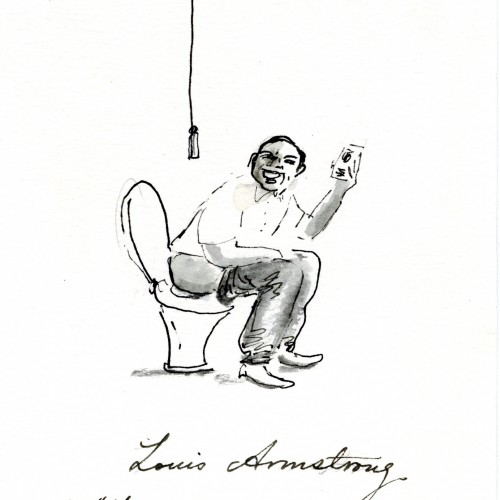
Louis Armstrong (1901–1971)
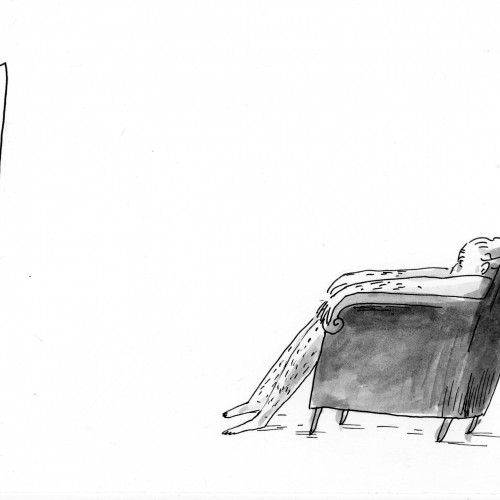
Armstrong relied on music to lull himself to sleep. Before he could get into bed, however, he had to administer the last of his daily home remedies, Swiss Kriss, a potent herbal laxative invented by the nutritionist Gayelord Hauser in 1922 (and still on the market today). Armstrong believed so strongly in its curative powers that he recommended it to all his friends, and even had a card printed up with a photo of himself sitting on the toilet, above the caption “Leave It All Behind Ya.”
- From Daily Rituals: How Artists Work by Mason Currey
“All music is folk music. I ain't never heard a horse sing a song.”
― Louis Armstrong
#dailyrituals #inktober #LouisArmstrong @masoncurrey
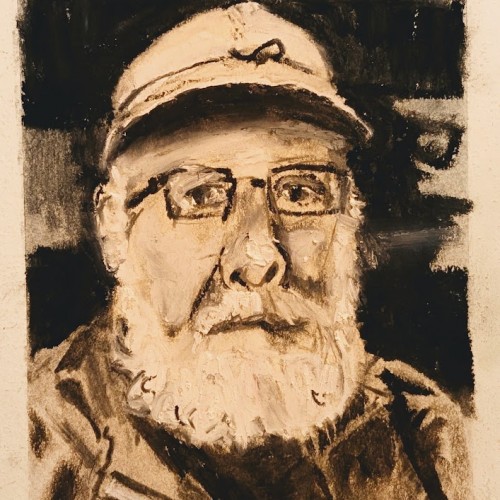
Taking some inspiration from some things me and my girlfriend talked about regarding old highs in one’s past and asking yourself if revisiting them later on in life is worth it… the usual stuff I guess.
Vine Charcoal and Oil Pastel make for a messy, smudgy experience. A certain amount of messiness can make a process feel more real and human. When things aren’t perfectly polished, it reflects a genuine effort, imperfections, and growth. In personal life, letting go of the need for everything to be tidy can promote a more authentic existence. The hat is a Stormy Chromer. It also evolved out of a mess. More on that later. Peace.
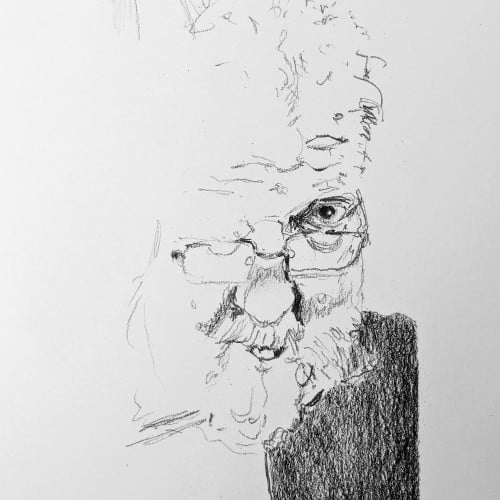
2B pencil focusing on the eye, nose and mouth. The reflection today is a suggestion that we find what we look for, and we see what we want to see. Our family dinners include a sharing time of: 1. Who blessed you today? 2. Who did you bless today? and 3. What are you thankful for? It is suggested by some that if you focus on the abundance, you will not see so much of the lack, but if you focus on the lack, you will not be able to see the abundance so well. This was illustrated by the questions: "How many red cars did you see on the way to work this morning?" My answer was: "No Idea!" It is because I was not looking. If I was being given $100.00 for each red car I spotted, I would have certainly been looking, and maybe even getting creative with the definition of 'red'. What are you looking for? What are you finding?
Hi. Am I hard to see? You are free to look closer.
This is how I will most frequently present myself as, drawn here in an effort to rejuvenate past drawing abilities . Both Ego and Shadow are delicately present as one, although still not the truly completed form. That is still outside my own grasp within the field of creativity.
Everything here has some meaning, including the blank background. A "Domain" in the form of a canvas. The ability to bend reality. A shadow that opens the door to the extraordinary. The simple tools to channel one's creativity. Most importantly, an Avatar of one's being.
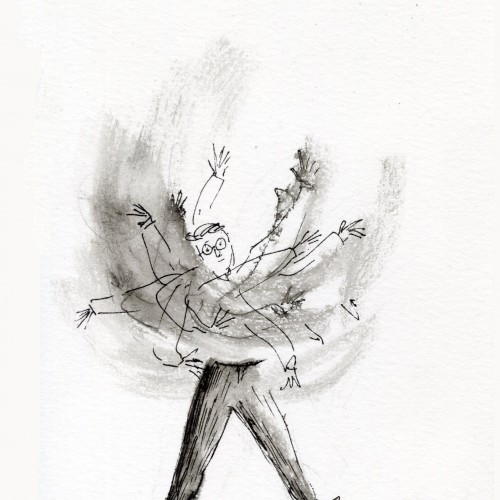
Dmitry Shostakovich (1906–1975)
Shostakovich’s contemporaries do not recall seeing him working, at least not in the traditional sense. The Russian composer was able to conceptualize a new work entirely in his head, and then write it down with extreme rapidity—if uninterrupted, he could average twenty or thirty pages of score a day, making virtually no corrections as he went.
But this feat was apparently preceded by hours or days of mental composition—during which he “appeared to be a man of great inner tensions,” the musicologist Alexei Ikonnikov observed, “with his continually moving, ‘speaking’ hands, which were never at rest.”
Shostakovich himself was afraid that perhaps he worked too fast. “I worry about the lightning speed with which I compose,” he confessed in a letter to a friend. Undoubtedly this is bad. One shouldn’t compose as quickly as I do. Composition is a serious process, and in the words of a ballerina friend of mine, “You can’t keep going at a gallop.” I compose with diabolical speed and can’t stop myself.… It is exhausting, rather unpleasant, and at the end of the day you lack any confidence in the result. But I can’t rid myself of the bad habit.
- From Daily Rituals: How Artists Work by Mason Currey
#dailyrituals #inktober #shostakovich @masoncurrey
Been developing in a way to free myself from external reference-based OC concepts, which was where I started from in drawing. In a way, exploring how I view characters from my own eyes. Here, is an example of drawing myself in two contrasting counterparts. Personal preferences are actually pretty simplistic by appearance.
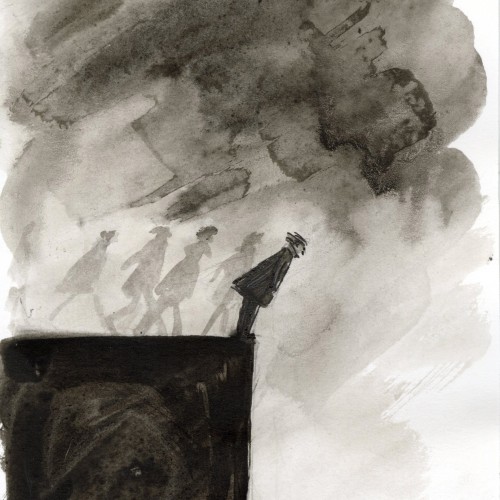
Samuel Beckett (1906–1989)
On a late-night walk near Dublin harbor, Beckett found himself standing on the end of a pier in the midst of a winter storm. Amid the howling wind and churning water, he suddenly realized that the “dark he had struggled to keep under” in his life—and in his writing, which had until then failed to find an audience or meet his own aspirations—should, in fact, be the source of his creative inspiration.
“I shall always be depressed,” Beckett concluded, “but what comforts me is the realization that I can now accept this dark side as the commanding side of my personality. In accepting it, I will make it work for me.”
- From Daily Rituals: How Artists Work by Mason Currey
#dailyrituals #inktober #samuelbeckett @masoncurrey
Teddy Bear's Change of Seasons - Sophie's Christmas included!
Is beautifully written and illustrated, Teddy Bear’s Change of Seasons includes four charming stories, wonderfully rolled into one children’s novel.
Teddy Bear and his friends create magical ways to explore and learn about the snow-white, wonderful world they live in, which changes from summer to autumn and into an unforgettable Christmas.
Teddy’s journey of self-discovery through four seasons, Christmas included, begins in a magnificent old-growth forest, but Teddy is stuck inside a dark and lonely place.
His dreams look far away and out of reach, until Teddy rescues a small mouse, who is desperate for help.
From this one act of kindness, Teddy's life changes in ways he never imagined, bringing him close friends, a new loving family and the kind of challenges and adventures other teddies have never encountered before.
This is a dream of a book, the perfect snuggle-down bedtime story, accompanied by hot, sleepy cocoa.
Imagining a cover design for an imaginary self help book. Case in point. LOL. // Playing with text positioning - putting "out" outside of the cloud text bubble for literal applied meaning.
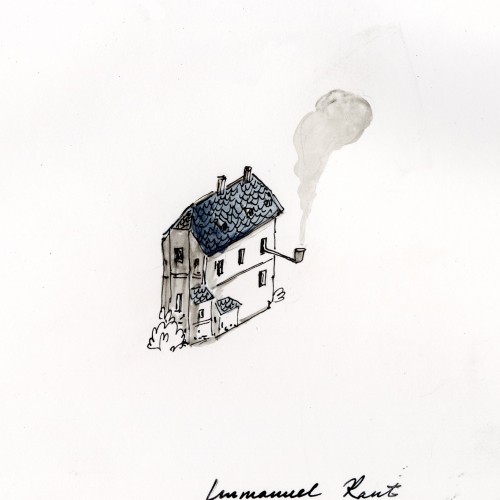
Immanuel Kant (1724–1804)
Kant’s biography is unusually devoid of external events.
As Heinrich Heine wrote: The history of Kant’s life is difficult to describe. For he neither had a life nor a history.
In actual fact, as Manfred Kuehn argues in his 2001 biography, Kant’s life was not quite as abstract and passionless as Heine and others have supposed…. If he failed to live a more adventurous life, it was largely due to his health: the philosopher had a congenital skeletal defect that caused him to develop an abnormally small chest, which compressed his heart and lungs and contributed to a generally delicate constitution. In order to prolong his life with the condition—and in an effort to quell the mental anguish caused by his lifelong hypochondria—Kant adopted what he called “a certain uniformity in the way of living and in the matters about which I employ my mind.”
This routine was as follows: Kant rose at 5:00 A.M., after being woken by his longtime servant, a retired soldier under explicit orders not to let the master oversleep. Then he drank one or two cups of weak tea and smoked his pipe. According to Kuehn, “Kant had formulated the maxim for himself that he would smoke only one pipe, but it is reported that the bowls of his pipes increased considerably in size as the years went on.”
- From Daily Rituals: How Artists Work by Mason Currey
#dailyrituals #inktober #ImmanuelKant @masoncurrey
Sketchbook #11.
Since the 100heads challenge was real tiresome for me, I devised myself another challenge - "50 heads". Basically it's a "100 heads challenge", but for lazy people) The rules are simple: I had to draw 10 two-page spreads of 5 heads, no time limit, no nothing. And I decided to use different materials for each spread.
Spread #1 - ballpoint pen (+ a little bit of watercolour) - NEMOPHILA.
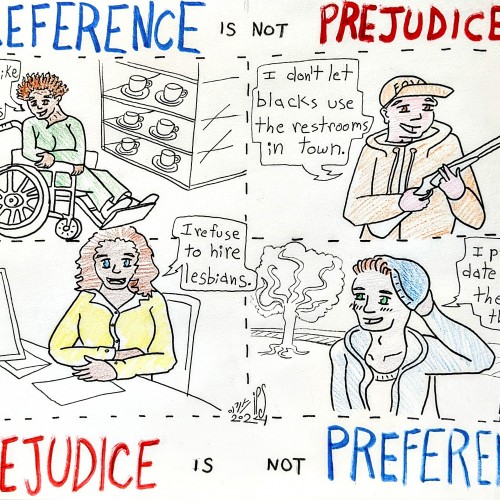
You can listen to nothing but rock music and wear nothing but black clothing and only date short guys in their thirties. Those are valid preferences. Choosing not to hire people of color or refusing to let trans people use the bathroom is prejudice.
Living, breathing, and creating with nature
When you wake up to the gentle sights and sounds of the pond, trees, plants, birds, bees, and dragonflies, inspiration flows effortlessly. So, when the owner asked for a menu design for @SarayaGoa Art Café, I thought—why not let nature speak for itself?
Using pen and ink, I captured the beauty of my mornings here—each stroke reflecting the lush surroundings that make Saraya unique. Instead of focusing on just food items, I filled the cover and inside pages with illustrations of the vibrant life around us. Dining here means eating among the green, surrounded by the diverse plants of our permaculture gardens.
This study is a tribute to the beauty that shapes every meal at Saraya.
Benjamin Franklin (Part 2)
The plan worked, up to a point. After following the course several times in a row, he found it necessary to go through just one course in a year, and then one every few years. But the virtue of order—“Let all your things have their places; let each part of your business have its time”—appears to have eluded his grasp. Franklin was not naturally inclined to keep his papers and other possessions organized, and he found the effort so vexing that he almost quit in frustration.
This timetable was formulated before Franklin adopted a favorite habit of his later years—his daily “air bath.” At the time, baths in cold water were considered a tonic, but Franklin believed the cold was too much of a shock to the system. He wrote in a letter: I have found it much more agreeable to my constitution to bathe in another element, I mean cold air. With this view I rise early almost every morning, and sit in my chamber without any clothes whatever, half an hour or an hour, according to the season, either reading or writing. This practice is not in the least painful, but on the contrary, agreeable; and if I return to bed afterwards, before I dress myself, as sometimes happens, I make a supplement to my night’s rest, of one or two hours of the most pleasing sleep that can be imagined.
From Daily rituals by Mason Currey
#daulyrituals #inktober #benjaminfranklin @masoncurrey
Ludwig van Beethoven (1770–1827)
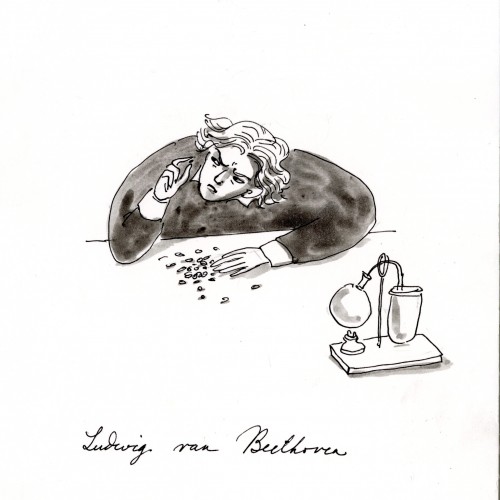
Beethoven rose at dawn and wasted little time getting down to work. His breakfast was coffee, which he prepared himself with great care—he determined that there should be sixty beans per cup, and he often counted them out one by one for a precise dose.
From Daily Rituals : How Artists Work by Mason Currey.
#dailydrawing #dailyritual #beethoven #coffee #inktober @masoncurrey
(Gel Fineliner on A5 Paper) “Wait...Did you just call me Phil? I'm a multi-dimensional higher being, you ignorant little tit! You don't just call someone like me PHIL! I was about to share the fruits of my knowledge with your species, ushering in a new age which would have been a significant step in human evolution, but now you can all PISS RIGHT OFF! You humans deserve to wipe yourselves out!” (It is widely believed that humanity constantly subdues itself with lazy misunderstandings like this.)
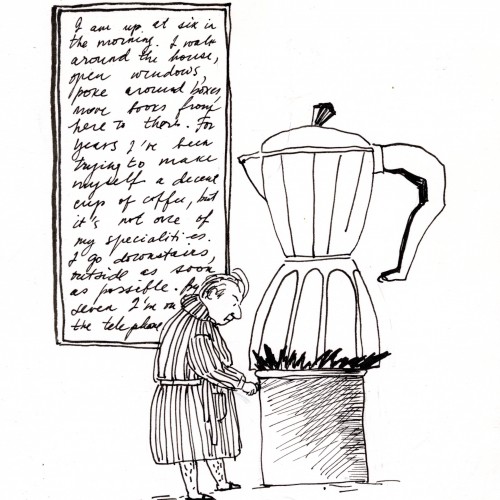
FEDERICO FELLINI
In a 1977 interview, he described his morning routine:
I'm up at six in the morning. I walk around the house, open sindows, poke around boxes. move books from here to there. For years I've been trying to make myself a decent cup if coffee, but it's not one of my specialties. I go downstairs, outside as soon as possible. By seven I'm on the telephone.
- Daily rituals by Mason Curry.
#inktober #masonCurry #federicofellini #dailyritual