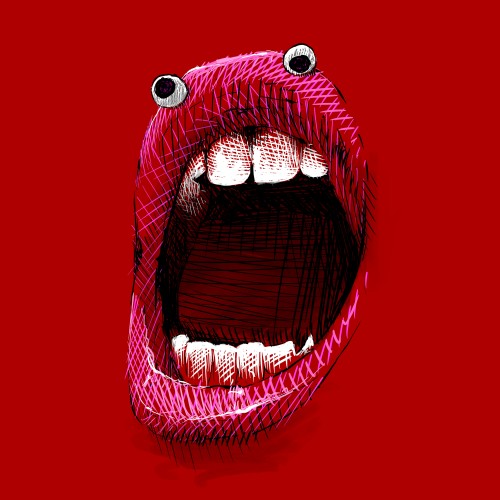
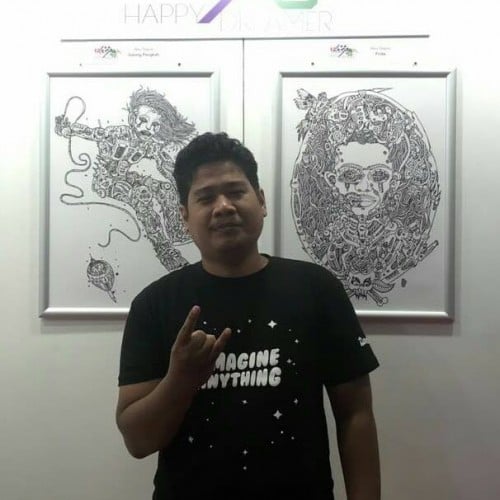
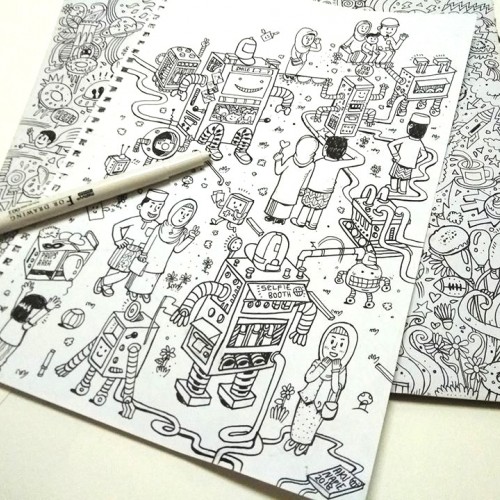
Commision doolde artwork for eid al-fitr money envelope. Eid al-Fitr is an important religious holiday celebrated by Muslims worldwide that marks the end of Ramadan, the Islamic holy month of fasting (sawm)
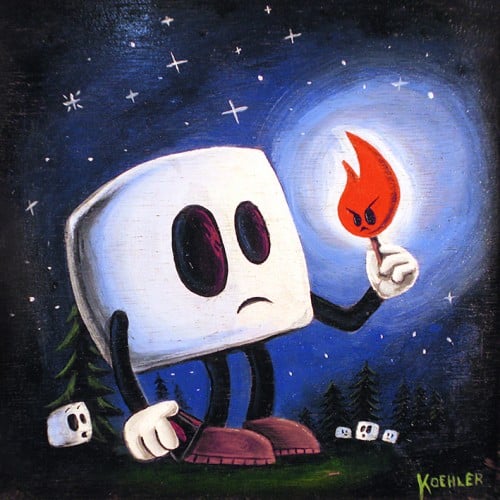
THE SHIELD from Stories for Nighttime and Some for the Day by Ben Loory.
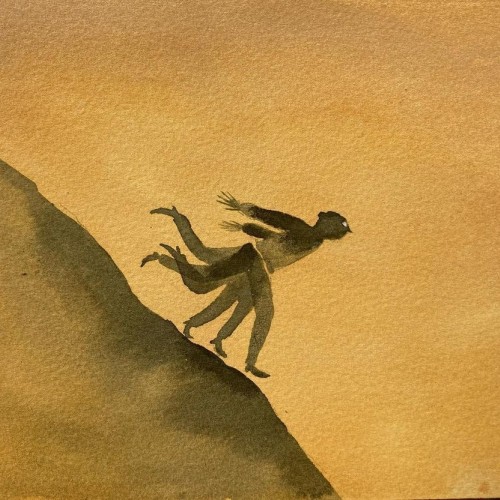
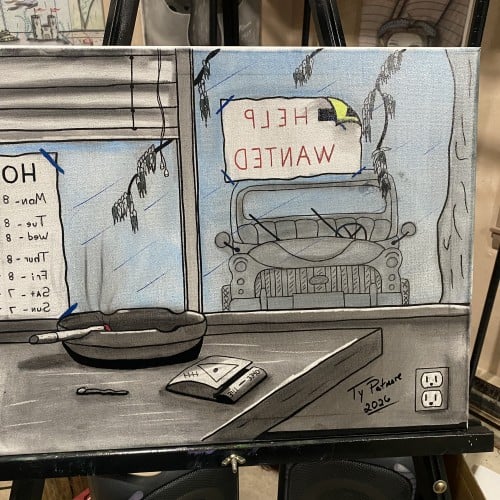
"And the remembrance of that place seems to spur him on, and suddenly he’s picking up the pace. Suddenly he’s jogging down the middle of the road, and then he breaks into a run. And then he’s running as fast as he can, and it feels like he’s about to take off. By the time the man gets to the cheap side of town, he’s never felt so good in his life. And he blows right by that dingy apartment and off into wide open space." https://www.instagram.com/p/CguFREoucBj/?utm_source=ig_web_copy_link
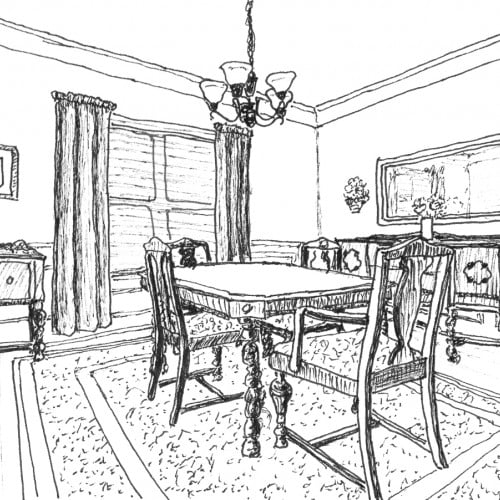
Our Dining Room is my favorite room in the house. Every family meal we eat at home happens there - breakfast, lunch, and dinner. Meal times are our sacred family time to share our day, our thoughts, our struggles, our successes, etc. We do have a breakfast area. But aside from homework, projects, or reading the newspaper, the breakfast area doesn't get much use unless needed for overflow from the dining room when we have visitors.
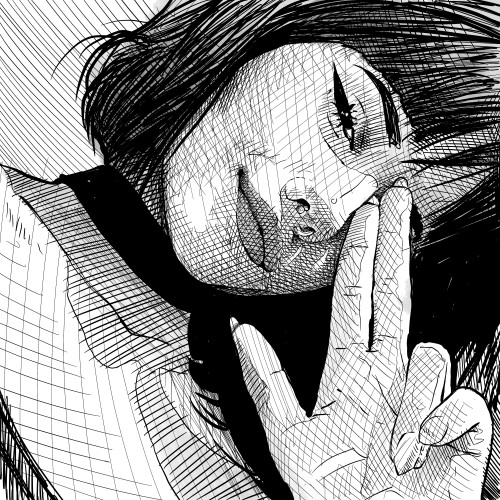
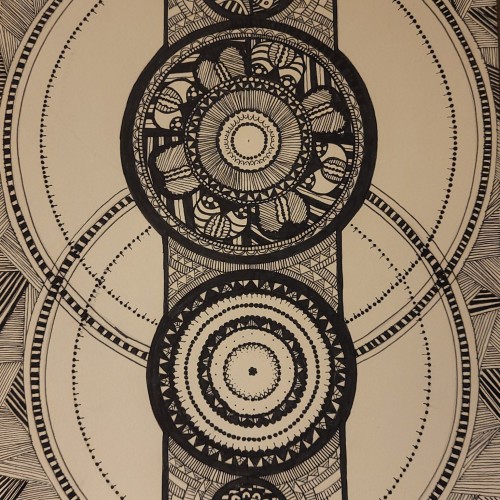
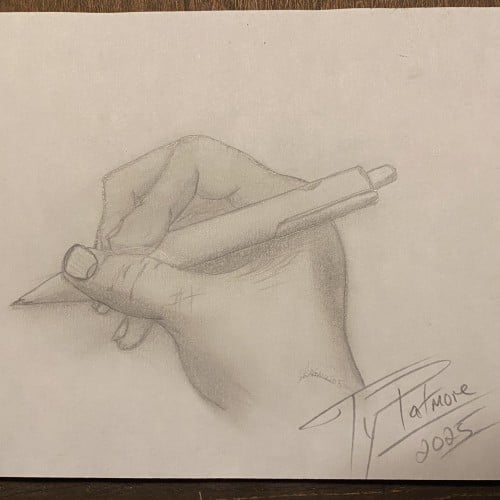
It's been an interesting week, one of which had events I didn't expect to affect me as much as they did. I'd like to say something that occurred was surprising, but quite frankly, it wasn't. It's concerning how far things have gone and how some seem to feel indifferent to or even support them. We'll see what will happen, 11 days can't pass soon enough... besides that, time ticks on. A bit too fast in my opinion, but it is what it is. I know this drawing isn't my usual style, but something about drawing like this feels mindless for me, it lets me zone out and disconnect.
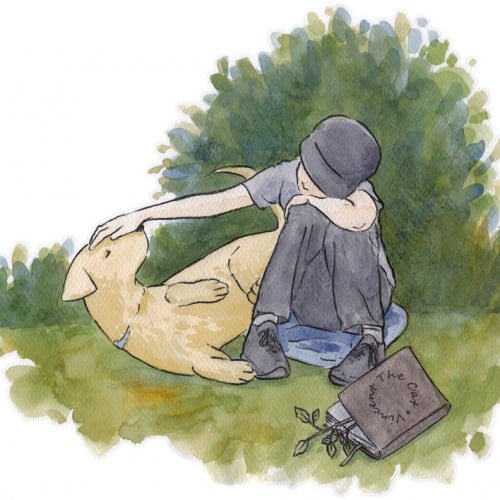
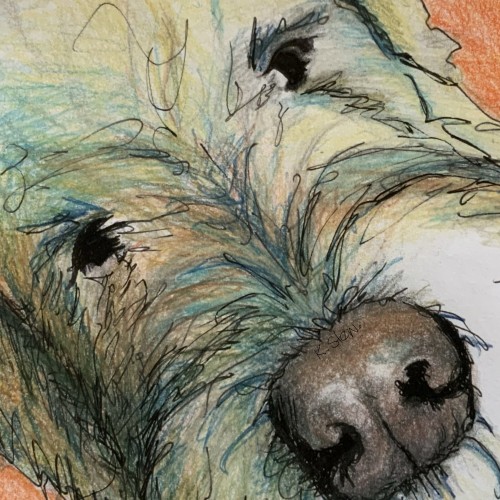
Satch’s perhaps the most resourceful dog on the planet. His legs are fast, his nose is keen, his mind is set, but the world has grown too complicated for a dog even as well-equipped as Satch. His owners got lost and he does not know how to find them in this never-ending maze of smells and sounds.
Thankfully, he stumbled upon Neal. He will know what to do.
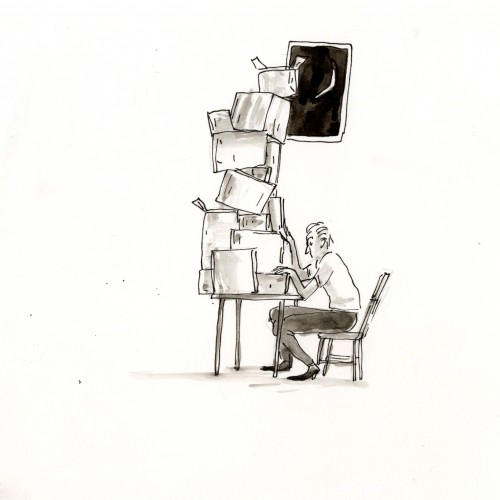
Joseph Cornell (1903–1972)
Cornell worked nights at the kitchen table, sorting and assembling materials for his boxes. It was not easy going. Some nights he felt too fatigued from his day job to concentrate on his art and would sit up reading instead, switching on the oven for warmth. In the mornings, his quarrelsome mother would scold him about the mess he’d left at the kitchen table; without a proper workroom, Cornell was forced to store his growing collection of magazine clippings and dime-store baubles out in the garage.
In 1940 Cornell finally mustered the courage to quit his job and pursue his art full-time—and even then his habits changed little. He still worked nights at the kitchen table, while his mother and brother slept upstairs. In the late morning he would head downtown for breakfast at his local Bickford’s restaurant, often satisfying his sweet tooth with a Danish or a slice of pie (and lovingly cataloging these indulgences in his diary).
- From Daily Rituals: How Artists Work by Mason Currey
#dailyrituals #inktober #JosephCornell @masoncurrey
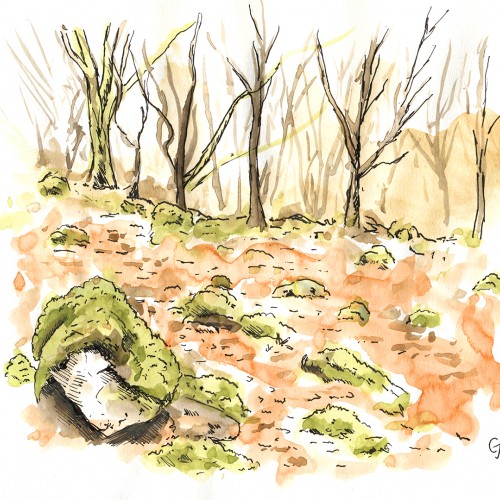
A bit of a departure from my usual style. I wanted to try something a bit messy, fast, and loose. The scene is an ancient woodland in Pembrokeshire called Tŷ Canol, an atmospheric place and full of inspiration for artworks. Pen and watercolour in Seawhite sketchbook.
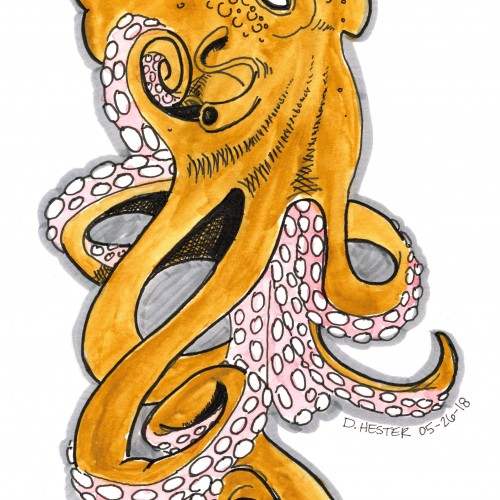
Ink and Watercolor sketch of octopus. Normally I start with a pencil outline, then go over it with micron pens. But I'm learning to skip the pencil step and just sketch with ink. I helps you not to overthink things. Once you lay the ink line down on the paper it's there to stay. You can't erase and there isn't an undo like you have when working digitally. You just have to work around any "mistakes" you make. I'm also working on sketching faster because I just don't have that much free time these days. Trying to produce a new sketch every day is a real challenge.
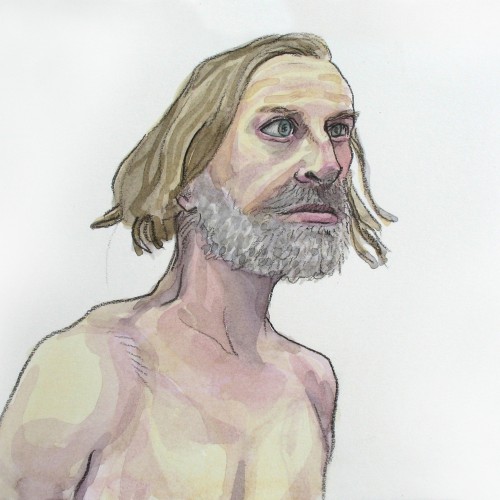
This drawing, with a bit of watercolour, was done years ago in North Vancouver during a figure drawing session. Probably 15 - 20 minutes. Watercolour, subtly employed, can have wonderful affects. The challenge of working fast forced me to ditch excess thinking. And it's funny, because at first I thought, "Oh, this is terrible." Then the next day, with fresh eyes, or checking out the drawing in a mirror, I think, "Wow! How did I not see how good this is?" Never throw out your artwork immediately after a drawing session. Give them a few days and look at your work with fresh eyes.
I can't believe October is already here, and it's startling how fast time is moving. I shouldn't be up this late, but I wanted to make some art, especially given how today has been (8-3:15 'in school,' 3:15-10pm doing homework). The honest answer is I just feel down. I can usually phrase things better but my brain is fried. Everything is non-stop, the time I have to breathe seems to get shorter. Anyway, it's 11pm, I should get to bed.
My vision of the character ‘Smaug’ from J.R.R. Tolkien’s ‘The Hobbit’.
Pencil sketch, coloured digitally on IbisPaint X.
Here is a passage from The Hobbit describing Smaug’s appearance: “There he lay, a vast red-golden dragon, fast asleep; thrumming came from his jaws and nostrils, and wisps of smoke, but his fires were low in slumber. Beneath him, under all his limbs and his huge coiled tail, and about him on all sides stretching away across the unseen floors, lay countless piles of precious things, gold wrought and unwrought, gems and jewels, and silver red-stained in the ruddy light. Smaug lay, with wings folded like an immeasurable bat, turned partly on one side, so that the hobbit could see his underparts and his long pale belly crusted with gems and fragments of gold from his long lying on his costly bed.”
Dmitry Shostakovich (1906–1975)
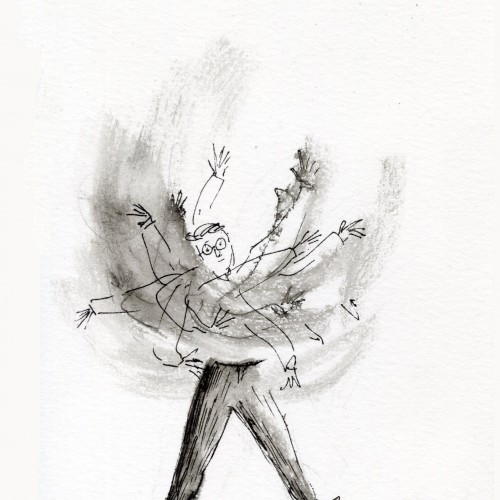
Shostakovich’s contemporaries do not recall seeing him working, at least not in the traditional sense. The Russian composer was able to conceptualize a new work entirely in his head, and then write it down with extreme rapidity—if uninterrupted, he could average twenty or thirty pages of score a day, making virtually no corrections as he went.
But this feat was apparently preceded by hours or days of mental composition—during which he “appeared to be a man of great inner tensions,” the musicologist Alexei Ikonnikov observed, “with his continually moving, ‘speaking’ hands, which were never at rest.”
Shostakovich himself was afraid that perhaps he worked too fast. “I worry about the lightning speed with which I compose,” he confessed in a letter to a friend. Undoubtedly this is bad. One shouldn’t compose as quickly as I do. Composition is a serious process, and in the words of a ballerina friend of mine, “You can’t keep going at a gallop.” I compose with diabolical speed and can’t stop myself.… It is exhausting, rather unpleasant, and at the end of the day you lack any confidence in the result. But I can’t rid myself of the bad habit.
- From Daily Rituals: How Artists Work by Mason Currey
#dailyrituals #inktober #shostakovich @masoncurrey
Next up is the finalized sketch. Specifically when I'm working on prints and commissions I do a detailed final sketch. It makes the inking/painting process a lot faster.
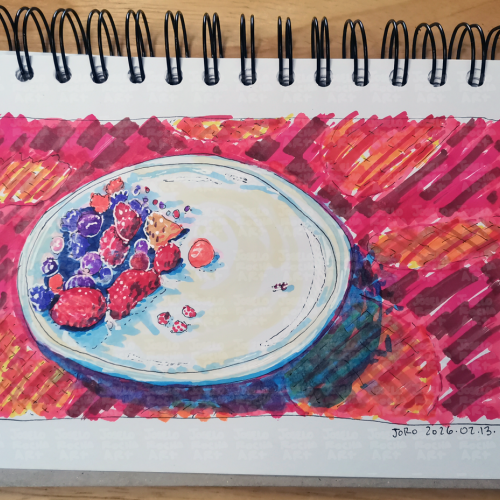
A vibrant fruit bowl filled with a variety of colorful mix of red fruits like strawberries, blueberries, and raspberries. The bright, bold colors create a striking contrast against the background.
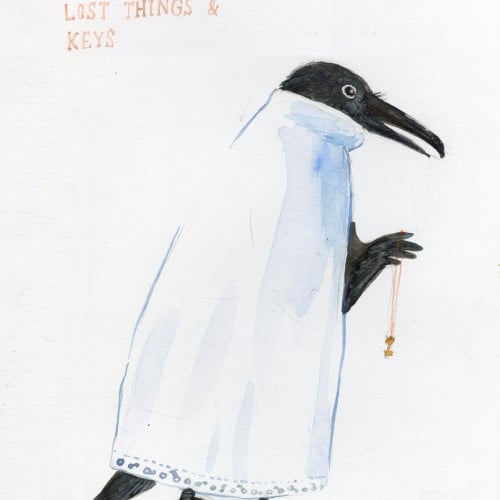
Patron Saint of Lost Keys and Small Things.
Reminded me of this poem by Elizabeth Bishop.
One Art
The art of losing isn’t hard to master;
so many things seem filled with the intent
to be lost that their loss is no disaster.
Lose something every day. Accept the fluster
of lost door keys, the hour badly spent.
The art of losing isn’t hard to master.
Then practice losing farther, losing faster:
places, and names, and where it was you meant
to travel. None of these will bring disaster.
I lost my mother’s watch. And look! my last, or
next-to-last, of three loved houses went.
The art of losing isn’t hard to master.
I lost two cities, lovely ones. And, vaster,
some realms I owned, two rivers, a continent.
I miss them, but it wasn’t a disaster.
—Even losing you (the joking voice, a gesture
I love) I shan’t have lied. It’s evident
the art of losing’s not too hard to master
though it may look like (Write it!) like disaster.